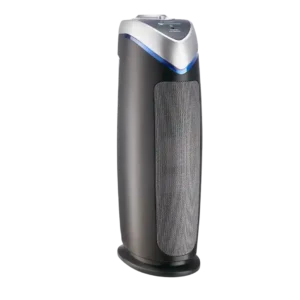
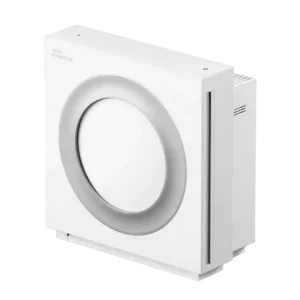
GermGuardian AC4825
Where It Has the Edge
- size and footprint is 4.2 vs 3.8. Size and footprint are strong positives for small spaces, with reviewers praising the slim tower shape and small...

Scorata scores summarize analyzed review evidence on a 1–5 scale; they are not laboratory measurements or a simple average of customer star ratings. Feature scores summarize the reviews covering that feature. The overall score averages feature scores within each review, then combines review averages. When both expert and customer evidence are available, those two groups receive equal weight. Products can have different review coverage, so small score gaps do not establish a winner.
Recommendations prioritize important features for the category, with a score of at least 3.5, a gap of at least 0.25 points and at least two supporting reviews per product. Features with widely varying scores or broad connectivity contexts are excluded from recommendations. These safeguards do not establish statistical significance.
Quick verdict
The review evidence points to a tradeoff: size and footprint versus air purification performance and noise level. Choose according to which strengths matter more to you; the overall score alone does not settle that choice.
Choose GermGuardian AC4825 for size and footprint.
Choose Coway Airmega Mighty2 AP-1512N for air purification performance and noise level.
Scores are out of 5. Missing scores mean missing review evidence, not a missing feature.
Air cleaning results range from weak against newer rivals to excellent in several small-room tests, so performance is best viewed as solid but space-dependent.
Reviewers generally found purification strong, with fast real-world improvements and smoke or particle clearing, though one lab-style review called the result merely decent.
Noise feedback is mixed: many found it quiet or acceptable, but several noted high-speed or low-speed optimization problems and bedroom caveats.
Noise level was one of the strongest areas, with reviewers repeatedly calling it nearly silent, virtually undetectable, or very quiet.
Filter replacement cost varies by reviewer, from fairly cheap compared with some rivals to expensive when annual maintenance is considered.
Filter cost feedback was mixed: longer filter life could offset the price, but combined HEPA/carbon replacement and the higher replacement price added caveats.
The lack of a washable pre-filter is a repeated drawback because users must replace rather than wash the carbon/pre-filter layer.
The washable pre-filter was praised as practical, vacuumable, and simple to clean.
Filter life is mixed to negative: some users can maintain filters with vacuuming, but several reviewers criticized short life or clogging of the carbon/pre-filter.
Filter life was praised in WIRED because the Mighty2 filters last a year and twice as long as the previous model's filters.
Pre-filter quality is criticized because the carbon layer doubles as the pre-filter and is described as thin, low-carbon, or poorly made.
Pre-filter quality was positive, with reviewers finding the washable or vacuumable pre-filter practical for pet-heavy homes.
Activated carbon feedback is mostly negative from testing-oriented reviewers, who repeatedly called the treated or fibrous carbon layer low quality, though one review credited it with odor help.
Evidence was mixed: one reviewer disliked replacing combined carbon and HEPA filters together, while another credited the filter with odor, smell, and gas removal.
Display readability evidence is limited but negative, with a tester finding the UV-C status hard to see in bright light.
Display feedback was mixed: one reviewer found the touchscreen dim, while others liked instant air-quality readability and numerical indicators.
Filter-stage evidence is mixed: one review liked the affordable four-stage setup, while another criticized the unit for having only three technologies.
Filter-stage design was mixed-to-positive, with larger/all-in-one filters seen as practical but combined HEPA/carbon replacement disliked by one reviewer.
The true HEPA filter is a recurring strength, though one review called its quality merely fair and others praised true HEPA at the budget price.
True HEPA evidence came from Breathe Quality's particle-capture result, though that same review said competing purifiers performed better.
Reliability evidence is limited and mixed, with one reviewer noting some reports of units burning out despite many positive owner reviews.
Reliability evidence was positive but limited, with features working as expected and particle levels staying low during testing.
Value is sharply context-dependent: it can be a good buy for simple small-room particle cleaning, but several reviewers prefer newer or higher-featured alternatives.
Value was mixed-to-positive: reviewers liked the capability for the price, but CNET and Breathe Quality noted cheaper or stronger rivals.
Power consumption is a recurring concern, with reviewers citing high electricity costs, high monthly usage, or higher draw than rivals.
Power consumption was praised as very low at 56 watts in the Breathe Quality review.
Real-time air quality monitoring is a weakness because reviewers noted the unit cannot detect air quality and leaves users guessing about fan speed.
Real-time monitoring was a major strength, giving reviewers peace of mind and a better understanding of their indoor air.
Sleep mode is a weakness because reviewers explicitly said the unit would benefit from one and called its absence a bedroom drawback.
Sleep mode was praised for automatic dark-room behavior and for putting itself to sleep repeatedly in smart mode.
VOC reduction is consistently weak where tested or discussed, mainly because reviewers criticized the thin treated-carbon layer.
VOC-related evidence was limited to Breathe Quality's gas-removal assessment of the combined filter.
CADR-related evidence is negative, with reviewers saying measured performance or motor size disappointed relative to the CADR provided.
CADR evidence was positive for bedroom-scale use and similar to other Mighty models, though not presented as a dramatic class-leading jump.
Portability is a plus because reviewers repeatedly described it as light, easy to transport, or equipped with a usable handle.
Portability was weak because the unit lacks wheels and was described as an awkward square shape to move.
Energy efficiency trends negative overall, especially against newer or higher-CFM models, despite one review rating it average in class.
Energy efficiency evidence was positive, tied to sensor-driven operation and a claimed energy-saving Eco mode.
Odor reduction is the biggest split: some reviewers found odors improved, while several testing-focused reviews said the carbon stage is weak for gas and odor control.
Odor reduction evidence was positive but not deeply tested; reviewers cited a substantial difference around smoke, pets, and gas/odor filtration.
HEPA filtration is praised as an industry-standard particle approach, especially impressive at this price point.
HEPA filtration was supported by Breathe Quality's particle-capture test, but that review still placed the result behind several competitors.
Particle removal is the AC4825's most credible strength, with several tests showing meaningful particulate reductions, though some reviewers found it slower or below the 99.97% promise.
Particle removal was strongly supported by quick PM reductions and smoke clearing, though one review called the measured capture rate decent rather than best-in-class.
Maintenance is generally easy for filter access and replacement, though long-term upkeep still adds cost.
Maintenance ease was consistently strong, with filters and pre-filters described as easy to remove, clean, vacuum, and reinstall.
Room coverage is a clear limitation: the unit is mainly suitable for small rooms, with better results when kept near the recommended square footage.
Room coverage was mixed: reviewers saw strong apartment or bedroom results, while Breathe Quality considered the 1,800-square-foot claim overly optimistic.
Smoke removal is mixed: some testing and owner comments were positive, but carbon limitations made smoke or incense-related performance slower in other evidence.
Smoke removal was strong in WIRED's smoke test and CNET's apartment smoke context, with fast clearing and adequate filtration reported.
Pet-related particle evidence is limited but positive, with one reviewer calling it great for a home with a dog.
Pet dander removal was supported by one reviewer's report of reduced dander during shedding season.
Allergen reduction is a positive use case in the review set, especially for small rooms and users concerned about allergies.
Allergen-related evidence was limited but positive, centered on reduced pet dander during shedding season.
Indicator lights are mixed: one reviewer warned the always-on light could bother dark-room users, while another found illumination not too bright.
Indicator-light feedback was split between confusing color coding and easier instant readability with numerical or color-coded indicators.
Dust removal receives positive owner-style and review evidence, with reviewers noting visible dust capture and cleaner air in homes with dust concerns.
Dust removal was praised in pet and litter-box settings, with reviewers seeing less residual litter dust and less dust around the litter area.
Smart features are limited; reviewers described the unit as basic and lacking automatic or real-time functions.
Smart features were useful despite no app, especially the sensor-driven modes and real-time air insight.
Design opinions vary from old-fashioned or obvious-looking to attractive and easy to fit into rooms.
Design was mostly praised as modern, stylish, and less prone to collecting fur, though one review called the redesign subtle rather than revolutionary.
Size and footprint are strong positives for small spaces, with reviewers praising the slim tower shape and small floor space.
The footprint was generally compact and living-room friendly, but one reviewer found the square body awkward and another noted it is wider than a small purifier.
Air changes were praised in smaller spaces and versus the Core 300, but Breathe Quality warned the 1,800-square-foot claim drops to only one exchange per hour.
Child lock was mentioned as one of the convenient manual-control features.
Fan speed options are simple and useful, with one review specifically praising the three-speed controls as easy to use.
Ozone-free operation receives strong positive evidence from one reviewer who explicitly said the ozone-free claim is true.
PM2.5 detection was praised when checked against another sensor and when it gave the reviewer confidence that small smoke and odor particles were being filtered.
Pollen removal is supported by reviewer praise that the unit gets rid of pollen alongside dust in normal room use.
Safety certifications receive positive evidence from one reviewer who treated the certifications as a quality guarantee.
Scheduling options were useful where tested, with the timer working as expected and being grouped with convenient manual controls.
Reviewers repeatedly criticized the optional UV-C stage as poorly implemented or minimally useful; only one test saw a tiny added air-quality improvement.
Sensor accuracy was strong where tested, with one reviewer checking it against a separate AQI sensor and another saying it improved Auto mode precision.
Auto mode earned positive marks for adjusting fan speed with little intervention and responding more precisely to changing air quality.
Filter availability is praised because replacement filters are easy to obtain from the product family and manufacturer ecosystem.
App connectivity was a clear weakness because reviewers repeatedly noted the absence of an app, Wi-Fi connectivity, or remote connected control.
Voice assistant compatibility was a weakness because CNET explicitly noted the lack of voice assistant support.
Build quality is generally good for the price, with reviewers calling it well made or solid while recognizing its budget tier.
Durability evidence is moderate: one review said it is not among the most durable, while another called the unit well made.
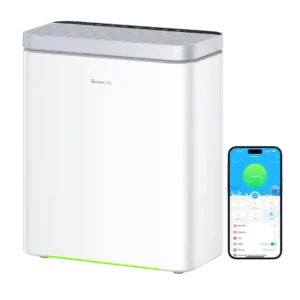
Choose the H7124 if you want a quiet smart purifier for odors, dust, pets, and app control. Skip it if you need foolproof Wi-Fi, wall-facing intake, UV light, or strong...
Pros: air purification performance, noise level
Cons: control placement
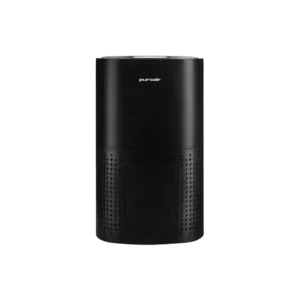
Best for quiet, simple cleaning in bedrooms or apartments. Skip it if you need verified large-room CADR value, app control, or guaranteed neighbor-smoke removal.
Pros: noise level, air purification performance
Cons: filter replacement cost, air quality sensor accuracy
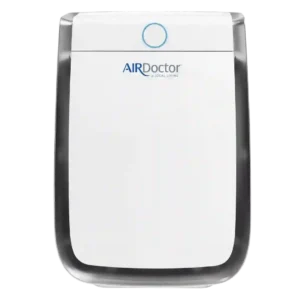
Best for strong room cleaning, allergy relief, odor control, and simple operation. Skip it if high filter costs, a larger footprint, or possible nighttime fan noise would bother you.
Pros: air purification performance, overall satisfaction
Cons: filter replacement cost
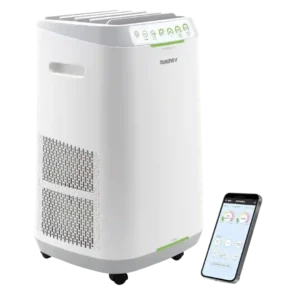
Choose this if you want strong odor, dust, smoke, and pet-air cleanup with washable filters. Skip it if turbo noise, Wi-Fi setup, or a high upfront price will bother you.
Pros: overall satisfaction, air purification performance