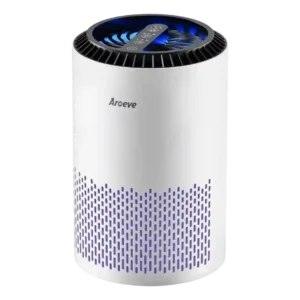
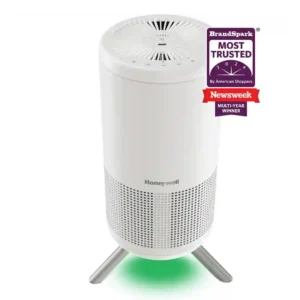
Aroeve MK01
Where It Has the Edge
- portability is 4.4 vs 2.3. Portability is a clear strength. Owners and reviewers like the light weight, small body, easy repositioning, and travel-friendly...

Scorata scores summarize analyzed review evidence on a 1–5 scale; they are not laboratory measurements or a simple average of customer star ratings. Feature scores summarize the reviews covering that feature. The overall score averages feature scores within each review, then combines review averages. When both expert and customer evidence are available, those two groups receive equal weight. Products can have different review coverage, so small score gaps do not establish a winner.
Recommendations prioritize important features for the category, with a score of at least 3.5, a gap of at least 0.25 points and at least two supporting reviews per product. Features with widely varying scores or broad connectivity contexts are excluded from recommendations. These safeguards do not establish statistical significance.
Quick verdict
The review evidence points to a tradeoff: portability versus ease of use and pre-filter quality. Choose according to which strengths matter more to you; the overall score alone does not settle that choice.
Choose Aroeve MK01 for portability.
Choose Honeywell HPA830 for ease of use and pre-filter quality.
Scores are out of 5. Missing scores mean missing review evidence, not a missing feature.
Most owners say rooms feel fresher and cleaner, especially bedrooms. Lab-style reviewers are much less impressed, calling performance slow or underpowered outside very small spaces.
Most reviews praise air cleaning, especially customers noticing fresher air, dust/dander reduction, and wildfire usefulness, though one expert criticizes low fan power.
Replacement filter cost is polarizing. Some testers and customers call the filters cheap or reasonably priced, while others think the cost is high relative to the low-priced unit.
Filter cost evidence is mixed but mostly favorable, with several reviews calling filters affordable or cheap and one expert wanting lower annual costs.
Quietness is a major reason customers like the MK01, especially for bedrooms and sleep mode. The main negative pattern is a whine, whistle, or louder high-speed noise on some units.
Noise is the strongest consensus area: most reviewers call it quiet, though one expert dislikes high-speed noise and one customer wanted more white noise.
The pre-filter is basic. It catches larger dust and hair, but expert reviewers criticize its quality compared with stronger separate pre-filters.
Pre-filter feedback is positive where reviewed, especially for capturing larger particles and adding carbon-layer support.
True HEPA claims are presented as a selling point, but not all reviewers are convinced the small unit can fully benefit from H13 media. Owners still report practical dust and allergen help.
One expert praises the True HEPA filter's 99.97% capture claim.
The lighting is mostly treated as a small convenience rather than a major feature. One reviewer found the night light too dim for reading, while customers like being able to turn lights off.
One expert finds the floor indicator hard to see in bright conditions.
The filter stack is described as a basic three-stage design. It is useful for everyday particles, but test-focused reviews do not treat it as a premium filtration system.
One expert describes the filter setup as a full package after discussing HEPA plus carbon pre-filter coverage.
Filter availability is mixed. One owner says filters are easy to find and replace, while another could not find a filter that fit.
Filter availability is a caveat because one expert says the unique filter is not shared with other models yet.
Carbon performance is split. Some shoppers liked everyday odor help, while expert testing repeatedly notes that the thin or foam-style carbon layer is weak for heavy smoke, VOCs, and stronger smells.
Activated-carbon evidence is mixed: one expert faults the lack of a proper carbon filter, while others note a carbon pre-filter or missing optional carbon layer.
Customer support stands out as unusually strong. Several owners describe fast replies, replacements, refunds, free filters, or helpful follow-up after defects and complaints.
One expert criticizes Honeywell support as less friendly than competitors and describes restrictive return terms.
Filter replacement is generally straightforward, but the reset process causes confusion for some customers. Owners often explain that the red light needs to be manually reset after changing the filter.
One expert describes the return/replacement experience as costly because of restocking fees and shipping-charge limits.
Warranty coverage is described positively in expert discussion because activation is automatic. Customer defect stories focus more on support and refunds than formal warranty terms.
One expert praises the warranty as among the longest in the industry.
Value is a customer favorite because the purifier is small, affordable, and often effective in bedrooms. Critical reviewers argue the low price is less impressive when coverage and replacement costs are considered.
Value is mixed: customers often call it a good investment, while experts compare it unfavorably with stronger or cheaper alternatives.
Ease of use is a consistent strength. Owners repeatedly describe setup, controls, cleaning, and filter changes as simple, quick, and approachable.
Ease of use is a strength, with experts and customers praising quick setup, intuitive controls, and low-maintenance operation.
Controls are simple, but not universally loved. Customers often find them easy, while one expert reviewer criticizes the top panel as tiny, crowded, and poorly arranged.
Experts praise the top controls as well-positioned, simple, and preferable to touch controls.
Portability is a clear strength. Owners and reviewers like the light weight, small body, easy repositioning, and travel-friendly size.
Portability is a weakness because experts cite the lack of handles and difficulty moving it around the house.
The aroma pad is a pleasant bonus for many owners, and some say it makes rooms smell fresh. A few complain the scent drawer is too small or, in older units, prone to melting or damage.
Aromatherapy is weakly received: one expert says it is not revolutionary, and another cites complaints about a poor diffuser.
Ozone-related feedback is limited to expert discussion, but generally reassuring. The purifier is described as CARB-certified or ozone-free, with one review still uncertain about the UV implementation.
One expert gives strong ozone-free evidence, noting no ionizer or ozone-producing filtration technology.
Particle removal gets visible support from dirty filters and test observations, but experts say the purifier is constrained by low airflow and filter quality. It is better for small-room particles than demanding cleanup.
Particle-removal evidence is positive overall, with expert test improvements and customer praise for airborne-particle capture.
VOC reduction is a weak area in testing. The carbon layer may help lightly, but reviewers do not recommend this unit for serious gas, chemical, or VOC control.
VOC evidence is mixed, with one expert saying VOC reduction is minor and others crediting carbon/VOC features.
Dust removal is widely mentioned and usually positive by owners, with many seeing dust in the filter or less dust in the room. A few reviewers still found settled dust around the unit and were disappointed.
Customers report visible dust reduction, including less dust floating in sunlight after the unit ran.
HEPA filtration gets praise from owners and some budget-focused reviewers, especially for dust, pollen, and pet dander. More critical reviewers question the overall airflow and filter quality around that HEPA claim.
Experts praise the HEPA filter quality and certified 99.97% particle-capture capability.
Measured CADR is a clear limitation. Reviewers who tested it put the MK01 around 25-30 CFM, making it suitable for small personal spaces rather than full-size bedrooms.
Experts consistently frame the CADR and fan power as modest, especially against stronger competitors.
Maintenance is usually easy, especially filter changes and basic cleaning. The main complaint is that the small base ventilation holes can be difficult to clean thoroughly.
Maintenance is generally easy, with praise for straightforward filter replacement, low upkeep, and a customer saying the filter is easy to change.
Power cost is not a major complaint. Reviewers usually describe electricity use as modest, though one expert notes annual running cost should still be considered.
Power consumption evidence is mixed: one expert wants lower use for the CADR, while another praises the 27-watt rating.
Odor reduction is one of the most praised customer benefits, especially for pets, litter boxes, smoke smells, cooking, bedrooms, and stale rooms. Expert testing is more skeptical for heavy odors and VOCs.
Odor evidence is mixed: one expert reports weak odor reduction, while another and a customer notice improvement with smells or smoke odor.
Indicator lights are helpful when they work, especially for filter changes and light-off nighttime use. Several customers also complain about red lights staying on or needing a reset after replacement.
Indicator lights are useful for filter and air-quality feedback, but expert evidence also notes brightness/readability tradeoffs.
Air movement is one of the sharper tradeoffs. Customers often describe good airflow, while testers note that meaningful circulation requires higher, noisier speeds and the measured output is low.
One expert praises the bottom-to-top airflow concept for helping the unit clean better at lower fan speed.
Pet owners are a major happy group. Reviews mention less dander, cat fur, dog smell, litter odor, and allergy discomfort in pet-heavy bedrooms or small rooms.
Customers specifically report pet dander reduction, including less dander floating in sunbeams.
Sleep mode is usually praised for quiet bedroom use and dimmer lights. The tradeoff is that airflow can feel weak, and a few noisy units are poor for sleep.
Sleep mode is praised for low noise and dimming behavior, especially for bedroom use.
Air-change feedback comes mainly from testing. In the recommended tiny-room range it can meet a 4.8 ACH target, but that drops off quickly in larger spaces.
One expert cites certified 5x air changes per hour as a positive for the HPA830's intended room size.
Energy use is generally favorable. Reviewers describe low wattage and low monthly running cost, though one expert notes the power-to-CADR ratio could be better.
One expert praises the Energy Star-rated unit for saving energy compared with sibling models.
Pollen relief appears in a smaller but positive set of reviews. Customers with pollen allergies report clearer eyes, fewer symptoms, and relief when the unit runs in bedrooms.
A customer review says the purifier captures airborne particles including pollen.
Remote-control expectations should be low. The expert review says there is no remote, leaving users with the built-in touch panel.
Remote control is a clear weakness because an expert review says the unit does not include one.
Overall satisfaction is high among customer reviews, with many repeat purchases and recommendations. Expert reviewers are more restrained, mainly because measured performance and coverage are limited.
Customer satisfaction is high overall, with repeated recommendations, no-regret comments, and one expert calling it suitable for Honeywell bedroom use.
Room fit is the central caveat. Customers like it for bedrooms, dorms, nurseries, offices, and small apartments, while testers warn it is underpowered for larger rooms.
Room coverage is best for small to medium rooms; experts say it performs well near its rated range but is limited for larger spaces.
Smoke performance is sharply split. Many customers say it helps with cigarette, cooking, neighbor, or weed smells, while expert tests rate smoke removal as slow or weak for its size.
Smoke evidence is split, with expert criticism of smoke removal but strong smoke-test and wildfire customer praise.
Fan speed options are appreciated for giving users a choice between quiet night use and stronger airflow. Some buyers find lower speeds too weak for smoke or faster circulation.
One expert treats the three named fan speeds as part of a useful, simple feature set.
Allergy relief is one of the strongest customer themes. Many owners mention less congestion, fewer sneezes, calmer allergies, or better comfort around dust, pollen, pets, and dander.
One expert review reports buyers often saw a positive impact on allergy symptoms.
Durability has both loyal long-term users and complaints. Some units reportedly ran for years, while other owners mention defects, failures, or replacement needs.
Durability is a concern in one expert test after the small diffuser cover fractured quickly.
Sleep benefits show up in customer comments about peaceful sleep, comfortable hotel nights, and sleeping better with white noise. This is more about comfort than measured sleep improvement.
A customer says the quiet sleep-mode operation helped them sleep soundly while still purifying air.
Build quality is mixed. Some customers call the unit sturdy or good quality for the price, while expert reviewers and a few owners point to cheap-feeling plastic, cracked interfaces, and early aroma-tab defects.
Build impressions are mixed, ranging from sturdy and solid to stable but with fragile parts.
The compact footprint is one of the MK01’s clearest strengths. It fits on nightstands, dressers, desks, shelves, and small rooms without feeling bulky.
Most reviewers like the compact footprint or size, although one customer found it somewhat intimidating.
Many customers like the compact, clean look and say it blends into bedrooms, offices, shelves, and decor. Expert opinions are cooler, with one tester saying the unit looks cheap.
Design is mostly liked by customers and some experts, though one expert finds it plain and another sees tradeoffs in the new concept.
Smart features are minimal. Reviewers describe the purifier as simple and app-free, which keeps it easy but leaves buyers without connected controls or advanced automation.
Smart-feature evidence is limited: the unit has sensor-based automation but lacks app, remote, and modern connected extras.
The MK01 is not a connected purifier. Reviewers who discuss controls note that there is no app support, so buyers need to be happy with onboard controls only.
Expert reviews agree the HPA830 lacks app connectivity, making it weaker for buyers who want connected controls.
Reliability ranges from strong long-term satisfaction to early hiccups. Several owners report years of use, while a few mention initial failures or later issues handled by support.
Arrival feedback is light but positive in the scored review. The unboxing impression was plain but decent, with setup information visible right away.
A customer perceived the sensor as responsive because the light changed when auto mode needed to adjust.
Auto mode is generally praised for adjusting fan speed when air quality changes, with one customer also noticing responsive adjustment.
Filter life is generally acceptable for everyday bedroom use. Customers mention several months of use, 2,000 hours, three-month replacement habits, and filters lasting longer in cleaner homes.
One customer says the advertising was helpful for understanding the product before purchase.
One expert describes the VOC sensor as capable of detecting tiny airborne particles.
Several customers connect the purifier with easier breathing, less coughing, or reduced stuffiness. One pet-related aroma warning was negative, so essential oils should be treated cautiously around sensitive animals.
Cord length gets a brief positive mention from a customer who liked being able to place the purifier where needed. There is not much broader discussion of the cord.
Documentation is mixed. One video praised setup instructions on the box, while a customer complained that replacement filter dimensions were missing from the specs.
One expert claims the True HEPA filter can capture mold-related particles along with other contaminants.
One expert criticizes the sensor choice because the unit has a VOC sensor rather than PM2.5 detection.
Monitoring evidence is mixed: reviewers like visible air-quality feedback, but advanced monitoring is limited and indicator readability varies.
One expert cites CARB and Energy Star certification as positive safety/certification evidence.
Timer controls are well liked. Reviewers appreciate 6, 12, and 24 hour options for overnight use, daytime cycles, or avoiding 24/7 operation.
UV feedback is uncertain. Some customers view the light as a helpful purifier feature, while expert reviewers question whether the UV implementation is truly germicidal or useful.
One expert cites virus-related capture among contaminants handled by the True HEPA filter.
One expert flags the missing carry slot or handle as a meaningful portability drawback.
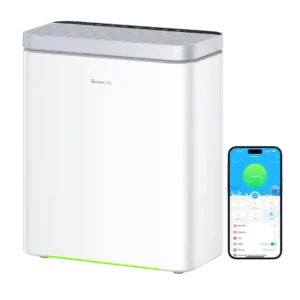
Choose the H7124 if you want a quiet smart purifier for odors, dust, pets, and app control. Skip it if you need foolproof Wi-Fi, wall-facing intake, UV light, or strong...
Pros: air purification performance, noise level
Cons: control placement
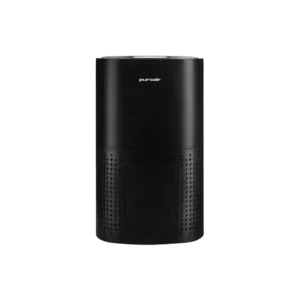
Best for quiet, simple cleaning in bedrooms or apartments. Skip it if you need verified large-room CADR value, app control, or guaranteed neighbor-smoke removal.
Pros: noise level, air purification performance
Cons: filter replacement cost, air quality sensor accuracy
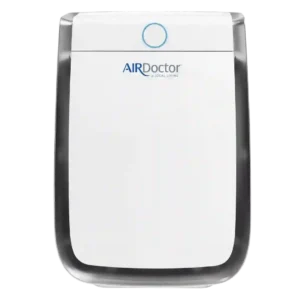
Best for strong room cleaning, allergy relief, odor control, and simple operation. Skip it if high filter costs, a larger footprint, or possible nighttime fan noise would bother you.
Pros: air purification performance, overall satisfaction
Cons: filter replacement cost
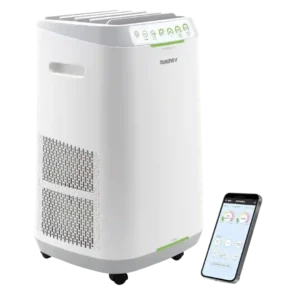
Choose this if you want strong odor, dust, smoke, and pet-air cleanup with washable filters. Skip it if turbo noise, Wi-Fi setup, or a high upfront price will bother you.
Pros: overall satisfaction, air purification performance