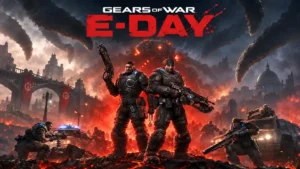

Gears of War: E-Day
Where It Has the Edge
No clear scored advantage over the other product.

Scorata scores summarize analyzed review evidence on a 1–5 scale; they are not laboratory measurements or a simple average of customer star ratings. Feature scores summarize the reviews covering that feature. The overall score averages feature scores within each review, then combines review averages. When both expert and customer evidence are available, those two groups receive equal weight. Products can have different review coverage, so small score gaps do not establish a winner.
Recommendations prioritize important features for the category, with a score of at least 3.5, a gap of at least 0.25 points and at least two supporting reviews per product. Features with widely varying scores or broad connectivity contexts are excluded from recommendations. These safeguards do not establish statistical significance.
Quick verdict
The available evidence supports the recommendation below, but does not establish an overall winner. Check the remaining features against your priorities.
There is not enough comparable review evidence to recommend Gears of War: E-Day over the other product.
Choose Hello Kitty Party Land for content variety and character roster.
No clear scored advantage over the other product.
Scores are out of 5. Missing scores mean missing review evidence, not a missing feature.
Mags and Lucas generally earn their place beside the established leads, with personal histories that add texture to Bravo Squad. Lucas in particular is sometimes seen as underdeveloped until later in the campaign.
The large cast does not offer enough opportunity to get to know individual characters more deeply. Players drawn to character relationships may find the interactions limited.
Ai behavior is a recurring weakness, with complaints that it gets in the way of an otherwise stronger experience.
CPU performance draws mixed reactions. One player finds them helpful and competent, while another says they sometimes struggle.
Squadmates can be useful, but inconsistent revives, pathing, and occasional obstruction are recurring frustrations in solo play. Human co-op largely sidesteps the problem.
Computer partners can help players learn and make solo play more enjoyable. Their competence is inconsistent across impressions, with occasional poor performance also reported.
The campaign mixes set pieces, open districts, side objectives, bosses, and exploration, but several critics still find the overall structure too repetitive.
The large minigame selection and optional town activities provide an appealing range of things to do. Only three boards and growing familiarity with the minigames limit that variety over time.
Marcus and Dom gain welcome context, while the campaign also spends meaningful time on newer squad members. Some criticism remains that certain arcs arrive late or do not deepen familiar characters enough.
Character discovery is more developed than character growth. One player wishes there were more opportunities to get to know the cast beyond their appearances in the activities.
Practice space, customizable controls, and clearer placement of active-reload information are designed to ease newcomers into Gears without forcing veterans to abandon familiar habits.
Helpful CPU characters can teach the games while letting players participate. Elsewhere, unclear explanations and a missing stick-rotation warning leave room for better guidance.
The best stretches move with cinematic urgency and strong action beats. Open districts, collectible hunting, repeated routes, and an unusually long campaign can slow that momentum for players who prefer a tighter Gears experience.
Subgames reduce waiting during board turns, and the short boards are a welcome alternative to drawn-out party sessions. The sampled minigames build tension without overstaying their welcome.
Harder settings can make positioning and cover choices sing, but balance is uneven around elite enemies, one-hit attacks, and spongey bosses. Normal difficulty is considered too forgiving by at least some experienced players.
Simple, manageable challenges generally suit the intended audience without becoming overwhelming. Higher settings can tighten board objectives and keep experienced players engaged.
A physical disc in the premium collector’s package is explicitly welcomed by collectors who still value disc-based releases.
The different physical editions are positively highlighted as something Sanrio collectors may want to consider.
The familiar cover-shooter foundation is refined with better mobility, lower cover, tactical gear, and weapon modifications. These additions improve flexibility without fundamentally reinventing Gears.
Helping teammates with items gives the boards a welcome tactical angle. Opinions split on the wider mechanics, which can feel lightweight or spread too thin across activities.
Exploration can uncover mods, collectibles, side objectives, and environmental storytelling, and some enjoy the freedom. Others find the open stretches repetitive, under-rewarding, or disruptive to the campaign’s stronger linear pacing.
Meeting characters, searching for stickers, and visiting the cave make wandering around town enjoyable. The appeal rests more on character encounters than a deep world full of things to do.
Bravo Squad mixes familiar leads with new faces effectively, and the four-person structure supports both story chemistry and co-op play.
The large Sanrio cast is a major attraction, with familiar favorites and obscure characters appearing throughout the activities. Several enthusiastic reactions center on simply spending time with these characters.
Co-op fits the campaign naturally and makes combat, exploration, and revives more enjoyable. It is also an effective workaround for occasional companion-AI problems.
Working toward shared goals is one of the most consistently praised ideas. Helping teammates and sharing scores make the games welcoming and reduce the sting of individual mistakes.
Changes to controls and multiplayer movement aim to lower barriers for new players, though veteran muscle memory may need an adjustment period.
Simple controls make the games easy to pick up, while helpful CPU teammates can demonstrate what to do. Casual players and young learners generally face a gentle learning curve.
Hard Cases and Supply Caches feed useful weapon customization, but some players dislike the frequency of searching for them or the low value of certain rewards.
The prize-drawing waterwheel earns particular affection as a way to obtain new cosmetic rewards.
Progression comes mainly through equipment and weapon modification rather than a traditional leveling tree, keeping growth tied directly to combat tools.
Discovering new conditions for sticker unlocks is enjoyable, especially when a reward comes as a surprise.
Destructible cover, shattered glass, bullet damage, and environmental reactions make firefights feel physical. Invisible barriers and inconsistent climbable surfaces limit that interactivity in places.
Interactive activities such as musical cake decoration and drawing add enjoyable things to do around town. Small touches, including a slide that characters can actually use together, also make the world more playful.
The campaign is generally polished and stable, but isolated hitches, AI quirks, and interaction roughness keep it from feeling completely seamless.
The boards and minigames show considerable care, particularly in making play accessible to younger participants.
Character losses, grief, and the bond between Marcus and Dom give the campaign more heart than its premise might suggest. Several impressions describe the emotional beats as earned and genuinely affecting.
Cute characters prompt smiles, sticker collecting brings childhood nostalgia, and gentle reactions to mistakes help keep the mood reassuring.
Weapon mods and tactical gear add meaningful customization without radically changing the core combat. The system is fun to tinker with, although the hunt for upgrade cases can become busywork.
Upgrading farm tools is rewarding because better tools earn more coins when used.
Two-player local co-op is welcomed as a rare modern feature and a strong match for the series’ campaign design.
Local cooperative play is a strong fit for entertaining children and bringing family or casual friends together.
Interiors, streets, debris, lighting, and destruction are packed with small details that make Kalona feel inhabited rather than like a sequence of arenas. Visual density is a consistent strength.
The character art attracts more enthusiasm than the environments, though the shopping mall earns particular praise for its beauty.
E-Day modernizes movement, cover, upgrades, and presentation, but opinions split on whether those changes are bold enough. Critics looking for a major reinvention see the game as too attached to a decades-old formula.
Playing little subgames while someone else takes a board turn is a particularly well-received idea. It keeps people involved during moments that often become downtime.
Collectibles add lore and reasons to explore, but the sheer volume can make completion feel like cleanup work. Map cues reduce the search burden for players who want to find everything.
Collecting character stickers is repeatedly described as fun, satisfying, and nostalgic. Putting stickers on outfits gives the collection a purpose beyond filling an album.
Immersion is a clear strength, with consistently positive reactions to how it supports the overall experience.
Having a chosen Sanrio companion greet and accompany the player makes the town feel more personal. The characters can also make solo sessions feel less solitary.
Movement and character animation are notably smoother and more detailed, though occasional NPC stiffness stands out against the otherwise high presentation bar.
Expressive, detailed animations help the Sanrio cast stand out and add charm to the minigames.
Despite disagreements over structure, the core action is widely described as fun, satisfying, and easy to keep playing. Even several critical takes still enjoy the shooting enough to carry weaker stretches.
Frantic bingo, collaborative challenges, and medal chasing produce plenty of cheerful fun. Human company often improves the experience, though solo enjoyment is possible too.
Repeated shooting encounters remain satisfying when arenas and enemy mixes are strong, but the campaign can become one-note when too many fights arrive without enough variation between them.
Discovering sticker unlocks can make the activity-and-reward loop enjoyable. The broader collection of side tasks can also feel hollow when character collecting is not enough of a draw.
The campaign is fully playable alone and remains enjoyable, but companion-AI revive problems can make solo runs more frustrating than co-op.
Solo play divides opinion: some enjoy the side activities and helpful character companions, while another assessment finds the experience considerably less engaging without friends.
Industrial architecture, gothic touches, harsh lighting, and collapsing urban spaces give Kalona a distinctive visual identity.
Cute character designs and a colorful kawaii style are among the game's most dependable strengths. Even less enthusiastic verdicts appreciate its presentation.
The game is repeatedly praised as gorgeous, technically ambitious, and among the best-looking releases of the year. Lighting, character rendering, and dense city scenes are particular strengths.
The bright 3D characters look especially good on Switch 2, with rounded models and vivid colors drawing consistent praise.
Kalona’s collapse creates a grim, oppressive mood that pushes Gears closer to survival horror without abandoning its action roots. The sense of dread and desperation is one of the most consistently praised parts of the campaign.
The gentle, colorful world is repeatedly praised as comforting and upbeat. Its relaxed mood is a major part of the appeal for unwinding.
The game strongly preserves the series’ identity through weighty cover shooting, gore, urban warfare, and familiar characters. Most changes modernize that formula rather than replacing it.
The cute, colorful art preserves the familiar appearance of the Sanrio characters rather than giving them an unfamiliar redesign.
Marcus’ dry one-liners and the series’ rough banter provide welcome relief between grim story beats, though not every joke lands equally well.
The baby-care minigame produces amusing moments as players become anxious about waking the sleeping kittens.
Aggregate-oriented coverage describes the game as a strong, favorable release even when it does not evaluate individual systems in detail.
Most verdicts recommend the game for its cute, cooperative approach, especially with family or friends. A more skeptical assessment finds its activities too shallow to compete with stronger party games at full price.
The large statue and physical extras have some display appeal, but the collector’s package is criticized for bland or filler items that do not justify the premium price.
Sticker collecting has a nostalgic pull, while the physical editions offer another point of interest for Sanrio collectors.
Character and weapon skins add more cosmetic variety than before, with some fans praising the extra detail and animated designs.
Detailed avatar creation, clothing, accessories, and sticker-decorated shirts give players enjoyable ways to personalize their look. Some options start out limited and expand through play.
The technology scales impressively across Xbox hardware, but demanding lighting and dense scenes can expose slowdowns on weaker configurations. High-end presentation comes with a real performance cost.
The hands-on Switch 2 preview reports that the game runs very well. The supplied performance assessment does not establish the same result on the original Switch.
Music supports the bleak, cinematic tone, with familiar motifs such as “Mad World” reinforcing the connection to the original game.
Lighthearted music fits the relaxed mood and supports the cheerful presentation.
The collector’s edition receives sharp criticism for its price relative to the included physical extras. The base game itself is generally viewed much more favorably than the expensive collector bundle.
The near-£45 asking price draws criticism from both assessments that discuss value. Waiting for a sale is the repeated recommendation.
Linear set pieces are often excellent and cinematic, with strong combat spaces and memorable encounters. The more open sections are less consistent, with some finding them spacious and flexible while others see them as momentum-killing.
The boards are simple, which some find limiting. Another assessment praises the careful design and finds their interest in helping friends rather than navigating complex routes.
Early impressions are enthusiastic about 4v4 Versus and the larger 12-player Horde Siege concept. Some launch reviews remain provisional because multiplayer was unavailable before embargo.
Shared objectives, pooled scores, and subgames during other players' turns keep multiplayer inclusive and active. Stronger players can carry more responsibility while less experienced participants still contribute.
Weapon reports, headshots, chainsaws, creature noises, and environmental audio give combat exceptional weight. The soundscape is frequently singled out as a major part of the game’s visceral impact.
Cheerful effects complement the relaxed atmosphere. The sticker-collection sound is especially memorable for one player because of its pleasant association with Fashion Dreamer.
Simple controls and approachable activities make participation easy, including for young children and newcomers.
Accuracy-focused mods and precision weapons are satisfying when shots land, but incoming fire and flinch can make lining up shots frustrating in tougher encounters.
The cast reaches beyond the best-known Sanrio faces. Obscure characters and unexpected favorites make discovering new companions especially rewarding.
The cooperative design lets more experienced players shoulder a larger share of the difficulty. That helps mixed-skill groups work toward the same goal.
Cover shooting remains the star: guns hit hard, executions feel satisfyingly brutal, and the classic Gears rhythm is still compelling. The main caveat is that larger enemies can turn into less-reactive bullet sponges.
The writing keeps Gears’ blunt banter and one-liners, which can be charming in moderation. A few squad lines are criticized as cringeworthy or repetitive.
Clothing prices can feel unexpectedly high, making the in-game economy less generous than hoped.
The mix of returning Locust and new threats keeps encounters visually and tactically varied. Bigger enemies draw more criticism when heavy health pools and weak hit reactions make them feel less satisfying to fight.
Expanded facial animation detail helps sell subtle emotion during close-up story scenes and is frequently paired with praise for character rendering.
The cooperative, friendly tone is a strong match for family gaming. Its emphasis on shared success helps soften the competitiveness that can frustrate younger players.
Farming can be a pleasant, slower-paced break from the party games. Its simple watering and harvesting tasks feel hollow to players wanting a more substantial farming system.
Fishing is appreciated as part of Sky Farm's calmer selection of side activities, giving the party games a relaxing change of pace.
Performance is generally solid on stronger console modes, but noticeable hitches and hardware-dependent drops appear in demanding scenes. Steam Deck performance is a separate and much larger problem.
The campaign is substantially longer than a typical Gears story, which gives the squad and setting more room but can overstay its welcome. Longer open sections amplify that concern for players who want a tighter run.
Buying all the clothing appears to require a lot of repeated minigame play. The reaction to those prices is more concerned than enthusiastic.
Steam Deck performance is poor enough that portable play is not recommended, with drops below 30 FPS even at the lowest settings.
Hovering over a missing sticker reveals where to find it, making the collection hints particularly useful.
The Locust are presented as frightening and overwhelming, with darkness, civilian casualties, and escalating threats sustaining real dread. The horror tone is widely seen as a successful return to the series’ earliest identity.
Large prompts and repeated nearby-item alerts are easy to notice but can feel intrusive, especially when the game repeatedly announces Hard Cases.
Loading can be noticeable, frequent, and occasionally long. It is described as a modest but recurring interruption.
The prequel is rich in established lore and connections, carefully preserving canon while filling in gaps around Emergence Day and Kalona.
Cooperative restaurant tasks, musical baseball, and character-themed challenges supply plenty of enjoyable moments. Simplicity, repetitive button mashing, and stick-rotation games make the collection uneven for some players.
Side content is repeatedly criticized for relying on similar defend-or-survive objectives, leaving the campaign short on non-combat variety.
Much of the seasonal content is positioned as earnable through play, but expensive premium and collector bundles draw more skepticism.
Sliding, vaulting, low cover, climbing, and the revised sprint make movement noticeably smoother and more flexible. Some longtime players are wary of losing familiar roadie-run and wall-bounce behavior, and a few interactions still feel clunky.
The prequel story lands emotionally for many, especially when it focuses on Marcus, Dom, and Kalona’s collapse. A smaller but persistent camp finds the plot too familiar, overly safe, or insufficiently revealing for longtime fans.
The prequel setup and horror emphasis add fresh context, but several critics feel familiar missions and story beats lean too heavily on established Gears ideas.
New climbing and jumping expand traversal, but mantling rules are not always readable; some walls look climbable but reject input, creating avoidable frustration.
Optional creative activities, shopping, farming, fishing, and exploration let players choose how to spend time beyond the main party modes.
Split-screen support is treated as a welcome return, preserving a classic way to play the campaign with another person on the same system.
Downed-state revives and tactical healing add pressure and recovery options, though unreliable squad assistance can make these systems feel harsher than intended.
Some parts need clearer explanations, even though the activities themselves are generally approachable.
The extreme gore is intentionally central to the experience, and most impressions see the gruesome dismemberment and impact as fitting for Gears rather than gratuitously out of place.
Dynamic lighting, ray-traced effects, destruction, gore, and particle work give firefights impressive spectacle. The destruction system is especially effective at selling the chaos of the invasion.
The arsenal is broad, punchy, and purpose-built, with old favorites and new guns supporting different ranges and tactics. Larger enemies can blunt that variety when they soak up too much damage.
Writing quality draws mixed reactions, working well in some situations but creating noticeable tradeoffs in others.
The accessible design is generally well matched to children. One serious reservation concerns stick-rotation inputs without a warning about using the palm of the hand.
Modernized inputs make sprinting, climbing, and cover transitions smoother and easier to control. Some movement interactions still create frustration in specific situations.
Marcus and Dom remain a major draw, with their friendship and earlier lives giving longtime fans a compelling reason to revisit the timeline.
Performances consistently sell grief, urgency, and squad chemistry, with the returning leads and new supporting cast both earning praise.
Most major encounters are memorable and tense, but a few bosses rely too heavily on large health pools or limited damage feedback.
Stick-rotation minigames draw a serious complaint about possible harm to children's hands. The lack of a warning against palm rotation makes this concern more troubling.
Map markers and proximity pings make upgrades easier to locate, but the interface can also turn exploration into waypoint cleanup rather than discovery.
Scripted missions and major set pieces are usually stronger than side objectives. Optional tasks can add useful rewards, but many boil down to familiar defensive fights.
The semi-open structure is divisive: some appreciate dense, compact districts that avoid a traditional open-world sprawl, while others feel the structure is awkward, repetitive, and poorly matched to Gears’ strengths.
Quest design draws mixed reactions, working well in some situations but creating noticeable tradeoffs in others.
Navigation and pickup messaging are functional, but repeated pop-ups and menu steps for collectibles can interrupt the flow.
Kalona feels lived-in before and during its destruction, with architecture, civilian details, and environmental storytelling making the setting feel consequential. Its transformation over the campaign reinforces the scale of Emergence Day.
Xbox and PC support is strong, but the absence of a PlayStation 5 version is a major negative for critics focused on player-base reach. Hardware differences also matter for performance.
Costume collecting, score chasing, and platinum medals offer reasons to return. Repeated minigames, simple boards, and a small board selection leave longer-term appeal more divisive.

Best for fluid traversal, rewarding exploration, striking art, and forgiving quality-of-life features. Skip it if you want deep combat, radical genre innovation, or consistently demanding bosses.
Pros: difficulty balance, boss design
Cons: innovation, sandbox freedom

Best for superb combat, inventive builds, and richly voiced characters. Skip it if repeated runs, resource gathering, or visually busy battles outweigh the appeal of steady progress.
Pros: overall quality, combat system
Cons: pacing, grind level

Good if you want a beautiful, demanding survival sandbox built around exploration, building, progression, and memorable co-op. Skip it if long resource runs, harsh death recovery, and deliberate pacing sound...
Pros: town-building system, exploration quality
Cons: grind level, fast travel convenience

Choose Clair Obscur if you want a story-rich RPG with thrilling timed combat, gorgeous art, and standout music. Skip it if poor maps, tight parry timing, or occasional bugs and...
Pros: narrative quality, combat system
Cons: map and navigation design, menu usability