
Marvel’s Wolverine
Where It Has the Edge
- puzzle design is 4.0 vs 3.6. Puzzles are light and infrequent; they offer pacing breaks without becoming a deep or memorable pillar.

Scorata scores summarize analyzed review evidence on a 1–5 scale; they are not laboratory measurements or a simple average of customer star ratings. Feature scores summarize the reviews covering that feature. The overall score averages feature scores within each review, then combines review averages. When both expert and customer evidence are available, those two groups receive equal weight. Products can have different review coverage, so small score gaps do not establish a winner.
Recommendations prioritize important features for the category, with a score of at least 3.5, a gap of at least 0.25 points and at least two supporting reviews per product. Features with widely varying scores or broad connectivity contexts are excluded from recommendations. These safeguards do not establish statistical significance.
Quick verdict
The review evidence points to a tradeoff: puzzle design versus faithfulness to franchise and fun factor. Choose according to which strengths matter more to you; the overall score alone does not settle that choice.
Choose Marvel’s Wolverine for puzzle design.
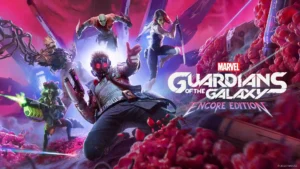
Choose Marvel’s Guardians of the Galaxy: Encore Edition for faithfulness to franchise and fun factor.
Scores are out of 5. Missing scores mean missing review evidence, not a missing feature.
The game offers unusually flexible accessibility controls, including granular difficulty and gore-censoring options that make its intensity easier to tailor.
Targeting and navigation options can make parts of the adventure more approachable, but the accessibility selection remains limited.
Dialogue and character banter often bring warmth to Logan’s relationships, though some exchanges lean on familiar superhero writing.
The constant banter gives the crew warmth and personality, with particularly convincing conversational chemistry. Players who dislike incessant chatter may find the approach tiring.
The roughly 15–20 hour campaign feels brisk to some players but overextended to others because its combat variety struggles to sustain the runtime.
The campaign offers more scope than expected, with an approximately eighteen-hour first playthrough feeling substantial without dragging.
Blood, lighting, ray tracing, and power effects create striking spectacle, with occasional excess or inconsistency depending on the scene.
Lighting earns praise, while reflections are a recurring weak point. Low resolution, incorrect movement and blurred surfaces can undermine the otherwise attractive presentation.
Loading is generally quick and unobtrusive, helping chapters and retries maintain momentum.
Loading waits can become irritating, particularly after deaths or failed sequences. Long startup logos also make getting into the game slower than necessary.
Performance mode is generally smooth at 60fps, with the PS5 Pro delivering the cleanest balance of image quality and responsiveness.
Some report stable play, particularly docked, while others encounter frequent stutters or severe handheld slowdowns. Neither graphics mode guarantees consistently smooth delivery across all accounts.
The writing gives Logan humanity and several effective relationships, but familiar plotting and uneven tonal choices stop it from matching the presentation.
Sharp writing makes arguments, jokes and vulnerable moments feel natural. Small reconciliations and everyday exchanges often land as strongly as the large story beats.
The presentation is highly polished and technically assured, even when design repetition and occasional visual roughness remain visible.
Crashes and restart-requiring bugs leave the release feeling less polished than its strong core adventure deserves.
Optional collectibles add lore and reasons to search, but the rewards are not always strong enough to make exploration feel essential.
Collectible treasures provide rewarding conversations and additional character background, making optional searching worthwhile.
Enemy types expand as the campaign continues, but repeated waves and familiar encounter patterns remain a common complaint.
Alien creatures, corrupted soldiers and cultists provide a satisfying spread of opponents. The unusual designs help keep encounters visually interesting.
Logan’s vulnerability and relationships create some of the game’s best moments, though several arcs feel rushed or underexplored.
The Guardians grow beyond their comic personas through personal histories, trauma and relationships. Their individual arcs create unusually strong attachment.
The visual direction sells a grim, blood-soaked comic-book world, with Tokyo and the character designs providing many of the strongest images.
Colorful planets and imaginative creature designs preserve the comic-book appeal across technical compromises. Art direction is one of the edition’s clearest strengths.
Set pieces, tracking, stealth, and light exploration interrupt the fighting, yet the overall activity mix can still feel narrow and repetitive.
The mix of exploration, story, combat and flight can feel varied. Being restricted to one directly controlled hero leaves some wanting more playable variety.
Light exploration and scent-tracking offer brief breathing room, but narrow routes and modest rewards limit the joy of searching off-path.
Hidden outfits and character conversations reward detours through the alien environments. Linear routes and repeated situations can limit the appeal for exploration-first players.
The brutality, healing, claws, costumes, and conflicted personality make this feel authentically Wolverine, even to critics of the broader game.
The adaptation captures the Guardians’ humor and found-family spirit while giving them independent interpretations. Its affection for the characters comes through strongly.
DualSense haptics give claw strikes and action sequences extra physical impact and are repeatedly singled out as a PS5 strength.
Joy-Con feedback makes firing and active reload especially satisfying. Its tactile feel even persuades some players to set aside their usual Pro Controller preference.
The story lands several moving character beats and gives Logan genuine vulnerability, while its tonal clash with constant killing weakens other moments.
Found-family relationships and personal revelations give the adventure substantial emotional weight. Several returning players still find themselves moved by familiar scenes.
Facial work is often expressive in emotional scenes, although inconsistent proportions and stiffness occasionally break the otherwise polished presentation.
Facial expressions can be excellent, but the German presentation occasionally has lip movements that do not match the spoken dialogue.
Progression steadily expands Logan’s tools, but reviewers commonly wish the combat evolved sooner and more substantially.
Expanding abilities increase tactical options as the adventure progresses, encouraging more varied squad combinations.
Logan’s personal journey and relationships earn substantial praise, yet predictable plotting, tonal conflict, and a weaker final stretch divide critics.
The heartfelt story is the most consistent reason to play, balancing friendship, humor and escalating cosmic stakes. Familiar plotting rarely overshadows the cast’s appeal.
Many players find the campaign entertaining and cathartic despite its flaws, while repetition causes the fun to fade for harsher critics.
The adventure remains highly entertaining for many players despite technical faults. Team combat, lively personalities and striking worlds make it easy to keep playing.
The focused fight-and-move-forward loop delivers quick thrills, but repetition becomes the central weakness across the full campaign.
Squad combinations create an engaging rhythm early on, but several players find that late-game encounters stop evolving enough to prevent repetition.
Jean Grey, Mystique, Sabretooth, and other supporting mutants create strong chemistry, although several relationships deserve more development.
Lady Hellbender, Mantis and the wider supporting cast add freshness and considerable charm. Some of these portrayals inspire especially strong affection.
Technical bugs are not a dominant concern, though isolated glitches keep the experience from feeling completely spotless.
Several players encounter collision or progression bugs that require reloading, including an invulnerable boss. Others confirm that an older collectible-conversation bug has been fixed.
Claw combat is visceral, fluid, and immediately satisfying, but its limited evolution makes repeated encounters wear thin for many players.
Calling in teammates and combining their powers gives firefights a satisfying tactical layer. Opinions range from excellent team action to competent but repetitive shooting.
The darker, moodier tone fits Logan well, even when the relentless brutality makes the atmosphere exhausting for some players.
Distinct cosmic locations invite players to slow down and enjoy their atmosphere while exploring.
Optional lore deepens Logan’s history and trauma, although tying some of it to repetitive challenges makes the storytelling feel fragmented.
The scan visor adds optional, enjoyable background information to objects and locations, even when those details are not necessary for progress.
The mechanics are accessible and cinematic, but critics who want deeper player expression find them automated, familiar, or overly simple.
Combat, exploration and squad puzzles fit together into a cinematic adventure. The underlying action formula can still feel conventional.
Combat is easy to understand, but reaching its more expressive possibilities takes time because key abilities unlock gradually.
Squad commands take some adjustment and initially feel unintuitive. Combining abilities becomes easier once the control sequence clicks.
Detailed environments and dense city streets give the globe-trotting campaign strong visual texture, particularly in Tokyo.
Richly detailed locations and ship interiors reward looking around. Reduced geometry, close pop-in and lost texture detail draw criticism in technical comparisons.
The game convincingly puts players inside Logan’s brutal fantasy during combat, though constrained levels and heavy scripting can weaken immersion.
Natural conversations, responsive exploration dialogue and convincing audio make the crew and their surroundings feel alive.
Character movement, finishers, and cinematic sequences are frequently praised for fluid, detailed animation, although occasional facial stiffness stands out.
Motion-captured acting earns strong praise for bringing the characters’ performances to life.
Visual fidelity, character models, lighting, and environments are consistent highlights, even among reviewers disappointed by the gameplay.
Many find this a beautiful Switch 2 game, particularly for its colorful worlds and detailed characters. Others are distracted by close pop-in, soft images and degraded textures.
The design refines familiar Insomniac ideas more than it invents new ones, leaving some players satisfied and others wanting a bolder evolution.
The action follows a familiar cinematic blockbuster formula. Its personality is more distinctive than its mechanical innovation.
The close camera adds weight to Logan’s attacks but can restrict awareness when fights crowd him with enemies.
The camera occasionally feels janky, briefly disrupting otherwise satisfying action.
The campaign often moves with brisk blockbuster momentum, though cutscenes, walking sections, and an uneven final act create noticeable slowdowns.
The story often balances quieter character scenes with big action effectively. Long fights and insufficient changes of rhythm can make parts of the campaign drag.
Pouncing and close-range movement suit Logan’s aggression, but traversal lacks the distinctive freedom and finesse of Insomniac’s Spider-Man games.
Jet boots can make combat movement feel fluid and expressive. Occasional awkward movement interrupts that flow.
Technical performance is broadly solid across PS5 modes, with the strongest image-and-frame-rate balance reserved for PS5 Pro.
Reports on the port’s optimization vary widely, from a satisfying hybrid conversion to disappointing missed targets despite visual cuts. Handheld performance draws the most persistent concern.
The score supports the cinematic action and emotional beats effectively, though it is less frequently celebrated than the visuals or performances.
The licensed retro tracks and original music are central to the adventure’s personality. Their placement in battles and emotional scenes makes the soundtrack feel essential.
Boss encounters provide several memorable spectacles, but their mechanical depth and consistency divide opinion.
Huge bosses deliver enjoyable cinematic spectacle and an impressive sense of scale.
The linear levels keep momentum focused and allow dense spectacle, but corridor-heavy routes and combat arenas often feel restrictive or dated.
Directed levels provide enough room for discovery without becoming bloated. Some find the layouts engaging rather than exceptional.
Claw impacts, environmental audio, and cinematic effects give the violence convincing weight, complementing the strong visual production.
Well-balanced voices, effects and music create an immersive audio mix that makes the presentation easy to appreciate.
Navigation through the directed levels is usually clear, but heavy guidance and objective markers can make exploration feel over-managed.
The route forward is not always obvious, and early exploration can leave players unsure where to go next.
Puzzles are light and infrequent; they offer pacing breaks without becoming a deep or memorable pillar.
Environmental puzzles reinforce the team dynamic by giving each Guardian a job. They are usually straightforward, with occasional clever solutions, frustration or repetition.
The globe-trotting X-Men setting supplies recognizable lore and strong locations, though the wider mutant world is sometimes more hinted at than explored.
Imaginative alien worlds make the cosmic setting a pleasure to inhabit. Strong visual identity helps sell the feeling of traveling through space.
PS5 features are used well, and PS5 Pro offers the most refined visual experience without making the base console version feel unplayable.
Mouse and gyro controls are welcome to some but feel redundant or unconvincing to others. Limited gyro opportunities and lock-on-heavy combat reduce their practical impact.
The standard edition is the safer value; the deluxe upgrade mainly appeals to players who care about its exclusive cosmetic suits and claws.
The stated forty-dollar-equivalent pricing earns strong praise for a substantial single-player adventure. Value is a clear selling point.
Chapter replay, New Game Plus, combat challenges, and unlockable suits provide solid reasons to return, especially for players who enjoy the fighting.
New Game Plus and chapter select give the campaign some replay appeal through retained upgrades, alternate choices and missed collectibles.
The voice performances are widely praised for giving Logan and the supporting cast warmth, intensity, and emotional credibility.
Expressive performances sell both sarcastic exchanges and emotional speeches. The English cast and the praised French and German dubs help the crew feel like a believable team.
Unlockable suits and claw styles offer appealing comic-inspired customization, but some of the best cosmetics sit behind the deluxe edition.
The unlockable costumes have plenty of appeal, but reactions to the new glam-rock outfits are mixed. They are generally treated as a small bonus rather than a reason to repurchase.
Logan’s wounded, reluctant charm is one of the most consistent successes, carrying weaker stretches of combat and plotting.
Star-Lord’s leadership works mechanically, but one player finds him less exciting to control than the teammates who remain outside direct control.
Menus and settings are functional and give useful control over difficulty and presentation, with few major usability complaints.
Menus can feel sluggish to navigate, adding friction outside the action.
Distinct Guardian abilities feel smooth and easy to manage, making the shared core mechanics accessible and enjoyable.
Active reload turns a routine weapon action into a satisfying timing challenge during hectic battles.
The cast is widely considered a strength, giving the personal scenes conviction even when the surrounding script falters.
Being limited to controlling Star-Lord disappoints players who want to use Gamora, Rocket or Drax directly. Squad commands do not fully replace that freedom.
Dialogue choices feel integrated into play, shaping progress and the outcomes of key story moments rather than serving only as decoration.
Busy arena fights can become visually messy, making it harder to keep track of enemies and choose squad commands at the right time.
Having the complete adventure run natively on Nintendo hardware is valued as the edition’s most meaningful improvement.
The absence of local co-op feels like a missed opportunity for a game built around a team of heroes.
Unexpected crashes are a repeated complaint, sometimes triggered by changing costumes. Several playthroughs report multiple exits to the console menu.
Granular difficulty controls let players tune health, parry windows, and related settings, but the default challenge can feel uneven or too forgiving.
This is not naturally family-friendly because of its gore and mature tone, though censorship settings make shared-room play more manageable.
The Milano flight sequences offer enjoyable breaks from ground combat. Their simplified action works better as a diversion than as a deep flight system.
The forty-frame performance mode is often preferred for its smoother action with little perceived visual sacrifice. It requires a compatible 120Hz display.
Portable access is a major attraction, but handheld impressions are sharply divided. Some love the convenience and image quality; others find the frame drops severe enough to avoid it.
Companions offer helpful hints through sarcastic remarks, preserving the group’s personality while nudging players past puzzle sticking points.
Sharp banter and internal rivalries repeatedly produce laughs, although a few individual jokes miss their mark. The comedy works best alongside the cast’s more vulnerable moments.
Locations change frequently, but mission structure repeatedly cycles through corridors, stealth, combat arenas, and cutscenes.
The complete solo format earns approval against service games that keep demanding more time and spending.
Comedy and emotional exchanges blend naturally, keeping either tone from feeling forced.
The opening establishes Logan and the basic combat clearly, but several reviewers feel the game takes too long to unlock its most enjoyable abilities.
Its old-school linear action can feel refreshingly direct, but familiar Insomniac systems and cinematic formulas make it derivative to many critics.
Most accounts recommend the underlying adventure enthusiastically for its cast, story and team combat. The main reservation is how much technical instability a player can tolerate.
Parkour and traversal challenges add variety, but contextual jumps and guided routes can feel mindless rather than precise.
Running the complete adventure natively is a meaningful improvement over the old cloud release. Small extras and uneven technical execution make its value as a new edition more conditional.
Light ability progression adds welcome customization without requiring a complex RPG system.
The skill tree eventually unlocks satisfying options, but basic upgrades and slow access to key moves limit the sense of depth.
The complete single-player campaign is a major strength, combining heartfelt storytelling with enjoyable action and a satisfying standalone structure.
Stealth offers brutal takedowns and brief variety, but forgiving detection and few consequences make it feel underdeveloped.
The game teaches its basic systems clearly, although extensive guidance can feel like handholding to experienced action players.
Technique points and enhancements provide useful growth, but the upgrades do not always transform combat enough to prevent repetition.
The unapologetic gore makes combat feel authentic and cathartic to many players, while others find the repeated dismemberment excessive, numbing, or tonally damaging.
Some enemies absorb so much ammunition that shooting becomes a slog rather than a satisfying part of team combat.
Its graphic violence is firmly aimed at mature players; the adjustable gore helps, but the underlying themes and action remain adult-oriented.
The controls generally feel immediate during close combat, although contextual movement and cinematic inputs sometimes reduce precision and agency.
Using the right Joy-Con as a mouse makes frequently used combat face buttons awkward to access.
Imaginative monsters and colorful alien enemies give the adventure considerable visual character, even when technical rendering is reduced.
The strongest missions pair cinematic set pieces with character drama, while routine arena encounters and scripted sequences reduce player freedom.
The deliberate rejection of an open world keeps the adventure focused, though players differ sharply on whether that focus feels refreshing or restrictive.
Quick-time and cinematic prompts heighten spectacle for some players but reinforce the feeling of watching rather than fully controlling the action for others.
The complete French and German dubs earn particular appreciation. Strong localization helps preserve character personality across the many conversations.
Frequent autosaves usually keep crashes from costing substantial progress. Reloading also resolves several reported progression problems and makes short sessions easier to manage.

Best for fluid traversal, rewarding exploration, striking art, and forgiving quality-of-life features. Skip it if you want deep combat, radical genre innovation, or consistently demanding bosses.
Pros: difficulty balance, boss design
Cons: innovation, sandbox freedom
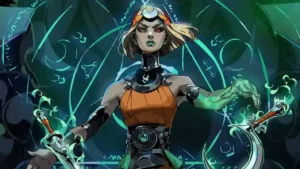
Best for superb combat, inventive builds, and richly voiced characters. Skip it if repeated runs, resource gathering, or visually busy battles outweigh the appeal of steady progress.
Pros: overall quality, combat system
Cons: pacing, grind level

Good if you want a beautiful, demanding survival sandbox built around exploration, building, progression, and memorable co-op. Skip it if long resource runs, harsh death recovery, and deliberate pacing sound...
Pros: town-building system, exploration quality
Cons: grind level, fast travel convenience
Choose Clair Obscur if you want a story-rich RPG with thrilling timed combat, gorgeous art, and standout music. Skip it if poor maps, tight parry timing, or occasional bugs and...
Pros: narrative quality, combat system
Cons: map and navigation design, menu usability