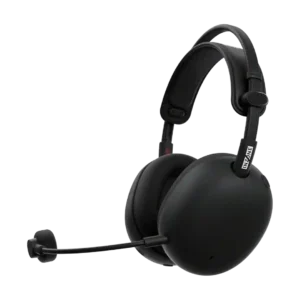
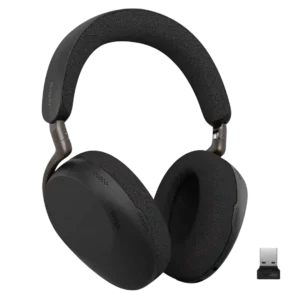
Sony INZONE H9 II Wireless Gaming Headset
Where It Has the Edge
- Instrument separation is 5.0 vs 4.2. A few reviewers singled out excellent separation between layers and sound sources, helping busy game scenes stay distinct...

Scorata scores summarize analyzed review evidence on a 1–5 scale; they are not laboratory measurements or a simple average of customer star ratings. Feature scores summarize the reviews covering that feature. The overall score averages feature scores within each review, then combines review averages. When both expert and customer evidence are available, those two groups receive equal weight. Products can have different review coverage, so small score gaps do not establish a winner.
Recommendations prioritize important features for the category, with a score of at least 3.5, a gap of at least 0.25 points and at least two supporting reviews per product. Features with widely varying scores or broad connectivity contexts are excluded from recommendations. These safeguards do not establish statistical significance.
Quick verdict
The review evidence points to a tradeoff: Instrument separation versus Integrated microphone and Portability/foldability. Choose according to which strengths matter more to you; the overall score alone does not settle that choice.
Choose Sony INZONE H9 II Wireless Gaming Headset for Instrument separation.
Choose Jabra Evolve3 85 for Integrated microphone and Portability/foldability.
Scores are out of 5. Missing scores mean missing review evidence, not a missing feature.
Sound quality is excellent for many gaming scenarios, with strong detail, clean separation, and immersive competitive cues. Music and non-FPS performance divide reviewers much more sharply, with several saying the default tuning needs EQ before it sounds right.
Music quality ranges from merely decent to excellent depending on the listener, but the broad pattern is work-first tuning rather than true flagship hi-fi. Voices and everyday listening fare better than demanding audiophile comparisons.
The default frequency balance is one of the most disputed areas. Several measurements and listening tests found recessed or uneven regions that make music less natural, even though the FPS-focused tuning can still work well for competitive play.
One music-focused test described the presentation as true-to-life and full of character, with complex mixes staying composed.
The soundstage is generally wide and open enough to create a convincing sense of space in games. Most testers found good depth and immersion, although one customer described the spatial presentation as unusually enclosed.
The stage is inconsistent across listeners: some hear a wide, dynamic presentation, while others find it enclosed or only average in width and depth.
Spatial audio can add convincing immersion and strong 3D positioning, particularly on PlayStation. Sony’s personalized setup is more controversial because some reviewers found the ear-scanning process cumbersome or not worth the effort.
Spatial processing is often useful for making calls feel more natural and adding media depth. One listener found the music upmixing too boomy, so its value depends on content.
Noise cancellation is one of the H9 II’s clearest strengths, repeatedly cutting fans, HVAC noise, keyboard chatter, and nearby voices down to a faint murmur or less. A few testers still found dedicated lifestyle ANC headphones stronger.
ANC works well for offices and steady background noise, and some testers found it excellent. Others heard too much traffic, transport noise, or midrange sound for a headset at this price.
Passive isolation is decent but not especially cocooning because the headset uses a light clamp and breathable design. Most of the real quiet comes once ANC is enabled.
The over-ear fit usually provides strong passive isolation and helps the ANC, though one tester found the fabric cushions less isolating than expected.
Microphone noise reduction works very well in many real-world tests, suppressing fans, breathing, construction noise, and other distractions while preserving speech. One noisy event exposed weaker filtering, so extreme environments can still break through.
ClearVoice removes an impressive amount of office, café, street, fan, and household noise while keeping speech understandable. Only a small amount of background sound occasionally leaks through in tougher outdoor use.
Bass is generally controlled and punchy enough for gunfire and explosions without burying positional cues, but the default low end is inconsistent. Some listeners wanted more impact, while others heard muddiness or excess boom in certain games and music.
Bass is usually described as warm and usable, yet opinions split on impact: some hear strong, detailed low end while others find it light, vague, or lacking depth.
There is no useful built-in call microphone once the detachable boom is removed. That limits the otherwise appealing idea of using the headset like everyday wireless headphones.
The six-mic boomless array is a major success, delivering clear professional speech without the visual bulk of a traditional microphone arm.
The earcups can lie flat, but the headset does not fold into a compact shape. Reviewers also noted that the soft pouch offers less travel protection than the hard cases supplied with some premium headphones.
Despite being over-ear, the headset folds exceptionally flat and takes up very little bag space. Its slim profile is repeatedly singled out as a travel advantage.
Sidetone needs too much adjustment for a natural result: the default level can be hard to hear, while higher settings were described as robotic, shrill, or walkie-talkie-like.
Adjustable sidetone is consistently useful for hearing your own voice and avoiding speaking too loudly during calls.
The ANC sensor implementation was praised for blocking demanding background noise effectively, including office equipment and nearby voices.
The wear-sensing hardware can perform brilliantly, but at least one tester found it inconsistent enough to undermine auto-pause.
The headset is generally stable in both fit and wireless operation, with secure headband locking and reliable connections. A few owners reported movement, audio breakups, or defective units, preventing a spotless record.
Fit and wireless behavior are both strong in the positive tests, with the headset staying put and connections remaining stable through real-world movement.
Ambient mode does let outside sound through, but it falls short of a true conversational transparency mode. Reviewers often found it easier to remove the headset when talking to someone nearby.
HearThrough is generally clear and useful, with several testers calling it natural. One listener found it too quiet and less natural than leading consumer implementations.
The USB-C dongle provides dependable low-latency wireless and useful PC/console switching, but its physical implementation is not perfect. Some users disliked blocked adjacent ports, adapter needs, or the lack of extra insulation.
The USB adapter generally provides reliable, low-friction PC connectivity and may improve call performance in some setups. One configuration may still require an extra USB adapter.
The mix of 2.4GHz wireless, Bluetooth, and 3.5mm wired audio gives the headset broad connection flexibility. The experience can become less elegant when switching modes, and wired use disables some wireless functions.
Bluetooth, multipoint, a pre-paired adapter, and wired options give the headset unusually broad flexibility across office and personal devices.
The soft carrying pouch is useful and its accessory pocket is appreciated, but several reviewers wanted a protective hard case at this price. It is convenient for organization rather than serious impact protection.
The compact case is unusually slim and easy to pack, with clever dongle storage in some versions. One tester thought its material felt less robust and disliked the lack of charger storage.
The outer earcups pick up fingerprints and smudges very easily. Reviewers who mentioned the finish consistently found the marking annoying.
The soft-touch finish looks clean but picks up visible fingerprints easily.
The accessory bundle is useful and reasonably complete, with the core cables, dongle, removable mic, and pouch covering the main ways owners will use the headset.
The tested bundle includes a travel case, Bluetooth adapter, charging cable, and wireless pad, creating a complete setup for hybrid work.
Full earcup rotation is useful for laying the headset flat, wearing it around the neck, and finding a comfortable angle. One customer found the cups rotated too freely, but most comments were positive.
The cups pivot and rotate freely enough for fitting, folding, and resting the headset around the neck.
A few reviewers singled out excellent separation between layers and sound sources, helping busy game scenes stay distinct rather than collapsing together.
Separation is mostly good, keeping vocals and instruments intelligible even in busier tracks. It still falls short of the precision some premium music-focused headphones deliver.
Overall opinion leans positive because the headset combines exceptional comfort, strong ANC, a capable mic, and excellent competitive-game cues. Satisfaction drops sharply for buyers who focus on the high price, battery endurance, or the need to tune sound for non-FPS use.
Most testers are highly positive about the work experience, especially calls, comfort, and battery life. Satisfaction drops when judged as a premium consumer headphone rather than a professional tool.
The suspension headband is widely praised for spreading weight well and locking into place securely. Its push-button adjustment is clever and quick once learned, though fine changes while wearing it can be fiddly.
The adjustable headband is easy to dial in and works with the swiveling cups to produce a comfortable fit.
The FPS presets can make footsteps and combat cues easier to hear, but the selection is overly concentrated on shooters. Some profiles sound muffled or unhelpful, leaving other game genres underserved.
Preset EQs are not a major strength; some have subtle effects, and one tester found they could thin out music.
Midrange reproduction is mostly clear, particularly for voices and game details, but the stock tuning can recess instruments and presence in music. EQ helps restore that missing body.
Voices are a major sonic strength, with clear, natural mids that suit calls and vocal-heavy music. A few listeners found the overall tuning slightly recessed or softened outside that core range.
Treble is usually clear enough for footsteps and gunfire without becoming fatiguing, but the stock tuning can also sound recessed, crunchy, or uneven. EQ is frequently needed to balance the highs for music and broader use.
Treble is generally clean and non-fatiguing, though several listeners wanted more brightness, sparkle, or extension. Stronger impressions praise crisp detail without harshness.
PC, PS5, Switch, and mobile use are all practical, making the H9 II a flexible multi-device headset. Xbox is the main exception because it lacks native wireless support.
The UC version works well for people moving across Teams, Meet, Zoom, and other work platforms instead of staying locked to one service.
Volume output drew more criticism than praise, especially from users who wanted more headroom or smoother console control. A few testers found it sufficiently loud, but the overall sentiment is that output and adjustment could be stronger.
One tester found the headset noticeably quieter than their regular over-ear headphones and needed a higher volume setting to reach the same loudness.
The ear cushions are usually described as plush, breathable, and roomy enough for long play. A minority found them warm, thin, or uncomfortable, so the padding is excellent for most rather than universal.
Breathable fabric cushions are soft, airy, and comfortable for long calls. Some testers wanted thicker or plusher padding, but heat control is generally better than leatherette.
USB-C is useful for charging and the wireless dongle works across many modern devices, but the physical setup has drawbacks. Several users wanted a USB-A adapter or more clearance so the dongle would not obstruct nearby ports.
USB-C charging fits neatly into a modern desk setup, but one tester criticized the port for not supporting wired listening.
Glasses and hats posed little comfort trouble in the tests that mentioned them, with reviewers reporting no pressure points or awkward fit.
A glasses wearer reported no discomfort during extended use, suggesting the fit handles eyewear well.
Battery life is adequate for several sessions but rarely feels premium for the price. Around 30 hours is the common reference point, with ANC cutting endurance further, although some testing stretched much longer and quick charging softens the weakness.
Battery life is outstanding and one of the clearest strengths, routinely lasting several workdays and sometimes close to a week in mixed use.
Fast charging is a strong convenience, with several reviewers highlighting useful playback from only a few minutes on the cable. That makes short top-ups much easier when the battery is low.
Fast charging is universally praised, and Qi charging is an unusually convenient bonus for desk use. A few minutes on power can add hours of runtime.
The lightweight construction is a tradeoff: several reviewers praised its flexibility and durability, while others thought the plastic or hollow feel was less premium than the price suggests. A small number of customers also reported physical defects.
Materials and construction feel unusually solid and premium for a business headset, with metal used in key structural areas and little sense of hollowness.
The redesign is widely liked for being understated, sleek, and less obviously 'gaming' styled than the original. Its minimalist look also makes it easier to wear away from a desk, though glossy surfaces and lightweight plastics divide opinion.
The boomless, slim design is one of the product’s biggest successes, looking much more like premium everyday headphones than traditional office gear.
Low clamping force helps the headset stay comfortable for long sessions and avoids pressure around the ears. On some heads, however, the relaxed clamp also lets the earcups shift more than ideal.
Clamp is secure without excessive pressure, helping the headset stay put while remaining comfortable.
Long-session comfort is the H9 II’s most consistent strength. The low weight, breathable padding, and light pressure let many reviewers wear it for hours with little heat, soreness, or fatigue.
Comfort is exceptionally consistent across long sessions, with multiple eight-hour or full-workday tests reporting little pressure or fatigue. The lightweight frame and roomy cups are central to that result.
The roughly 260g weight is an overwhelming strength and a major reason the headset stays comfortable for hours. Reviewers repeatedly described it as featherlight, barely noticeable, and unusually light for a premium wireless model.
At roughly 220 grams, the headset feels unusually light for an over-ear model and repeatedly disappears on the head during long workdays.
The hinge and adjustment structure handled aggressive stretching and movement without raising durability concerns in the test that evaluated it directly.
Metal hinge and mounting hardware create a solid, premium impression and support confidence in repeated folding.
The large, well-spaced controls are often easy to locate by touch, especially the mute button, but usability is not uniformly polished. The volume wheel, mode chimes, and some platform-specific control behavior drew repeated criticism.
Physical controls are generally clicky, direct, and easy to learn. The main criticism is a fiddly power switch and some right-hand bias in the layout.
The custom EQ is powerful enough to fix much of the headset’s unusual default tuning and tailor it for other genres. The downside is that many reviewers felt EQ was necessary, and preset-saving behavior across apps can be cumbersome.
A five-band custom EQ and presets provide useful tuning control, though the adjustment range is basic compared with the best consumer apps.
Bluetooth is broadly reliable and adds real versatility, especially alongside the 2.4GHz connection for phone audio or chat. Reviewers liked the fast pairing and dual-source use, with only scattered complaints about connection behavior.
Wireless performance is usually quick, stable, and easy to connect across work devices. One test reported noticeable stutters in busy open locations, but that is the exception.
Basic setup is often fast and plug-and-play, but the software is less polished. INZONE Hub can feel bare-bones or confusing, and moving between desktop and mobile settings may require extra work.
Setup is usually straightforward, especially with Fast Pair, the dongle, or the correct UC variant. Enterprise model choices and occasional app quirks can still create confusion.
For calls and voice chat, the mic is usually described as clear, natural, and substantially better than typical headset or earbud microphones. It is capable enough for meetings and casual communication even if it does not replace a dedicated broadcast mic.
Call quality is the standout feature: voices repeatedly come through clear, natural, and professional without a boom arm. Outdoor results are occasionally less perfect, but office performance is consistently exceptional.
Sony’s mobile app makes on-the-go EQ and ANC adjustments useful, but the software experience is not seamless. Reviewers called the tools basic and sometimes frustrating when PC and mobile settings overwrite or conflict with each other.
The Jabra Plus experience is useful but uneven: some testers found it intuitive and feature-rich, while others called it slow, cumbersome, or too limited for consumer customization.
Value is the headset’s biggest recurring concern. Many reviewers think $350 is difficult to justify when cheaper rivals offer longer battery life or similar features, although some buyers still consider the comfort, ANC, mic, and sound worth the premium.
Price is the dominant weakness. Businesses and call-heavy professionals may justify the premium, but many reviewers think personal buyers can get stronger music or ANC performance for less.
Simultaneous Bluetooth and 2.4GHz audio is consistently praised. It makes it easy to keep game sound active while adding phone music, calls, or Discord without constantly reconnecting devices.
Two-device switching is one of the strongest practical features, with laptop-and-phone handoffs repeatedly described as effortless or reliable. Adapter priority can affect media behavior in one setup.
Replaceable earpads are a welcome longevity feature, and the removable design was easy to work with in the tests that tried it.
Earpads are easy to replace on several tested configurations, improving comfort maintenance and product longevity.
The analog jack is a practical bonus for flights, entertainment systems, and wired listening, and several testers specifically appreciated having it.
A Samsung/Android setup handled dual Bluetooth media output without the shared-audio restriction the tester encountered on iPad.
Several testers specifically disliked the lack of aptX-class hi-res support, especially given the premium pricing.
The all-angle call-status light is generally a handy way to signal “do not disturb” in shared spaces. One tester disliked the bright automatic red lights, but most found the cue practical.
The included cables drew rare but clear praise for their useful length and practicality.
Console support has meaningful caveats despite working well on PS5 and Switch. Reviewers repeatedly criticized missing PS5 game/chat or UI integration, while Xbox lacks native wireless support.
The removable boom mic makes the H9 II easier to use as ordinary headphones and is simple to store or reattach. A few reviewers still preferred a stowable or flip-up design, and isolated customers reported connector problems.
Apple and Google device-finding support is a welcome cross-platform strength, but Apple’s restricted shared-audio ecosystem limits one specific use case.
The feature set is broad, but launch completeness drew criticism for missing desktop software and limited control over microphone AI processing.
Finding support is inconsistent by implementation: some tests praise Apple/Google tracking or an in-app find function, while another app-focused test reported no Find My Headphones tool.
Game/chat balance is convenient on PC, but its platform behavior is a major limitation. Multiple reviewers specifically disliked that the control does not provide the same useful integration on PS5.
Breathable headband cushioning feels excellent and reduces pressure during long work sessions.
LDAC is absent, and multiple testers called that omission disappointing for buyers expecting premium music features.
At high volume, one reviewer specifically found the sound remained enjoyable without harshness or fatigue.
The detachable boom microphone is generally a strong performer, with many reviewers praising its clarity, positioning, and natural voice capture. Results are not flawless: noisy-event filtering, occasional muffling, and a few hardware failures produced a noticeable minority of complaints.
The strongest case is for professionals who spend much of the day on calls and value comfort, battery life, and voice isolation. Music-first buyers can find better ANC and audio value elsewhere.
Packaging feedback is mixed to negative: one presentation was praised, but some customers received units that appeared opened or arrived with condition problems.
Metal accents, clean finishing, and quality plastics give the headset a convincingly premium look and feel.
One reviewer specifically criticized the lack of easily changeable earcup covers, a customization feature expected from some other premium gaming headsets.
Replaceable cushion components make wear parts easier to refresh and improve the headset’s long-term serviceability.
Replaceable batteries and cushions are a major long-term ownership advantage, making the headset less disposable than most premium competitors.
The ultra-slim folded shape, light weight, compact case, and optional analog connection make the headset especially easy to travel with.
The lack of an IP or water-resistance rating surprised one tester given the headset’s otherwise broad everyday ambitions.
Auto-pause is handy when it triggers and can work extremely well, but one test found music often continued after the headset was removed.
The 2.4GHz connection consistently delivers responsive, lag-free gaming audio. No reviewer who directly judged latency found it problematic.
Xbox support is limited rather than absent: native wireless operation is not available, but reviewers were able to use the headset through a 3.5mm wired connection. That compromise is acceptable for occasional use but not ideal for Xbox-first buyers.
Hearing protection, sidetone, spatial processing, wind reduction, AI voice tools, and management features create a deep work-focused feature set. Some users still want more control over the AI microphone processing.
One premium-feature comparison counted the lack of RGB lighting among the extras the headset gives up at its high price.
Wear sensing and call-status touches can make daily use smoother, but the consumer-style automation set is less complete than on some flagship headphones.
Hands-free assistant access works well for voice prompts and productivity tasks, with successful testing across AI assistants.
Residual noise depends heavily on environment: offices and steady machinery can become very quiet, while voices, traffic, and transport highs remain more noticeable for some users.
Dynamics are polarizing, ranging from wide and lively in one test to lacking energy and excitement in another.
Footsteps and other competitive cues are a standout strength. Reviewers repeatedly heard enemy movement earlier and more distinctly, giving the headset a clear advantage for FPS play.
The headset can create a convincing, enveloping presentation for media, especially when spatial processing is used, though its core tuning remains work-focused.
Positional audio is exceptionally strong, especially for competitive shooters. Reviewers repeatedly described precise left-right placement, depth, and footstep localization, though one test found vertical positioning less exact.
Detail varies by music and listener: some hear crisp fine information, while others find the presentation merely average and less precise than premium music headphones.
Wind handling is mixed: call-side wind reduction can work very well, but one tester still heard substantial wind through the listening experience.
LC3, AAC, and SBC fit the work-first mission, but the lack of higher-end music codecs is a repeated complaint at this price.
The headset generally fits securely and comfortably, with the adjustable suspension system accommodating many head shapes. Its very light clamp can reduce the seal or allow some movement for certain users.
One heavy user described the headset as robust after regular use and a couple of drops, supporting confidence in day-to-day toughness.
Breathable fabric reduces sweat compared with faux leather, though ears can still warm up after an hour or more in humid conditions.
Recyclable packaging, recycled structural materials, and other sustainability choices are viewed positively alongside the repairable design.
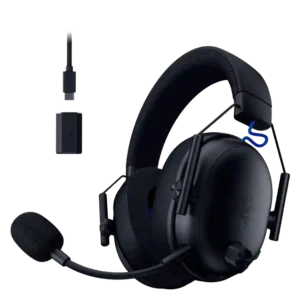
Best for excellent game audio, long-session comfort, clear voice chat, strong battery life, and low-latency wireless. Skip it if you need very high volume, flawless software, or zero tolerance for...
Pros: Overall satisfaction, Sound quality
Cons: Button control usability, Dongle
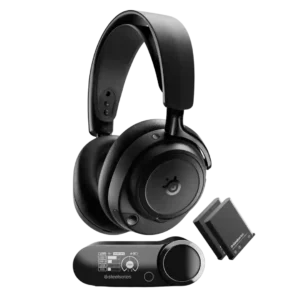
Choose the Arctis Nova Elite if you want top-tier wireless sound, ANC, hot-swap batteries, and multi-device mixing. Skip it if $600 feels excessive, you game on one console, or tight/heavy...
Pros: Sound quality, Connectivity versatility
Cons: Value for money, Carry case quality
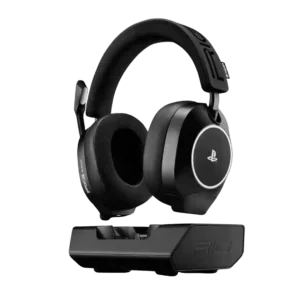
Best for sharp gaming audio, long battery life, an excellent dock, and strong value. Skip it if you need ANC, a detachable mic, maximum console volume, or seamless PS5/Xbox switching.
Pros: Sound quality, Included stand quality
Cons: Detachable microphone convenience
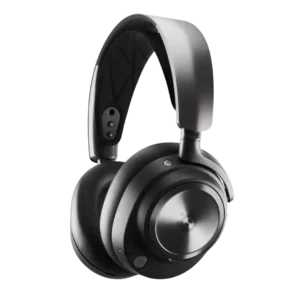
Choose the Arctis Nova Pro Wireless for premium gaming audio, hot-swappable batteries, broad device support, and deep EQ control. Skip it if the high price, mixed mic quality, or uneven...
Pros: Battery, Comfort during long use
Cons: Console compatibility limitations, USB-C