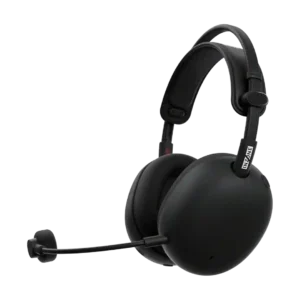
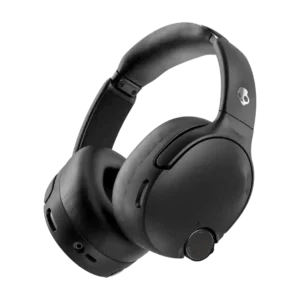
Sony INZONE H9 II Wireless Gaming Headset
Where It Has the Edge
No clear scored advantage over the other product.

Scorata scores summarize analyzed review evidence on a 1–5 scale; they are not laboratory measurements or a simple average of customer star ratings. Feature scores summarize the reviews covering that feature. The overall score averages feature scores within each review, then combines review averages. When both expert and customer evidence are available, those two groups receive equal weight. Products can have different review coverage, so small score gaps do not establish a winner.
Recommendations prioritize important features for the category, with a score of at least 3.5, a gap of at least 0.25 points and at least two supporting reviews per product. Features with widely varying scores or broad connectivity contexts are excluded from recommendations. These safeguards do not establish statistical significance.
Quick verdict
The available evidence supports the recommendation below, but does not establish an overall winner. Check the remaining features against your priorities.
There is not enough comparable review evidence to recommend Sony INZONE H9 II Wireless Gaming Headset over the other product.
Choose Skullcandy Crusher 1080 ANC for Volume output and Microphone quality for calls.
No clear scored advantage over the other product.
Scores are out of 5. Missing scores mean missing review evidence, not a missing feature.
Sound quality is excellent for many gaming scenarios, with strong detail, clean separation, and immersive competitive cues. Music and non-FPS performance divide reviewers much more sharply, with several saying the default tuning needs EQ before it sounds right.
Reviewers consistently describe a major step up in sound, with clearer, more balanced tuning that no longer relies on bass alone. Hands-on listeners call the overall presentation crisp, powerful, and genuinely premium.
Bass is generally controlled and punchy enough for gunfire and explosions without burying positional cues, but the default low end is inconsistent. Some listeners wanted more impact, while others heard muddiness or excess boom in certain games and music.
The adjustable haptic bass is the defining strength: it can feel like a subwoofer or live venue without necessarily burying the rest of the mix. Most testers loved it, though several stressed that moderation gives the best balance.
Spatial audio can add convincing immersion and strong 3D positioning, particularly on PlayStation. Sony’s personalized setup is more controversial because some reviewers found the ear-scanning process cumbersome or not worth the effort.
TrueSpatial is more than a novelty: reviewers heard a wider, speaker-like presentation and convincing head tracking. It works especially well for movies, stationary listening, and immersive music playback.
Passive isolation is decent but not especially cocooning because the headset uses a light clamp and breathable design. Most of the real quiet comes once ANC is enabled.
The large, well-sealed earcups provide strong passive isolation before ANC is even switched on. One reviewer said the outside world already became noticeably quieter from the fit alone.
The soundstage is generally wide and open enough to create a convincing sense of space in games. Most testers found good depth and immersion, although one customer described the spatial presentation as unusually enclosed.
The Bose-influenced tuning creates a noticeably wider and more open soundstage than previous Crusher models. TrueSpatial can expand it further, especially for movies and stationary listening.
Microphone noise reduction works very well in many real-world tests, suppressing fans, breathing, construction noise, and other distractions while preserving speech. One noisy event exposed weaker filtering, so extreme environments can still break through.
The microphone system handled real-world background noise well, including wind and roadside traffic. Callers reported clear speech with little obvious wind interference.
Noise cancellation is one of the H9 II’s clearest strengths, repeatedly cutting fans, HVAC noise, keyboard chatter, and nearby voices down to a faint murmur or less. A few testers still found dedicated lifestyle ANC headphones stronger.
ANC drew strong praise from several reviewers and clearly surpasses older Skullcandy efforts, especially against steady background noise. One hands-on tester found it less effective than Sonos Ace and some earbuds, so performance may vary by fit and environment.
The default frequency balance is one of the most disputed areas. Several measurements and listening tests found recessed or uneven regions that make music less natural, even though the FPS-focused tuning can still work well for competitive play.
The tuning is more balanced than past Crushers but still not reference-flat. Listeners seeking studio neutrality may find the elevated bass and upper-mid energy too colored.
The outer earcups pick up fingerprints and smudges very easily. Reviewers who mentioned the finish consistently found the marking annoying.
The finish resisted fingerprints, dust, and visible grime during early use. The black model stayed cleaner-looking than its large matte surfaces might suggest.
Sidetone needs too much adjustment for a natural result: the default level can be hard to hear, while higher settings were described as robotic, shrill, or walkie-talkie-like.
Sidetone can be adjusted enough to make the wearer’s own voice much easier to hear on calls. Increasing the setting noticeably improved a reviewer’s transparency experience.
Volume output drew more criticism than praise, especially from users who wanted more headroom or smoother console control. A few testers found it sufficiently loud, but the overall sentiment is that output and adjustment could be stronger.
Volume output is very strong, with enough headroom for older or quieter masters. At maximum settings, the headphones can become extremely loud.
The included cables drew rare but clear praise for their useful length and practicality.
The included cables are functional but feel thin and inexpensive. The short USB-C lead was singled out as less practical than the otherwise premium package.
The suspension headband is widely praised for spreading weight well and locking into place securely. Its push-button adjustment is clever and quick once learned, though fine changes while wearing it can be fiddly.
Length adjustment is available, but there is little ability to tighten the inward fit. One tester with a larger head still found the headset looser than desired.
The earcups can lie flat, but the headset does not fold into a compact shape. Reviewers also noted that the soft pouch offers less travel protection than the hard cases supplied with some premium headphones.
The headset folds and collapses more effectively than many premium rivals, but it remains physically large. Some reviewers found it easy to pack, while another still considered it less portable than smaller alternatives.
Treble is usually clear enough for footsteps and gunfire without becoming fatiguing, but the stock tuning can also sound recessed, crunchy, or uneven. EQ is frequently needed to balance the highs for music and broader use.
High-frequency detail stays cleaner than expected for a bass-focused headphone. Hands-on testing found that the highs remain present instead of disappearing beneath the Crusher effect.
Ambient mode does let outside sound through, but it falls short of a true conversational transparency mode. Reviewers often found it easier to remove the headset when talking to someone nearby.
Stay-Aware mode generally sounds natural and makes quick conversations or outdoor use practical. Most reviewers liked it, though one found it a step behind the best transparency systems until sidetone was adjusted.
The mix of 2.4GHz wireless, Bluetooth, and 3.5mm wired audio gives the headset broad connection flexibility. The experience can become less elegant when switching modes, and wired use disables some wireless functions.
Connectivity is flexible, covering Bluetooth multipoint, USB audio, and 3.5mm analog playback. The analog mode even works with the headphones powered off, though powered features are then unavailable.
The headset is generally stable in both fit and wireless operation, with secure headband locking and reliable connections. A few owners reported movement, audio breakups, or defective units, preventing a spotless record.
The relaxed fit is comfortable for sitting and walking but can shift during jogging or vigorous movement. Active users may find the headset less secure than tighter-clamping alternatives.
Overall opinion leans positive because the headset combines exceptional comfort, strong ANC, a capable mic, and excellent competitive-game cues. Satisfaction drops sharply for buyers who focus on the high price, battery endurance, or the need to tune sound for non-FPS use.
Hands-on reviewers were overwhelmingly enthusiastic about the sound, bass, comfort, and feature mix. Satisfaction is highest among listeners who want excitement and physical impact rather than strict neutrality.
PC, PS5, Switch, and mobile use are all practical, making the H9 II a flexible multi-device headset. Xbox is the main exception because it lacks native wireless support.
The headphones work across Android and iPhone and can keep both connected simultaneously. This makes switching between mobile ecosystems or a phone and computer painless.
Midrange reproduction is mostly clear, particularly for voices and game details, but the stock tuning can recess instruments and presence in music. EQ helps restore that missing body.
Mids come through with more energy and presence than on older Crushers. Reviewers especially liked that vocals, percussion, and other midrange details remain audible even when the sensory bass is active.
Full earcup rotation is useful for laying the headset flat, wearing it around the neck, and finding a comfortable angle. One customer found the cups rotated too freely, but most comments were positive.
The earcups rotate smoothly and the frame folds properly for storage. Reviewers appreciated that the mechanism produces a genuinely compact folded shape rather than only laying flat.
The soft carrying pouch is useful and its accessory pocket is appreciated, but several reviewers wanted a protective hard case at this price. It is convenient for organization rather than serious impact protection.
The soft-lined rolltop bag is roomy, padded, and easy to clip onto another bag. It protects against scratches, though travelers wanting crush protection may prefer a hard case.
The ear cushions are usually described as plush, breathable, and roomy enough for long play. A minority found them warm, thin, or uncomfortable, so the padding is excellent for most rather than universal.
The memory-foam earcups received near-universal praise for their soft, plush feel. They fully surround the ears and rebound well after use.
The accessory bundle is useful and reasonably complete, with the core cables, dongle, removable mic, and pouch covering the main ways owners will use the headset.
The package includes a padded travel bag plus 3.5mm and USB-C cables. The bag is a welcome addition, but the cable quality feels below the rest of the product.
A few reviewers singled out excellent separation between layers and sound sources, helping busy game scenes stay distinct rather than collapsing together.
Improved separation makes smaller instrumental details easier to pick out. Reviewers heard a cleaner, less congested presentation than on earlier Skullcandy headphones.
At high volume, one reviewer specifically found the sound remained enjoyable without harshness or fatigue.
Clarity remains impressive even at high volume and with heavy bass engaged. Multiple listeners reported that the mix stayed crisp rather than turning muddy or distorted.
The roughly 260g weight is an overwhelming strength and a major reason the headset stays comfortable for hours. Reviewers repeatedly described it as featherlight, barely noticeable, and unusually light for a premium wireless model.
Weight impressions were mixed: some testers called the headphones light in use, while others noticed the bulky 374-gram build during longer sessions. Comfort depends heavily on fit and activity.
Low clamping force helps the headset stay comfortable for long sessions and avoids pressure around the ears. On some heads, however, the relaxed clamp also lets the earcups shift more than ideal.
Clamping pressure is gentle enough to avoid soreness, but one reviewer found the fit slightly too loose. The relaxed clamp favors comfort over a locked-in feel.
The lightweight construction is a tradeoff: several reviewers praised its flexibility and durability, while others thought the plastic or hollow feel was less premium than the price suggests. A small number of customers also reported physical defects.
The frame generally feels solid and well assembled despite its plastic construction and hefty size. One sample developed a noticeable creak in the left earcup, which tempers confidence in consistency.
Long-session comfort is the H9 II’s most consistent strength. The low weight, breathable padding, and light pressure let many reviewers wear it for hours with little heat, soreness, or fatigue.
Most reviewers found the plush earcups and padded headband comfortable for long sessions. The weight can become noticeable, but it did not cause discomfort for every tester.
The redesign is widely liked for being understated, sleek, and less obviously 'gaming' styled than the original. Its minimalist look also makes it easier to wear away from a desk, though glossy surfaces and lightweight plastics divide opinion.
The industrial Skullcandy styling earned generally positive reactions, especially in the subtler black finish. Critics noted that the silhouette looks bulkier and less polished than current Sony or Bose designs.
Battery life is adequate for several sessions but rarely feels premium for the price. Around 30 hours is the common reference point, with ANC cutting endurance further, although some testing stretched much longer and quick charging softens the weakness.
Battery life is one of the strongest practical advantages, with up to 50 hours using ANC and 60 without it. Reviewers called the endurance exceptional and had difficulty draining it during testing.
Fast charging is a strong convenience, with several reviewers highlighting useful playback from only a few minutes on the cable. That makes short top-ups much easier when the battery is low.
Rapid charging is genuinely useful, adding several hours from a brief top-up. Hands-on reviewers found charging faster than expected in everyday use.
Value is the headset’s biggest recurring concern. Many reviewers think $350 is difficult to justify when cheaper rivals offer longer battery life or similar features, although some buyers still consider the comfort, ANC, mic, and sound worth the premium.
Value is generally favorable because the headphones deliver Bose-derived features, exceptional battery life, and unique haptic bass below many current flagships. The price becomes less compelling beside discounted older Sony, Bose, Sennheiser, or Soundcore models.
Simultaneous Bluetooth and 2.4GHz audio is consistently praised. It makes it easy to keep game sound active while adding phone music, calls, or Discord without constantly reconnecting devices.
Multipoint switching worked flawlessly in direct testing between an Android phone and an iPhone. Playback handed off cleanly without needing to reconnect devices.
Basic setup is often fast and plug-and-play, but the software is less polished. INZONE Hub can feel bare-bones or confusing, and moving between desktop and mobile settings may require extra work.
Pairing and app setup are simple, with quick device discovery and clear controls. Firmware and feature settings are easy to access once connected.
Sony’s mobile app makes on-the-go EQ and ANC adjustments useful, but the software experience is not seamless. Reviewers called the tools basic and sometimes frustrating when PC and mobile settings overwrite or conflict with each other.
The Skullcandy app was repeatedly described as clean, smooth, and comprehensive. It centralizes bass level, ANC, spatial audio, EQ, sidetone, personalization, and control remapping.
The custom EQ is powerful enough to fix much of the headset’s unusual default tuning and tailor it for other genres. The downside is that many reviewers felt EQ was necessary, and preset-saving behavior across apps can be cumbersome.
A customizable five-band EQ gives more control than many competing apps. Reviewers liked being able to combine custom tuning with Crusher bass, personal sound, and spatial modes.
The large, well-spaced controls are often easy to locate by touch, especially the mute button, but usability is not uniformly polished. The volume wheel, mode chimes, and some platform-specific control behavior drew repeated criticism.
Physical buttons and the joystick are easy to locate and satisfying to use. The main drawback is that the ANC switch sits close enough to the bass dial to cause occasional accidental presses.
For calls and voice chat, the mic is usually described as clear, natural, and substantially better than typical headset or earbud microphones. It is capable enough for meetings and casual communication even if it does not replace a dedicated broadcast mic.
Call quality is a clear strength, with voices described as crisp, natural, and easy to understand. Outdoor and roadside calls remained intelligible in hands-on testing.
The 3.5mm input adds useful fallback listening and continues to work when the battery is dead. Sensory bass and other powered processing are unavailable in passive mode.
Android pairing is straightforward through Google Fast Pair. The app and multipoint features also worked smoothly in direct Android testing.
Console support has meaningful caveats despite working well on PS5 and Switch. Reviewers repeatedly criticized missing PS5 game/chat or UI integration, while Xbox lacks native wireless support.
The removable boom mic makes the H9 II easier to use as ordinary headphones and is simple to store or reattach. A few reviewers still preferred a stowable or flip-up design, and isolated customers reported connector problems.
The USB-C dongle provides dependable low-latency wireless and useful PC/console switching, but its physical implementation is not perfect. Some users disliked blocked adjacent ports, adapter needs, or the lack of extra insulation.
The launch feature set is unusually complete, combining Bose ANC and spatial processing with long battery life, multipoint, wear detection, Auracast, and a deep app. Several sources called it competitive or premium for the price.
Game/chat balance is convenient on PC, but its platform behavior is a major limitation. Multiple reviewers specifically disliked that the control does not provide the same useful integration on PS5.
Glasses and hats posed little comfort trouble in the tests that mentioned them, with reviewers reporting no pressure points or awkward fit.
Headband padding is soft and comfortable, but thinner than the plush ear cushions. Heavier users may wish it had slightly more foam for better pressure distribution.
There is no useful built-in call microphone once the detachable boom is removed. That limits the otherwise appealing idea of using the headset like everyday wireless headphones.
The detachable boom microphone is generally a strong performer, with many reviewers praising its clarity, positioning, and natural voice capture. Results are not flawless: noisy-event filtering, occasional muffling, and a few hardware failures produced a noticeable minority of complaints.
Most hands-on reviewers strongly recommend the headphones to bass lovers and call them Skullcandy’s most complete model yet. More cautious sources advise waiting for independent testing if ANC neutrality or reference tuning matters most.
Packaging feedback is mixed to negative: one presentation was praised, but some customers received units that appeared opened or arrived with condition problems.
Metal accents, plush padding, and the substantial build create a convincingly premium impression. The materials do not always match flagship rivals, but the overall feel exceeds Skullcandy’s budget reputation.
The FPS presets can make footsteps and combat cues easier to hear, but the selection is overly concentrated on shooters. Some profiles sound muffled or unhelpful, leaving other game genres underserved.
One reviewer specifically criticized the lack of easily changeable earcup covers, a customization feature expected from some other premium gaming headsets.
The ANC sensor implementation was praised for blocking demanding background noise effectively, including office equipment and nearby voices.
Long battery life, effective ANC, folding earcups, and a clip-on bag make the headphones well suited to commuting and flights. Their weight and bulk keep them from being the easiest travel set to carry.
USB-C is useful for charging and the wireless dongle works across many modern devices, but the physical setup has drawbacks. Several users wanted a USB-A adapter or more clearance so the dongle would not obstruct nearby ports.
The 2.4GHz connection consistently delivers responsive, lag-free gaming audio. No reviewer who directly judged latency found it problematic.
Xbox support is limited rather than absent: native wireless operation is not available, but reviewers were able to use the headset through a 3.5mm wired connection. That compromise is acceptable for occasional use but not ideal for Xbox-first buyers.
Several testers found ANC made steady fans, engines, and background hum dramatically quieter. One reviewer heard a smaller reduction than with certain competing headphones, suggesting fit and expectations matter.
Video synchronization was excellent in testing, with no visible lip-sync delay even before low-latency mode was enabled. Gaming mode adds further reassurance for interactive use.
Footsteps and other competitive cues are a standout strength. Reviewers repeatedly heard enemy movement earlier and more distinctly, giving the headset a clear advantage for FPS play.
The combination of haptic bass, wide staging, and head tracking creates a highly immersive presentation. Testers described music as surrounding or following them and compared the sensation to a club or concert.
LE Audio support helps future-proof the wireless platform. Reviewers viewed it as a meaningful modern addition alongside Bluetooth 5.3 and Auracast.
Positional audio is exceptionally strong, especially for competitive shooters. Reviewers repeatedly described precise left-right placement, depth, and footstep localization, though one test found vertical positioning less exact.
Wind handling is mixed. Call microphones suppressed wind well for one outdoor test, but another reviewer heard air moving around the large earcups during a gust.
Auracast adds a forward-looking sharing feature that few buyers may need immediately but improves long-term wireless readiness. Reviewers grouped it with LE Audio as part of a future-proof connectivity package.
The wireless stack includes SBC, AAC, LE Audio, and Auracast, but premium codecs such as LDAC and aptX are not confirmed. That makes the feature set modern but not especially strong for codec-focused buyers.
Replaceable earpads are a welcome longevity feature, and the removable design was easy to work with in the tests that tried it.
The headset generally fits securely and comfortably, with the adjustable suspension system accommodating many head shapes. Its very light clamp can reduce the seal or allow some movement for certain users.
Bluetooth is broadly reliable and adds real versatility, especially alongside the 2.4GHz connection for phone audio or chat. Reviewers liked the fast pairing and dual-source use, with only scattered complaints about connection behavior.
Bluetooth 5.3 keeps the wireless platform current and supports modern features such as LE Audio and Auracast. Pairing and multipoint performance were strong in hands-on testing.
One premium-feature comparison counted the lack of RGB lighting among the extras the headset gives up at its high price.
The spoken status prompts are clear and memorable, including the playful “see you” shutdown message. Reviewers found the feedback useful and more personable than generic tones.
The hinge and adjustment structure handled aggressive stretching and movement without raising durability concerns in the test that evaluated it directly.
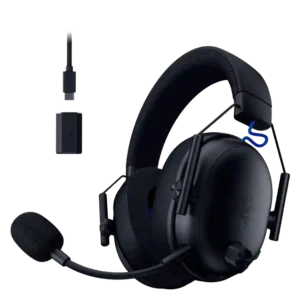
Best for excellent game audio, long-session comfort, clear voice chat, strong battery life, and low-latency wireless. Skip it if you need very high volume, flawless software, or zero tolerance for...
Pros: Overall satisfaction, Sound quality
Cons: Button control usability, Dongle
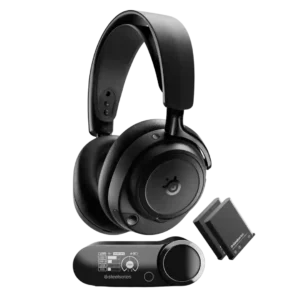
Choose the Arctis Nova Elite if you want top-tier wireless sound, ANC, hot-swap batteries, and multi-device mixing. Skip it if $600 feels excessive, you game on one console, or tight/heavy...
Pros: Sound quality, Connectivity versatility
Cons: Value for money, Carry case quality
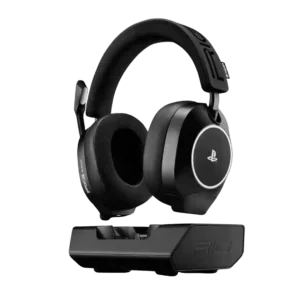
Best for sharp gaming audio, long battery life, an excellent dock, and strong value. Skip it if you need ANC, a detachable mic, maximum console volume, or seamless PS5/Xbox switching.
Pros: Sound quality, Included stand quality
Cons: Detachable microphone convenience
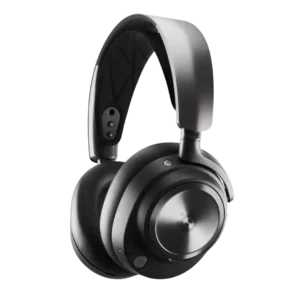
Choose the Arctis Nova Pro Wireless for premium gaming audio, hot-swappable batteries, broad device support, and deep EQ control. Skip it if the high price, mixed mic quality, or uneven...
Pros: Battery, Comfort during long use
Cons: Console compatibility limitations, USB-C