Scorata scores summarize analyzed review evidence on a 1–5 scale; they are not laboratory measurements or a simple average of customer star ratings. Feature scores summarize the reviews covering that feature. The overall score averages feature scores within each review, then combines review averages. When both expert and customer evidence are available, those two groups receive equal weight. Products can have different review coverage, so small score gaps do not establish a winner.
Recommendations prioritize important features for the category, with a score of at least 3.5, a gap of at least 0.25 points and at least two supporting reviews per product. Features with widely varying scores or broad connectivity contexts are excluded from recommendations. These safeguards do not establish statistical significance.
Quick verdict
What each product is best for
The review evidence points to a tradeoff: protagonist appeal and environmental detail versus originality and combat system. Choose according to which strengths matter more to you; the overall score alone does not settle that choice.
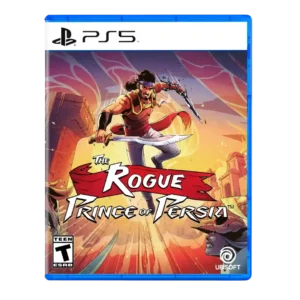
Choose The Rogue Prince of Persia for protagonist appeal and environmental detail.
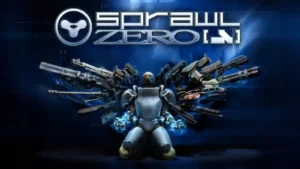
Choose SPRAWL zero for originality and combat system.
Why these recommendations?
The Rogue Prince of Persia
Where It Has the Edge
protagonist appeal is 3.9 vs 2.0. The Prince himself had modest appeal, with reviewers noting charm and emotional vulnerability despite broader story limits.
environmental detail is 4.2 vs 2.9. Environmental detail was praised for readable, distinct, colorful locations and expressive spaces.
content variety is 3.8 vs 3.0. Content variety ranged from strong biome/update praise to concerns about barebones early access, lean side areas, or limited...
SPRAWL zero
Where It Has the Edge
originality is 4.8 vs 2.8. The game wears its Halo, F.E.A.R., Half-Life 2, and Y2K influences openly, yet the disposable-weapon combat and cohesive...
combat system is 4.9 vs 4.1. Combat is the clear centerpiece: disposable guns, Gravity Gloves, Bullet Time, shields, and Rushdown combine into frantic improvisational...
sound design is 4.5 vs 3.8. Weapons hit with exceptional weight and punch, and the overall mix sells the violence well. Overprocessed voice lines...
The Rogue Prince of Persia4.0 overall score
SPRAWL zero4.0 overall score
Compare features
Scores are out of 5. Missing scores mean missing review evidence, not a missing feature.
Scored on both products
Other features
Frame rate stability
The Rogue Prince of Persia
4.9
SPRAWL zero
2.0
Details and evidence for frame rate stability
The Rogue Prince of Persia
Frame rate stability was strongly praised across several Switch 2 and technical impressions.
Frame-rate stability is the biggest technical concern on handheld hardware. Steam Deck and Switch 2 can suffer heavy drops in busy combat, while other platforms fare better.
Handheld results are mixed to poor: Steam Deck struggles to hold 60 FPS, and Switch 2 can drop sharply in busy scenes. VRR helps in some portable situations, but performance remains the main caveat.
SPRAWL zero does not reinvent shooters wholesale, but the disposable-weapon economy and Gravity Gloves give its retro framework a distinctive modern hook.
The game wears its Halo, F.E.A.R., Half-Life 2, and Y2K influences openly, yet the disposable-weapon combat and cohesive presentation give it a clear identity of its own.
Pacing is mixed: the best stretches flow beautifully, but long walking sections, repeated objectives, backtracking, and bullet-spongy encounters can stall the momentum.
The brutalist city has a distinctive identity, but many areas reuse similar concrete corridors, browns, greys, and industrial spaces. Visual repetition can make midgame locations blur together.
Technical bugs range from nearly absent on some systems to enemies getting stuck in geometry or triggers failing. The most disruptive cases can force a checkpoint reload.
Combat is the clear centerpiece: disposable guns, Gravity Gloves, Bullet Time, shields, and Rushdown combine into frantic improvisational fights. At its best, the system feels fast, expressive, and exceptionally satisfying.
The one-gun system, Gravity Gloves, powers, environmental throws, and aggressive movement combine into a mechanically strong throwback that still feels fresh.
The setting has more background depth than the main story initially suggests, with codex entries and environmental details filling in the city's factions and history.
Gravity Gloves make the environment an active weapon: barrels, grenades, health pods, debris, doors, and even enemies can be manipulated. This physical interactivity is one of the game's strongest defining traits.
Abilities upgrade at a steady pace and usually add meaningful power without burying the player in menus. A few powers or later upgrades feel less useful than others.
The overall package is strong but not uniformly polished. Later-balance issues and occasional bugs contrast with a presentation that otherwise feels carefully assembled.
Art direction was broadly praised for cel-shaded, colorful, comic-like, or distinctive Persian-inspired presentation, with one outlier calling it flat.
The low-poly, brown-and-neon Y2K cyberpunk look is one of the game's most consistently praised qualities. A few players find the deliberately drab palette monotonous, but the style itself is unusually cohesive.
Industrial cityscapes, propaganda, fog, electronic music, and religious imagery create a strong early-2000s cyberpunk mood that quickly pulls players in.
The overwhelming strength is simple enjoyment: fast fights, absurd weapons, physics tricks, and a strong soundtrack make the game easy to enjoy even when level or technical issues surface.
Secrets and hidden areas can be satisfying to hunt, but some exploration rewards amount to weapon caches or collectibles that do not always feel equally exciting.
The shoot-empty-throw-grab rhythm is the game's defining strength. Constant weapon swaps and physics interactions create a fast loop that many find addictive once it clicks.
The deliberately retro rendering is widely praised for looking sharp, attractive, and authentic to the era it emulates. Resolution and image quality vary by platform.
The huge arsenal is a major strength, with distinct tiers and behaviors encouraging constant adaptation. Some weak drops, shield interactions, and disposable limits can occasionally make a preferred weapon feel short-lived.
Enemy variety is generally strong, with snipers, shielded heavies, drones, melee threats, and other specialists forcing different responses. A few sections still feel repetitive when familiar foes dominate.
Movement is generally fluid, purposeful, and well matched to the more grounded combat. Some miss the predecessor's freer parkour, but others prefer the tighter focus.
Challenge is highly inconsistent across perspectives: some enjoy the tougher fights and adjustable settings, while others dislike late spikes, shielded enemies, and bullet-spongy foes that interrupt combat flow.
The story is serviceable rather than central. It provides enough context and a few twists, but several takes find it confusing, emotionally thin, or too dependent on mid-combat exposition.
Objective structure is one of the weaker areas, with repeated backtracking, holdout tasks, and one especially long poison-gas mission drawing criticism.
Navigation is a recurring weakness because similar-looking spaces and backtracking can make routes hard to read. The optional waypoint ping helps substantially but does not solve every layout.
Bosses are uneven: some encounters are enjoyable or appropriately challenging, but the final fight is repeatedly called frustrating, repetitive, or poorly matched to the game's best combat.
Level design was often praised for branching paths, biomes, and movement support, though procedural layouts sometimes became familiar or disrupted flow.
Level design is sharply divisive. Some stages are praised for secrets, varied arenas, and nonlinear objectives, while others feel overlong, repetitive, confusing, or padded by backtracking.
Performance varies dramatically by platform. Some PC runs are smooth, while Steam Deck and Switch 2 can suffer substantial drops, indicating uneven optimization.
The electronic, trance, techno, and breakcore-inspired score is one of the most universally praised parts of the game, driving fights with energy while easing back between encounters.
New Game+, remixed enemies, relic modifiers, secrets, and higher difficulties give the short campaign strong replay potential for players who enjoy mastering the combat.
The core game is widely considered worth the asking price thanks to replay systems and strong combat, but poor Switch 2 launch performance can erase that value until patched.
Enemies often flank, reposition, throw grenades, and pressure the player instead of standing still. Pathfinding and wall-stuck bugs can undermine that intelligence, especially in a few later encounters.
Codex entries and relics give explorers extra goals, with relics feeding modifiers and challenges. The lack of a clear per-level tracker makes completion hunting less convenient.
The compact campaign generally lands well, with estimates ranging from roughly five to ten hours. Some appreciate the lack of bloat, while others would happily take a little more.
The exaggerated gore, dismemberment, flaming enemies, and bloody impacts are treated as part of the fun rather than a drawback, fitting the game's over-the-top shooter tone.