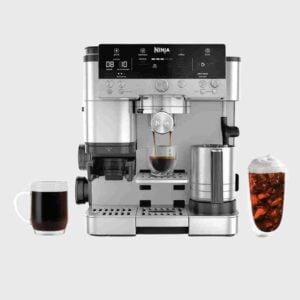
Ninja Luxe Café Premier Espresso, Drip Coffee and Cold Brew Machine
Where It Has the Edge
No clear scored advantage over the other product.

Scorata scores summarize analyzed review evidence on a 1–5 scale; they are not laboratory measurements or a simple average of customer star ratings. Feature scores summarize the reviews covering that feature. The overall score averages feature scores within each review, then combines review averages. When both expert and customer evidence are available, those two groups receive equal weight. Products can have different review coverage, so small score gaps do not establish a winner.
Recommendations prioritize important features for the category, with a score of at least 3.5, a gap of at least 0.25 points and at least two supporting reviews per product. Features with widely varying scores or broad connectivity contexts are excluded from recommendations. These safeguards do not establish statistical significance.
Quick verdict
The available evidence supports the recommendation below, but does not establish an overall winner. Check the remaining features against your priorities.
There is not enough comparable review evidence to recommend Ninja Luxe Café Premier Espresso, Drip Coffee and Cold Brew Machine over the other product.
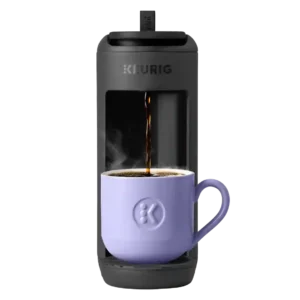
Choose Keurig K-Mini Mate for Environmental packaging sustainability and Design, ergonomics and footprint.
No clear scored advantage over the other product.
Scores are out of 5. Missing scores mean missing review evidence, not a missing feature.
Pump pressure was only directly judged once, where the reviewer felt pressure regulation worked well and avoided stalling or spraying.
Several owners experienced half-filled cups, stalled cycles, or grinding sounds when the machine struggled to move water. These reports suggest pump or flow consistency can become a reliability concern.
Packaging sustainability was a clear negative in CoffeeGeek reviews because the machine used too much styrofoam or polystyrene.
Reusable mugs and Keurig's recycling and composting options can reduce some disposable waste. Sustainability still depends heavily on the pods and accessories each owner chooses.
Reviewers generally liked the included kit, especially the unpressurized baskets, portafilter, tamper, cleaning items, and guide; one review highlighted the accessories as above budget standard.
The quick-start guide is useful, but the frequently pictured matching mug is not included. That omission surprised and disappointed several buyers.
Milk frothing was broadly liked for hands-free foam, cold foam, and beginner ease, but some reviewers disliked auto texture, plant-milk results, pitcher shape, noise, or wand cleaning demands.
The machine has no milk frother or steam system. It is best for straightforward pod drinks rather than buyers who want built-in lattes, cappuccinos, or textured milk.
Portability was weak: the machine was described as big, bulky, and heavy, making it unsuitable for tight spaces or frequent moving.
Its low weight and narrow body make it unusually practical for RVs, hotels, offices, and road trips. Owners repeatedly praised how easily it packs, though removable pieces and international voltage limitations deserve attention.
The absent hot-water dispenser on the US/Canada Premier was one of the most consistent complaints, especially for americanos, tea, and cup preheating.
Users successfully made tea, hot chocolate, cocoa, soup, and plain hot water with the brewer. Most found it convenient, but a few tea drinkers considered the water temperature too low.
Used-puck cleanup split by mode: espresso pucks often knocked out cleanly, while filter-style coffee could leave soupy, messy pucks or require rinsing.
Pod removal is usually simple, but some machines retain coffee or grounds around the pod holder. A few owners needed an extra drain or cleanup step after brewing.
Only one reviewer judged the cord length directly, calling it good for most kitchens while noting some users may find it short.
Cable handling is inconsistent: one owner liked the rear cord storage, while others found the cord short, unstowable, or capable of becoming stuck. Travelers may need to secure the cord separately.
Cup and tray handling was mixed: reviewers liked adjustable trays and travel-mug clearance, but repeatedly criticized the two-spout design, tight fit, basket handling, and drip-tray hassles.
Removing the drip tray allows many travel mugs and taller cups to fit comfortably. The tray can feel loose, and careful cup placement is sometimes needed to reduce splashing or spills.
Automation and sensors were praised for reducing guesswork, guarding against wrong setup, and guiding grind changes, but a few reviewers found the assist logic finicky or prone to chasing corrections.
Automatic shutoff and the descale indicator add useful convenience without complicating operation. Complaints centered on prolonged blinking, limited reset options, and the lack of a pause when the cup is removed.
Water and maintenance feedback was mixed: reviewers liked water-hardness setup, cleaning prompts, and simple cleanup, but criticized no filter, hard reservoir access, high purge water use, and frequent drip-tray emptying.
The removable reservoir and accessible pod area make routine filling and cleaning straightforward. Some owners nevertheless reported frequent clogs, retained liquid, or the need to flush and clear the needles more often than expected.
Recognition evidence was positive, with CoffeeGeek considering it for Espresso Machine of the Year and later calling it a market disruptor.
The brewer received a best coffee maker award from Dorm Therapy, reinforcing its appeal for dorm rooms and compact living.
Speed was a frequent positive, with fast heat-up, quick grinding, sub-minute espresso pulls, and reasonably quick coffee or cold drink workflows.
Fast brewing is one of its clearest strengths, with many cups ready in roughly one to two minutes and coffee beginning to dispense quickly. It suits rushed mornings, offices, and quick afternoon drinks.
Capacity drew praise for the large reservoir, hopper, travel-mug clearance, and flexible cup sizes, but the machine remains better for individual servings than batch brewing.
The 6- to 12-ounce single-cup capacity is well suited to one person or one to two daily drinks. Refilling for every cup becomes tedious for couples, guests, offices, or anyone brewing several drinks in succession.
Heating performance was praised for fast warm-up, hot early shots, and minimal preheating, with thermoblock/grouphead behavior seen as effective for the category.
Many units produced coffee that reviewers considered properly hot, often around the mid-160s Fahrenheit or higher. Temperature was nevertheless one of the most disputed traits, with recurring reports of lukewarm coffee after adding cream or when brewing tea.
Cold drink performance was divided: cold foam and some cold brew modes impressed many reviewers, but others found cold brew less deep, bitter, warm, or underwhelming.
There is no dedicated iced or cold-brew mode, but users can brew over ice or add ice afterward. It works for simple iced drinks, though it lacks specialized temperature or strength controls.
Espresso and drinks were usually praised as good to excellent for the price, with rich crema, strong milk-drink performance, and some caveats around acidity or ultimate enthusiast quality.
Most reviewers enjoyed the coffee, especially at smaller brew sizes, describing it as rich, flavorful, and consistent with Keurig expectations. A minority found larger cups weak, watery, or occasionally too bitter.
Overall user experience was strongly positive for beginners and café-style drink variety, with repeated praise for ease, versatility, and fun despite quirks.
Most owners liked the simple one-button operation, tiny footprint, and quick fresh cup. Satisfaction drops sharply when a unit brews lukewarm coffee, splashes, clogs, stops mid-cycle, or fails early.
Pot or batch-coffee capability was weak because reviewers emphasized individual cups, limited 18-ounce brews, and flawed filter-style coffee rather than carafe use.
This is strictly a one-cup brewer with no carafe or warming plate. That simplicity works well for light use, but it becomes inconvenient when several people want coffee or multiple cups are needed quickly.
Warranty and support evidence was limited but mildly positive, noting a one-year warranty, extension options, and affordable spare parts.
Support experiences were uneven. Some buyers received refunds, while others reported warranty restrictions, rejected proof of purchase, or unsatisfactory resolutions after early failures.
Setup was described as painless or well documented, with useful quick-start guidance, though first-time use can still take around 20 minutes.
Setup is exceptionally simple, with a clear initial rinse and almost no learning curve. The quick-start guidance was also praised as detailed and helpful.
Value was one of the strongest consensus points: reviewers repeatedly called it excellent, disruptive, or unusually capable for the price.
Reviewers generally considered it a strong value when discounted, particularly for small spaces or travel. At the full price near $80, some felt the limited features and reliability concerns made competing brewers more attractive.
Design flaws centered on missing hot water in some markets, awkward dual spouts, ratio quirks, bean switching, non-abortable workflows, and cramped ergonomics.
Splashing and post-brew dripping are the most repeated design complaints. Less common issues include loose tray pieces, pooling near the pod holder, awkward cup positioning, and leaks from failing units.
Design opinions were polarized: several reviewers liked the stylish or appealing look, while others found it bulky, space-hungry, plasticky, or unattractive.
Its exceptionally slim footprint is the standout feature, fitting easily on desks, RV counters, dorm shelves, and crowded kitchen surfaces. The modern shape and color choices also drew frequent praise.
Build impressions ranged from sturdy and above-budget to concerns about plastic parts, chipping accessories, and uncertain long-term durability.
Many buyers found the lightweight plastic body sturdier than expected, and some units held up well under daily use. Others reported flimsy pieces, cracking reservoirs, leaks, or complete failure within weeks or months.
Reviewers felt Ninja largely delivered on its core claims around ease, versatility, barista assistance, and cold drink capability rather than merely overpromising.
The compact size and straightforward operation generally matched the product's promises. The main presentation complaint was imagery that appeared to imply a matching mug was included when it was not.
Filter baskets were viewed positively because they are real, traditional, non-pressurized baskets rather than pressurized beginner baskets.
Reusable filters can deliver fresher grounds and lower pod costs when the fit is correct. Some reusable cups work perfectly, while others misalign, leak, clog, or spill grounds inside the machine.
Most reviews found espresso and coffee output consistent and capable, especially after dialing in, while a minority reported shot-ratio inconsistency or long programmed yields.
The brewer usually delivers a dependable single cup with very little effort. However, a smaller but recurring group reported interrupted cycles, partial cups, or performance that became inconsistent over time.
The on-demand heating design avoids keeping water in an internal tank and helps the machine start quickly. Reviewers liked the fresher-water approach and the reduced waiting time.
The wide availability and variety of K-Cups are major advantages, and many owners successfully used reusable pods. Compatibility varies by reusable filter design, and the machine remains less flexible for buyers who want other capsule formats.
Most units arrived in acceptable condition, but several buyers received machines that were used, dirty, incomplete, or coming apart. Buying from a retailer with easy returns may be worthwhile.
The grinder, hopper, and dosing system were among the strongest features, especially weight-based dosing, scale integration, quietness, and helpful guidance, though some assist recommendations were imperfect.
Tamper feedback was mostly positive for level, low-mess puck prep, but the 601's separate dosing ring and tamper workflow was called fiddly by some reviewers.
Reviewers described strong attention and status for the machine, calling it top-rated or one of the most asked-about mainstream coffee launches.
Accessory storage was a clear convenience win, with reviewers praising integrated side storage and organized accessory compartments.
Customization is basic: there is no dedicated strong, iced, or specialty-drink mode. Users can still influence strength by changing the water amount and choose from a broad range of pod flavors and drink types.
Most reviewers considered the machine quiet or only mildly noticeable, making it suitable for offices, early mornings, and shared rooms. Occasional pump noise was generally brief rather than disruptive.
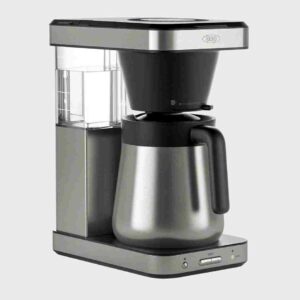
Choose the OXO Brew 8-Cup if you want fast, consistent drip coffee in small or full batches. Skip it if you need programming, app controls, a larger pot, or the...
Pros: Brewing performance and consistency, Overall user experience
Cons: Design flaws
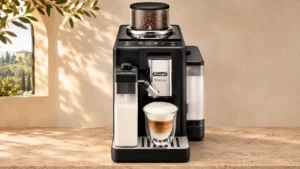
Swappable bean hoppers, intuitive controls and silky automatic milk foam make the Rivelia unusually convenient for varied coffee routines. The premium price, grinder-clearing step and optional cold-foam upgrade are worth...
Pros: Grinder, hopper and dosing system, Espresso and beverage quality
Cons: Iced / cold-brew function quality, Capacity
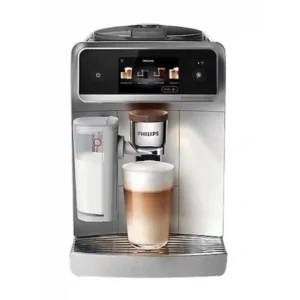
Best for effortless, highly personalized hot and cold coffee in a busy multi-drinker home. Skip it if counter space is tight, you demand silky adjustable microfoam, or the premium price...
Pros: Automation and sensors, Overall user experience
Cons: Design flaws, Mess-free used-puck disposal
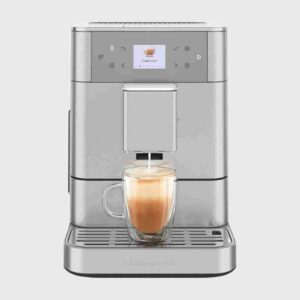
Choose the KitchenAid KF6 for rich espresso, quiet operation, easy cleaning, and strong value in a super-automatic. Skip it if dense cappuccino foam, plant-milk presets, touchscreen controls, or an included...
Pros: Water system, maintenance and descaling, Overall user experience
Cons: Accessories, Design flaws