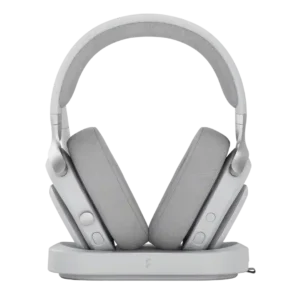
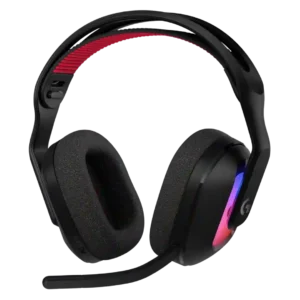
Fractal Design Scape Headset
Where It Has the Edge
No clear scored advantage over the other product.

Scorata scores summarize analyzed review evidence on a 1–5 scale; they are not laboratory measurements or a simple average of customer star ratings. Feature scores summarize the reviews covering that feature. The overall score averages feature scores within each review, then combines review averages. When both expert and customer evidence are available, those two groups receive equal weight. Products can have different review coverage, so small score gaps do not establish a winner.
Recommendations prioritize important features for the category, with a score of at least 3.5, a gap of at least 0.25 points and at least two supporting reviews per product. Features with widely varying scores or broad connectivity contexts are excluded from recommendations. These safeguards do not establish statistical significance.
Quick verdict
The available evidence supports the recommendation below, but does not establish an overall winner. Check the remaining features against your priorities.
There is not enough comparable review evidence to recommend Fractal Design Scape Headset over the other product.
Choose Logitech G Astro A20 X for Microphone and Microphone quality for calls.
No clear scored advantage over the other product.
Scores are out of 5. Missing scores mean missing review evidence, not a missing feature.
Sound quality is one of the Scape’s strongest areas, with repeated praise for clean, detailed and balanced playback across games and music. Even reviewers with caveats generally rated the core audio highly.
Gaming audio is usually clear, detailed, and immersive, especially after EQ, but the default tuning divides opinion. Some find it excellent immediately, while others call it flat, dull, or below expectations for the price.
The stock tuning is generally judged well balanced and thoughtfully voiced, often leaning neutral-to-V-shaped. Reviewers also liked that the strong baseline makes EQ optional rather than mandatory.
Measured tonal balance departs noticeably from the reviewer’s target, especially through the treble. The stock response can make bass feel muddier and vocals less detailed than intended.
The closed-back Scape produces a notably roomy, wide presentation. Reviewers described the soundstage as above average to exceptional for gaming and movie use.
Soundstage is serviceable to strong depending on the listener, with good left-right spread for gaming. Some experts still find it narrower than open-back or more premium alternatives.
Passive isolation is mixed but often useful: some testers blocked traffic, workouts or room noise well enough without ANC, while others found the fabric pads let in more sound than competing closed-backs.
Passive isolation is inconsistent, ranging from adequate in quiet rooms to almost ineffective in noisy environments. The breathable fabric pads favor awareness and comfort over a tight acoustic seal.
There is no active noise cancellation, and that omission is one of the most repeated criticisms at this price. A few reviewers accepted the tradeoff because passive isolation was adequate for their use.
Noise cancellation is not a consistent strength: several people expected more isolation or noted that true ANC is absent. A few customers nevertheless described the perceived noise reduction as effective.
Bass is punchy and controlled rather than bloated, with enough impact for games and music. Some competitive players preferred trimming it with EQ so low-end effects would not mask cues.
Bass is highly dependent on tuning and fit: some hear smooth, punchy lows, while others find it weak, overemphasized, or lacking deep rumble. EQ can improve it substantially.
Microphone noise reduction can suppress keyboards and room noise effectively, but aggressive processing can thin or compress the voice. Several testers preferred leaving it off in quieter rooms.
Noise handling ranges from excellent with Blue VO!CE filters enabled to overly sensitive in untreated rooms. Background fans, keyboards, and desk noises can still bleed through depending on settings and mic position.
Positional accuracy is excellent for competitive play. Reviewers repeatedly reported easy footstep, gunshot and movement localization without needing exaggerated virtual-surround effects.
Directional cues are a strong gaming advantage, with footsteps, gunfire, and enemy locations usually easy to place. Rear positioning and very busy sound mixes can be less precise for some listeners.
One reviewer heard noticeable Bluetooth lag between on-screen action and sound effects, making that mode less suitable when sync matters.
Bluetooth can show slight lip-sync delay in podcasts or movies when watched closely. LIGHTSPEED is much tighter and is the better choice for video-sensitive use.
Spatial presentation is strong, with reviewers describing directional cues as precise and, in one case, calling the spatial audio top-notch for locating footsteps and gunshots.
Spatial presentation is a strong gaming feature, helping place enemies and environmental sounds convincingly around the player. It is particularly effective in immersive and competitive titles.
The magnetic wireless charging stand is the Scape’s most consistently praised convenience feature. It keeps the headset displayed, charged and the dongle organized with very little effort.
There is no charging stand or dock, which disappointed at least one buyer coming from a headset that included one. Charging is handled by cable instead.
Cup articulation is sufficient for most heads but limited for storage and neck wear. Multiple reviewers disliked that the earcups cannot rotate fully flat.
The earcups offer useful tilt and swivel for fitting different head shapes. That adjustability helps comfort even though the headset does not fold flat.
There is no native game/chat balance control, a limitation called out by reviewers who rely on quick source mixing.
The onboard game/chat mixer is very useful on Xbox and PC and can quickly prioritize teammates or game audio. A few owners found the rocker easy to hit accidentally or reported it failing outright.
Xbox is the clear compatibility gap. Multiple reviewers flagged that the Scape will not connect to Xbox consoles, making it unsuitable as a one-headset-for-every-system choice.
Xbox support is a notable strength when it works, including easy use within the same multi-platform setup. One customer, however, reported that their unit would not connect to Xbox at all.
Soft, compliant pads handled several glasses frames comfortably in one detailed test, despite the headset’s firmer clamp.
Glasses comfort is mixed: some users barely notice interference and praise the light clamp, while others report pressure and soreness. Fit seems especially dependent on head size and pad position.
Midrange comes through clearly, with vocals, guitars and other mid-focused content staying well defined. Several reviewers singled out the mids as a strength of the otherwise slightly V-shaped tuning.
Midrange performance is mixed: voices and game detail can sound clean, but several experts hear missing detail or recessed presence in the stock tuning. EQ can improve vocal naturalness and balance.
USB-C adds useful wired-audio and charging redundancy away from the dock. One reviewer wished the included connection setup were friendlier to USB-C-only computers.
USB-C adds useful flexibility for wired audio and charging, and at least one buyer specifically valued that option. It helps keep the headset usable even when wireless power is depleted.
The removable 2.4GHz dongle integrates neatly into the charging dock and can be taken on the road. One reviewer had disconnects when it was plugged directly near other USB devices, which improved after repositioning and firmware.
The compact PLAYSYNC base is central to the headset’s convenience and is much smaller than many multi-system docks. Its light weight can make it slide around, and cable placement can become awkward when systems are far apart.
Headband adjustment feels smooth, deliberate and resistant enough to hold its setting. The firmer mechanism takes a little effort but helps keep the fit from drifting.
The suspension band works well for many medium and large heads, but its limited adjustment points can be a poor fit for smaller users. Several people would prefer a more conventional sliding system.
The 2.4GHz connection is generally low-latency and stable, while Bluetooth can introduce more lag. For gaming, reviewers clearly preferred the dongle path.
LIGHTSPEED is consistently described as effectively lag-free for gaming, with quick source changes and tight response. Bluetooth can show more noticeable delay in video use.
The detachable boom mic is a practical win, letting the Scape look and behave more like ordinary lifestyle headphones when voice chat is not needed.
The removable boom is convenient for solo play, travel, and casual listening. Some users would prefer flip-to-mute, and the lack of dedicated storage makes the mic easier to misplace.
Microphone impressions range from excellent to merely average. The detachable boom is generally clear enough for gaming and calls, but some reviewers heard compression or a tinny character compared with top headset mics.
The detachable 48 kHz boom mic is one of the most consistently praised parts of the headset, often sounding unusually full and clear for wireless gaming gear. A few users found it too sensitive or merely average without tuning.
Portability is only average because the headset does not fold or lie fully flat, and neck wear can be awkward. The removable dongle and Bluetooth mode help when traveling.
It can travel and work over Bluetooth or USB, but dependence on the base station for full wireless functionality makes it less travel-friendly than ordinary Bluetooth headphones. It also does not fold flat.
The matte finish can show fingerprints readily, according to one hands-on reviewer.
The microphone material can discolor or stain over time, creating a cosmetic mismatch with the headset. This was a specific durability concern on one long-term unit.
The bundled dock materially improves the package, combining headset storage, charging and dongle management. That integration helped reviewers justify the overall price.
The bundle is well organized and includes useful cables and the PLAYSYNC base, but one expert wanted a power adapter and an additional USB cable. It is comprehensive without feeling luxurious.
Packaging matches the minimalist design language and was praised for looking unusually polished and attractive rather than like typical gaming-headset packaging.
Packaging is generally neat, organized, and increasingly eco-conscious, with accessories separated clearly and reduced plastic. Presentation receives positive marks even when extras are sparse.
Maximum loudness is a recurring weakness. Several reviewers wanted more headroom, especially over Bluetooth, even though the headset is loud enough for ordinary listening.
Maximum loudness is a recurring complaint, with several users wishing the headset could play louder or deliver stronger chat volume. The restrained output can be a downside for listeners who prefer high volume.
Overall sentiment is strongly positive: the Scape is repeatedly recommended as a refined daily driver with excellent sound and charging convenience. One reviewer received a malfunctioning unit and was understandably very disappointed.
Overall sentiment is strongly positive for multi-platform gaming, with convenience, comfort, mic clarity, and battery life doing most of the work. Negative experiences cluster around fit, default sound tuning, Bluetooth limitations, and a handful of reliability failures.
The three onboard EQ slots are useful and easy to switch. Balance works well for many listeners, while competitive play may benefit from a leaner custom preset and some reviewers preferred the Depth-style tuning for music.
The included and community EQ presets are useful starting points, particularly for FPS, bass, and media listening. Default profiles are not universally loved, and several users get better results from custom or community tuning.
Tri-mode connectivity is a real strength, giving users 2.4GHz wireless, Bluetooth and USB options for different setups. Reviewers frequently described the headset as versatile despite its Xbox limitation.
PLAYSYNC is the headset’s defining strength, making it quick and painless to jump between two gaming systems while also offering Bluetooth and USB options. The main tradeoff is that Bluetooth cannot mix simultaneously with LIGHTSPEED audio.
Treble is detailed and airy enough to expose small cues, but opinions split on the stock emphasis. A few testers heard extra harshness or occasional sibilance and preferred reducing it with EQ.
Treble can be crisp and non-fatiguing, but several experts found it recessed, uneven, or lacking sparkle in the default tuning. EQ is often needed to restore detail without making the sound harsh.
The fit is secure for normal gaming and work use without feeling loose enough to slip off. Violent head movement can still dislodge it, so it is not meant for workouts.
Wireless performance is usually stable and dependable, with many users reporting clean connections and no dropouts. A small minority reported serious disconnects or intermittent crackling after months of use.
Outside Xbox, compatibility is broad across PC, Mac, PlayStation, Switch and mobile devices. That makes the Scape easy to move among several common platforms.
It is especially strong for mixed setups spanning PC, Xbox, PlayStation, Switch, and mobile devices. The single-version approach avoids needing separate console-specific headset variants.
Sidetone is one of the weakest features in the launch-era reviews. Several testers found it extremely quiet, unclear or effectively broken and hoped firmware would improve it.
Sidetone is one of the weaker areas, with complaints about missing or unsatisfactory mic monitoring. In some setups it only becomes available after extra app configuration.
The memory-foam ear pads are plush, deep and often breathable, helping spread pressure well. A minority disliked the rougher fabric texture or found it scratchy.
The fabric memory-foam pads are usually praised as soft, breathable, and cooler than leatherette. Some users find the foam too firm, scratchy, hot, or insufficiently plush for long sessions.
Android use is straightforward over Bluetooth; one reviewer specifically described connecting to an Android phone as easy.
The mobile control app supports Android and is particularly useful for console-first setups that still need EQ, mic, and lighting access. Desktop G Hub remains more powerful.
One tester praised the built-in DAC and amplifier for handling spatial cues well, helping the two-driver headset place movement convincingly.
High-resolution 24-bit/48 kHz playback on PC is a welcome strength for users who want more than basic wireless game audio. Console output is more limited.
Separation and detail are strong, with mids and lows staying distinct and subtle information easy to pick out. The analytical presentation suits both competitive play and detailed music listening.
Separation is a clear gaming strength, keeping gunfire, footsteps, abilities, and ambient effects distinct in busy scenes. This supports accurate tracking in competitive play.
Wireless range is a strength, staying connected several rooms away and reaching roughly 40 meters or around 55 feet in separate tests.
Range is generally excellent, staying connected across rooms, around a house, and even through walls in some tests. It compares favorably with several older wireless headsets.
The microphone connector uses a larger, more robust notch than some detachable-mic designs, giving the attachment a secure, premium feel.
The keyed mic jack works, but there is no protective cover or dedicated place to store the detached boom. That makes the small microphone easier to lose.
Clamp force drew mixed reactions: some found the tension nearly perfect, while larger-head users and a few long-session testers wanted a looser fit.
Clamp pressure is generally light and comfortable, helping with long sessions and glasses. The downside is that the headset can feel less secure on smaller heads or during quick movement.
Design is a standout strength across the review set: understated, Scandinavian and premium rather than overtly gamer-styled. The subtle RGB, fabric and metal accents make it suitable for both desks and work calls.
The modern, lightweight look and tasteful RGB are broadly liked, especially in the white colorway. Some Astro fans dislike how closely it resembles the G522 and feel the brand has lost part of its visual identity.
Build quality generally feels premium for the price, with sturdy plastics, metal details and deliberate controls. One reviewer still questioned long-term plastic-headband durability, and a defective unit shows quality control is not perfect.
The lightweight plastic frame is usually flexible and solid enough for everyday use, but it does not feel especially premium. Some buyers describe it as cheap or plasticky, while others praise its durability and sturdy feel.
The Scape is much lighter than some premium rivals, which helps neck comfort over long sessions. A few reviewers still called the 330g-class chassis heavy compared with lighter gaming sets.
The sub-300 g design feels notably light and is frequently credited with reducing fatigue during long sessions. For a few users, the very light, loose fit can also make the headset shift around.
Comfort is usually good over long sessions thanks to soft pads and manageable weight, but head shape matters. Several testers reported clamp or top-of-head pressure after a few hours.
Comfort is generally a major strength thanks to low weight, breathable fabric, and a suspension-style fit. Head shape matters, though: some smaller-head users and a few experts reported slipping, pressure points, or discomfort after extended wear.
Bluetooth is useful for phones and mobile listening, but it is not the Scape’s strongest connection mode. Reviewers noted no simultaneous mixing and, in some cases, lower volume, compression or lag.
Bluetooth is convenient for phones, calls, and casual listening, but it is not the headset’s strongest connection mode. Some users experienced setup quirks, crackling, or app handoff issues that did not appear over LIGHTSPEED.
Setup is refreshingly simple: the headset is quickly detected, and most customization happens through a lightweight browser interface. Reviewers liked not having a large utility running in the background.
Most setups are plug-and-play and PLAYSYNC switching is easy once configured. A minority encountered long Bluetooth pairing attempts, firmware steps that required a PC, or awkward audio-routing quirks.
The boom mic is generally good enough for Discord, meetings and work calls, with some reviewers rating it very highly. Others found it merely serviceable, and the built-in mic is a step down.
Voice communication is one of the headset’s strongest uses, with crisp, full pickup that can approach a decent USB mic for chats and casual streaming. Software presets can add even more polish.
The physical controls are a highlight, especially the damped crown/volume wheel. Reviewers repeatedly praised its tactility, easy reach and reliable media clicks, with only minor learning-curve complaints.
Most physical controls are easy to reach and tactile, including mute, volume, and source switching. Some users dislike the placement of the wheel and buttons because they can be bumped by a chair, hood, or headrest.
The parametric EQ is one of the most celebrated features. It provides unusually flexible tuning for a gaming headset, saves profiles onboard and makes it easy to correct bass or treble to taste.
EQ control is unusually deep for a gaming headset, including advanced and community-created profiles for both headphone and mic sound. Tuning is often the key to turning the merely decent default sound into something much better.
RGB is unusually subtle and tasteful for a gaming headset, with good preset and custom options. The main tradeoff is battery life, which drops substantially when lighting stays on.
The LIGHTSYNC lighting is widely liked for adding tasteful visual flair, with strong control through G Hub. It can shorten battery life substantially, and a few software quirks make fully disabling it less straightforward.
Fractal’s browser-based Adjust software is widely praised for avoiding a heavy installed utility while still offering useful control. A few browser or reliability quirks keep it from being flawless.
G Hub is a major strength on desktop, offering detailed audio, mic, lighting, battery, and profile controls. The mobile app is useful on consoles but more limited and occasionally less intuitive.
Battery life is the most divisive practical issue: RGB-off runtime can approach 40–50 hours, but lighting cuts it sharply. Some reviewers called that weak for $200, while others barely noticed because the dock keeps it topped up.
Battery life is a standout feature, commonly landing around 40 hours with RGB and stretching toward 90 hours with lighting off. A few customer units developed battery or charging failures after several months.
Charging is exceptionally convenient when the magnetic dock is used; placing the headset down can power it off and start charging automatically. Minor complaints include dock lift, status indication and host USB power behavior.
USB-C charging is generally simple and can be used while playing, with some tests finding recharging reasonably quick. A small number of units suffered serious charging faults.
Fit is secure and adaptable when the cups are positioned correctly, with generous ear clearance. Poor positioning or larger heads can expose more clamp pressure.
Fit is the biggest comfort variable: medium and larger heads tend to fare well, while smaller heads can experience slipping and a weak seal. A loose fit can also change bass response and positional consistency.
At around $200, value depends on what you prioritize. Many reviewers felt the refined build, sound and charging dock justify the price, while others called it pricey given the battery, ANC and feature omissions.
Value is strongest for people who will actually use PLAYSYNC across two systems; in that use case the convenience can justify the price premium. Single-platform players often see cheaper alternatives or the G522 as the smarter buy.
Firmware support showed real benefit by reducing one reviewer’s disconnects, while other testers hoped updates would improve sidetone or noise suppression. One defective unit had no update available to solve its issue.
Firmware updates can improve sound and resolve initial issues, but updating may require connecting directly to a PC. That extra step is useful when it works but not especially seamless.
Multipoint is a clear omission: the Scape cannot stay connected to Bluetooth and its 2.4GHz link at the same time, so calls cannot simply mix in over a game.
The biggest connectivity limitation is that Bluetooth and LIGHTSPEED cannot play at the same time. Switching is fast, but users who want phone audio mixed with console or PC sound may find this restrictive.
The earpads are replaceable in practice and come off easily, though retail replacement availability was limited at the time of one review.
Removable earpads make cleaning and eventual replacement easier. That helps preserve comfort and usability over longer ownership.
Many units work flawlessly in daily use, but there are meaningful outliers involving battery failure, charging problems, disconnects, and intermittent crackling. Long-term reliability is therefore less consistent than the headset’s day-one performance.
Codec support is a tradeoff. The 2.4GHz LC3+ implementation was praised for low latency and adequate bandwidth, while Bluetooth’s SBC/AAC-only support was criticized as dated.
aptX Adaptive is not supported, and one reviewer specifically wished Fractal had included a more modern Bluetooth codec.
The included USB cable feels robust and is long enough to charge or use the headset while connected, though the connector opening can limit bulkier aftermarket cables.
Console support is broad but not universal. The lack of Xbox compatibility is the major limitation, and the absence of a 3.5mm path narrows fallback options for some setups.
The built-in mic is a handy backup for calls on the go, and several testers found it surprisingly usable. It is still clearly noisier and lower quality than the detachable boom mic.
LDAC is absent, putting the Scape behind the Maxwell for high-quality Bluetooth codec support.
One detailed test found the highs remained controlled rather than turning shrill at maximum volume, suggesting the tuning keeps its composure when pushed.
Transparency mode is absent, which disappointed a reviewer who relies on it to monitor their own voice and surroundings.
Fabric earpads can briefly rustle when the headset is put on or shifted, enough for one reviewer to mistake the noise for electronic crackle.
Footstep cues are usually easy to hear and useful for competitive shooters, especially with the right EQ. Dense mixes can sometimes mask subtler steps, so the advantage is not absolute.
One owner found that people nearby could clearly hear what was playing. That makes the headset less private in shared rooms.
Metal hinge hardware contributes to the premium feel and gives the moving parts a sturdy impression.
Recycled plastic and reduced single-use packaging are meaningful positives, especially for a mainstream gaming headset. The lighter material strategy also supports the headset’s low weight.
Bluetooth listening is hampered by the lack of basic playback controls such as play or pause. This makes the headset less convenient away from a computer or console.
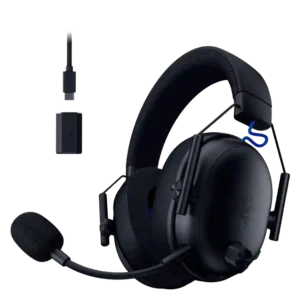
Best for excellent game audio, long-session comfort, clear voice chat, strong battery life, and low-latency wireless. Skip it if you need very high volume, flawless software, or zero tolerance for...
Pros: Overall satisfaction, Sound quality
Cons: Button control usability, Dongle
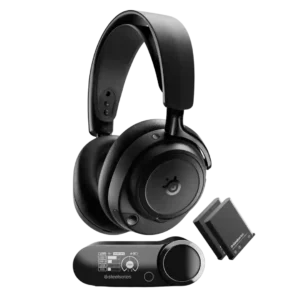
Choose the Arctis Nova Elite if you want top-tier wireless sound, ANC, hot-swap batteries, and multi-device mixing. Skip it if $600 feels excessive, you game on one console, or tight/heavy...
Pros: Sound quality, Connectivity versatility
Cons: Value for money, Carry case quality
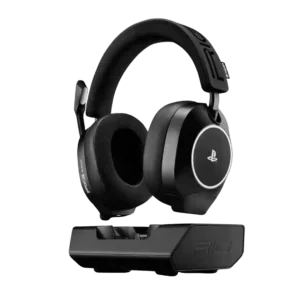
Best for sharp gaming audio, long battery life, an excellent dock, and strong value. Skip it if you need ANC, a detachable mic, maximum console volume, or seamless PS5/Xbox switching.
Pros: Sound quality, Included stand quality
Cons: Detachable microphone convenience
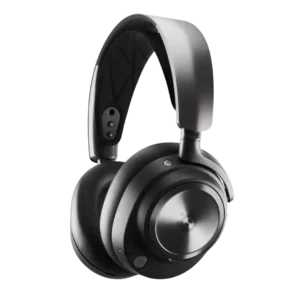
Choose the Arctis Nova Pro Wireless for premium gaming audio, hot-swappable batteries, broad device support, and deep EQ control. Skip it if the high price, mixed mic quality, or uneven...
Pros: Battery, Comfort during long use
Cons: Console compatibility limitations, USB-C