Scorata scores summarize analyzed review evidence on a 1–5 scale; they are not laboratory measurements or a simple average of customer star ratings. Feature scores summarize the reviews covering that feature. The overall score averages feature scores within each review, then combines review averages. When both expert and customer evidence are available, those two groups receive equal weight. Products can have different review coverage, so small score gaps do not establish a winner.
Recommendations prioritize important features for the category, with a score of at least 3.5, a gap of at least 0.25 points and at least two supporting reviews per product. Features with widely varying scores or broad connectivity contexts are excluded from recommendations. These safeguards do not establish statistical significance.
Quick verdict
What each product is best for
The review evidence points to a tradeoff: side character depth and user interface design versus accessibility options and immersion. Choose according to which strengths matter more to you; the overall score alone does not settle that choice.
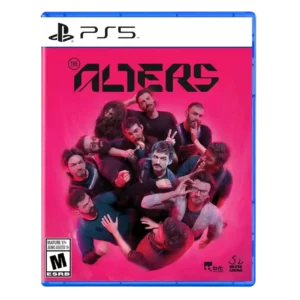
Choose The Alters for side character depth and user interface design.
Choose Dispatch for accessibility options and immersion.
Why these recommendations?
The Alters
Where It Has the Edge
side character depth is 5.0 vs 2.5. Side character depth was praised in the reviews that addressed it, with the Alters described as distinct and...
user interface design is 4.2 vs 2.0. UI design was mostly praised as clean, tactile, and not intrusive, with some interface quirks noted.
originality is 4.7 vs 4.3. Originality was strongly praised, with reviewers calling the concept unique, uncategorizable, ambitious, or unlike anything else.
Dispatch
Where It Has the Edge
accessibility options is 4.4 vs 3.0. Accessibility is a clear strength, with reviewers highlighting QTE disabling, unlimited hacking attempts, censor options, and other settings....
immersion is 5.0 vs 4.5. Dispatch’s interactive-TV structure can be highly absorbing, helped by character attachment and story-gameplay integration. Reviewers who wanted more...
replay value is 4.6 vs 4.3. Replay appeal is strong despite constrained branching. Reviewers repeatedly return for alternate relationships, endings, character outcomes, or simply...
The Alters4.2 overall score
Dispatch4.3 overall score
Compare features
Scores are out of 5. Missing scores mean missing review evidence, not a missing feature.
Scored on both products
Other features
Onboarding experience
The Alters
5.0
Dispatch
1.5
Details and evidence for onboarding experience
The Alters
Onboarding was praised for introducing many systems without overwhelming the player.
Onboarding is inconsistent: some reviewers find the systems intuitive, while others say mechanics, icons, and powers are poorly explained. The game becomes easier to read with experience.
Supporting characters are broadly charming and memorable, but screen time is uneven. Several reviewers wanted more development for characters outside the central Invisigal-focused arc.
Hero leveling and special abilities add useful strategic depth to dispatch shifts. Reviewers enjoy tailoring stats and seeing mechanical growth parallel character development.
Action scenes and set pieces receive strong visual praise, with energetic staging and flashy presentation making otherwise light interaction feel exciting.
Accessibility is a clear strength, with reviewers highlighting QTE disabling, unlimited hacking attempts, censor options, and other settings. A few reviewers still wanted more input simplification.
Production polish is frequently compared with high-budget animation, with strong art, sound, and scene direction. A few unfinished visuals and platform quirks keep it from being uniformly flawless.
Most reviewers praised the blended survival, management, and narrative mechanics as polished or inventive, though a few found the underlying gameplay basic.
Gameplay opinion is mixed: the dispatching work can be clever and satisfying, but the overall game is intentionally light and some supporting minigames feel shallow or repetitive.
The streamlined interactive-TV format sacrifices traditional exploration. Reviewers who miss walking around environments see that as a real limitation even while accepting the faster pacing.
Dialogue is a major strength: sharp, naturalistic, witty banter makes the workplace ensemble feel alive. The crass humor is divisive, but the best exchanges repeatedly land.
Portable play is a good fit, especially on Steam Deck and Switch hardware. Steam Deck performance drew particularly strong praise, while Switch 2 was seen as convenient but not the best portable version.
Pacing is generally praised for short episodes, cliffhangers, and strong momentum. A few reviewers think the back half rushes important developments or that the episodic structure hurts the ending.
Difficulty is uneven. Some reviewers found dispatching or late hacking stressful and even unfair, while others thought gameplay was too easy, pointing to inconsistent challenge rather than a single stable curve.
Writing is the product’s strongest attribute alongside characters and animation. Reviewers repeatedly praise its sharp banter, sincere emotional beats, and ability to balance workplace comedy with redemption drama.
Animation is one of Dispatch’s most consistently celebrated qualities. Reviewers call it gorgeous, top-notch, fluid, expressive, and comparable to a polished animated series.
Dispatch’s interactive-TV structure can be highly absorbing, helped by character attachment and story-gameplay integration. Reviewers who wanted more direct control were less immersed by its passive stretches.
Character development is a standout, especially the Z-Team’s gradual growth into a found family. A few reviewers wanted more balanced screen time across the large ensemble.
Dispatch combines familiar superhero and Telltale-style ingredients with enough workplace-comedy identity to feel fresh to many reviewers. Some still find the underlying story and world fairly conventional.
The ensemble is repeatedly described as lovable, memorable, and the heart of the game. Even reviewers who criticize the mechanics tend to stay invested because of the Z-Team.
Most reviewers had a very good time with Dispatch, often calling it addictive, hilarious, or a personal favorite. Even mixed reviews generally found the overall experience enjoyable.
Narrative quality was one of the strongest areas, with many reviewers praising the story as compelling, thoughtful, philosophical, or emotionally resonant.
Narrative quality is the clearest consensus strength. Most reviewers praise the superhero workplace story as compelling, heartfelt, and among the better modern interactive dramas, despite some structural caveats.
The dispatch-management loop is frequently praised as strategic, addictive, and well integrated with character drama. Its depth is modest, but many reviewers wanted even more of it.
The audiovisual presentation gives Dispatch a cinematic but intimate atmosphere. Music, lighting, office ambience, and scene staging help the world feel believable and emotionally grounded.
The game’s humor is backed by unusually strong emotional warmth. Reviewers repeatedly mention heartfelt moments, found-family attachment, and endings or character beats that genuinely hit hard.
Visual presentation receives near-universal praise for its polished, animated-series look. A few reviewers spotted unfinished-looking moments, but the overall graphics impression is excellent.
Bug evidence was mixed: several reviewers saw minor bugs, glitches, or stuck characters, while one reported zero bugs and another saw more disruptive issues.
Bugs appear to be minor rather than systemic. One reviewer encountered a few small issues during dispatching, while broader technical impressions were generally strong.
Many reviewers see Dispatch as a meaningful revival or evolution of episodic narrative games, though a minority argue its reduced interactivity limits how innovative it really is.
The comic-inspired presentation earns strong praise for its distinctive, polished look. Reviewers particularly like its stylized superhero aesthetic and character designs.
Controls are mostly straightforward, but mouse gestures and controller navigation can become awkward under time pressure. A few platform-specific input issues reduce confidence in the otherwise simple control scheme.
Robert is praised as an unusually grounded, sympathetic superhero protagonist. His dry personality and gradual emotional recovery give the story a strong center.
Reviewers consistently flag Dispatch as mature rather than child-focused, citing profanity, sexual material, and adult humor. One source considered it acceptable for teens 13+, but several others strongly warned against younger audiences.
Voice acting was strongly praised across many reviews, especially Alex Jordan’s work differentiating the many Jans, with only one mild delivery caveat.
Voice acting is one of the strongest points of agreement. Aaron Paul, Laura Bailey, Matthew Mercer, and the wider ensemble are repeatedly praised, even when individual supporting performances vary.
The user interface is a recurring gameplay complaint, especially on controllers. Reviewers describe selecting map icons as fiddly or confusing when several timed calls overlap.
Mission design is strongest when dispatch calls reflect ongoing character drama and story events. Reviewers praise how field work, team morale, and narrative stakes feed into one another.
Sound is generally strong, especially voice work and cinematic ambience, though some sources criticize weak impact or low sound-effect balance in specific moments.
Hacking is divisive: some find it fun, rewarding, and appropriately challenging, while many others call it the weakest or most repetitive part of the game.
The alternate Los Angeles and SDN workplace are praised for making a familiar superhero setup feel lived-in. Some reviewers find the world archetypal, but strong character and environmental presentation give it personality.
Overall performance is solid, but isolated reports mention delayed inputs, imperfect camera smoothness, or platform video-quality concerns. These issues are usually localized rather than game-wide.
The soundtrack is widely praised for fitting the superhero workplace tone, using synth-heavy scoring and licensed tracks effectively. A few reviewers found it merely decent rather than memorable.
Saving is mostly automatic and dependable, but at least one reviewer disliked the lack of more flexible saving within a run when testing different choices.
Replay value was widely praised because alternate Alters, choices, endings, and remembered dialogue paths encourage repeat runs, though a few reviewers saw replay fatigue.
Replay appeal is strong despite constrained branching. Reviewers repeatedly return for alternate relationships, endings, character outcomes, or simply to revisit the cast and presentation.
Value impressions are positive where price is discussed: one reviewer explicitly considered the complete game worth its $30 asking price, while others broadly recommend buying it for narrative fans.
Casting is widely viewed as a major asset, with professional actors, voice veterans, and online creators generally fitting their roles well. Some sources note unevenness among less experienced performers, but the overall response is strongly positive.
Choice impact is the most divided major feature. Some reviewers felt decisions strongly shaped relationships and endings, while others saw the broader story as railroaded with too many cosmetic or low-consequence choices.
Reviewers generally praised the variety created by survival, puzzles, exploration, branching side quests, and genre mixing, with one caveat about restrictive base building.
Details and evidence for economy and resource balance
The Alters
Resource balance was mostly praised for satisfying pressure and strong management hooks, though some reviewers found it irritating or overly punishing.
Dispatch is a poor fit for younger families because of profanity, sexual material, nudity, and adult humor. Censor options soften some content but do not make the game broadly family-friendly.
Runtime opinions vary. Several reviewers liked the compact eight-episode structure, while others felt the season needed more time for its characters or story and criticized its short length.
Interface clarity is one of the weaker areas when missions become busy. Reviewers report losing track of cursors or icons and struggling to select targets quickly.
The dispatch system is easy to understand over time, and one reviewer praised how the player’s learning curve mirrors Robert’s growth. Poor explanations in other reviews make onboarding less consistently successful.
Dispatch calls cover a broad mix of situations and evolve across episodes. Reviewers generally find the mission variety strong enough to keep the management shifts fresh.
Romance is one of the most criticized story elements. Reviewers cite limited choices, workplace power dynamics, uneven development, and a sense that the game pushes one path more than the other.
Upgrades and passive abilities meaningfully shape dispatch strategy, letting players specialize heroes and improve team synergy as the season progresses.
QTEs look great and can add tension, but their low consequences are a frequent complaint. Some reviewers love their cinematic rhythm; others see them as largely illusory interaction.
Platform versions are generally playable and portable-friendly, but Switch 2 has compromises including forced visual filtering and weaker video quality. Reviewers preferred PS5 for TV play or Steam Deck for portable play.