Scorata scores summarize analyzed review evidence on a 1–5 scale; they are not laboratory measurements or a simple average of customer star ratings. Feature scores summarize the reviews covering that feature. The overall score averages feature scores within each review, then combines review averages. When both expert and customer evidence are available, those two groups receive equal weight. Products can have different review coverage, so small score gaps do not establish a winner.
Recommendations prioritize important features for the category, with a score of at least 3.5, a gap of at least 0.25 points and at least two supporting reviews per product. Features with widely varying scores or broad connectivity contexts are excluded from recommendations. These safeguards do not establish statistical significance.
Quick verdict
What each product is best for
The review evidence points to a tradeoff: value for money and environmental detail versus dialogue quality and frame rate stability. Choose according to which strengths matter more to you; the overall score alone does not settle that choice.
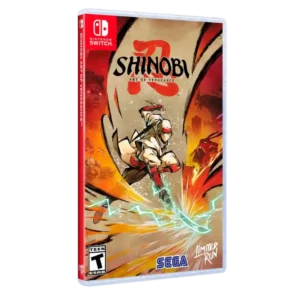
Choose Shinobi: Art of Vengeance for value for money and environmental detail.
Choose Orbitals for dialogue quality and frame rate stability.
Why these recommendations?
Shinobi: Art of Vengeance
Where It Has the Edge
value for money is 4.6 vs 3.3. Value for money is positive overall, especially for combat-focused or completionist players, though one review frames value as...
environmental detail is 5.0 vs 3.8. Environmental detail stands out in reviews that praise painterly backgrounds, large-scale set pieces, and richly detailed level backdrops.
visual effects quality is 4.8 vs 3.7. Visual effects are praised for stylish Ninjutsu, cinematic flourishes, audiovisual impact, and bold combat feedback.
Orbitals
Where It Has the Edge
dialogue quality is 4.2 vs 2.5. The leads' banter, puns, and constant chatter are charming to many reviewers but grating to a smaller group,...
frame rate stability is 4.2 vs 2.9. The intentionally stylized frame cadence generally supports the anime illusion, while technical performance is described as mostly smooth.
writing quality is 3.7 vs 2.8. Warm character banter helps, but the script is frequently criticized for familiar ideas, thin setup, and an underdeveloped...
Shinobi: Art of Vengeance4.4 overall score
Orbitals3.8 overall score
Compare features
Scores are out of 5. Missing scores mean missing review evidence, not a missing feature.
Scored on both products
Other features
Camera behavior
Shinobi: Art of Vengeance
5.0
Orbitals
2.0
Details and evidence for camera behavior
Shinobi: Art of Vengeance
Camera behavior is praised in one review for intelligently changing framing to support mood, traversal, and visual depth.
Difficulty is generally viewed as fair and satisfying, but opinions split on spikes, projectile-heavy sections, undertuned enemies, and some hard optional challenges.
The audiovisual presentation feels highly polished, while a handful of underdeveloped mechanics and technical rough edges keep it from feeling flawless.
The core loop is widely liked as fast, stylish 2D action with strong combat and traversal, with a few reviewers calling it great despite structural complaints.
Pacing is mixed: several reviewers like the length and steady tool rollout, while others say long stages, revisit loops, or samey rhythm weaken momentum.
Content variety is strong across stage themes, optional challenges, enemy encounters, bonus levels, and replay modes, though some side segments are less loved.
The game introduces ideas rapidly and often feels inventive, but several reviewers say later sections reuse concepts or abandon promising mechanics too quickly.
Platforming is often praised as tight, precise, and rewarding, though several reviewers flag optional challenge rooms or late-game traversal as frustrating or inconsistent.
Exploration is divisive: many enjoy secrets, replayable routes, and rewards, while others find backtracking or Metroidvania-lite detours less compelling.
Narrative quality is the most mixed creative element: some call it one of the franchise’s better stories, while many describe it as simple, thin, or tonally inconsistent.
The cassette-futurist setting is visually distinctive, but reviewers often want more depth behind its communities, technology, and late-game revelations.
Level design is usually praised for scale, variety, secrets, and challenge structure, but some reviewers criticize flow, pacing, or underused combat spaces.
Boss design earns many positive notes for memorable, exciting encounters, though a few reviewers find some bosses too easy, clunky, or mechanically weaker than regular fights.
Controls are usually described as smooth, tight, intuitive, and responsive, with a few caveats around moments where scripted control loss or platforming inputs feel awkward.
Value for money is positive overall, especially for combat-focused or completionist players, though one review frames value as more moderate for players skipping side content.
The polished co-op adventure earns recommendations from many reviewers, but its short length makes the asking price a meaningful concern for some buyers.
Replay value is strong for completionists thanks to collectibles, secrets, stage revisits, Arcade Mode, Boss Rush, ranks, and unlockables, though not every reviewer loves revisiting.
Performance optimization varies by platform and context, with PS5 impressions strong but Switch-oriented reviews noting optimization and frame-pacing caveats.
The soundtrack is mostly praised as energetic, fitting, and memorable, though one review finds it weaker than the visuals and Genesis-era expectations.
Accessibility options are praised for adjustable difficulty, assist settings, and sliders that make the challenge more approachable without fully flattening it.
Cooperation is the heart of the game: asymmetric roles, shared problem-solving, and constant coordination make it especially rewarding with a compatible partner.
Local split-screen play is a major strength, turning the compact campaign into an easy recommendation for couples, friends, and families sharing a couch.
Endgame content is generally seen as useful for replay through Arcade Mode, Boss Rush, superbosses, and ranking challenges, though one reviewer sees arcade mode as padding.
The roughly compact campaign leaves many players wanting more; some appreciate the focus, while others consider the ending abrupt and the price harder to justify.