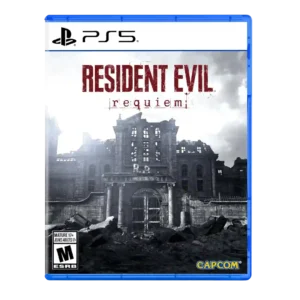
Compare Shinobi: Art of Vengeance vs Resident Evil Requiem

Shinobi: Art of Vengeance

Shinobi: Art of Vengeance

Overall score 4.4 / 5

Based on 30 scored reviews

vs
Resident Evil Requiem

Resident Evil Requiem

Overall score 4.4 / 5

Based on 33 scored reviews

How we score

Scorata scores summarize analyzed review evidence on a 1–5 scale; they are not laboratory measurements or a simple average of customer star ratings. Feature scores summarize the reviews covering that feature. The overall score averages feature scores within each review, then combines review averages. When both expert and customer evidence are available, those two groups receive equal weight. Products can have different review coverage, so small score gaps do not establish a winner.

Recommendations prioritize important features for the category, with a score of at least 3.5, a gap of at least 0.25 points and at least two supporting reviews per product. Features with widely varying scores or broad connectivity contexts are excluded from recommendations. These safeguards do not establish statistical significance.

Quick verdict

What each product is best for

The review evidence points to a tradeoff: endgame content and upgrade system versus writing quality and character development. Choose according to which strengths matter more to you; the overall score alone does not settle that choice.

Choose Shinobi: Art of Vengeance for endgame content and upgrade system.

Choose Resident Evil Requiem for writing quality and character development.

Why these recommendations?

Shinobi: Art of Vengeance

Where It Has the Edge

  • endgame content is 4.1 vs 2.5. Endgame content is generally seen as useful for replay through Arcade Mode, Boss Rush, superbosses, and ranking challenges,...
  • upgrade system is 4.5 vs 3.4. The upgrade system is praised for meaningful amulets, combat additions, and flexible build choices that alter playstyle.
  • difficulty balance is 4.1 vs 3.5. Difficulty is generally viewed as fair and satisfying, but opinions split on spikes, projectile-heavy sections, undertuned enemies, and...

Resident Evil Requiem

Where It Has the Edge

  • writing quality is 4.8 vs 2.8. Writing quality drew strong praise from reviewers who felt Requiem delivered some of the series’ better character work.
  • character development is 4.7 vs 3.3. Character development evidence centered on Grace’s growth and consistency, with reviewers finding her arc effective.
  • performance optimization is 4.6 vs 3.8. Performance optimization was generally strong, with multiple reviewers calling performance solid or flawless.
Shinobi: Art of Vengeance 4.4 overall score
Resident Evil Requiem 4.4 overall score

Compare features

Scores are out of 5. Missing scores mean missing review evidence, not a missing feature.

Scored on both products

Other features

Bug frequency
Shinobi: Art of Vengeance
2.0

Bug frequency is a concern in one review that reports a severe save-wipe issue, even though other technical impressions were cleaner.

Resident Evil Requiem
5.0

Bug frequency was praised by one reviewer who reported no bugs or wall clips.

Checkpoint system
Shinobi: Art of Vengeance
5.0

The checkpoint system is praised as a quality-of-life improvement because it reduces frustration around difficult optional challenges.

Resident Evil Requiem
2.2

Checkpointing drew criticism from one reviewer who reported being set back 30 minutes after dying.

Emotional impact
Shinobi: Art of Vengeance
2.5

Emotional impact is limited in the review evidence, with one reviewer wishing for a stronger moment of emotional weight.

Resident Evil Requiem
4.8

Emotional impact was a clear strength for reviewers moved by Grace, Leon, and the story’s legacy themes.

Writing quality
Shinobi: Art of Vengeance
2.8

Writing quality is mixed-to-weak, with reviewers describing the script as fine, tropey, or not especially nuanced.

Resident Evil Requiem
4.8

Writing quality drew strong praise from reviewers who felt Requiem delivered some of the series’ better character work.

Endgame content
Shinobi: Art of Vengeance
4.1

Endgame content is generally seen as useful for replay through Arcade Mode, Boss Rush, superbosses, and ranking challenges, though one reviewer sees arcade mode as padding.

Resident Evil Requiem
2.5

Endgame content was a repeated concern, especially the lack of Mercenaries or similarly meaningful side content.

Character development
Shinobi: Art of Vengeance
3.3

Character development is limited overall, with one reviewer liking a supporting character but another calling broader character depth minimal.

Resident Evil Requiem
4.7

Character development evidence centered on Grace’s growth and consistency, with reviewers finding her arc effective.

Frame rate stability
Shinobi: Art of Vengeance
2.9

Frame rate stability is mixed, especially on Switch, where reviewers note dips or painful frame-rate issues despite otherwise strong presentation.

Resident Evil Requiem
4.2

Frame rate stability was praised on Switch 2 for a mostly consistent 60 fps with minor dips.

Originality
Shinobi: Art of Vengeance
4.5

Originality is praised where reviewers call the revival fresh for the series rather than a simple nostalgic retread.

Resident Evil Requiem
3.2

Originality was mixed: reviewers liked the structure and perspective split, but several felt the game was safe, familiar, or too referential.

Upgrade system
Shinobi: Art of Vengeance
4.5

The upgrade system is praised for meaningful amulets, combat additions, and flexible build choices that alter playstyle.

Resident Evil Requiem
3.4

The upgrade system received positive evidence for its weapon-upgrade structure and replay incentive.

Immersion
Shinobi: Art of Vengeance
4.0

Immersion is supported by strong presentation and visual depth, though one reviewer says the game remained enjoyable without strongly resonating.

Resident Evil Requiem
4.8

Immersion was praised through Grace’s vulnerability and how strongly it affected player behavior.

Dialogue quality
Shinobi: Art of Vengeance
2.5

Dialogue quality is uneven: one review criticizes a dull character, and another finds paused dialogue barks jarring despite fun narrative moments.

Resident Evil Requiem
3.3

Dialogue quality was mixed between enjoyable deadpan jokes and criticism that Leon could sound corny or caricatured.

Pacing
Shinobi: Art of Vengeance
3.6

Pacing is mixed: several reviewers like the length and steady tool rollout, while others say long stages, revisit loops, or samey rhythm weaken momentum.

Resident Evil Requiem
4.3

Pacing was the most discussed tradeoff: many praised the action-horror balance, while others found the character split lopsided or jarring.

Difficulty balance
Shinobi: Art of Vengeance
4.1

Difficulty is generally viewed as fair and satisfying, but opinions split on spikes, projectile-heavy sections, undertuned enemies, and some hard optional challenges.

Resident Evil Requiem
3.5

Difficulty balance was mixed: some praised flexible challenge, while others felt the game had too much firepower or lacked a hardcore mode.

Progression system
Shinobi: Art of Vengeance
4.6

Progression is praised for steadily adding moves, abilities, upgrades, and customization that keep combat and traversal evolving.

Resident Evil Requiem
4.0

Leon’s progression system was viewed positively as a fairly fleshed-out way to build out his arsenal.

Load times
Shinobi: Art of Vengeance
4.5

Load times receive a positive note from one Switch reviewer who says they did not take too long.

Resident Evil Requiem
5.0

Load times received strong praise for being nearly nonexistent.

Atmosphere
Shinobi: Art of Vengeance
4.5

Atmosphere is supported by presentation touches such as camera framing and mood-setting scenes that help the 2D spaces feel more dramatic.

Resident Evil Requiem
5.0

Atmosphere was a major strength, with tense staging, lighting, audio, and Switch 2 presentation preserving the mood.

Animation quality
Shinobi: Art of Vengeance
4.9

Animation quality is a standout, especially Joe’s motion, hand-drawn character work, and the way combat and traversal read in motion.

Resident Evil Requiem
4.5

Animation quality received positive evidence through praise for Leon’s reload animations.

Narrative quality
Shinobi: Art of Vengeance
3.3

Narrative quality is the most mixed creative element: some call it one of the franchise’s better stories, while many describe it as simple, thin, or tonally inconsistent.

Resident Evil Requiem
3.7

Narrative quality was polarized, with some calling the story strong or captivating and others finding it disappointing, messy, or thin.

Gameplay mechanics
Shinobi: Art of Vengeance
4.4

Gameplay mechanics are praised for depth and power fantasy, though one reviewer argues an execution mechanic lacks meaningful challenge pressure.

Resident Evil Requiem
4.7

Gameplay mechanics were usually praised for combining survival horror and action cleanly, with Grace’s sections singled out as especially strong.

Content variety
Shinobi: Art of Vengeance
4.5

Content variety is strong across stage themes, optional challenges, enemy encounters, bonus levels, and replay modes, though some side segments are less loved.

Resident Evil Requiem
4.8

Content variety was praised for breadth, though some wanted the smaller experiences expanded further.

Camera behavior
Shinobi: Art of Vengeance
5.0

Camera behavior is praised in one review for intelligently changing framing to support mood, traversal, and visual depth.

Resident Evil Requiem
4.7

Camera behavior was praised for making first- and third-person play feel effective, though the choice also shapes the experience heavily.

Visual effects quality
Shinobi: Art of Vengeance
4.8

Visual effects are praised for stylish Ninjutsu, cinematic flourishes, audiovisual impact, and bold combat feedback.

Resident Evil Requiem
5.0

Visual effects quality was praised through the game’s extreme gore and violent presentation.

Environmental detail
Shinobi: Art of Vengeance
5.0

Environmental detail stands out in reviews that praise painterly backgrounds, large-scale set pieces, and richly detailed level backdrops.

Resident Evil Requiem
4.8

Environmental detail was praised for corridors and spaces that felt time-worn and secretive.

Lore depth
Shinobi: Art of Vengeance
4.0

Lore depth gets mild praise where the reviewer appreciates Shinobi’s blend of cultural mythological elements.

Resident Evil Requiem
4.2

Lore depth was praised for giving long-time fans a lot to sift through.

Exploration quality
Shinobi: Art of Vengeance
4.1

Exploration is divisive: many enjoy secrets, replayable routes, and rewards, while others find backtracking or Metroidvania-lite detours less compelling.

Resident Evil Requiem
4.3

Exploration and backtracking were praised when the layouts made revisiting spaces enjoyable rather than tedious.

Innovation
Shinobi: Art of Vengeance
4.8

Innovation is praised where reviewers say the game evolves Shinobi meaningfully instead of merely repeating the past.

Resident Evil Requiem
4.6

Innovation drew praise where reviewers saw Requiem as a step forward or ambitious new baseline for the franchise.

Combat system
Shinobi: Art of Vengeance
4.9

Combat is the most consistently praised attribute, with reviewers calling it fluid, deep, expressive, satisfying, and central to the game’s appeal.

Resident Evil Requiem
4.7

Combat drew broad praise for weight, weapon handling, Leon’s action toolkit, and entertaining encounters, though one review noted some harassment-style friction.

Graphics quality
Shinobi: Art of Vengeance
5.0

Graphics quality is a major strength, with reviewers repeatedly calling the game gorgeous, beautiful, and visually impressive.

Resident Evil Requiem
4.9

Graphics quality was consistently praised across platforms, from PS5 presentation to Switch 2 fidelity.

Enemy variety
Shinobi: Art of Vengeance
4.7

Enemy variety is a strength, with reviewers praising the range of ninjas, soldiers, monsters, bosses, and specialized foes that shape encounters.

Resident Evil Requiem
4.8

Enemy variety was praised through zombies with different retained behaviors and personalities.

Art direction
Shinobi: Art of Vengeance
5.0

The hand-drawn art direction receives near-universal praise for its style, cohesion, painterly look, and strong franchise fit.

Resident Evil Requiem
4.9

Art direction was praised for grotesque beauty and an effective old/new visual mix.

Faithfulness to franchise
Shinobi: Art of Vengeance
4.7

Reviewers broadly describe the revival as faithful to Shinobi’s legacy while modernizing it with new structure, combat depth, and visual presentation.

Resident Evil Requiem
4.7

Faithfulness to franchise was consistently praised as a love letter or culmination that honors Resident Evil’s history.

Fun factor
Shinobi: Art of Vengeance
4.8

Fun factor is high, with many reviewers calling the combat, challenge rooms, and overall ninja fantasy enjoyable or easy to recommend.

Resident Evil Requiem
4.8

Fun factor was very strong overall, with reviewers repeatedly describing the game as exciting, entertaining, and highly enjoyable.

Accessibility options
Shinobi: Art of Vengeance
4.2

Accessibility options are praised for adjustable difficulty, assist settings, and sliders that make the challenge more approachable without fully flattening it.

Resident Evil Requiem
4.2

One reviewer praised the way difficulty and accessibility were balanced rather than treating options as a pure checklist.

Polish
Shinobi: Art of Vengeance
4.8

Polish is praised where reviewers highlight the game as well put together and visually refined.

Resident Evil Requiem
4.7

Polish was praised in reviews that saw Requiem as a polished, confident fusion of old and new Resident Evil.

Crash stability
Shinobi: Art of Vengeance
5.0

Crash stability is strong in the PS5 review that reports no crashes, soft-locks, or freezes over a long playthrough.

Resident Evil Requiem
5.0

Crash stability was praised in a performance review that reported no hard crashes.

Onboarding experience
Shinobi: Art of Vengeance
4.5

Onboarding is praised for easing the player into each move rather than overwhelming them with the full combat kit at once.

Resident Evil Requiem
4.5

Onboarding was praised for easing players into story and lore without demanding deep series knowledge immediately.

Comfort and build

World-building
Shinobi: Art of Vengeance
2.5

World-building is weak in the evidence that explicitly says not to expect captivating world building from the campy action story.

Resident Evil Requiem
4.8

World-building was praised for making the setting feel grotesquely alive.

Sound design
Shinobi: Art of Vengeance
3.5

Sound design is mixed: impact feedback and combat audio are praised, but one reviewer strongly disliked the harsh radio or speaker filter.

Resident Evil Requiem
5.0

Sound design was repeatedly praised as a major driver of fear and atmosphere.

Map and navigation design
Shinobi: Art of Vengeance
3.8

Map and navigation design is mixed: reviewers like map clarity and fast travel, but some cite confusing secret tracking or unclear pits.

Resident Evil Requiem
4.8

Map and navigation design was praised as a useful tool for tracking rooms and missed resources.

Level design
Shinobi: Art of Vengeance
4.1

Level design is usually praised for scale, variety, secrets, and challenge structure, but some reviewers criticize flow, pacing, or underused combat spaces.

Resident Evil Requiem
4.9

Level design was a major strength, especially the care center’s loops, agency, and interconnected mansion-like structure.

Boss design
Shinobi: Art of Vengeance
4.4

Boss design earns many positive notes for memorable, exciting encounters, though a few reviewers find some bosses too easy, clunky, or mechanically weaker than regular fights.

Resident Evil Requiem
3.8

Boss design split reviewers sharply, from excellent and varied encounters to weak, forgettable, or underwhelming boss fights.

Puzzle design
Shinobi: Art of Vengeance
4.0

Puzzle design receives a mild positive note for being logical and not slowing the action down.

Resident Evil Requiem
3.7

Puzzle design landed unevenly: one review liked the body-part riddles, while another said puzzles lacked focus overall.

Performance

Performance optimization
Shinobi: Art of Vengeance
3.8

Performance optimization varies by platform and context, with PS5 impressions strong but Switch-oriented reviews noting optimization and frame-pacing caveats.

Resident Evil Requiem
4.6

Performance optimization was generally strong, with multiple reviewers calling performance solid or flawless.

Soundtrack quality
Shinobi: Art of Vengeance
4.4

The soundtrack is mostly praised as energetic, fitting, and memorable, though one review finds it weaker than the visuals and Genesis-era expectations.

Resident Evil Requiem
4.5

Soundtrack quality was praised for tracks that complemented Leon’s action-heavy sequences.

Controls and connectivity

Protagonist appeal
Shinobi: Art of Vengeance
4.5

Protagonist appeal is positive where Joe Musashi is described as a compelling, badass ninja fantasy rather than a talkative character.

Resident Evil Requiem
5.0

Protagonist appeal was strong where reviewers called Grace the standout lead.

Voice acting
Shinobi: Art of Vengeance
4.0

Voice acting receives mixed-to-positive reactions: some reviews praise the performances, while others call the English voices merely fine or jarring.

Resident Evil Requiem
4.1

Voice acting was mostly praised, especially Grace’s performance, but one review found her delivery manufactured.

Controls responsiveness
Shinobi: Art of Vengeance
4.7

Controls are usually described as smooth, tight, intuitive, and responsive, with a few caveats around moments where scripted control loss or platforming inputs feel awkward.

Resident Evil Requiem
4.7

Controls were praised as responsive and purpose-built, with reviewers saying characters did what they expected and combat balanced heft with responsiveness.

Ownership and support

Replay value
Shinobi: Art of Vengeance
4.1

Replay value is strong for completionists thanks to collectibles, secrets, stage revisits, Arcade Mode, Boss Rush, ranks, and unlockables, though not every reviewer loves revisiting.

Resident Evil Requiem
3.7

Replay value was mixed: several reviewers liked unlocks and repeat runs, while others lamented thin post-game offerings or weaker second playthroughs.

Value for money
Shinobi: Art of Vengeance
4.6

Value for money is positive overall, especially for combat-focused or completionist players, though one review frames value as more moderate for players skipping side content.

Resident Evil Requiem
5.0

Value for money received direct positive evidence from a reviewer who called the game super worth it.

Evidence available for one product

Other features

AI behavior
Shinobi: Art of VengeanceNo score yet
Resident Evil Requiem
4.3

Enemy behavior was often praised as eerie and strategic, though one review found a later stalker overused.

Aiming precision
Shinobi: Art of VengeanceNo score yet
Resident Evil Requiem
2.3

Aiming evidence was mixed: Grace’s shaky aim reinforced vulnerability, while Switch 2 gyro aiming was criticized as poor for horizontal aim.

Core gameplay loop
Shinobi: Art of Vengeance
4.7

The core loop is widely liked as fast, stylish 2D action with strong combat and traversal, with a few reviewers calling it great despite structural complaints.

Resident Evil RequiemNo score yet
Crafting system
Shinobi: Art of VengeanceNo score yet
Resident Evil Requiem
4.2

Crafting was generally seen as strategic and interesting, especially the blood/injector system, though one reviewer found it weird.

Driving mechanics
Shinobi: Art of VengeanceNo score yet
Resident Evil Requiem
5.0

The motorcycle action sequence was praised as one of the most fun moments in the series.

Economy and resource balance
Shinobi: Art of VengeanceNo score yet
Resident Evil Requiem
4.5

Resource balance was praised for forcing tactical decisions about injectors, ammo, and room-clearing.

Facial animations
Shinobi: Art of VengeanceNo score yet
Resident Evil Requiem
5.0

Facial animations were specifically praised as increasingly impressive later in the game.

Fast travel convenience
Shinobi: Art of Vengeance
4.8

Fast travel is repeatedly praised for making revisits, secret hunting, and post-completion cleanup smoother rather than tedious.

Resident Evil RequiemNo score yet
Flying mechanics
Shinobi: Art of Vengeance
3.0

Flying mechanics are mildly criticized in the glider’s case, with the reviewer saying it slows down otherwise snappy traversal.

Resident Evil RequiemNo score yet
Handheld play suitability
Shinobi: Art of VengeanceNo score yet
Resident Evil Requiem
4.8

Handheld suitability was praised because the Switch 2 version looked and ran well both docked and handheld.

Horror tension
Shinobi: Art of VengeanceNo score yet
Resident Evil Requiem
4.7

Horror tension was broadly praised, especially Grace’s early sections, though some reviews found the scares frontloaded or less intense than past entries.

HUD clarity
Shinobi: Art of Vengeance
3.0

HUD clarity receives a mixed score because flashy combat effects can make the player lose track of the action.

Resident Evil RequiemNo score yet
Learning curve
Shinobi: Art of Vengeance
4.5

The learning curve is favorable because reviewers describe the combat as simple to engage with while still rewarding mastery.

Resident Evil RequiemNo score yet
Microtransaction impact
Shinobi: Art of VengeanceNo score yet
Resident Evil Requiem
5.0

Microtransaction impact was praised indirectly through the absence of greedy monetization practices.

Mission variety
Shinobi: Art of Vengeance
4.5

Mission variety is supported by praise for fresh objectives and distinct environments across the stages.

Resident Evil RequiemNo score yet
Monetization fairness
Shinobi: Art of VengeanceNo score yet
Resident Evil Requiem
5.0

Monetization fairness was praised because the game was described as free of greedy practices.

Movement feel
Shinobi: Art of Vengeance
4.8

Movement feel is heavily praised as fast, fluid, snappy, and fun, though one Switch review notes combat can feel slower than traversal.

Resident Evil RequiemNo score yet
Platforming precision
Shinobi: Art of Vengeance
4.0

Platforming is often praised as tight, precise, and rewarding, though several reviewers flag optional challenge rooms or late-game traversal as frustrating or inconsistent.

Resident Evil RequiemNo score yet
Side character depth
Shinobi: Art of Vengeance
2.5

Side character depth is weak in the evidence focused on Ankou, whom one reviewer calls dull despite liking the broader visual design.

Resident Evil RequiemNo score yet
Stealth mechanics
Shinobi: Art of VengeanceNo score yet
Resident Evil Requiem
3.8

Stealth was mostly praised for making Grace’s routes tense and tactical, though one reviewer found stealth options limited.

Tutorial quality
Shinobi: Art of Vengeance
4.5

Tutorial quality is positive where one reviewer says the early tutorials made combat options easy to understand and apply.

Resident Evil RequiemNo score yet
Weapon balance
Shinobi: Art of VengeanceNo score yet
Resident Evil Requiem
5.0

Weapon balance was praised because different weapons had clear uses and opportunities to shine.

Controls and connectivity

Menu usability
Shinobi: Art of Vengeance
5.0

Menu usability is praised through the clean, easy-to-navigate interface that removes friction around fast travel and play.

Resident Evil RequiemNo score yet

Comfort and build

Mission design
Shinobi: Art of Vengeance
4.5

Mission design is praised through comments about well-crafted stages that mix platforming, combat, puzzles, and optional routes.

Resident Evil RequiemNo score yet
User interface design
Shinobi: Art of Vengeance
5.0

User interface design receives praise for being clean and easy to navigate.

Resident Evil RequiemNo score yet

Ownership and support

Platform-specific feature support
Shinobi: Art of VengeanceNo score yet
Resident Evil Requiem
2.0

Platform-specific support was criticized on Switch 2 for not meaningfully using mouse, touchscreen, or useful gyro features.

Save system reliability
Shinobi: Art of Vengeance
3.3

Save reliability is split: one review praises frequent saves, while another reports the serious problem of a save being wiped twice.

Resident Evil RequiemNo score yet

Other Top Video Games to Consider

#1 Well Dweller
4.7

Best for fluid traversal, rewarding exploration, striking art, and forgiving quality-of-life features. Skip it if you want deep combat, radical genre innovation, or consistently demanding bosses.

Pros: difficulty balance, boss design

Cons: innovation, sandbox freedom

#2 Hades II
4.5

Best for superb combat, inventive builds, and richly voiced characters. Skip it if repeated runs, resource gathering, or visually busy battles outweigh the appeal of steady progress.

Pros: overall quality, combat system

Cons: pacing, grind level

#3 Valheim
4.5

Good if you want a beautiful, demanding survival sandbox built around exploration, building, progression, and memorable co-op. Skip it if long resource runs, harsh death recovery, and deliberate pacing sound...

Pros: town-building system, exploration quality

Cons: grind level, fast travel convenience

#4 Grand Theft Auto VI
4.5

Leonida is a breathtakingly alive crime sandbox with memorable protagonists, spectacular heists, and extraordinary detail. The tradeoff is a 30 fps ceiling, occasional control awkwardness, and some progression friction.

Pros: immersion, graphics quality

Cons: grind level, controls responsiveness