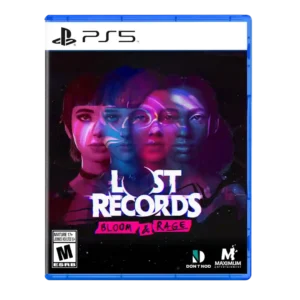
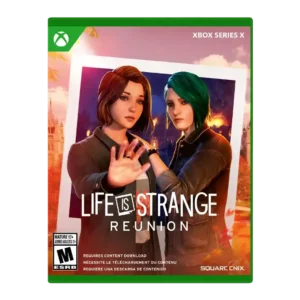
Lost Records: Bloom & Rage
Where It Has the Edge
No clear scored advantage over the other product.

Scorata scores summarize analyzed review evidence on a 1–5 scale; they are not laboratory measurements or a simple average of customer star ratings. Feature scores summarize the reviews covering that feature. The overall score averages feature scores within each review, then combines review averages. When both expert and customer evidence are available, those two groups receive equal weight. Products can have different review coverage, so small score gaps do not establish a winner.
Recommendations prioritize important features for the category, with a score of at least 3.5, a gap of at least 0.25 points and at least two supporting reviews per product. Features with widely varying scores or broad connectivity contexts are excluded from recommendations. These safeguards do not establish statistical significance.
Quick verdict
The available evidence supports the recommendation below, but does not establish an overall winner. Check the remaining features against your priorities.
There is not enough comparable review evidence to recommend Lost Records: Bloom & Rage over the other product.
Choose Life is Strange: Reunion for protagonist appeal and voice acting.
No clear scored advantage over the other product.
Scores are out of 5. Missing scores mean missing review evidence, not a missing feature.
World-building was widely praised for its nostalgic 1990s setting, memory framing, and believable sense of place.
One especially negative assessment finds Caledon lifeless and its conversations narrowly devoted to exposition, making the setting feel populated by plot devices rather than people.
Sound design was mostly positive for soundscape and cinematic effect, though one review reported overlapping audio issues.
The overall audio presentation is rich and cohesive, supporting the intimate tone beyond the individual strengths of the music and performances.
Puzzle design was mixed to negative: a few simple puzzles were praised for the right complexity, but multiple reviews wanted more depth or found specific puzzles clunky.
Rewind-based investigation occasionally produces clever, satisfying problems, but most puzzles are simple, sparse, and rarely test the player for long.
Environmental detail was a clear strength, with reviewers highlighting era-specific props, lived-in rooms, and careful production details.
Some spaces feel rushed and under-detailed, reinforcing the impression that the reused setting did not receive a full finishing pass.
Animation quality was praised where discussed, especially expressive action and realistic imperfect body movement.
Character movement often lacks finish: secondary characters can look stiff, and several accounts mention clipping or awkward motion even when the leads fare better.
Content variety had limited direct evidence, but one review positively highlighted the abundance of collectibles.
Reused Caledon locations, a small number of new spaces, and a narrow set of activities make the adventure feel condensed and repetitive.
Side character depth was often strong, especially around Kat, though one review singled out Dylan’s unresolved arc as a weakness.
Moses, Amanda, Safi, and several returning faces earn praise in individual moments, but much of the supporting cast is sidelined, flattened, or used mainly to move the mystery forward.
Frame rate stability had mixed evidence, with one Steam Deck review saying it never chugged and another PS5 review reporting hefty drops.
Scene transitions and busy areas can stutter or dip noticeably, especially on PS5, adding to the sense of uneven technical preparation.
The core loop was criticized by the few reviewers who addressed it directly, with one saying it needed more as a game and another finding little gameplay at all.
The familiar loop of walking, talking, investigating, and rewinding is approachable and story-focused, but players seeking active or demanding gameplay may find it too passive.
Originality had limited evidence, with one reviewer criticizing the story as trope-heavy.
Familiar settings, restored powers, and heavy reliance on Max and Chloe make the game feel more like nostalgic course correction than a fresh direction.
Graphics quality was broadly strong, with repeated praise for landscapes, character models, lighting, and overall visual presentation.
Autumn color, lighting, and character models can look gorgeous, but texture pop-in, oversaturation bugs, clipping, and low-detail assets make visual quality inconsistent.
Art direction was mostly praised for cinematography, lighting, production design, and visual identity, with one strongly negative dissent calling the aesthetic average.
The warm autumn palette and lightly painterly presentation preserve the series’ distinctive visual identity while giving Caledon an inviting, bittersweet look.
Fun factor was polarized, with enthusiastic enjoyment from several reviewers and one reviewer saying they did not enjoy it.
Players invested in the characters generally have a very good time, especially when swapping protagonists or using Backtalk, despite the limited action.
Writing quality ranged from graceful, hard-truth character writing to complaints about structural problems, contrivance, and uneven dialogue.
Lead-character scenes can be tender, funny, and emotionally precise, but the wider script draws criticism for retcon-heavy exposition, forced exchanges, and uneven plotting.
Dialogue quality leaned mixed to negative, with recurring criticism of clunky, awkward, or unnatural lines despite some qualified praise.
Max and Chloe’s tender exchanges are often a highlight, yet the broader script swings between charmingly corny and awkward, repetitive, or overly expository.
Reviewers split on the simple narrative-adventure mechanics: several liked the camcorder and environmental interaction, while others felt filming and light interactivity became filler.
Max’s rewind is welcomed back and often used cleverly in conversations, while Chloe’s Backtalk adds contrast; both systems are enjoyable but underused and mechanically shallow.
Character development was one of the strongest areas, with broad praise for the four girls, their relationships, and the adult/teen contrasts, offset by a few dissenting views.
Older versions of Max and Chloe feel more mature and emotionally layered to many players, while dissenting voices think they remain too close to their teenage selves or skip needed growth.
Polish received limited direct evidence but was criticized through technical blemishes in one review.
Lighting errors, clipping, texture loading, missing-feeling scenes, and other rough edges make the production feel hurried despite its strong artistic moments.
Atmosphere was a strong point, with praise for dreamlike, creepy, nostalgic, and emotionally charged mood.
The cozy fall setting, intimate pauses, and indie music create a strong sense of place for most players, though a few found some environments sterile or emotionally flat.
Exploration divided reviewers, with one calling object hunting wasteful while another enjoyed moving through the world at a personal pace.
Optional clues and dense interactables can reward careful investigation, but condensed or reused spaces limit discovery and leave some areas feeling stale.
Immersion was mixed: one reviewer praised immediate immersion, while another said an editing-like issue broke immersion.
The warm setting and central relationship can be absorbing, but public secret conversations, reused spaces, and sparse interaction sometimes expose the game’s artificiality.
Pacing was the clearest repeated concern, with many reviews calling the game slow, glacial, rushed in Tape 2, or uneven despite some praise for deliberate buildup.
Some find the roughly eight-to-ten-hour length focused and well judged; others experience a slow opening, rushed explanations, dull stretches, or an abrupt finale.
Bug frequency was a common concern, with many reviews mentioning texture pop-in, progression issues, visual bugs, reloads, or a buggy launch.
Technical experiences vary, but pop-in, blown-out lighting, face-rig glitches, clipping, and occasional restart-worthy problems recur too often to ignore.
Narrative quality was sharply mixed: reviewers praised the character drama and emotional payoffs but often criticized the supernatural mystery, structure, ending, or uneven payoff.
The story is the main fault line: admirers find a focused, heartfelt mystery and satisfying farewell, while detractors see retcons, thin subplots, and an underdeveloped central fire investigation.
Emotional impact was a major strength for many reviewers, with praise for poignancy, tears, nostalgia, grief, and connection, despite a few negative reactions.
The reunion consistently lands hardest in quiet conversations, reconciliations, and the final farewell, producing warmth, sadness, and closure even for some otherwise critical players.
Facial animations were mixed: one review praised expressive faces, another criticized lip syncing, and another praised facial animation effects.
The leads’ expressions are frequently praised for carrying subtle emotion, although face-rig glitches and plasticky side characters create conspicuous low points.
Swann’s protagonist appeal was mixed but mostly positive: several reviewers loved or related to her, while others found her bland or rarely compelling.
Max and Chloe are the clearest success. Their chemistry, contrasting personalities, and vulnerable reconnection carry the game for supporters and soften many of its broader weaknesses.
Voice acting was mostly praised, especially the cast performances, though a few reviewers found Swann’s performance weaker or grating.
The cast is consistently praised, with Hannah Telle and Rhianna DeVries giving Max and Chloe warmth, humor, vulnerability, and believable chemistry.
Soundtrack quality was usually praised, often as excellent, atmospheric, or emotionally effective, though one review found it disappointing.
The hazy indie soundtrack is one of the strongest points of agreement, enhancing reflective scenes and delivering several memorable emotional peaks.
Performance optimization was inconsistent across platforms and patches, ranging from PS5 stability praise to texture loading and popping complaints.
A few playthroughs ran smoothly with few problems, but others report conspicuous performance and presentation faults, making platform experience inconsistent.
Replay value was generally tied to branching outcomes, relationship variation, and alternate endings, though one negative reviewer said they would never replay it.
Missable clues, multiple endings, relationship variations, and character fates give committed players solid reasons to revisit the story.
Value for money was polarized: some called the $40 package a steal or worthwhile, while others were hesitant or said it was not worth buying.
The lower launch price and replay paths feel fair to dedicated fans, but the short runtime and technical roughness make the purchase harder to justify for others.
The accessibility suite is unusually broad, combining profile presets with extensive subtitle, timing, interaction-highlight, sequence-skip, and content-warning controls.
The character roster was praised for diversity, design, and romanceable central characters, with reviewers responding strongly to the core group.
Choice consequences divide opinion sharply. Some paths, clues, and failures can alter endings or character fates, while other decisions feel obvious, performative, or vulnerable to later retconning.
Crash stability had limited direct evidence, with one PS5 reviewer noting no crashes.
Most puzzles and decisions are easy to read, with Chloe’s irreversible Backtalk exchanges supplying more pressure than Max’s forgiving rewind ability.
For many longtime fans, the tone, music, and Max-Chloe bond restore the series’ heart and provide fitting closure. Critics see the same approach as fan service that compromises earlier choices.
Handheld suitability was split, with one reviewer praising improved Steam Deck performance and another strongly discouraging Steam Deck play.
The PS5 version offers no meaningful DualSense support, missing an easy opportunity to strengthen the rewind and investigation mechanics.
Horror tension had limited evidence and mixed results, with one review praising suspense while another felt the mystery lacked momentum.
This finale stays close to the established formula and introduces little that feels genuinely new, even when the dual-protagonist setup works well.
Lore depth was a repeated weakness; reviewers often found the Abyss, supernatural elements, or broader mystery underexplained or unresolved.
Movement feel received limited but positive evidence, with one reviewer saying roaming and camera use usually felt good despite the game’s simplicity.
The opening recap is dense and confusing, so newcomers may understand the basic setup without gaining the character history needed for the emotional payoff.
The relationship and choice systems were often praised for reactivity, especially in Tape 2, though at least one review felt dialogue choices lacked meaning.
Stealth was mostly a weak point: one reviewer liked a short sequence as variety, but others called later stealth awkward, padding-like, or simply not good.
The previewed locations stand out for environmental storytelling, charm, and personality-rich visual composition.
Action prompts are scarce, with very few true QTEs or action sequences to break up the conversation-heavy structure.

Best for fluid traversal, rewarding exploration, striking art, and forgiving quality-of-life features. Skip it if you want deep combat, radical genre innovation, or consistently demanding bosses.
Pros: difficulty balance, boss design
Cons: innovation, sandbox freedom

Good if you want fast, tactical roguelite combat with huge progression depth, striking art, and standout music. Skip it if repetition, resource micromanagement, or a less emotionally satisfying sequel story...
Pros: combat system, progression system
Cons: originality

Good if you want a beautiful, demanding survival sandbox built around exploration, building, progression, and memorable co-op. Skip it if long resource runs, harsh death recovery, and deliberate pacing sound...
Pros: town-building system, exploration quality
Cons: grind level, fast travel convenience

Best for joyful destruction, dense exploration, and a charming DK-Pauline adventure. Skip it if camera quirks, frame-rate dips, easy bosses, or premium Switch 2 pricing are dealbreakers.
Pros: fun factor, world interactivity
Cons: frame rate stability, boss design