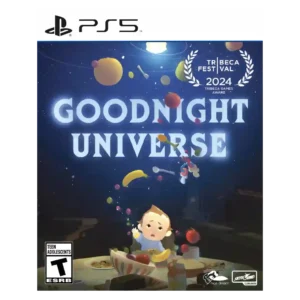
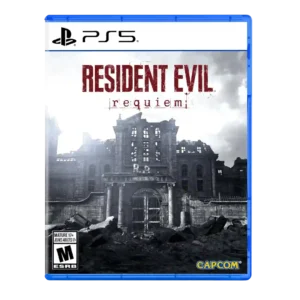
Goodnight Universe
Where It Has the Edge
- originality is 4.6 vs 3.2. Originality was strongly praised, with reviewers repeatedly calling the premise, baby perspective, and overall experience unique or fresh.

Scorata scores summarize analyzed review evidence on a 1–5 scale; they are not laboratory measurements or a simple average of customer star ratings. Feature scores summarize the reviews covering that feature. The overall score averages feature scores within each review, then combines review averages. When both expert and customer evidence are available, those two groups receive equal weight. Products can have different review coverage, so small score gaps do not establish a winner.
Recommendations prioritize important features for the category, with a score of at least 3.5, a gap of at least 0.25 points and at least two supporting reviews per product. Features with widely varying scores or broad connectivity contexts are excluded from recommendations. These safeguards do not establish statistical significance.
Quick verdict
The review evidence points to a tradeoff: originality versus controls responsiveness and stealth mechanics. Choose according to which strengths matter more to you; the overall score alone does not settle that choice.
Choose Goodnight Universe for originality.
Choose Resident Evil Requiem for controls responsiveness and stealth mechanics.
Scores are out of 5. Missing scores mean missing review evidence, not a missing feature.
Handheld suitability had limited negative evidence, with one reviewer saying the eye-tracking design is not a great fit for Steam Deck or handheld PCs.
Handheld suitability was praised because the Switch 2 version looked and ran well both docked and handheld.
The checkpoint system was praised for keeping players close to the action and reducing stress after failures.
Checkpointing drew criticism from one reviewer who reported being set back 30 minutes after dying.
Facial animations had a minor caveat, with one reviewer noting occasional lip-sync issues.
Facial animations were specifically praised as increasingly impressive later in the game.
Originality was strongly praised, with reviewers repeatedly calling the premise, baby perspective, and overall experience unique or fresh.
Originality was mixed: reviewers liked the structure and perspective split, but several felt the game was safe, familiar, or too referential.
Stealth/action sequences were a recurring weak spot, with instant-fail or active-control sections standing out as less enjoyable than the story-focused portions.
Stealth was mostly praised for making Grace’s routes tense and tactical, though one reviewer found stealth options limited.
Polish was somewhat imperfect in limited evidence, with motion and jank issues noted despite the broader emotional success.
Polish was praised in reviews that saw Requiem as a polished, confident fusion of old and new Resident Evil.
Reviewers often praised the mechanics when webcam, blinking, telepathy, and psychic interactions served the story, but several found the console or passive versions thin, clunky, or less meaningful.
Gameplay mechanics were usually praised for combining survival horror and action cleanly, with Grace’s sections singled out as especially strong.
Bug frequency was a minor caveat rather than a major complaint; reviewers mentioned visual bugs or jank but often said they did not derail the experience.
Bug frequency was praised by one reviewer who reported no bugs or wall clips.
Immersion depended heavily on setup: webcam, headphones, and eye inputs often deepened immersion, while missing camera support, rough pacing, or weaker mechanics could reduce intimacy.
Immersion was praised through Grace’s vulnerability and how strongly it affected player behavior.
Narrative quality was the strongest consensus point, with most reviewers praising the emotional family story, unusual premise, and memorable journey, though a minority found it less focused or affecting.
Narrative quality was polarized, with some calling the story strong or captivating and others finding it disappointing, messy, or thin.
Dialogue quality had limited but positive evidence, with one reviewer appreciating small unique dialogue changes tied to choices.
Dialogue quality was mixed between enjoyable deadpan jokes and criticism that Leon could sound corny or caricatured.
Camera behavior was central and mixed: several reviewers loved or respected the webcam/blink mechanics, but others found detection finicky, awkward, mechanical, or platform-dependent.
Camera behavior was praised for making first- and third-person play feel effective, though the choice also shapes the experience heavily.
Fun factor was mostly positive in story and psychic-play moments, but one negative review said the gameplay stopped being fun.
Fun factor was very strong overall, with reviewers repeatedly describing the game as exciting, entertaining, and highly enjoyable.
Pacing was one of the most split areas: some reviewers thought the short runtime was well used, while others cited side-tracked sections, slow stretches, abrupt movement, or rough emotional timing.
Pacing was the most discussed tradeoff: many praised the action-horror balance, while others found the character split lopsided or jarring.
Graphics quality was viewed positively but modestly, with reviewers calling the game easy on the eyes and technically good rather than visually cutting-edge.
Graphics quality was consistently praised across platforms, from PS5 presentation to Switch 2 fidelity.
Environmental detail was mixed: one reviewer found the world not especially detailed, while another praised the overall detail and animation.
Environmental detail was praised for corridors and spaces that felt time-worn and secretive.
Frame rate stability was positive in Switch 2-focused evidence, with no frame hitches or meaningful performance dips reported.
Frame rate stability was praised on Switch 2 for a mostly consistent 60 fps with minor dips.
Reviewers agreed the game is not especially challenging; this worked for passive narrative play but may disappoint players seeking demanding gameplay.
Difficulty balance was mixed: some praised flexible challenge, while others felt the game had too much firepower or lacked a hardcore mode.
Art direction was generally praised for its colorful, charming, expressive, and warm visual identity, even when the world itself was not always detailed.
Art direction was praised for grotesque beauty and an effective old/new visual mix.
Character development was usually praised for grounded family dynamics and three-dimensional characters, though one reviewer found the cast likable but underdeveloped.
Character development evidence centered on Grace’s growth and consistency, with reviewers finding her arc effective.
Accessibility-related evidence was positive, with reviewers appreciating basic webcam requirements and a No Camera option that preserved the experience.
One reviewer praised the way difficulty and accessibility were balanced rather than treating options as a pure checklist.
Writing was widely admired for beauty, sincerity, character moments, and presentation, though a few reviewers felt the story could fall flat or shine unevenly.
Writing quality drew strong praise from reviewers who felt Requiem delivered some of the series’ better character work.
Atmosphere was praised for dreamlike ambience, emotional visual contrast, and a warm, engaging mood.
Atmosphere was a major strength, with tense staging, lighting, audio, and Switch 2 presentation preserving the mood.
Emotional impact was a major strength, with many reviewers reporting tears, lingering feelings, heartfelt moments, or strong investment; a few found the beats less earned.
Emotional impact was a clear strength for reviewers moved by Grace, Leon, and the story’s legacy themes.
Innovation was praised for surprising mechanics and interactive storytelling, although one reviewer felt the good ideas were not fully realized.
Innovation drew praise where reviewers saw Requiem as a step forward or ambitious new baseline for the franchise.
Animation quality received positive evidence for smooth animation and detailed character expression.
Animation quality received positive evidence through praise for Leon’s reload animations.
Load times had limited positive evidence, with scenes transitioning without a loading delay.
Load times received strong praise for being nearly nonexistent.
The onboarding was praised for easing players into Isaac’s powers through natural tutorialization.
Onboarding was praised for easing players into story and lore without demanding deep series knowledge immediately.
Visual effects quality had limited but very positive evidence around inventive mixed 2D, 3D, and hand-drawn late-game visual storytelling.
Visual effects quality was praised through the game’s extreme gore and violent presentation.
Controls drew mixed reactions: some found the control scheme competent or acceptable, while console and later set-piece inputs were described as inaccurate, fiddly, clunky, or unable to keep up.
Controls were praised as responsive and purpose-built, with reviewers saying characters did what they expected and combat balanced heft with responsiveness.
Voice acting was one of the clearest strengths, repeatedly praised for stellar, captivating, passionate, or brilliant performances across the cast.
Voice acting was mostly praised, especially Grace’s performance, but one review found her delivery manufactured.
Isaac’s protagonist appeal was strong, with reviewers highlighting his emotional complexity, witty inner voice, and memorable narration.
Protagonist appeal was strong where reviewers called Grace the standout lead.
Value for money was mixed to positive: most price/value comments considered it worthwhile, while one reviewer felt it was not recommendable at its offered price.
Value for money received direct positive evidence from a reviewer who called the game super worth it.
Platform-specific feature support was a notable drawback on Switch 2 and other console versions because missing camera/eye tracking reduced the intended experience.
Platform-specific support was criticized on Switch 2 for not meaningfully using mouse, touchscreen, or useful gyro features.
Replay value came mainly from choices, callbacks, and altered dialogue rather than major branching endings; several reviewers still found multiple playthroughs worthwhile.
Replay value was mixed: several reviewers liked unlocks and repeat runs, while others lamented thin post-game offerings or weaker second playthroughs.
Puzzle design received praise in limited evidence, especially for a psychic-camera sequence that felt fun and surprisingly challenging.
Puzzle design landed unevenly: one review liked the body-part riddles, while another said puzzles lacked focus overall.
Sound design was a major strength, especially spatial thought-reading audio, headphones, foley, and soundscapes that support the story.
Sound design was repeatedly praised as a major driver of fear and atmosphere.
Performance optimization was praised in limited evidence, with one reviewer noting it does not need a cutting-edge PC.
Performance optimization was generally strong, with multiple reviewers calling performance solid or flawless.
The soundtrack was praised for emotional support, dreamlike or restrained ambience, and strong musical moments, though one reviewer framed it as effective rather than overwhelming.
Soundtrack quality was praised for tracks that complemented Leon’s action-heavy sequences.
Enemy behavior was often praised as eerie and strategic, though one review found a later stalker overused.
Aiming evidence was mixed: Grace’s shaky aim reinforced vulnerability, while Switch 2 gyro aiming was criticized as poor for horizontal aim.
Combat drew broad praise for weight, weapon handling, Leon’s action toolkit, and entertaining encounters, though one review noted some harassment-style friction.
Content variety was praised for breadth, though some wanted the smaller experiences expanded further.
The core loop worked best in chore/checklist or story-observation moments, but reviewers who wanted more active play found it passive or lacking.
Crafting was generally seen as strategic and interesting, especially the blood/injector system, though one reviewer found it weird.
Crash stability was praised in a performance review that reported no hard crashes.
The motorcycle action sequence was praised as one of the most fun moments in the series.
Resource balance was praised for forcing tactical decisions about injectors, ammo, and room-clearing.
Endgame content was a repeated concern, especially the lack of Mercenaries or similarly meaningful side content.
Enemy variety was praised through zombies with different retained behaviors and personalities.
Exploration and backtracking were praised when the layouts made revisiting spaces enjoyable rather than tedious.
Faithfulness to franchise was consistently praised as a love letter or culmination that honors Resident Evil’s history.
Horror tension was broadly praised, especially Grace’s early sections, though some reviews found the scares frontloaded or less intense than past entries.
HUD clarity was praised in limited evidence, with power cues described as clear and not confusing.
Learning curve was praised in limited evidence because the mechanics click quickly and let the storytelling stay central.
Lore depth was praised for giving long-time fans a lot to sift through.
Microtransaction impact was praised indirectly through the absence of greedy monetization practices.
Monetization fairness was praised because the game was described as free of greedy practices.
Leon’s progression system was viewed positively as a fairly fleshed-out way to build out his arsenal.
Side characters were praised where discussed, especially Isaac’s family and the small cast that reviewers came to care about.
Tutorial quality had limited but positive evidence, with the game naturally teaching powers as they become relevant.
The upgrade system received positive evidence for its weapon-upgrade structure and replay incentive.
Weapon balance was praised because different weapons had clear uses and opportunities to shine.
World interactivity was praised for using psychic abilities and environmental interactions to reinforce the heartfelt story.
Boss design split reviewers sharply, from excellent and varied encounters to weak, forgettable, or underwhelming boss fights.
Level design was a major strength, especially the care center’s loops, agency, and interconnected mansion-like structure.
Map and navigation design was praised as a useful tool for tracking rooms and missed resources.
User interface design had a negative console/set-piece example where cursor text highlighting bogged down the experience.
World-building was praised for making the setting feel grotesquely alive.

Best for fluid traversal, rewarding exploration, striking art, and forgiving quality-of-life features. Skip it if you want deep combat, radical genre innovation, or consistently demanding bosses.
Pros: difficulty balance, boss design
Cons: innovation, sandbox freedom

Best for superb combat, inventive builds, and richly voiced characters. Skip it if repeated runs, resource gathering, or visually busy battles outweigh the appeal of steady progress.
Pros: overall quality, combat system
Cons: pacing, grind level

Good if you want a beautiful, demanding survival sandbox built around exploration, building, progression, and memorable co-op. Skip it if long resource runs, harsh death recovery, and deliberate pacing sound...
Pros: town-building system, exploration quality
Cons: grind level, fast travel convenience

Leonida is a breathtakingly alive crime sandbox with memorable protagonists, spectacular heists, and extraordinary detail. The tradeoff is a 30 fps ceiling, occasional control awkwardness, and some progression friction.
Pros: immersion, graphics quality
Cons: grind level, controls responsiveness