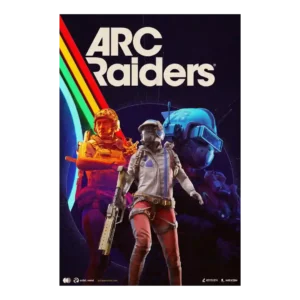
Scorata scores summarize analyzed review evidence on a 1–5 scale; they are not laboratory measurements or a simple average of customer star ratings. Feature scores summarize the reviews covering that feature. The overall score averages feature scores within each review, then combines review averages. When both expert and customer evidence are available, those two groups receive equal weight. Products can have different review coverage, so small score gaps do not establish a winner.
Recommendations prioritize important features for the category, with a score of at least 3.5, a gap of at least 0.25 points and at least two supporting reviews per product. Features with widely varying scores or broad connectivity contexts are excluded from recommendations. These safeguards do not establish statistical significance.
Quick verdict
What each product is best for
The review evidence points to a tradeoff: graphics quality and performance optimization versus polish and world-building. Choose according to which strengths matter more to you; the overall score alone does not settle that choice.
Choose Arc Raiders for graphics quality and performance optimization.
Choose Elden Ring: Tarnished Edition for polish and world-building.
Why these recommendations?
Arc Raiders
Where It Has the Edge
graphics quality is 4.6 vs 3.9. Visuals were broadly praised as gorgeous, detailed, and technically strong, with only minor reservations in a few impressions.
performance optimization is 4.9 vs 4.2. Performance was one of the strongest technical categories, with repeated praise for smooth play and solid optimization.
sound design is 5.0 vs 4.7. Sound design was the most consistently praised attribute, repeatedly described as excellent, informative, immersive, and tension-building.
Elden Ring: Tarnished Edition
Where It Has the Edge
polish is 4.8 vs 3.8. Reviewers overwhelmingly see the shipped edition as polished and dramatically improved over early demos, with remaining rough edges...
world-building is 4.9 vs 4.3. The Lands Between remains one of the game’s signature achievements, combining environmental storytelling, mythology, strange characters, and memorable...
level design is 5.0 vs 4.6. Legacy Dungeons, layered open spaces, underground regions, and the expansion’s vertical layouts are consistently praised as intricate, surprising,...
Arc Raiders4.1 overall score
Elden Ring: Tarnished Edition4.2 overall score
Compare features
Scores are out of 5. Missing scores mean missing review evidence, not a missing feature.
Scored on both products
Controls and connectivity
Voice acting
Arc Raiders
1.9
Elden Ring: Tarnished Edition
5.0
Details and evidence for voice acting
Arc Raiders
Voice acting was the most criticized element, with repeated complaints about AI-generated or flat NPC/vendor performances.
Most reviewers find combat inputs responsive enough that mistakes still feel like the player’s own, which is crucial for Elden Ring’s timing-heavy fights. A few note lower-frame-rate feel or stick dead zones as minor compromises.
Environmental storytelling is strongly praised, with the world’s finer details doing much of the narrative work without relying on conventional exposition.
Even when its fantasy influences are recognizable, reviewers praise the game for transforming them into a distinctive dark-fantasy identity of its own.
Shadow of the Erdtree is praised as exceptional endgame content, adding a full new map, demanding fights, and fresh progression for high-level characters.
Shadow of the Erdtree’s older exploration rewards are criticized as underwhelming, with later updates improving what players receive for some discoveries.
One reviewer sees the starting-class stat spreads as useful for min-maxing, while also flagging the possibility that certain new gear could be unusually strong in PvP.
The overall gameplay design is described as deeply satisfying, with exploration, combat, build experimentation, and progression reinforcing one another.
One returning reviewer specifically praises how easy it is to dive back in without facing a long, sluggish grind, while exploration and flexible leveling let players strengthen naturally.
Frame-rate impressions are genuinely mixed. Many reviewers report a mostly stable 30fps experience with only occasional dips, while others encounter choppiness or severe drops in busy open areas and certain boss fights.
The lore is repeatedly described as dense, strange, and rewarding for players willing to read item descriptions and connect environmental clues, even when the main story remains deliberately opaque.
Reviewers overwhelmingly see the shipped edition as polished and dramatically improved over early demos, with remaining rough edges rarely overwhelming the core experience.
Online activity, messages, summons, and the broader player community can make the world feel more alive, but platform separation and DLC compatibility concerns reduce that benefit for some players.
The game remains demanding to learn, and some systems are communicated too subtly for newcomers. Its open-world structure and plentiful guides make that curve easier to manage than in earlier Souls games.
The sparse HUD is often praised for keeping the screen readable and letting the world dominate the presentation, though small handheld text can make some information harder to read.
The game offers an enormous range of viable weapons and builds, and several new Tarnished weapons are enthusiastically praised. Some new options are clearly outclassed by later DLC gear, while a few may be unusually strong early on.
Distinct biomes, intricate armor, architecture, foliage, underground areas, and dense scenery make the world feel richly authored. Even with Switch 2 reductions, reviewers still find the environmental detail striking.
Switch 2 preserves the game’s visual identity surprisingly well, especially in handheld mode, but resolution softness, reduced draw distance, pop-in, simpler textures, and a clear gap versus PS5/PC are recurring caveats.
The Tarnished Pack’s paid cosmetic-and-starting-gear approach worries some reviewers because it departs from FromSoftware’s usual pattern of more substantial paid expansions or free minor updates.
The art direction remains one of the game’s clearest strengths: dramatic vistas, strange creatures, monumental architecture, and a distinctive dark-fantasy style survive the Switch 2 downgrade exceptionally well.
Reviewers consistently praise the mournful, oppressive, mysterious atmosphere. Even technical compromises rarely diminish the strong sense of place across the Lands Between and Realm of Shadow.
The cycle of exploring, fighting, discovering gear, experimenting with builds, and returning stronger is repeatedly praised as absorbing and difficult to put down.
Limited build resources can discourage experimentation, with one missed opportunity being a safe training space before committing materials to a setup.
Finally overcoming a boss after repeated failures is singled out as one of the game’s most powerful rewards, creating a strong sense of relief and accomplishment.
The open-world reinvention is still described as revolutionary years later, especially in how it turns traditional Souls difficulty into freedom to explore elsewhere and return stronger.
The world is packed with encounters, treasure, NPCs, and unexpected threats, giving exploration a strong sense that something is always happening nearby.
Large-scale lighting, spells, particles, and environmental effects remain impressive on Switch 2, though the busiest scenes can coincide with performance drops.
The camera remains a recurring weakness, especially in tight spaces or during hectic encounters. Several reviewers describe it as awkward enough to be noticeable even when the rest of combat works well.
The game is brutally demanding, but the open world, summons, build changes, leveling, and alternate routes give players many ways to respond to a wall. Some late-game and DLC encounters still draw criticism for spikes or mechanics that feel overly punishing.
The opening is more approachable than earlier Souls games thanks to an optional tutorial, flexible starting classes, and many routes to power. Some reviewers still want clearer explanations of classes and core systems.
The complete package is enormous, with weapons, armor, spells, builds, regions, bosses, dungeons, and the full expansion offering exceptional breadth. The edition-specific extras are much smaller, so returning owners may find the genuinely new material modest.
Despite the punishment, reviewers repeatedly describe the game as exhilarating, addictive, and hard to put down, with combat victories and exploration delivering sustained enjoyment.
Runes, flexible stat allocation, upgrades, respec options, and the expansion’s separate progression create strong build freedom. Some DLC-specific progression mechanics remain divisive.
Combat remains one of the package’s biggest strengths, combining precise timing with shields, dodges, magic, summons, weapon skills, mounted fighting, and an enormous range of builds. Reviewers repeatedly describe victories as demanding but deeply satisfying.
Story reactions are mixed: lore-focused reviewers admire its depth and environmental storytelling, while others find the central narrative too sparse or easy to lose track of during free exploration.
Bugs were usually described as rare or occasional, but reviewers still cited frustrating glitches, pop-in, and exploits because losses carry high stakes.
The shipped port is far cleaner than its rough preview build, with many reviewers seeing few serious issues. Pop-in, lighting glitches, resume quirks, and occasional odd bugs still appear in some playthroughs.
Exploration is the most consistently celebrated part of the experience: distant landmarks invite detours, hidden areas reward curiosity, and repeated playthroughs still reveal places, quests, and encounters reviewers missed before.
The combination of sparse interface, atmospheric art, sound, scale, and discovery makes the world exceptionally immersive even after hundreds of hours.
Players are free to change builds, choose routes, delay bosses, use summons, or approach encounters in very different ways, making the game unusually accommodating of personal playstyle.
The online systems remain useful, but Switch 2’s isolated matchmaking pool is viewed as a meaningful loss for a game built around summons, invasions, and asynchronous interaction.
The interface is intentionally restrained and mostly effective, while additions such as a recent-items view make it easier to track newly collected lore and gear.
World-building was a broad strength, with reviewers praising Speranza, map storytelling, lore hooks, and the surface’s lived-in detail despite some dissent.
The Lands Between remains one of the game’s signature achievements, combining environmental storytelling, mythology, strange characters, and memorable regions into a world reviewers describe as unusually rich and coherent.
Legacy Dungeons, layered open spaces, underground regions, and the expansion’s vertical layouts are consistently praised as intricate, surprising, and among FromSoftware’s best work.
The soundscape is praised for reinforcing loneliness, menace, and the weight of combat. Handheld speakers can sound thinner, but the underlying audio design remains strong.
Boss fights are widely admired for spectacle, challenge, and payoff, though some reviewers criticize late-game difficulty spikes, repeated encounters, or weaker bosses in specific regions.
The Switch 2 version benefits from portability and some hardware support, but reviewers miss options such as a performance mode, stronger HDR behavior, and broader online compatibility.
Replay value is exceptional: alternate builds, missed quests, hidden areas, New Game Plus, and the new starting gear give veterans repeated reasons to return.
The final port is dramatically improved from the disastrous 2025 demo and many reviewers call it an impressive technical achievement. Experiences still range from near-faultless to noticeably rough in demanding areas, so optimization is strong but not uniformly flawless.
Battery results vary by test, but most reports land around a couple of hours to roughly two and a half hours. Some reviewers found that acceptable for a game this demanding, while others considered the drain a notable portable drawback.
The game is more flexible than earlier FromSoftware titles, but dedicated accessibility accommodations remain limited for players who need broader options.
Reviewers generally praised Arc enemies as unusually intelligent, dangerous, and unpredictable, though one review noted moments where enemies lose track or navigate poorly.
Sites of Grace are generally placed close enough to major fights that failed attempts do not require long runbacks, keeping repeated boss attempts focused on the fight itself.
The new Idus and Heavy Knight starts are generally viewed as strong, useful options for newcomers and repeat runs. A few reviewers think their early equipment can be powerful enough to soften the opening challenge.
The experience remains firmly true to its Souls-like roots, preserving the demanding combat and learning-through-failure identity longtime players expect.
Fast travel is treated as a major quality-of-life strength, letting players escape areas they are not ready for and quickly return after upgrading or changing strategy.
The base game and Shadow of the Erdtree together offer an enormous amount of playtime, commonly described as well over 100 hours and potentially hundreds for thorough explorers or repeat runs.
Portability is the edition’s defining advantage. Most reviewers enjoy exploring, grinding, or tackling shorter objectives in handheld mode, though battery drain, small text, darker scenes, and Joy-Con comfort can limit very long sessions.
Loading is generally acceptable to very fast on Switch 2, especially around fast travel and death, though a few reviewers notice longer waits than on more powerful hardware.
The Game-Key Card approach disappoints reviewers who want the complete game stored on the physical card, since a substantial download is still required.
Build freedom is exceptional: players can reshape stats, weapons, spells, armor, and playstyle with very little long-term commitment to the starting class. The new classes add more useful starting points rather than locking players into fixed roles.
Controller impressions depend heavily on setup: the Pro Controller earns praise, while stock Joy-Cons can feel cramped or tiring during long, demanding fights.
The open world is almost universally praised for freedom, density, verticality, and the way it turns difficulty into a choice to explore elsewhere. Reviewers repeatedly describe it as a benchmark for open-world action RPG design.
Switch 2’s lack of cross-platform multiplayer is a clear limitation, keeping co-op and invasions separated from the larger PlayStation, Xbox, and PC populations.
Shadow of the Erdtree is repeatedly treated as a huge, high-quality inclusion that makes the package feel exceptionally complete. The smaller Tarnished Pack extras draw more mixed reactions, especially when judged as paid content on other platforms.
For newcomers, the base game plus Shadow of the Erdtree is repeatedly called a huge amount of high-quality content for the price. Existing owners have a weaker case to rebuy because the Tarnished-specific extras are comparatively small.
One analysis highlights a mismatch between circulated 60fps claims and the shipped 30fps-class performance, making pre-release performance messaging a notable point of skepticism.