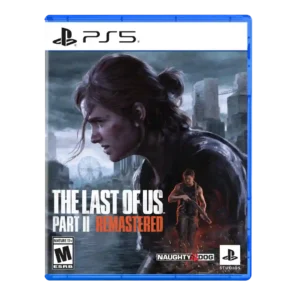
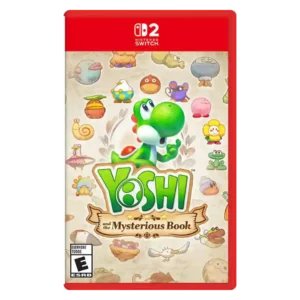
Compare The Last of Us Part II Remastered vs Yoshi and the Mysterious Book

The Last of Us Part II Remastered

The Last of Us Part II Remastered

Overall score 4.4 / 5

Based on 37 scored reviews

vs
Yoshi and the Mysterious Book

Yoshi and the Mysterious Book

Overall score 4.3 / 5

Based on 91 scored reviews

How we score

Scorata scores summarize analyzed review evidence on a 1–5 scale; they are not laboratory measurements or a simple average of customer star ratings. Feature scores summarize the reviews covering that feature. The overall score averages feature scores within each review, then combines review averages. When both expert and customer evidence are available, those two groups receive equal weight. Products can have different review coverage, so small score gaps do not establish a winner.

Recommendations prioritize important features for the category, with a score of at least 3.5, a gap of at least 0.25 points and at least two supporting reviews per product. Features with widely varying scores or broad connectivity contexts are excluded from recommendations. These safeguards do not establish statistical significance.

Quick verdict

What each product is best for

The review evidence points to a tradeoff: world-building and sound design versus polish and exploration quality. Choose according to which strengths matter more to you; the overall score alone does not settle that choice.

Choose The Last of Us Part II Remastered for world-building and sound design.

Choose Yoshi and the Mysterious Book for polish and exploration quality.

Why these recommendations?

The Last of Us Part II Remastered

Where It Has the Edge

  • world-building is 4.8 vs 3.8. World-building was praised for Seattle’s detail, environmental storytelling, and the way the sequel frames grief and factions.
  • sound design is 4.8 vs 4.6. Sound design was praised for 3D audio, directionality, anxiety, and stealth-tension cues.

Yoshi and the Mysterious Book

Where It Has the Edge

  • polish is 5.0 vs 4.4. The presentation, character reactions, and discovery feedback show considerable care and Nintendo-style polish. Even critical reviewers often acknowledged...
  • exploration quality is 4.8 vs 4.2. Exploration is the heart of the game, rewarding curiosity with secrets, creature reactions, and unexpected solutions. Reviewers consistently...
  • content variety is 4.8 vs 4.3. New creatures continually introduce different abilities, interactions, and level gimmicks, so the adventure rarely runs out of ideas....
The Last of Us Part II Remastered 4.4 overall score
Yoshi and the Mysterious Book 4.3 overall score

Compare features

Scores are out of 5. Missing scores mean missing review evidence, not a missing feature.

Scored on both products

Other features

Family friendliness
The Last of Us Part II Remastered
1.5

Family friendliness scored low because one reviewer explicitly described the game as gritty, intense, and extremely violent.

Yoshi and the Mysterious Book
5.0

The gentle tone, absence of harsh failure, and playful experimentation make this a strong family-friendly choice. It is especially welcoming for younger or less experienced players.

Innovation
The Last of Us Part II Remastered
3.0

Innovation was limited in one review, which found No Return fun but not especially unique as a mode.

Yoshi and the Mysterious Book
4.9

The game boldly reframes a Yoshi platformer as an interactive creature study built around experimentation. Reviewers widely praised its willingness to prioritize discovery over conventional stage completion.

Core gameplay loop
The Last of Us Part II Remastered
5.0

The No Return loop was praised as a high-stakes, rewarding way to experience the game’s encounters repeatedly.

Yoshi and the Mysterious Book
3.3

Experimenting with creatures, earning discoveries, and revisiting pages creates a rewarding feedback loop. Players who do not enjoy repeated trial-and-error or collectathon structure may find it repetitive.

Originality
The Last of Us Part II Remastered
3.5

Originality was mixed, with one review finding No Return strange and unusual but artistically awkward.

Yoshi and the Mysterious Book
4.9

The creature-research concept gives the game a distinctive identity within both the Yoshi series and 2D platformers. Its unusual mix of sandbox play, puzzles, and observation feels genuinely fresh.

Difficulty balance
The Last of Us Part II Remastered
4.1

Difficulty was usually viewed positively as tense and intentional, with challenge options and survival pressure fitting the game’s design.

Yoshi and the Mysterious Book
3.1

The main story is extremely forgiving, with no meaningful death penalty and little platforming pressure. Hidden discoveries and completion goals add thoughtfulness, but challenge-focused players may still feel underserved.

Accessibility options
The Last of Us Part II Remastered
4.9

Accessibility options were strongly praised, with reviewers calling the expanded descriptive audio, speech-to-vibration, and broader tools meaningful additions.

Yoshi and the Mysterious Book
4.0

The no-fail structure, optional hints, and multiple control layouts make the game unusually approachable. Some reviewers still wanted stronger visual accessibility options and clearer guidance when puzzles become obscure.

Frame rate stability
The Last of Us Part II Remastered
4.4

Frame rate stability was mostly praised, especially in performance mode, with some caveats around 30fps fidelity mode and certain PC scenes.

Yoshi and the Mysterious Book
5.0

Performance is generally smooth, including busy scenes with many creatures. Reviewers noted only rare dips, with docked play usually presenting the most consistent results.

Polish
The Last of Us Part II Remastered
4.4

Polish was a consistent strength, with reviewers describing the package, presentation, and bonus modes as well-crafted.

Yoshi and the Mysterious Book
5.0

The presentation, character reactions, and discovery feedback show considerable care and Nintendo-style polish. Even critical reviewers often acknowledged the game’s crafted charm.

Exploration quality
The Last of Us Part II Remastered
4.2

Exploration was generally valued for scavenging, optional environmental stories, and player choice, though one reviewer found it sometimes too guided.

Yoshi and the Mysterious Book
4.8

Exploration is the heart of the game, rewarding curiosity with secrets, creature reactions, and unexpected solutions. Reviewers consistently found the discovery process satisfying and inviting.

Graphics quality
The Last of Us Part II Remastered
4.4

Graphics were widely praised as excellent or stunning, but reviewers often stressed that the jump over the PS4/PS5-patched version is modest.

Yoshi and the Mysterious Book
5.0

The bright storybook imagery looks attractive and distinctive, particularly in docked mode. A minority of reviewers thought handheld image quality looked softer than expected.

Art direction
The Last of Us Part II Remastered
4.0

Art direction was praised as visually striking, though one review also noted the remaster could look too dark in places.

Yoshi and the Mysterious Book
4.5

The hand-drawn, watercolor storybook presentation is one of the game’s clearest strengths. Reviewers repeatedly praised its bright environments, imaginative creatures, and warm illustrated look.

Content variety
The Last of Us Part II Remastered
4.3

Content variety was broadly praised, especially No Return, Lost Levels, commentary, guitar free play, skins, speedrun tools, and modifiers, though some extras were called short or uneven.

Yoshi and the Mysterious Book
4.8

New creatures continually introduce different abilities, interactions, and level gimmicks, so the adventure rarely runs out of ideas. Some reviewers wished the best mechanics were developed across more stages.

Atmosphere
The Last of Us Part II Remastered
5.0

Atmosphere was praised as masterful, especially for its oppressive tension and survival-horror mood.

Yoshi and the Mysterious Book
4.5

This is a cozy, whimsical, low-pressure adventure designed for relaxed play. Its sweetness is comforting for most reviewers, though a few found the tone overly sugary or sleepy.

Gameplay mechanics
The Last of Us Part II Remastered
3.5

Gameplay mechanics drew mixed responses: several reviewers liked the remastered combat tools, but one felt the core stealth-loot-shoot loop had aged poorly.

Yoshi and the Mysterious Book
3.9

Creature abilities transform Yoshi’s familiar moves into a wide range of playful experiments and puzzle solutions. A few mechanics feel underdeveloped or awkward, but the overall system is inventive.

Writing quality
The Last of Us Part II Remastered
4.1

Writing quality was polarized: several reviewers praised the ambitious, intentional storytelling, while one criticized the script as unsubtle.

Yoshi and the Mysterious Book
4.5

Creature names, visual jokes, and gentle humor add personality throughout the book. Dialogue and plot writing are simple, serving the playful experiments rather than carrying the experience.

Pacing
The Last of Us Part II Remastered
2.9

Pacing was the most consistent structural complaint, with multiple reviewers saying the campaign felt long, bloated, or uneven despite strong moments.

Yoshi and the Mysterious Book
2.6

The relaxed rhythm works well in short sessions and suits the bedtime-story atmosphere. For some reviewers, repeated dialogue, backtracking, or stop-start puzzle solving made the adventure drag.

Narrative quality
The Last of Us Part II Remastered
4.3

Narrative quality remained divisive but mostly positive, with many reviewers calling it profound or masterful while others criticized its structure, bleakness, and execution.

Yoshi and the Mysterious Book
4.5

The story is light and secondary to the creature experiments, offering just enough context to connect the chapters. Players seeking a strong plot or dramatic stakes may find it thin.

Load times
The Last of Us Part II Remastered
4.8

Load times were consistently praised as much faster and a clear quality-of-life upgrade.

Yoshi and the Mysterious Book
5.0

Loading is quick and unobtrusive, helping the game maintain its relaxed flow between pages and discoveries.

Progression system
The Last of Us Part II Remastered
4.5

Progression in No Return was praised for unlocks, challenges, and longer-term rewards that kept runs moving.

Yoshi and the Mysterious Book
4.3

Stars, discoveries, and newly appearing creatures provide frequent rewards and steadily open more chapters. Revisiting earlier pages with new knowledge adds satisfying layers, though late completion can require persistence.

Fun factor
The Last of Us Part II Remastered
4.4

Fun factor was strongest in No Return and combat-focused extras, though the main story’s grim tone made it less relaxing for some reviewers.

Yoshi and the Mysterious Book
4.5

For players who enjoy curiosity-driven play, the constant small surprises are joyful and frequently smile-inducing. The fun is quieter and more experimental than a traditional action platformer.

Comfort and build

Puzzle design
The Last of Us Part II Remastered
2.0

Puzzle design was a weak point in one review, which complained that environmental puzzles were too few and underdeveloped.

Yoshi and the Mysterious Book
4.3

The strongest puzzles reward observation, experimentation, and lateral thinking rather than reflexes. Some solutions are overly specific or poorly hinted, creating occasional frustration.

Boss design
The Last of Us Part II Remastered
5.0

Boss design stood out in one PC review, which highlighted major fights as some of Naughty Dog’s best.

Yoshi and the Mysterious Book
3.3

Boss encounters provide colorful action breaks and inventive creature-based set pieces. Their impact is softened by the lack of real danger or failure, making some finales feel anticlimactic.

Level design
The Last of Us Part II Remastered
5.0

Level design received strong praise from one reviewer for making linear spaces feel flexible and meaningful.

Yoshi and the Mysterious Book
3.9

Most stages work as compact, open-ended sandboxes filled with interactions rather than simple left-to-right courses. The best pages feel dense and clever, while weaker ones can seem small, empty, or unclear.

World-building
The Last of Us Part II Remastered
4.8

World-building was praised for Seattle’s detail, environmental storytelling, and the way the sequel frames grief and factions.

Yoshi and the Mysterious Book
3.8

The living encyclopedia and its connected ecosystems create an inviting storybook world with memorable creatures. Lore and dramatic context remain intentionally light.

Sound design
The Last of Us Part II Remastered
4.8

Sound design was praised for 3D audio, directionality, anxiety, and stealth-tension cues.

Yoshi and the Mysterious Book
4.6

Cheerful creature noises, discovery cues, and familiar Yoshi effects reinforce the playful tone. The audio feedback gives interactions extra personality.

Controls and connectivity

Age appropriateness
The Last of Us Part II Remastered
3.0

Age appropriateness was limited by the game’s mature themes, violence, and emotional weight, with one reviewer saying younger players may not appreciate it.

Yoshi and the Mysterious Book
4.4

The forgiving main path and playful creature experiments are well suited to children, while hidden discoveries give curious adults more to do. A few puzzles may still require help from an older player.

Protagonist appeal
The Last of Us Part II Remastered
4.0

Protagonist appeal was mixed: Ellie was praised as carrying the sequel by some, while one reviewer found her harder to relate to.

Yoshi and the Mysterious Book
5.0

Yoshi remains exceptionally expressive, adorable, and easy to root for. His reactions to creatures and discoveries give the otherwise light story much of its personality.

Controls responsiveness
The Last of Us Part II Remastered
4.6

Controls were usually described as smooth, responsive, and solid, with PC mouse-and-keyboard support adding precision for some players.

Yoshi and the Mysterious Book
3.7

Yoshi generally feels smooth, familiar, and responsive, especially during ordinary movement and flutter jumping. Certain physics-heavy creatures, throws, and ground-pound inputs can feel finicky or chaotic.

Performance

Soundtrack quality
The Last of Us Part II Remastered
5.0

The soundtrack was praised as atmospheric and emotionally effective.

Yoshi and the Mysterious Book
3.8

The music is gentle, cheerful, and well matched to the cozy environments. Several reviewers felt the recurring themes or short loops became repetitive during longer searches.

Ownership and support

Platform-specific feature support
The Last of Us Part II Remastered
5.0

Platform-specific support was praised for PS5-native upgrades such as load times, DualSense features, and 3D audio.

Yoshi and the Mysterious Book
4.1

Docked play benefits from sharp presentation, smooth performance, and strong use of the Switch 2 display output. Handheld mode remains playable but drew occasional criticism for softer visuals or minor dips.

Value for money
The Last of Us Part II Remastered
4.3

Value for money was strongly positive for the $10 upgrade, with more mixed views for first-time or double-dip buyers at full price.

Yoshi and the Mysterious Book
3.8

The inventive concept and extensive completion goals can justify the purchase for cozy-game fans and completionists. The short, easy main story may feel light for players judging value by campaign length or challenge.

Replay value
The Last of Us Part II Remastered
4.4

Replay value was one of the strongest remaster arguments, driven mainly by No Return, daily/custom runs, unlocks, and added extras.

Yoshi and the Mysterious Book
4.2

Revisited pages gain new creatures, interactions, collectibles, and postgame objectives, giving completionists substantial extra work. Players focused only on the main story will finish much sooner.

Evidence available for one product

Other features

AI behavior
The Last of Us Part II Remastered
4.3

AI behavior was praised in combat-focused reviews for swarming, faction pressure, and strong arena behavior.

Yoshi and the Mysterious BookNo score yet
Aiming precision
The Last of Us Part II Remastered
4.5

Aiming precision received specific praise on PC, where mouse input gave reviewers strong control for headshots.

Yoshi and the Mysterious BookNo score yet
Animation quality
The Last of Us Part II RemasteredNo score yet
Yoshi and the Mysterious Book
4.3

Frame-skipped, stop-motion-like animation gives Yoshi and the creatures a handmade personality that fits the living-book theme. Character reactions are expressive and often part of the charm.

Bug frequency
The Last of Us Part II Remastered
3.3

Bug frequency was mixed: some PC reviewers reported minor UI or texture glitches, while others found the port clean.

Yoshi and the Mysterious BookNo score yet
Character development
The Last of Us Part II Remastered
5.0

Character development was praised for its heavy character work and risky perspective structure.

Yoshi and the Mysterious BookNo score yet
Character roster
The Last of Us Part II Remastered
4.7

The character roster in No Return was praised for bringing secondary characters forward with different loadouts, traits, and playstyles.

Yoshi and the Mysterious BookNo score yet
Co-op experience
The Last of Us Part II RemasteredNo score yet
Yoshi and the Mysterious Book
2.8

The complete absence of co-op was a recurring disappointment, especially for families who enjoyed earlier Yoshi games together. One reviewer appreciated the focused single-player design, but the broader response favored having an option.

Combat system
The Last of Us Part II Remastered
4.6

Combat was one of the strongest areas overall, with reviewers praising its brutal feel, polish, resource pressure, and ability to shine in No Return despite a few dissenting takes.

Yoshi and the Mysterious BookNo score yet
Couch co-op quality
The Last of Us Part II RemasteredNo score yet
Yoshi and the Mysterious Book
4.0

The single-player focus lets stages avoid multiplayer compromises, but families looking for local cooperative play receive no couch co-op mode.

Crafting system
The Last of Us Part II Remastered
4.5

Crafting was praised as part of the game’s excellent survival-combat foundation.

Yoshi and the Mysterious BookNo score yet
Economy and resource balance
The Last of Us Part II Remastered
5.0

Resource balance was praised for keeping ammo and materials scarce enough to make survival tense.

Yoshi and the Mysterious BookNo score yet
Emotional impact
The Last of Us Part II Remastered
5.0

Emotional impact was extremely strong, with reviewers repeatedly describing the story as gutting, heartbreaking, or emotionally shattering.

Yoshi and the Mysterious BookNo score yet
Enemy variety
The Last of Us Part II Remastered
3.5

Enemy variety was mixed: No Return adds faction variety and AI pressure, but one reviewer criticized the limited number of new enemies.

Yoshi and the Mysterious BookNo score yet
Environmental detail
The Last of Us Part II Remastered
4.9

Environmental detail drew strong praise for scenery, foliage, world texture, and dense visual craftsmanship.

Yoshi and the Mysterious BookNo score yet
Facial animations
The Last of Us Part II Remastered
5.0

Facial animation was praised as industry-leading and central to the emotional performances.

Yoshi and the Mysterious BookNo score yet
Faithfulness to franchise
The Last of Us Part II RemasteredNo score yet
Yoshi and the Mysterious Book
3.8

Yoshi’s familiar moves, cheerful personality, and visual nostalgia remain intact, but the structure is a major departure from traditional stage-based platforming. That reinvention delighted many reviewers and disappointed some series purists.

Handheld play suitability
The Last of Us Part II Remastered
4.5

Handheld suitability was praised in one PC review because the Steam Deck version ran well enough to deserve verification.

Yoshi and the Mysterious BookNo score yet
Haptic feedback integration
The Last of Us Part II Remastered
4.7

Haptic feedback integration was strongly praised for bows, weapons, bandaging, traversal, and added immersion, though one reviewer found extended use tiring.

Yoshi and the Mysterious BookNo score yet
Horror tension
The Last of Us Part II Remastered
4.8

Horror tension was praised for causing anxiety, dread, and memorable scare sequences.

Yoshi and the Mysterious BookNo score yet
HUD clarity
The Last of Us Part II RemasteredNo score yet
Yoshi and the Mysterious Book
3.5

Optional exploration tools can expose useful information and help track secrets, with flexible placement on screen. They arrive late and can make the display feel cluttered if too many are enabled.

Mission variety
The Last of Us Part II Remastered
4.3

Mission variety in No Return was praised for randomized objectives and encounter types, with some caveats about uneven encounters.

Yoshi and the Mysterious BookNo score yet
Platforming precision
The Last of Us Part II RemasteredNo score yet
Yoshi and the Mysterious Book
5.0

Basic movement and flutter jumping feel dependable and rarely cause frustration. Precision is intentionally de-emphasized, though a few specialized interactions can be awkward.

Remake/remaster quality
The Last of Us Part II Remastered
4.5

Remaster quality was generally praised as a definitive or worthwhile edition, though the visual upgrade was often called modest and content-focused.

Yoshi and the Mysterious BookNo score yet
Sandbox freedom
The Last of Us Part II Remastered
4.0

No Return’s sandbox-like setup was praised as a fun way to experiment outside the campaign’s narrative constraints.

Yoshi and the Mysterious BookNo score yet
Skill tree depth
The Last of Us Part II Remastered
3.5

Skill systems were split: one reviewer liked the upgrade satisfaction, while another felt No Return upgrades did not meaningfully change play enough.

Yoshi and the Mysterious BookNo score yet
Stealth mechanics
The Last of Us Part II Remastered
4.7

Stealth mechanics were widely praised as tense, flexible, and improved, especially when No Return encouraged new approaches.

Yoshi and the Mysterious BookNo score yet
Visual effects quality
The Last of Us Part II Remastered
3.5

Visual effects were mostly strong, but one PC review noted distracting upscaling artifacts around transparencies.

Yoshi and the Mysterious BookNo score yet
World interactivity
The Last of Us Part II RemasteredNo score yet
Yoshi and the Mysterious Book
4.2

Creatures, foods, terrain, water, temperature, and other systems combine in surprising ways, making pages feel reactive. Occasional physics problems keep the interactions from feeling consistently seamless.

Controls and connectivity

Character customization
The Last of Us Part II RemasteredNo score yet
Yoshi and the Mysterious Book
4.5

Choosing Yoshi colors and naming discovered creatures adds a playful personal touch. Customization is charming but relatively limited beyond those options and a few interface settings.

Voice acting
The Last of Us Part II Remastered
5.0

Voice acting earned unanimous praise from scored reviews, especially for the main cast’s performances.

Yoshi and the Mysterious BookNo score yet

Comfort and build

Map and navigation design
The Last of Us Part II Remastered
2.5

Map and navigation design drew one notable complaint about unclear progression paths in naturalistic environments.

Yoshi and the Mysterious BookNo score yet
Open-world design
The Last of Us Part II Remastered
4.0

The limited semi-open Seattle section stood out positively to one reviewer, who wished more of the game pursued that feeling.

Yoshi and the Mysterious BookNo score yet
User interface design
The Last of Us Part II Remastered
2.5

User interface design had one PC-specific criticism, where mouse-related UI elements could hurt frame rate.

Yoshi and the Mysterious BookNo score yet

Performance

Performance optimization
The Last of Us Part II Remastered
4.4

Performance optimization was generally strong on PS5 and many PC setups, though one PC review reported stutter and texture issues.

Yoshi and the Mysterious BookNo score yet

Other Top Video Games to Consider

#1 Well Dweller
4.7

Best for fluid traversal, rewarding exploration, striking art, and forgiving quality-of-life features. Skip it if you want deep combat, radical genre innovation, or consistently demanding bosses.

Pros: difficulty balance, boss design

Cons: innovation, sandbox freedom

#2 Hades II
4.5

Best for superb combat, inventive builds, and richly voiced characters. Skip it if repeated runs, resource gathering, or visually busy battles outweigh the appeal of steady progress.

Pros: overall quality, combat system

Cons: pacing, grind level

#3 Valheim
4.5

Good if you want a beautiful, demanding survival sandbox built around exploration, building, progression, and memorable co-op. Skip it if long resource runs, harsh death recovery, and deliberate pacing sound...

Pros: town-building system, exploration quality

Cons: grind level, fast travel convenience

#4 Grand Theft Auto VI
4.5

Leonida is a breathtakingly alive crime sandbox with memorable protagonists, spectacular heists, and extraordinary detail. The tradeoff is a 30 fps ceiling, occasional control awkwardness, and some progression friction.

Pros: immersion, graphics quality

Cons: grind level, controls responsiveness