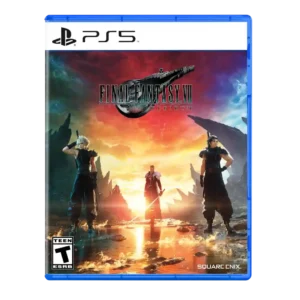
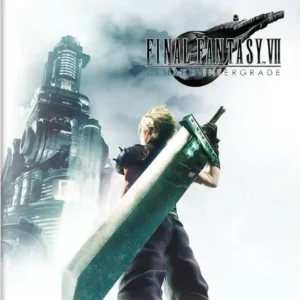
Final Fantasy VII Rebirth
Where It Has the Edge
- content variety is 4.3 vs 2.5. The game is packed with minigames, card battles, side activities, races, and regional diversions; most reviewers praise the...

Scorata scores summarize analyzed review evidence on a 1–5 scale; they are not laboratory measurements or a simple average of customer star ratings. Feature scores summarize the reviews covering that feature. The overall score averages feature scores within each review, then combines review averages. When both expert and customer evidence are available, those two groups receive equal weight. Products can have different review coverage, so small score gaps do not establish a winner.
Recommendations prioritize important features for the category, with a score of at least 3.5, a gap of at least 0.25 points and at least two supporting reviews per product. Features with widely varying scores or broad connectivity contexts are excluded from recommendations. These safeguards do not establish statistical significance.
Quick verdict
The review evidence points to a tradeoff: content variety versus handheld play suitability and performance optimization. Choose according to which strengths matter more to you; the overall score alone does not settle that choice.
Choose Final Fantasy VII Rebirth for content variety.
Choose Final Fantasy VII Remake Intergrade for handheld play suitability and performance optimization.
Scores are out of 5. Missing scores mean missing review evidence, not a missing feature.
Menu usability has a notable complaint around the lack of saveable loadouts for equipment and Materia setups.
Menus and command navigation are generally clear and quick, with combat options easy to reach once learned.
Voice acting is one of the clearest strengths, with reviewers repeatedly calling out expressive, emotional, and well-cast performances.
The main cast is praised for expressive performances, though some reviewers note uneven delivery or cheesy NPC work.
Movement is mixed: broad traversal supports adventure, but dodging, climbing, chocobo handling, and uneven-ground movement drew complaints for feeling awkward or stiff.
Movement and combat flow feel precise and responsive in handheld play.
The game is packed with minigames, card battles, side activities, races, and regional diversions; most reviewers praise the abundance, while a few feel it becomes too much.
Story chapters, side quests, minigames, combat challenges, and Materia experimentation add variety, but some reviewers want more.
Grind and bloat are manageable when players avoid completionist impulses, but the amount of optional content can be overwhelming.
Optional boosts reduce grinding, and several reviewers say the base game rarely demands it.
Environmental detail is heavily praised for making Gaia's landscapes, regions, and familiar locations feel vivid and emotionally resonant.
Midgar’s slums, markets, reactors, and skyline are densely detailed, with occasional soft textures or pop-in.
Exploration is broadly praised for rewarding curiosity with sights, activities, and regional depth, especially when the world design feels handcrafted rather than checklist-driven.
The city rewards wandering and discovery, though its linear structure and limited interaction disappoint open-world-minded players.
Handheld suitability is mixed: Steam Deck/PC handheld play is possible but compromised, while PlayStation Portal use is praised.
Portability is the defining strength: reviewers call handheld play viable, convenient, or the best portable way to play.
Reported bug frequency is low, with multiple reviewers saying they encountered no bugs or only minor visual issues.
The port is generally stable, although one review reports no bugs while another source notes a clipping incident.
The character upgrade system is viewed as more nuanced and strategic than Remake's approach.
Weapon upgrades and Materia builds encourage experimentation and weakness-based planning.
Polish is generally high but not flawless, with minor hiccups, visual issues, or areas needing more shoring up.
The Switch 2 release is widely characterized as polished, smooth, and unusually well finished.
Pacing is mixed: some reviewers like the scenic, character-forward route, but many complain that open-world checklists, minigames, and late sections slow or derail the main story.
Reviewers enjoy the major beats but repeatedly flag slow walks, padded chapters, and occasional pacing whiplash.
Visuals are often praised for cutscenes, vistas, and character models, but performance-mode blur and occasional inconsistency reduce the score in several reviews.
The Switch 2 version is widely praised for lighting, models, and cinematic presentation, with softer textures and hair artifacts as tradeoffs.
Dialogue is praised for charming quiet moments, sharp exchanges, and touching character interactions.
Dialogue and banter often land with humor and personality, though some lines are called cringe-worthy or overly cheesy.
Narrative response is divided: reviewers praise the character-driven journey and remixed story, but several criticize thin macro plotting, convolution, or the ending's execution.
The story is praised for emotional scale and character focus, though meta twists and the unresolved trilogy structure are divisive.
Character development is a standout consensus strength, with reviewers emphasizing deeper bonds, richer backstories, and more rounded portrayals across the party.
Expanded scenes give Cloud, Aerith, Tifa, Barret, Jessie, Biggs, and Wedge more depth; one reviewer finds the main cast less likable.
The roster is praised for adding distinct, memorable party members whose combat styles and personalities broaden the experience.
The playable cast feels distinct and memorable, while supporting characters gain welcome personality and screen time.
Reviewers frequently describe the game, combat, Queen's Blood, and minigames as extremely fun despite pacing or bloat caveats.
Reviewers repeatedly describe the game as fun, engrossing, and hard to put down, especially in combat and replay sessions.
Writing is strongly praised for expanding the original, deepening the human element, and selling relationships, even when broader story choices remain divisive.
Writing is praised for warmth, humor, and character depth, though some reviewers dislike its excesses and convoluted additions.
Load times and fast-travel speed are praised as quick and convenient.
Switch 2 load times are repeatedly praised as fast or nearly absent.
Difficulty balance is mostly manageable and rewarding, but reviewers mention a strange spike, demanding bosses, and encounters that occasionally test patience.
Normal difficulty is usually fair and engaging, while Hard mode offers a sharper post-game challenge.
Combat is one of the strongest points: reviewers repeatedly praise the hybrid action/ATB foundation, Synergy additions, tactical depth, and character-specific playstyles, while only a few note occasional clumsy or frustrating encounters.
The hybrid real-time and ATB system is a consensus strength: strategic, flashy, and rewarding, though aerial combat and some controls draw criticism.
Atmosphere is praised for beauty, loss, escapism, and a strong sense of place.
Midgar feels oppressive, beautiful, and alive, with lighting and environmental detail reinforcing its mood.
Level design ranges from exceptional set pieces to divisive dungeons, with the Cait Sith/Shinra Manor-style segments and hallway-like stretches drawing the sharpest criticism.
Linear chapters and dungeons are often polished but can feel corridor-like, padded, or less interesting than the larger sequel.
Side quests are generally viewed positively when they deepen party relationships or world context, though some reviewers call out filler, repetition, or isolated dull tasks.
Side quests add character and rewards, though many are viewed as basic fetch work or filler.
Boss fights are regarded as major highlights, with reviewers praising their spectacle, challenge, and layered design.
Bosses are a recurring highlight, combining spectacle with demanding patterns and memorable multi-stage fights.
World-building is praised for making Gaia feel more alive, detailed, and newly understandable compared with older versions.
The expanded Midgar turns a few original hours into a dense, memorable city shaped by class, industry, and resistance.
Performance is mixed across platforms and modes: some reviews report smooth play, while others criticize blur, pop-in, texture streaming, or technical tradeoffs.
The port is treated as a technical showcase, preserving a large AAA experience with surprisingly few compromises.
The soundtrack is an overwhelming consensus strength, repeatedly described as incredible, phenomenal, moving, and among the series' best.
The reimagined score is a consistent strength, balancing orchestral emotion, industrial texture, and memorable battle themes.
Replay value is strong thanks to hard mode, New Game Plus, postgame options, relationship outcomes, and many remaining activities.
Replay options, Hard mode, fast-forwarding, and streamlined progression make revisiting attractive.
Value is strong because of the game's length and abundance of content, though some reviewers question whether it asks for too much time.
At $40, reviewers call the package exceptional value for its length and included Intermission; storage and key-card costs temper that praise.
Optional progression boosts, Classic mode, and difficulty settings help players bypass grind, though some reviewers find the boosts overpowered.
Barret’s ranged role is useful, but one reviewer finds his aiming feedback stilted.
Synergy Ability animations are praised for personality and relationship expression.
Art direction receives high praise for maximalist world creation and imaginative modern design.
The camera is usually serviceable but can become frustrating in crowded battles.
The checkpoint system is praised for reducing repetition during tricky chocobo-taming sections.
One review specifically says AI-controlled party behavior and aerial-combat complaints from Remake were addressed through Synergy systems.
Reviewers describe the overall loop as a much larger and more satisfying RPG experience than Remake, with battle, exploration, and side systems keeping them engaged.
Crafting receives limited support and one reviewer found little need to engage with it.
Crash stability is strong in the limited evidence, with one reviewer reporting no crashes.
Emotional impact is very strong overall, producing tears, reflection, and attachment, though one review says the ending's delivery undermines a crucial moment.
Postgame content is viewed positively for adding more to do after the main story.
Enemy variety is praised in combat-focused reviews, though one reviewer found open-world mobs bland and rote.
Expressive faces are credited with amplifying the cast's emotional drama.
Reviewers strongly praise its respect for Final Fantasy VII's legacy while still modernizing or reshaping it.
Fast travel is praised as well-designed, plentiful, and fast.
The locked 30fps is usually stable and responsive, with occasional cutscene dips; some reviewers still want 40 or 60fps.
The expanded Midgar arc commonly takes about 30–40 hours, with side content and completionist runs stretching much longer.
One reviewer appreciates HD Rumble 2 for adding subtle feedback without distraction.
Innovation is praised in the game's density, polish, and inventive design ambition.
The interlocking combat and progression systems can feel overwhelming at first, but reviewers say they become rewarding once understood.
World Intel and regional information are praised for deepening understanding of Final Fantasy VII's world.
Mission variety is mixed because Chadley-style objectives and world intel can repeat across regions despite the game offering many different activities overall.
Onboarding is uneven: Red XIII's recap helps returning players, but multiple reviewers warn newcomers may still be lost.
Originality is supported by reviewers who say the reimagined story still surprises them despite familiarity with the original.
The physical release is a Game Key Card requiring a large download, which collectors describe as disappointing.
Folios and related progression systems are considered useful and flexible by several reviewers, though at least one found character leveling and skill growth confusing.
As a remake/reimagining, Rebirth is widely praised for honoring the original while expanding, modernizing, and sometimes boldly changing it.
The small stealth segments were singled out as a weak link, especially because the engine was not seen as well-suited to stealth maneuvers.
Visual spectacle is strong, although one reviewer notes motion blur can obscure otherwise striking battle imagery.
World interactions such as animals leading to objectives and fast-travel points were seen as pleasant touches that make Gaia feel reactive, though repetition remains a caveat.
Controls are generally responsive and combat inputs feel clean, though Joy-Con layouts and crowded fights can take adjustment.
The lack of cross-save is a small but real disappointment for players moving between platforms.
Intermission adds a worthwhile Yuffie campaign and extra perspective, but its story is often found shorter and less complete than the main game.
PS5-specific features receive light but positive mention through DualSense motion controls and haptics.
Map and compass design is criticized as insufficient for complex terrain such as Gongaga.
Some mandatory or heavily gamified tasks were criticized for interrupting flow and failing to give players breathing room.
The open-world structure is the most divisive area: many reviewers admire its scale and reward loops, while others criticize bloat, repetition, and momentum-breaking busywork.
Sound design is mixed: effects and environmental audio can impress, but multiple reviews mention poor mixing or music drowning out dialogue.

Best for fluid traversal, rewarding exploration, striking art, and forgiving quality-of-life features. Skip it if you want deep combat, radical genre innovation, or consistently demanding bosses.
Pros: difficulty balance, boss design
Cons: innovation, sandbox freedom

Best for superb combat, inventive builds, and richly voiced characters. Skip it if repeated runs, resource gathering, or visually busy battles outweigh the appeal of steady progress.
Pros: overall quality, combat system
Cons: pacing, grind level

Good if you want a beautiful, demanding survival sandbox built around exploration, building, progression, and memorable co-op. Skip it if long resource runs, harsh death recovery, and deliberate pacing sound...
Pros: town-building system, exploration quality
Cons: grind level, fast travel convenience

Leonida is a breathtakingly alive crime sandbox with memorable protagonists, spectacular heists, and extraordinary detail. The tradeoff is a 30 fps ceiling, occasional control awkwardness, and some progression friction.
Pros: immersion, graphics quality
Cons: grind level, controls responsiveness