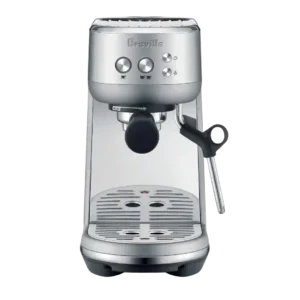
Breville Bambino Espresso Machine
Where It Has the Edge
No clear scored advantage over the other product.

Scorata scores summarize analyzed review evidence on a 1–5 scale; they are not laboratory measurements or a simple average of customer star ratings. Feature scores summarize the reviews covering that feature. The overall score averages feature scores within each review, then combines review averages. When both expert and customer evidence are available, those two groups receive equal weight. Products can have different review coverage, so small score gaps do not establish a winner.
Recommendations prioritize important features for the category, with a score of at least 3.5, a gap of at least 0.25 points and at least two supporting reviews per product. Features with widely varying scores or broad connectivity contexts are excluded from recommendations. These safeguards do not establish statistical significance.
Quick verdict
The available evidence supports the recommendation below, but does not establish an overall winner. Check the remaining features against your priorities.
There is not enough comparable review evidence to recommend Breville Bambino Espresso Machine over the other product.
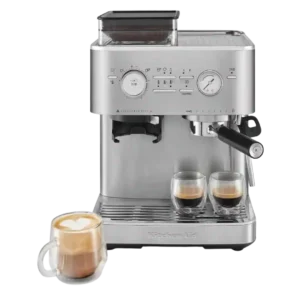
Choose KitchenAid Semi-Automatic Espresso Machine, KES6551 for Capacity and Accessories.
No clear scored advantage over the other product.
Scores are out of 5. Missing scores mean missing review evidence, not a missing feature.
Pressure performance is praised through the 9-bar OPV, pressure stability, and pre-infusion, though the machine still rewards careful puck prep.
Working units reach the ideal pressure zone and can maintain strong extraction. Other tests found vague regulation, inconsistent consecutive performance, defective gauges, or pumps that weakened after only a few weeks.
Heating power is a standout: reviewers praise the ThermoJet system for fast, efficient heat-up and near-instant steam transition.
The thermocoil or thermoblock normally heats quickly and switches modes responsively. A small number of owners reported overheating during grinding or heat that became too weak to brew properly.
Capacity feedback is mixed: the 1.4L tank is often seen as generous for the tiny footprint, while the drip tray and basket capacity draw complaints.
The roughly 2.5-liter water tank is a standout convenience and supports frequent drinks without constant refilling. The removable hopper also makes it easier to switch beans, though rear tank access can be awkward under low cabinets.
Reviewers like that the machine includes baskets and a pitcher, but many criticize the stock portafilter and tamper as light, cheap, or worth upgrading.
The box is unusually complete, with a substantial tamper, multiple baskets, pitcher, filter, and cleaning tools. A few buyers found the pitcher undersized or cheap-feeling, and some wished a dosing funnel were included.
Overall user experience is very positive across all reviews: reviewers call it easy, compact, capable, and unusually rewarding for the price.
Satisfied owners describe an attractive, enjoyable machine that becomes easy to use after a short learning period. Dissatisfied buyers faced confusing setup, erratic controls, leaks, jams, or repeated replacements, creating a sharply divided ownership picture.
The ThermoJet system is praised for near-instant transitions that feel dual-boiler-like, but one reviewer frames the machine as effectively one-task-at-a-time.
The single-boiler design requires espresso to finish before steaming begins. The transition only takes a short reheating pause, but it cannot brew and steam simultaneously.
Hot water access is generally useful for Americanos, tea, and workflow, although one reviewer finds the dispensing method awkward.
The dedicated spout is convenient for Americanos and occasional tea. Some machines delivered water that cooled too quickly or stopped at a small volume, making it unsuitable for properly hot black tea.
Travel-friendliness is unusually strong for an espresso machine, with reviewers noting that it is tiny, light, and even suitcase-friendly.
Rear wheels and a relatively narrow body make the machine easier to pull forward for filling or cleaning. Its substantial weight still limits true portability and can make repositioning cumbersome.
Automation is useful but limited: reviewers mention programmable/volumetric convenience while noting missing sensors or relatively basic customization.
Timed dosing, pressure guidance, cleaning alerts, and status lights provide useful assistance without removing the hands-on work. Some testers found the automation basic, while a few owners experienced stuck purge or descaling behavior.
Recognition evidence comes from TechGearLab naming it a Best Buy Award pick.
QuietMark certification is backed up by notably restrained real-world grinder noise. The machine performs like a genuinely quiet certified appliance rather than relying on the badge alone.
Maintenance is manageable thanks to descaling guidance, water access, and cleaning tools, but reviewers note missing low-water sensing and steam-wand cleaning hassles.
The removable hopper, accessible burrs, cleaning alerts, and mostly automatic descaling make routine care manageable. Persistent water leaks, overflowing drip trays, and messy grinding can turn maintenance into a daily burden.
Used-puck disposal is a recurring weakness because the lack of a 3-way solenoid can leave wetter pucks and make immediate portafilter removal messier.
Spent pucks are often dry, but they can cling stubbornly to the basket. Some users needed a spoon or knife, and one tester worried the loosely retained basket would fall into the trash.
Espresso and beverage quality are consistently praised, from balanced full-bodied shots to lattes reviewers say rival or beat many cafes.
At its best, the machine produces rich, full-bodied espresso with thick crema and balanced flavor. Poorly calibrated or failing units can instead deliver weak, cool shots or prove impossible to dial in.
Cup and tray handling earns praise for cup clearance, an easy-clean drip tray, and indicators, but several reviewers still call the drip tray small.
Removable components make filling and washing straightforward, and the top tray genuinely warms cups. The small drip tray on one test unit needed frequent emptying.
The lack of a built-in grinder is a repeated limitation, and several reviewers stress that a capable grinder is important to unlock the machine’s best results.
The grinder is remarkably quiet, its removable hopper is convenient, and many units dispense fluffy grounds with little static. The biggest weakness is inconsistent calibration and timed dosing, with reports of overfilling, coarse limits, jamming, and severe mess.
Milk steaming is one of the strongest areas, with repeated praise for microfoam, latte art potential, speed, and control, despite some cleaning and wand-size caveats.
Milk performance is a major strength, with several testers producing velvety microfoam, latte art, and good results with dairy or oat milk. Wand placement, limited mobility, or modest power can require practice.
Speed is one of the most consistent strengths, with reviewers repeatedly praising seconds-fast heat-up, quick transitions, and efficient drink workflow.
Cold-start readiness is typically around 20 to 50 seconds, and several testers made back-to-back drinks with minimal waiting. Milk steaming can take longer on the single-heater system, but mode changes are generally quick.
Value is rated very highly: reviewers repeatedly call it a bargain, worth it, hard to beat, or a best budget machine.
The integrated grinder, strong espresso, capable wand, and premium hardware can justify the price, especially when discounted. Value falls sharply for buyers who encounter leaks, calibration problems, or early component failures, and several rivals offer more guidance or control.
Setup is generally described as quick and beginner-friendly, helped by clear instructions, though best results often require a preheat or flushing routine.
Setup ranges from quick and intuitive to needlessly confusing. Priming instructions, basket identification, and grind-and-dose calibration are the main hurdles, and several users needed multiple attempts before producing a satisfying shot.
Warranty and support are mixed: reviewers praise Breville’s support ecosystem but note the standard warranty is shorter than some buyers might prefer.
Two- or three-year warranty coverage and a ten-year repair or parts promise provide meaningful reassurance in some regions. Actual support experiences were uneven, with multiple customers reporting representatives who lacked product knowledge or repeated ineffective troubleshooting.
Filter support is a strength because reviewers value the included pressurized and non-pressurized baskets for both beginners and users with better grinders.
Single- and double-wall baskets support both forgiving beginner preparation and more advanced extraction. Basket identification, water-filter assembly, missing or damaged parts, and limited grinder fineness caused frustration for some users.
Brewing performance is strongly positive when paired with good technique and grinder control, with repeated praise for consistency, crema, and shot quality; dialing in can still be work.
Once properly dialed in, the machine can repeat strong extractions and handle consecutive drinks with little waiting. Results are less dependable when grinder calibration, pressure, heat, or bean changes interfere.
One review flags a concrete marketing accuracy problem: the box claims the portafilter is stainless steel when the reviewer says it is aluminum.
The “smart dosing” label drew repeated skepticism because output often needed manual correction and sometimes varied unpredictably. Anti-static claims were convincing on working units, but a few owners reported the system failing and spraying grounds.
Build quality is viewed as acceptable for the price, with some metal and durability praise offset by a very light body, plastic parts, and a low-end portafilter.
The heavy metal body and substantial hardware feel built for long service, and one heavily used machine was still performing well after about eighteen months. That confidence is undercut by recurring reports of leaks, failed buttons, weak pumps, and grinder breakdowns.
The compact footprint is one of the clearest strengths, with reviewers repeatedly calling it tiny, sleek, space-saving, and easy to fit on limited counters.
The color choices, premium finishes, and streamlined profile earn widespread praise, with several owners fitting it under low cabinets or on crowded counters. Its heavy build and rear tank can still make placement and movement awkward.
Common design flaws include the light body shifting during portafilter use, cheap or awkward parts, wet-puck workflow, and missing conveniences such as a power button.
Small design irritations include plastic portafilter spouts, a grinder dial that must sit exactly on a dot, awkward wand placement, no built-in shot timer, and mess without an added dosing funnel.
Packaging was secure and thoughtfully protected in positive unboxings. Other buyers received a missing water filter, a broken basket, or a machine with an inoperable pressure gauge.
Packaging sustainability is a notable weak point in the CoffeeGeek review, which criticizes styrofoam and excess plastic.
The flat-bottomed 58mm portafilter is one of the most consistently praised features. It rests securely on a counter or scale, making firm, even tamping far easier than with rounded or protruding-spout designs.
A silicone wand handle and immediate steam shutoff make hot parts easier to manage. Temperature settings can feel broad or too hot, and one thermal-camera test found a hot spot near the bean hopper.
Popularity and standing are supported by reviewers calling it a class leader or beloved entry-level machine.
A hidden tray behind the drip tray provides a tidy home for extra baskets and small tools. It is a thoughtful way to reduce countertop clutter.
Users can tune grind, dose, shot volume, temperature, and milk texture while making espresso, Americanos, lattes, and cappuccinos. Controls are flexible but lack saved profiles and offer only three temperature levels.
Exceptionally quiet grinding is the clearest point of agreement. Multiple testers called it the quietest integrated or semi-automatic grinder they had used, making it especially suitable for early mornings and shared homes.
The metal exterior and heavyweight hardware support a premium impression. Plastic nozzles and internal portafilter pieces are a recurring disappointment, especially at this price.
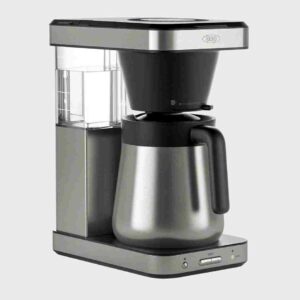
Choose the OXO Brew 8-Cup if you want fast, consistent drip coffee in small or full batches. Skip it if you need programming, app controls, a larger pot, or the...
Pros: Brewing performance and consistency, Overall user experience
Cons: Design flaws
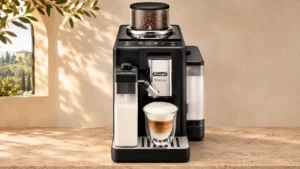
Swappable bean hoppers, intuitive controls and silky automatic milk foam make the Rivelia unusually convenient for varied coffee routines. The premium price, grinder-clearing step and optional cold-foam upgrade are worth...
Pros: Grinder, hopper and dosing system, Espresso and beverage quality
Cons: Iced / cold-brew function quality, Capacity
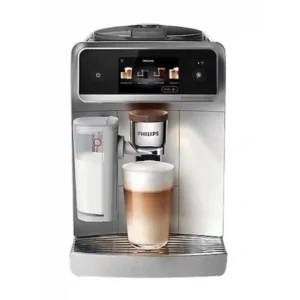
Best for effortless, highly personalized hot and cold coffee in a busy multi-drinker home. Skip it if counter space is tight, you demand silky adjustable microfoam, or the premium price...
Pros: Automation and sensors, Overall user experience
Cons: Design flaws, Mess-free used-puck disposal
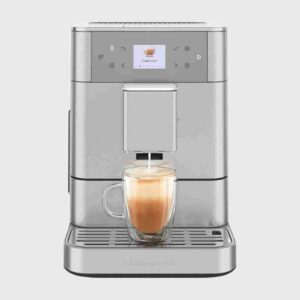
Choose the KitchenAid KF6 for rich espresso, quiet operation, easy cleaning, and strong value in a super-automatic. Skip it if dense cappuccino foam, plant-milk presets, touchscreen controls, or an included...
Pros: Water system, maintenance and descaling, Overall user experience
Cons: Accessories, Design flaws