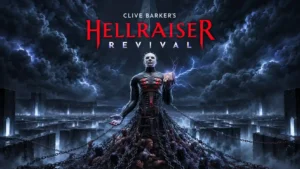
Compare Ghost of Yōtei vs Clive Barker’s Hellraiser: Revival

Ghost of Yōtei

Ghost of Yōtei

Overall score 4.4 / 5

Based on 30 scored reviews

vs
Clive Barker’s Hellraiser: Revival

Clive Barker’s Hellraiser: Revival

Overall score 3.7 / 5

Based on 62 scored reviews

How we score

Scorata scores summarize analyzed review evidence on a 1–5 scale; they are not laboratory measurements or a simple average of customer star ratings. Feature scores summarize the reviews covering that feature. The overall score averages feature scores within each review, then combines review averages. When both expert and customer evidence are available, those two groups receive equal weight. Products can have different review coverage, so small score gaps do not establish a winner.

Recommendations prioritize important features for the category, with a score of at least 3.5, a gap of at least 0.25 points and at least two supporting reviews per product. Features with widely varying scores or broad connectivity contexts are excluded from recommendations. These safeguards do not establish statistical significance.

Quick verdict

What each product is best for

The review evidence points to a tradeoff: haptic feedback integration and controls responsiveness versus world-building. Choose according to which strengths matter more to you; the overall score alone does not settle that choice.

Choose Ghost of Yōtei for haptic feedback integration and controls responsiveness.

Choose Clive Barker’s Hellraiser: Revival for world-building.

Why these recommendations?

Ghost of Yōtei

Where It Has the Edge

  • haptic feedback integration is 5.0 vs 2.3. DualSense haptics and touchpad integrations are widely praised, especially wind, riding, rain, music, and activity feedback.
  • controls responsiveness is 4.3 vs 2.3. Parrying, quick selection, and combat inputs are praised, but one review flags the overall control system as demanding.
  • difficulty balance is 4.0 vs 2.5. Difficulty is mostly praised for rewarding patience and offering customization, though critics cite easy challenge, high damage, or...

Clive Barker’s Hellraiser: Revival

Where It Has the Edge

  • world-building is 4.3 vs 3.8. Environmental details and background material make the setting feel coherent and inhabited. The game expands the franchise’s world...
Ghost of Yōtei 4.4 overall score
Clive Barker’s Hellraiser: Revival 3.7 overall score

Compare features

Scores are out of 5. Missing scores mean missing review evidence, not a missing feature.

Scored on both products

Other features

Load times
Ghost of Yōtei
5.0

Load times are one of the clearest technical wins, with reviewers calling travel and boot-to-game transitions near-instant.

Clive Barker’s Hellraiser: Revival
2.0

Long loading and repeated run-backs can make failed encounters frustrating. One account specifically objects to waits exceeding thirty seconds.

Haptic feedback integration
Ghost of Yōtei
5.0

DualSense haptics and touchpad integrations are widely praised, especially wind, riding, rain, music, and activity feedback.

Clive Barker’s Hellraiser: Revival
2.3

DualSense feedback is inconsistent, and some attacks produce little or no rumble. Players wanting strong tactile impact may find it underwhelming.

HUD clarity
Ghost of Yōtei
4.8

HUD and marker restraint are praised for keeping the view clear and helping exploration feel less like a checklist.

Clive Barker’s Hellraiser: Revival
2.0

The flashing health display can be difficult to read in a fight. A clearer indication of remaining health would make urgent decisions easier.

Movement feel
Ghost of Yōtei
5.0

Movement is praised for fluidity, especially in combat flow and traversal compared with the predecessor.

Clive Barker’s Hellraiser: Revival
2.3

Dodging and first-person movement can feel functional once their rhythm clicks. The inability to vault, awkward evasion, and stiff movement under pressure create recurring friction.

Polish
Ghost of Yōtei
4.8

Polish is a recurring strength, with reviewers calling the release premium, cinematic, and impressively crafted despite a few bugs or animation rough edges.

Clive Barker’s Hellraiser: Revival
2.5

The presentation can feel impressively finished, yet multiple accounts describe rough interactions and technical problems. The result is a game whose polish varies considerably across systems and scenes.

Sandbox freedom
Ghost of Yōtei
3.8

Freedom is moderate: reviewers appreciate loose target order and player-directed wandering, but note that some freedom is an illusion.

Clive Barker’s Hellraiser: Revival
1.5

One player dislikes being confined to the central storyline. There is little scope for deviating into a freely directed adventure.

AI behavior
Ghost of Yōtei
4.5

Enemy perception receives positive attention where stealth is described as sound-driven, with enemies reacting to audio as well as sight.

Clive Barker’s Hellraiser: Revival
2.3

Enemy perception and responses are a weak point: opponents can seem oblivious one moment and unusually perceptive the next. Predictable attacks and questionable pursuit behavior further reduce the threat.

Loot system
Ghost of Yōtei
4.5

Loot evidence is positive where quests and conflicts reward Atsu with valuable loot, information, and clues that feed exploration.

Clive Barker’s Hellraiser: Revival
2.5

One account finds survival too dependent on whether useful weapons happen to appear while looting. That reliance makes difficulty feel less consistently earned.

Onboarding experience
Ghost of Yōtei
4.0

Onboarding is initially intimidating for some, but reviewers say the discovery and indicator systems become enjoyable once learned.

Clive Barker’s Hellraiser: Revival
2.0

Fast-disappearing introductory prompts can leave players uncertain about mechanics they should already understand. The opening could explain crafting and puzzles more clearly.

Tutorial quality
Ghost of Yōtei
4.0

Tutorial/onboarding evidence is modestly positive, praising learn-by-doing design and seamless early teaching.

Clive Barker’s Hellraiser: Revival
2.0

Early tutorial prompts can disappear too quickly to absorb. Missing those explanations makes initial crafting and puzzle interactions more confusing.

Bug frequency
Ghost of Yōtei
4.2

Most reviewers report few or no serious bugs, though some mention an odd freeze, minor technical issues, or rare late-game disruptions.

Clive Barker’s Hellraiser: Revival
2.5

Technical experiences vary from essentially clean playthroughs to intrusive glitches involving audio, interactions, animations, and textures. Problems can interrupt encounters and weaken otherwise effective horror scenes.

Checkpoint system
Ghost of Yōtei
4.0

Checkpoint evidence is limited but positive for convenience, with one reviewer noting instant respawns and mid-fight boss checkpoints that reduce punishment.

Clive Barker’s Hellraiser: Revival
2.3

Some players find checkpoints fair and forgiving, while others report losing substantial time after a failed encounter. Greater generosity would help the more demanding sections.

Platforming precision
Ghost of Yōtei
3.7

Platforming and climbing are mixed: one review says climbing is improved, while others call it awkward or overly gamified.

Clive Barker’s Hellraiser: Revival
2.0

One account criticizes clunky platforming. Precision during traversal is a weakness rather than a highlight.

Economy and resource balance
Ghost of Yōtei
4.5

Resource balance is praised where simplified material categories and less strict upgrade paths encourage more engagement.

Clive Barker’s Hellraiser: Revival
2.9

Scarce ammunition and healing supplies can create meaningful decisions about what to carry, craft, or spend. Some players instead find scarcity punishing or inconsistent, while others accumulate enough supplies to blunt the tension.

Difficulty balance
Ghost of Yōtei
4.0

Difficulty is mostly praised for rewarding patience and offering customization, though critics cite easy challenge, high damage, or artificial duel constraints.

Clive Barker’s Hellraiser: Revival
2.5

Difficulty varies sharply with settings, resource luck, and how heavily the puzzle box is used. Some appreciate the survival challenge, while others encounter unfair spikes or find the tools make normal encounters too easy.

Endgame content
Ghost of Yōtei
3.3

Endgame evidence is mixed: there are post-story tasks and challenge reasons to return, but one review notes no new game plus and another says late content can feel samey.

Clive Barker’s Hellraiser: Revival
1.8

Completing the story offers little extra reward, with New Game Plus notably absent. Players seeking substantial post-campaign activities may be disappointed.

Facial animations
Ghost of Yōtei
4.5

Facial animation is praised in cutscenes and Atsu’s expressions, with reviewers noting visible emotion and strong performance capture.

Clive Barker’s Hellraiser: Revival
3.0

Facial performances can sell the cast’s emotion and menace. Lip-sync problems and inconsistent facial detail occasionally undermine close-up scenes.

Frame rate stability
Ghost of Yōtei
5.0

Frame-rate evidence is very positive, including stable pacing, smooth transitions, and rock-solid 60 FPS in PS5 Pro modes.

Clive Barker’s Hellraiser: Revival
3.6

Some players report stable high frame rates, while others encounter occasional drops or a restrictive platform target. The experience varies across PC, PlayStation, and Switch configurations.

Combat system
Ghost of Yōtei
4.7

Combat is the most broadly praised system, with fluid parries, weapon-swapping, violent impact, and strong duels; criticisms focus on rigidity or fatigue in the rock-paper-scissors weapon setup.

Clive Barker’s Hellraiser: Revival
3.3

Melee weapons, firearms, and the puzzle box can combine into satisfying, gruesome encounters. Reactions range from enthusiastic praise to complaints about stiff swings, weak feedback, repetitive fights, and excessive reliance on powers.

Camera behavior
Ghost of Yōtei
3.3

Camera feedback is mixed: one reviewer says it is improved, while others cite visibility problems or off-screen/camera-management friction.

Clive Barker’s Hellraiser: Revival
2.0

Restricted peripheral vision can make close-range threats harder to track. One player finds the first-person camera limiting in combat.

Animation quality
Ghost of Yōtei
4.0

Combat animation is often praised for brutality and style, but several reviewers note repetition or less-polished NPC/casual dialogue animation.

Clive Barker’s Hellraiser: Revival
2.8

Expressive performances and gruesome action animations can look convincing. Stiff enemy movement, repeated finishers, and occasional animation failures reduce consistency.

Stealth mechanics
Ghost of Yōtei
3.9

Stealth is enjoyable and viable, especially with chain assassinations and tools, but several reviewers call it basic or largely unchanged.

Clive Barker’s Hellraiser: Revival
2.8

Optional sneaking can save resources and make clearing an area quietly satisfying. Forced stealth and unreliable detection are much less popular, especially when enemies spot Aiden through cover.

Emotional impact
Ghost of Yōtei
4.9

Reviewers frequently describe the story as moving, affecting, and emotionally rich, including moments that brought tears or strong sympathy.

Clive Barker’s Hellraiser: Revival
3.8

The themes and ending can leave players thinking about Aiden’s choices after the credits. Emotional engagement is much weaker for those who never connect with the central relationship.

Progression system
Ghost of Yōtei
4.4

Progression is praised for tying upgrades to exploration and skill shrines, though some reviewers want more depth or nuance.

Clive Barker’s Hellraiser: Revival
3.3

New abilities and equipment arrive alongside the story, keeping progression focused on practical tools. Some powers appear too late or receive too few opportunities to develop fully.

Crafting system
Ghost of Yōtei
4.0

Crafting/resource gathering is lightly but positively scored because materials are more generalized, making upgrades easier to engage with.

Clive Barker’s Hellraiser: Revival
3.0

Crafting healing items and repairs can feel useful and focused rather than overloaded with materials. Resource shortages or simplistic implementation make it less satisfying for some players.

Learning curve
Ghost of Yōtei
4.0

Learning curve evidence is positive but modest, emphasizing learn-by-doing design that mirrors Atsu’s practice and attention rather than heavy explanation.

Clive Barker’s Hellraiser: Revival
3.0

Evasion takes time to learn, and the combat becomes more serviceable once its rhythm is familiar. Initial adjustment can make early encounters feel awkward.

Character development
Ghost of Yōtei
4.8

Atsu’s arc is praised for emotional clarity, redemption, growth, and a more intimate character focus than the predecessor.

Clive Barker’s Hellraiser: Revival
3.9

Aiden’s addiction and relationship history give some players a meaningful character arc. Others find the development thin or less convincing than the ideas behind it.

Grind level
Ghost of Yōtei
2.8

Grind sentiment is mixed-to-negative where repeated side activities, collectibles, or checklist tasks create fatigue over time.

Clive Barker’s Hellraiser: Revival
2.0

One account describes an extended stretch as a grind because inventory trouble prevented collecting a useful upgrade. The complaint concerns avoidable friction rather than rewarding repetition.

Weapon balance
Ghost of Yōtei
4.1

Weapon balance is praised for distinct tools and effective counters, but mixed overall because several reviewers find weapons too situational or favorite weapons underpowered outside matchups.

Clive Barker’s Hellraiser: Revival
3.3

The arsenal and environmental projectiles offer several ways to dismember enemies. Gun strength, melee durability, and dominant puzzle-box abilities can make some options feel much more useful than others.

Family friendliness
Ghost of Yōtei
2.0

The family-friendliness score is low because the only explicit family guidance warns against younger gamers due to violence and mature content.

Clive Barker’s Hellraiser: Revival
1.3

The sexual content and graphic horror make playing around children inappropriate. It is better reserved for an adult setting.

Visual effects quality
Ghost of Yōtei
4.0

Visual-effects evidence is positive but limited, with reviewers appreciating enhanced particles, blood, mud, wind, and cinematic environmental effects.

Clive Barker’s Hellraiser: Revival
4.8

Surreal transitions, grotesque effects, and the flow between cinematics and gameplay are frequently admired. These visual tricks help the Labyrinth feel physically impossible.

Writing quality
Ghost of Yōtei
4.3

Writing is praised for creative freshness and emotional ambition, but one dissenting review calls it conventional blockbuster material.

Clive Barker’s Hellraiser: Revival
3.5

The script earns praise for treating pleasure, pain, and toxic relationships as central themes. Heavy exposition, blunt profanity, and uneven resolutions keep it from working equally well for everyone.

Enemy variety
Ghost of Yōtei
4.3

Enemy variety is positively noted through more weapon matchups, multiple factions, and a better range of enemies than before.

Clive Barker’s Hellraiser: Revival
3.6

Cultists and increasingly grotesque enemies offer visual variation and changing threats. Similar attack patterns and a limited practical range of foes make encounters feel repetitive to some players.

Pacing
Ghost of Yōtei
3.6

Pacing is divisive: Game Informer praises it as a triumph, while several reviewers cite predictability, prolonged beats, or odd act structure.

Clive Barker’s Hellraiser: Revival
3.1

Alternating combat, exploration, and surreal Labyrinth passages gives the campaign momentum for many players. Others find repeated chases, long exposition, and late-game encounters drag the pace down.

Lore depth
Ghost of Yōtei
4.5

Lore depth receives positive but limited support through mythic tales and storytelling sequences that expand the world’s legends.

Clive Barker’s Hellraiser: Revival
3.9

Notes, audio logs, and encounters with the Cenobites add appealing background and new perspectives on the mythology. Some players want deeper exploration of those ideas.

Fun factor
Ghost of Yōtei
4.7

Reviewers repeatedly describe the game as enjoyable, addictive, and fun from start to finish, even when noting formulaic elements.

Clive Barker’s Hellraiser: Revival
4.2

Creative kills and outrageous horror make the campaign highly entertaining for many players. Repetition and uneven combat temper that enjoyment for others.

Graphics quality
Ghost of Yōtei
4.9

Visuals receive near-universal praise, from stunning fidelity and landscapes to screenshot-worthy environments and color.

Clive Barker’s Hellraiser: Revival
4.4

Detailed environments, dramatic lighting, and gruesome visuals often impress, especially in the Labyrinth. Character models and the consistency between gameplay and cinematics attract more qualified reactions.

Innovation
Ghost of Yōtei
3.2

Innovation scores trend moderate because reviewers describe Yōtei as refinement rather than reinvention, with familiar systems made better.

Clive Barker’s Hellraiser: Revival
2.7

The puzzle box supplies a fresh angle on familiar survival-horror mechanics. The surrounding shooting, inventory, and encounter design largely follow established conventions, leaving innovation uneven.

Upgrade system
Ghost of Yōtei
4.5

Upgrades are praised for being tied to exploration, weapons, armor, charms, and mastery activities rather than pure XP grinding.

Clive Barker’s Hellraiser: Revival
4.0

Weapon and inventory upgrades provide useful improvements and can ease survival pressure. Some increases in firepower feel less pronounced than expected.

Exploration quality
Ghost of Yōtei
4.7

Exploration is one of the strongest areas, often called rewarding, organic, and meaningful, though one dissenting review finds it over-guided.

Clive Barker’s Hellraiser: Revival
4.3

Searching interconnected rooms for supplies, notes, and secrets makes exploration rewarding. The strongest areas encourage attention to the environment while maintaining an uneasy sense of danger.

Core gameplay loop
Ghost of Yōtei
4.8

The core loop is repeatedly described as compelling, hard to put down, and more fruitful than Tsushima for some reviewers.

Clive Barker’s Hellraiser: Revival
4.3

Exploring, conserving supplies, and using the puzzle box give the survival loop a satisfying rhythm. Banishment adds another tactical option to standard fighting and scavenging.

Environmental detail
Ghost of Yōtei
5.0

Environmental detail earns strong praise for realistic items, dense foliage, weather, light, and painstakingly crafted spaces.

Clive Barker’s Hellraiser: Revival
4.6

Paintings, sculptures, machinery, and grotesque background objects make the environments feel carefully constructed. Small details help turn ordinary rooms and hellish spaces into a convincing extension of the franchise.

Crash stability
Ghost of Yōtei
3.0

Crash evidence is limited to one reviewer reporting two late-game crashes, while most other technical impressions lean stable.

Clive Barker’s Hellraiser: Revival
2.6

Several players report crashes, sometimes with lost progress, while others complete the game without any. Crash reliability is inconsistent across the supplied playthroughs.

Mission variety
Ghost of Yōtei
4.0

Mission variety is lightly positive, with praise for varied missions in different places and diverse objectives.

Clive Barker’s Hellraiser: Revival
4.4

The campaign changes locations, activities, and encounter styles enough to keep many players engaged. Distinct areas and varied set pieces help offset its familiar overall structure.

Immersion
Ghost of Yōtei
3.8

Immersion is a major strength through world navigation, sound, and minimal HUD, though occasional technical or duel design issues can break it.

Clive Barker’s Hellraiser: Revival
4.1

First-person interactions, oppressive environments, and strong audiovisual presentation draw players into the world. Awkward mechanics or technical interruptions can break that involvement.

Narrative quality
Ghost of Yōtei
4.4

The narrative is generally praised as emotional, well-executed, and compelling, but some reviewers criticize predictability, structure, or linear revenge beats.

Clive Barker’s Hellraiser: Revival
4.1

Aiden’s rescue mission explores addiction, consent, and destructive desire, giving some players more to consider than a simple trip through hell. Others find the exposition heavy, the twists predictable, and the ending rushed.

Atmosphere
Ghost of Yōtei
5.0

The atmosphere is consistently framed as a major strength, emphasizing contemplative tone, environmental mood, and cinematic immersion.

Clive Barker’s Hellraiser: Revival
4.7

The Labyrinth sustains a dense, oppressive mood through disturbing imagery, threatening spaces, and a sense that safety never lasts. Atmosphere is one of the game’s most consistently praised qualities.

Dialogue quality
Ghost of Yōtei
2.8

Dialogue and delivery are mixed: some conversations carry emotion well, but several reviewers call line delivery stilted or conversations dated.

Clive Barker’s Hellraiser: Revival
3.0

Dialogue can carry the characters’ menace and eccentric humor effectively. Cheesy exchanges, excessive profanity, and blunt delivery occasionally weaken it.

Side character depth
Ghost of Yōtei
3.7

Side character depth is mixed, with praise for strong companions and villains but criticism that many allies or supporting figures lack involvement.

Clive Barker’s Hellraiser: Revival
4.0

Zora and the eccentric cult members often leave stronger impressions than the protagonist. Some supporting antagonists feel underdeveloped despite their striking presentation.

Art direction
Ghost of Yōtei
4.9

Reviewers strongly praise the painterly visual identity, lighting, color, and intentional environmental effects, with only mild familiarity concerns.

Clive Barker’s Hellraiser: Revival
4.7

Surreal flesh, metal, religious imagery, and impossible architecture give the game striking visual character. The strongest praise concerns imaginative environments rather than novelty in the underlying mechanics.

Accessibility options
Ghost of Yōtei
3.0

Accessibility evidence is limited and mixed: TechRadar notes helpful subtitles, visibility, control simplification, and combat assists, but says the suite is lighter than some PS5 peers and lacks colorblind options.

Clive Barker’s Hellraiser: Revival
2.8

Accessibility settings receive some appreciation, but subtitle mismatches or missing lines can hinder comprehension. Available options do not eliminate every presentation or readability problem.

Originality
Ghost of Yōtei
3.0

Originality is moderate: reviewers repeatedly say Yōtei does not revolutionize the formula, but many accept that as focused refinement.

Clive Barker’s Hellraiser: Revival
2.9

Hellraiser’s imagery and puzzle-box powers give the game an identity of its own. Its survival-horror structure remains heavily familiar, which some welcome and others find derivative.

Gameplay mechanics
Ghost of Yōtei
4.3

General mechanics are praised as refined and improved, though some reviewers call them reused rather than evolutionary.

Clive Barker’s Hellraiser: Revival
4.4

The Genesis Configuration gives combat and puzzles a distinctive hook through telekinesis, fire, and banishment. Its most enthusiastic admirers enjoy creative kills, while critics find its potential limited or its powers too dominant.

Content variety
Ghost of Yōtei
4.3

Reviewers praise the amount of meaningful activities and handcrafted diversions, while a few note that repeated open-world tasks can become chores.

Clive Barker’s Hellraiser: Revival
4.4

Distinct environments, changing activities, and several combat tools keep the campaign varied for many players. Its best stretches offer more than a succession of similar corridors.

Aiming precision
Ghost of Yōtei
2.5

The only scored aiming-related evidence is negative, with one reviewer saying auto-targeting hindered them and contributed to deaths.

Clive Barker’s Hellraiser: Revival
2.6

Aiming is serviceable for some players, especially with a mouse. Aggressive aim assist, awkward headshot targeting, and uneven firearm precision frustrate others.

Faithfulness to franchise
Ghost of Yōtei
4.7

Yōtei is viewed as a worthy successor that preserves Ghost of Tsushima’s best ideas while refining them around Atsu.

Clive Barker’s Hellraiser: Revival
4.7

The game embraces the franchise’s sadomasochism, grotesque imagery, and philosophy of pleasure and pain rather than softening them. Many consider it an unusually faithful adaptation, even when they dislike its combat or story choices.

Character roster
Ghost of Yōtei
4.5

The supporting ensemble is viewed positively in several reviews, though some reviewers find side figures underused or shallow.

Clive Barker’s Hellraiser: Revival
4.5

Returning Cenobites are welcomed, and regular interactions with the familiar cast are appreciated. Their presence strengthens the franchise connection beyond Pinhead alone.

Skill tree depth
Ghost of Yōtei
4.5

Skill depth is praised where charms, loadouts, weapon skills, and spirit attacks allow specialized builds and granular tuning.

Clive Barker’s Hellraiser: Revival
4.5

One player particularly welcomes the absence of a skill tree or perk system. Keeping new combat tools tied to the story avoids an extra layer of complexity.

Comfort and build

Open-world design
Ghost of Yōtei
4.4

The open world is widely praised for beauty, density, organic discovery, and restraint, with dissenting notes about repetition, over-guidance, or familiar structure.

Clive Barker’s Hellraiser: Revival
1.5

A player who prefers open worlds finds the fixed central storyline too restrictive. The campaign’s linear structure does not suit that desire for free exploration.

Puzzle design
Ghost of Yōtei
1.5

Puzzle design receives a low score from a reviewer who calls several puzzles overly simple and almost pointless.

Clive Barker’s Hellraiser: Revival
3.7

The puzzle box and shifting architecture provide enjoyable breaks from combat, with several satisfying transformations. Most puzzles are approachable, although some players find them too simple or less inventive than the setting promises.

Level design
Ghost of Yōtei
2.5

The only scored level-design evidence is critical, describing certain mission spaces as single-route and overly linear.

Clive Barker’s Hellraiser: Revival
4.3

Interconnected areas and impossible Labyrinth architecture are major strengths, blending exploration with surreal transformations. Linear stretches, repetitive chase routes, and awkward encounter spaces draw criticism.

Mission design
Ghost of Yōtei
4.3

Mission design is generally positive for diverse objectives and strong campaign structure, though some side mission design is criticized elsewhere.

Clive Barker’s Hellraiser: Revival
2.5

Inventive set pieces and the mix of combat, puzzles, and traversal can sustain momentum. Repeated wave encounters and chase sequences become tiring when they outlast their initial impact.

User interface design
Ghost of Yōtei
3.5

UI evidence is mixed: restrained maps and menus are praised, but one reviewer reports low-contrast text and hard-to-see map elements.

Clive Barker’s Hellraiser: Revival
2.0

Health presentation is less clear than one player would like. A more readable bar would communicate danger better during combat.

Boss design
Ghost of Yōtei
4.1

Duels and boss-style encounters are usually exciting and memorable, though one reviewer criticizes duel advantages as artificial.

Clive Barker’s Hellraiser: Revival
2.8

Boss encounters divide opinion between inventive, memorable spectacles and flat or repetitive fights. Bullet-sponge health, weak mechanics, and occasional difficulty spikes are frequent complaints.

Sound design
Ghost of Yōtei
4.9

Sound design is consistently praised for environmental audio, combat effects, and the way it supports immersion.

Clive Barker’s Hellraiser: Revival
4.0

Wet impacts, clattering teeth, unsettling ambience, and spatial cues give the horror a strong sonic identity. A few players report missing audio or effects that sound weaker than the action demands.

Map and navigation design
Ghost of Yōtei
4.8

Navigation is strongly praised for wind guidance, readable maps, organic discovery, spyglass/map ideas, and low UI clutter.

Clive Barker’s Hellraiser: Revival
4.0

The map’s marking of discovered items helps navigation and return visits. It makes scavenging less dependent on remembering every room.

World-building
Ghost of Yōtei
3.8

World-building is mixed-to-positive: Ezo’s culture and social context are compelling, but some reviewers wanted broader supporting context.

Clive Barker’s Hellraiser: Revival
4.3

Environmental details and background material make the setting feel coherent and inhabited. The game expands the franchise’s world while connecting its strange spaces to Aiden’s personal journey.

Controls and connectivity

Controls responsiveness
Ghost of Yōtei
4.3

Parrying, quick selection, and combat inputs are praised, but one review flags the overall control system as demanding.

Clive Barker’s Hellraiser: Revival
2.3

Controls can feel responsive enough for ordinary combat, but awkward quick-turn inputs and occasional delay draw complaints. Tight encounters expose those problems most clearly.

Protagonist appeal
Ghost of Yōtei
4.8

Atsu is widely praised as a compelling, complex, fiery, and memorable lead who gives the sequel a stronger identity.

Clive Barker’s Hellraiser: Revival
2.7

Aiden’s vulnerability and gradual assertion of agency engage some players. Others find him bland, unlikable, or too shallow to carry the rescue story.

Age appropriateness
Ghost of Yōtei
2.0

The only explicit age-appropriateness judgment warns against younger players because of bloody violence, mature themes, language, drug use, frightening scenes, and slight nudity.

Clive Barker’s Hellraiser: Revival
1.3

Warnings about children watching underline that this is an adult horror experience. The objection concerns its appropriateness for younger audiences, not whether the horror succeeds for adults.

Menu usability
Ghost of Yōtei
2.5

Menu usability has a specific criticism around a hard-to-see reticule and low-contrast text.

Clive Barker’s Hellraiser: Revival
2.0

Inventory menus can require too much pausing and digging during item management. Missing conveniences make routine actions more frustrating than they need to be.

Voice acting
Ghost of Yōtei
4.9

Voice acting receives strong praise, especially Erika Ishii’s performance and the English/Japanese voice casts.

Clive Barker’s Hellraiser: Revival
4.7

Doug Bradley’s commanding, unsettling delivery is a standout, bringing Pinhead’s familiar menace to the game. The broader cast generally supports him well, although a few performances land less convincingly.

Ownership and support

Replay value
Ghost of Yōtei
4.5

Replay value is supported by a large map, many activities, and difficulty-based return reasons, but lack of new game plus limits the endgame.

Clive Barker’s Hellraiser: Revival
2.5

Trying different weapons or revisiting the campaign can appeal to some players. Limited unlocks and the absence of New Game Plus leave others with little incentive to return.

Value for money
Ghost of Yōtei
4.8

Value sentiment is positive where reviewers call the game worth buying or a must-play, supported by long playtime and substantial content.

Clive Barker’s Hellraiser: Revival
4.3

The approximately $40 price is frequently considered attractive for the campaign and presentation. Strong value still depends on accepting the mechanical and technical rough edges.

Platform-specific feature support
Ghost of Yōtei
4.2

PS5-specific features are mostly praised, especially PS5 Pro modes and DualSense use, though some touchpad/motion gimmicks are considered distracting.

Clive Barker’s Hellraiser: Revival
4.3

Xbox Play Anywhere’s included PC access is seen as a useful benefit. Switch 2 mouse controls also draw appreciation for a first-person game.

Performance

Performance optimization
Ghost of Yōtei
4.9

Performance feedback is very positive overall, with strong PS5/PS5 Pro stability, polished execution, and few performance complaints.

Clive Barker’s Hellraiser: Revival
3.4

Some configurations run smoothly, while others show pop-in, flickering, frame drops, or loading-related issues. Performance depends heavily on platform and individual playthrough.

Soundtrack quality
Ghost of Yōtei
4.8

The soundtrack receives strong praise for atmospheric Japanese instrumentation, shamisen motifs, memorable songs, and cinematic tension.

Clive Barker’s Hellraiser: Revival
4.2

The score helps sustain dread, with some musical moments earning especially enthusiastic reactions. A few encounters would benefit from more forceful or better-matched accompaniment.

Evidence available for one product

Other features

Achievement list quality
Ghost of YōteiNo score yet
Clive Barker’s Hellraiser: Revival
3.3

Opinions range from a routine achievement list tied mostly to story progression to appreciation for discoveries and Easter eggs. Completion goals offer some appeal without universal enthusiasm.

Casting choices
Ghost of YōteiNo score yet
Clive Barker’s Hellraiser: Revival
4.5

Bringing back the familiar Pinhead performer lends immediate authenticity. The casting helps connect the game to the franchise’s established identity.

Choice impact
Ghost of YōteiNo score yet
Clive Barker’s Hellraiser: Revival
4.0

Rejecting the offer makes the ending feel more hopeful in one account. The choice matters emotionally, although that assessment does not establish a broad branching campaign.

Collectibles
Ghost of YōteiNo score yet
Clive Barker’s Hellraiser: Revival
4.3

Lore notes and audio logs are enjoyable finds rather than mere completion targets. They add character background and make individual locations feel more meaningful.

Combat readability
Ghost of YōteiNo score yet
Clive Barker’s Hellraiser: Revival
2.0

Weak stagger reactions and limited hit feedback can make it hard to tell how effectively attacks are working. That uncertainty reduces confidence during close combat.

Companion AI
Ghost of Yōtei
4.0

The wolf companion is generally appreciated as a useful and flavorful aid, but some reviewers expected it to be more impactful or frequent.

Clive Barker’s Hellraiser: RevivalNo score yet
Death mechanics
Ghost of YōteiNo score yet
Clive Barker’s Hellraiser: Revival
4.0

Quick respawns in the Labyrinth make deaths less punishing than they are in the real world. This helps players retry its more unusual passages without a lengthy recovery.

Fast travel convenience
Ghost of Yōtei
5.0

Fast travel is strongly praised as instantaneous or highly respectful of the player’s time.

Clive Barker’s Hellraiser: RevivalNo score yet
Game length
Ghost of YōteiNo score yet
Clive Barker’s Hellraiser: Revival
4.0

The roughly eight-to-thirteen-hour campaign often earns praise for being compact and manageable. Repeated sequences still make that runtime feel padded to some players.

Handheld play suitability
Ghost of YōteiNo score yet
Clive Barker’s Hellraiser: Revival
4.5

The Switch 2 handheld experience benefits from VRR according to its platform assessment. It is preferred over docked play by a player sensitive to the game’s low frame-rate presentation.

Horror tension
Ghost of YōteiNo score yet
Clive Barker’s Hellraiser: Revival
3.9

Chatterer pursuits, sensory tricks, and the Labyrinth’s transformations can produce real dread. Repeating the same chase patterns or giving Aiden overwhelming powers can gradually weaken that tension.

Humor
Ghost of YōteiNo score yet
Clive Barker’s Hellraiser: Revival
4.1

Zora’s sarcasm and quick one-liners provide welcome personality amid the horror. Her humor also reinforces her unusual, unsettling presence.

Inventory management
Ghost of YōteiNo score yet
Clive Barker’s Hellraiser: Revival
2.7

The grid inventory makes equipment choices tangible, and automatic sorting helps. Limited space, cumbersome item handling, and upgrade collection problems can turn management into needless friction.

Overall quality
Ghost of YōteiNo score yet
Clive Barker’s Hellraiser: Revival
3.7

The game’s faithful horror world and memorable presentation win enthusiastic recommendations from many sources. Less satisfied players see a compelling license held back by uneven combat, repetition, and technical problems.

Packaging presentation
Ghost of YōteiNo score yet
Clive Barker’s Hellraiser: Revival
4.5

The Day One Edition’s visual presentation and typography impress one buyer. Its distinctive styling is part of the attraction of owning a physical copy.

Physical preorder fulfillment
Ghost of YōteiNo score yet
Clive Barker’s Hellraiser: Revival
1.0

Delayed physical orders and poor communication cause substantial disappointment among buyers expecting launch-day delivery. Collector’s edition components and standard-copy shipping both attract complaints.

Physical release format
Ghost of YōteiNo score yet
Clive Barker’s Hellraiser: Revival
2.0

One buyer is disappointed by reports that the physical disc contains little game data. Their desire for a complete physical copy makes a download-dependent format less appealing.

Romance quality
Ghost of YōteiNo score yet
Clive Barker’s Hellraiser: Revival
3.8

The central relationship explores dependency, abuse, and the difference between love and possession. Its emotional complexity interests some players, while others find the couple difficult to care about or the resolution unsatisfying.

Sexual content treatment
Ghost of YōteiNo score yet
Clive Barker’s Hellraiser: Revival
3.8

Some find the sexual imagery refreshing and integral to Hellraiser’s themes. Others consider its repeated use gratuitous, shallow, or uncomfortable rather than meaningfully provocative.

Shopkeeping system
Ghost of YōteiNo score yet
Clive Barker’s Hellraiser: Revival
2.7

Zora’s shop gives supplies and upgrades a useful place in the survival loop. Stock restrictions and failures to restock before important fights can be especially frustrating.

Solo play quality
Ghost of YōteiNo score yet
Clive Barker’s Hellraiser: Revival
4.6

A focused single-player campaign is widely viewed as a good fit for Hellraiser. It allows the world, story, and horror to develop through a personal journey.

Survival mechanics
Ghost of YōteiNo score yet
Clive Barker’s Hellraiser: Revival
3.1

Ammunition conservation, fragile melee weapons, healing, and inventory choices can create satisfying survival pressure. Durability and resource scarcity sometimes feel punitive rather than tense.

Violence level
Ghost of YōteiNo score yet
Clive Barker’s Hellraiser: Revival
4.0

Many appreciate the gore as an uncompromising match for Hellraiser’s identity and a satisfying part of combat. Others find the excess unpleasant or exhausting, making its effectiveness strongly dependent on tolerance.

VR implementation
Ghost of YōteiNo score yet
Clive Barker’s Hellraiser: Revival
5.0

A PC account strongly recommends playing through the UEVR mod, especially when exploring the Labyrinth. The praise concerns a modded VR experience rather than a native VR mode.

World interactivity
Ghost of YōteiNo score yet
Clive Barker’s Hellraiser: Revival
3.4

Telekinesis turns traps, spikes, and saw blades into entertaining combat tools. Some players wish objects and environmental interactions allowed more freedom or experimentation.

Controls and connectivity

Character customization
Ghost of YōteiNo score yet
Clive Barker’s Hellraiser: Revival
2.0

Customization feels limited to one player. It does not provide the broad range of personal options they wanted.

Collector appeal
Ghost of YōteiNo score yet
Clive Barker’s Hellraiser: Revival
5.0

The collector’s edition is enthusiastically praised for its appeal as a physical collectible. Shipping disappointment is a separate concern for buyers hoping to receive it at launch.

Performance

CRT filter quality
Ghost of YōteiNo score yet
Clive Barker’s Hellraiser: Revival
4.0

The optional 1980s movie filter is appreciated as a fitting stylistic touch. It offers another way to frame the franchise’s period horror aesthetic.

Marketing accuracy
Ghost of YōteiNo score yet
Clive Barker’s Hellraiser: Revival
1.5

Launch-arrival promises are criticized when physical orders remain unshipped. Limited communication and late updates increase frustration about expectations being missed.

Ownership and support

DLC value
Ghost of YōteiNo score yet
Clive Barker’s Hellraiser: Revival
4.5

One account considers the extra storytelling worthwhile for players who want more narrative context. That appeal centers on expanding the story rather than adding essential combat systems.

Localization support
Ghost of YōteiNo score yet
Clive Barker’s Hellraiser: Revival
2.5

The lack of Spanish voice dubbing disappoints one Spanish-language player. Language support falls short of their preferred way to experience the story.

Mod support
Ghost of YōteiNo score yet
Clive Barker’s Hellraiser: Revival
4.5

The UEVR mod works out of the box for one PC player and enables a highly recommended VR playthrough. This is praise for a specific mod outcome, without establishing broader modding support.

Save system reliability
Ghost of YōteiNo score yet
Clive Barker’s Hellraiser: Revival
2.1

Autosave behavior can compound bugs or leave players losing minutes of progress. These accounts describe frustration with preserving progress rather than dependable recovery.

Comfort and build

Quest design
Ghost of Yōtei
4.5

Quest design is a major strength in many reviews thanks to memorable tales, bounties, organic side stories, and worthwhile rewards, though Eurogamer sharply dislikes the formulaic sidequests.

Clive Barker’s Hellraiser: RevivalNo score yet

Other Top Video Games to Consider

#1 Well Dweller
4.7

Best for fluid traversal, rewarding exploration, striking art, and forgiving quality-of-life features. Skip it if you want deep combat, radical genre innovation, or consistently demanding bosses.

Pros: difficulty balance, boss design

Cons: innovation, sandbox freedom

#2 Hades II
4.6

Good if you want fast, tactical roguelite combat with huge progression depth, striking art, and standout music. Skip it if repetition, resource micromanagement, or a less emotionally satisfying sequel story...

Pros: combat system, progression system

Cons: originality

#3 Valheim
4.5

Good if you want a beautiful, demanding survival sandbox built around exploration, building, progression, and memorable co-op. Skip it if long resource runs, harsh death recovery, and deliberate pacing sound...

Pros: town-building system, exploration quality

Cons: grind level, fast travel convenience

#4 Donkey Kong Bananza
4.5

Best for joyful destruction, dense exploration, and a charming DK-Pauline adventure. Skip it if camera quirks, frame-rate dips, easy bosses, or premium Switch 2 pricing are dealbreakers.

Pros: fun factor, world interactivity

Cons: frame rate stability, boss design