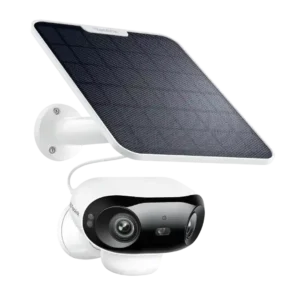
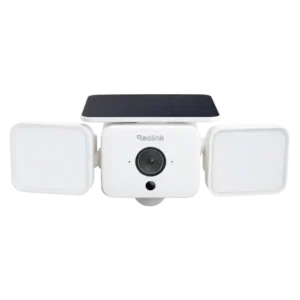
Reolink Argus 4 Pro 4K Solar Security Camera
Where It Has the Edge
- Hub requirement is 4.0 vs 1.5. The hub was optional rather than required, and reviewers liked that it could add storage or RTSP-style functionality...

Scorata scores summarize analyzed review evidence on a 1–5 scale; they are not laboratory measurements or a simple average of customer star ratings. Feature scores summarize the reviews covering that feature. The overall score averages feature scores within each review, then combines review averages. When both expert and customer evidence are available, those two groups receive equal weight. Products can have different review coverage, so small score gaps do not establish a winner.
Recommendations prioritize important features for the category, with a score of at least 3.5, a gap of at least 0.25 points and at least two supporting reviews per product. Features with widely varying scores or broad connectivity contexts are excluded from recommendations. These safeguards do not establish statistical significance.
Quick verdict
The review evidence points to a tradeoff: Hub requirement versus Operating temperature range and Speaker volume. Choose according to which strengths matter more to you; the overall score alone does not settle that choice.
Choose Reolink Argus 4 Pro 4K Solar Security Camera for Hub requirement.
Choose Reolink Solar Floodlight, B430 for Operating temperature range and Speaker volume.
Scores are out of 5. Missing scores mean missing review evidence, not a missing feature.
Battery life was one of the most split attributes: solar-backed tests could be strong, but reviewers repeatedly criticized standalone, cold-weather, or high-activity drain.
Most units stay near full charge for weeks with adequate sun, but heavy triggers, dark winters, cold weather, or weak solar exposure can force manual recharging.
Battery-based power made installation easier, but reviewers warned that heavy use or residential 24/7 expectations can expose battery limits.
The large internal battery enables a genuine wire-free floodlight camera for locations without mains power.
Operating-temperature performance was a concern, especially in cold-weather use where battery life degraded badly.
The camera continued working in sub-zero conditions, including one test near -28°C, though battery products naturally lose efficiency in cold weather.
The hub was optional rather than required, and reviewers liked that it could add storage or RTSP-style functionality without forcing a base station.
A hub is optional for basic use but may be required for Home Assistant or centralized storage, adding cost and sometimes reducing range.
Speaker volume was a clear weakness; reviewers said the built-in speaker was quiet or not loud enough for easy two-way communication.
Two-way talk is generally loud and understandable, but one tester found the siren much weaker than its rating suggests.
Mounting flexibility was widely praised for brackets, straps, wall/tree options, and no-screw setups, though one reviewer found the ball joint hard to tighten.
The camera body and lights can be aimed, but the permanently fixed solar panel and short or rigid mount often force compromises between view, sun exposure, and eaves or gutters.
Detection range tested well, with reviewers reporting person or vehicle detection at long distances, including one 40-foot test and a much farther driveway test.
Range varies sharply by installation: one test reached 40 feet, while other owners found person detection shorter than advertised or ineffective.
Wired alternatives were recommended by one reviewer for buyers who prioritize stable, long-term 24/7 surveillance over wireless convenience.
Solar and Wi-Fi are easier for remote placements, but wired-system compatibility is inconsistent and some buyers still prefer the security of a hardwired setup.
Cable management was mostly positive because the camera avoids data and power runs, but USB-C charging fit created a practical annoyance for one reviewer.
The all-in-one solar design eliminates exposed power and panel cables, making remote placement cleaner and avoiding cable damage or electrician work.
Included accessories were consistently appreciated, especially the solar panel, straps, brackets, hardware, templates, and mounting supplies.
Mounting hardware, anchors, a USB cable, template, and dedicated wrench are useful, but the missing microSD card and occasional absent strap reduce completeness.
Connectivity options were praised in the review that highlighted rock-solid dual-band Wi-Fi 6 plus rare FTP and NAS support.
Many setups connect quickly and maintain useful range, but router distance, walls, isolated networks, and a few defective units can cause severe reliability problems.
PoE was a weakness for this battery camera; one reviewer specifically pointed buyers toward Reolink’s PoE Duo line for wired needs.
PoE remains preferable for some security installations, although solar and Wi-Fi were the easier choice for the tested perimeter use.
System scalability was positive when paired with the Home Hub, which reviewers saw as useful for centralized storage and protecting recordings.
The camera fits well into larger Reolink setups, with owners successfully combining several cameras in one app and planning additional coverage.
The 180-degree horizontal view was the product’s defining strength for yards, driveways, and broad perimeters, but reviewers repeatedly warned about the narrow vertical view and small-area fit.
The wide view covers driveways, entrances, yards, and perimeter areas effectively, reducing the need to aim at one narrow section.
Continuous recording was a major limitation because reviewers repeatedly noted motion-triggered-only recording or the lack of 24/7 recording.
This battery model records motion events only and is not suitable for buyers who require true 24/7 recording.
Spotlights were generally helpful and sometimes very bright, though reviewers distinguished them from true floodlights and one saw odd on/off behavior.
Brightness, warm-to-cool color temperature, subject-specific activation, flashing, and manual control make the lighting unusually configurable.
Reviewers liked the ability to tune sensitivity, zones, non-detection areas, object sizes, and schedules to reduce unwanted motion captures.
The app makes it easy to exclude roads, branches, neighboring property, or other busy areas from triggering recordings.
The microphone side was acceptable for listening through the camera, but the evidence was narrower than for video or detection.
The microphone can pick up speech from impressive distances, including through walls, while remaining clear enough for live communication.
Privacy masking was well received, with reviewers describing it as clever, useful, and fully blacked out in recordings.
Privacy masks are simple to draw and effectively block neighboring property or other sensitive areas from live view and recordings.
Articulation evidence was limited but positive, with one reviewer praising the flexible bracket for easy aiming.
Both floodlight panels can be rotated and tilted widely, while the ball-joint camera mount provides useful aiming control.
On-device extras were useful, especially the timelapse feature, which one reviewer said worked well.
Time-lapse is a standout extra for weather or construction projects, while built-in filtering, encryption, and battery modes add useful flexibility.
The 15fps limit was a recurring drawback for motion clarity, with several reviewers noting choppiness or jerkiness despite one smooth-video impression.
The 15fps footage is acceptable for routine monitoring and battery savings, but motion is visibly less smooth than on wired cameras running at higher frame rates.
The stitched dual-stream approach was praised for preserving clarity across the wide composite image.
The Clear stream provides strong 2K playback, while the lower-bandwidth Fluent option trades substantial image quality for easier remote viewing.
Local storage was one of the strongest points, with praise for microSD, hub, FTP/NAS choices, privacy benefits, and avoiding mandatory cloud fees.
A microSD card provides straightforward recording and playback without required monthly fees, though the card is sold separately and footage can be lost if the camera is stolen.
Detection features were widely praised for person, animal, vehicle, and motion recognition, with some reviewers calling them accurate or precise.
Person, vehicle, and animal detection works well in many tests, but some units miss people, misclassify motion, or perform poorly at night.
Reviewers consistently described the stitched 4K-style footage as crisp, sharp, detailed, or crystal clear, especially for wide outdoor coverage.
The 2K image is generally clear enough for faces, vehicles, and nearby security coverage, but several testers found it softer, grainier, or less useful at distance than sharper 4K cameras.
Weather resistance was treated positively, with reviewers trusting the IP-rated construction for outdoor use.
The IP66 body handled rain, snow, and varied outdoor weather well in testing, with no recurring sealing failures reported.
The solar panel was often praised as effective or essential, but reviewers warned it depends heavily on sunlight, weather, and cold conditions.
The integrated panel often keeps the battery near full even in cloud, cold, or partial shade, but its fixed angle makes direct sun and careful placement essential.
Night vision earned strong praise for full-color output and useful detail, though a few reviewers found it weaker in no-light scenes or prone to smear/overexposure.
Night footage is a major strength when the floodlights engage, producing clear color video; infrared mode is also useful, although one test found darker edges.
On-device processing was praised for object-size filtering and more consistent detection behavior than some other cameras reviewers had used.
Free on-device AI distinguishes people, vehicles, and animals effectively in most tests and can tailor lighting or alerts by subject.
Recording start timing was mixed: one review found slow trigger behavior, while another test showed prompt recording as motion approached.
Wake-up response ranges from nearly instant to several seconds; most tests found it acceptable for a battery camera, but one installation triggered the light far too late.
Live view and streaming reliability were generally praised, with reviewers calling the feed smooth, quick, responsive, or faster to connect remotely.
Live access is responsive on well-connected setups, but several owners reported intermittent service, failed connections, or the need to reboot.
ONVIF/RTSP support was weak or conditional, with reviewers noting native limitations and hub-dependent RTSP access.
The camera cannot connect to a NAS through ONVIF, which is a firm limitation for buyers building an open surveillance system.
Event recording was useful when incidents were captured to microSD and easy to review later, though broader recording reliability evidence was limited.
Some tests captured motion consistently, while several owners reported missed nighttime events, inconsistent activation, or complete recording failure.
Price value was mostly positive because of the feature set, solar panel, local storage, and two-camera-like coverage, but wired-camera value comparisons created some pushback.
The combination of 2K video, solar power, strong lighting, and fee-free local storage is widely considered excellent value around the entry-level price.
Cloud storage was treated as optional rather than essential; reviewers appreciated that cloud upsells were avoidable, but noted extra cost when cloud backup was desired.
Optional cloud plans are inexpensive compared with many rivals, but one owner found linking the plan to the camera frustrating enough to cancel.
Setup and mounting were repeatedly described as simple, quick, foolproof, or easy, making installation one of the product’s most consistent strengths.
Most installations take only two screws and a few app steps, especially on wood; brick, siding, ladders, and awkward solar placement can make the job harder.
Smart-home integration was mixed to weak: Alexa and Google support were useful, but reviewers criticized missing Home Assistant, Apple Home, and deeper automations.
Alexa and Google integrations provide useful voice control and live viewing, with especially positive feedback for Echo Show use.
Smart-home accessory compatibility was limited because reviewers could not trigger lights or use the camera as a deeper automation endpoint.
Reolink hubs, NVRs, and Home Assistant can support broader systems, but battery-camera integration may require a hub and can omit some controls.
Notification management was mixed: tuning and scheduling were useful, but the lack of notification snooze was a repeated-style frustration in one detailed review.
Category labels, schedules, snoozing, email, push, and FTP options make alerts easy to organize around household routines.
The Reolink app was usually considered useful or efficient, but some reviewers found the app clunky, unhelpful, or slower to show live previews.
The app is usually responsive and dependable, but isolated reports describe repeated connection failures and reboot-dependent access.
Smart search/filtering by subject was supported by accurate differentiation of people, animals, cars, and motion events.
AI search and event filters make it much faster to find clips by object type or description instead of scrubbing through a full timeline.
Notification speed was generally positive, with reviewers describing fast or acceptable alert response times in hands-on tests.
Alerts commonly arrive in roughly four to five seconds, but weak Wi-Fi and some units produce slower or noticeably lagging notifications.
App controls were generally strong, with clean settings, deep customization, event filters, and flexible setup, though one review found the app needs refinement.
The Reolink app offers deep control over detection, lighting, recording, privacy, alerts, and playback; most find it clear, though setup and advanced menus can feel clunky or overwhelming.
Durability evidence was mixed: the camera hardware felt tough, but one reviewer warned solar-panel components can degrade outdoors.
The camera continued operating through rain, snow, and hectic outdoor weather without performance problems in the reported tests.
Size and footprint opinions were mixed: some praised the compact body, while others found the solar setup or camera awkward, bigger, or ugly.
The compact cube packs the camera, battery, panel, and two lights into a surprisingly small body that suits visible perimeter placement.
Build quality was consistently praised as robust, durable, premium, or well made.
The main camera feels sturdy, compact, and well assembled, although one detailed inspection criticized rough, cheaply finished mounting hardware.
False-alert filtering was generally effective after tuning, with reviewers praising sensitivity controls, object-size filters, and fewer false alerts.
AI categories and exclusion zones can reduce nuisance alerts, yet default sensitivity often triggers on traffic, laundry, pets, or minor movement and may require careful tuning.
Dual-band/Wi-Fi 6 performance was viewed positively, with reviewers citing solid connectivity, lower lag, less interference, and better outdoor signal potential.
Dual-band Wi-Fi 6 can deliver stable high-quality live video and useful range, but advanced isolated-network setups and a few homes experienced connection trouble.
Low-light performance was generally strong when some ambient light or spotlight help was available, but pitch-black performance was more qualified.
The camera captures useful activity in very dark conditions, especially wildlife and nearby movement, but the best color detail still depends on the floodlights.
Color accuracy was usually strong at night, though one reviewer noted bright light sources could be overblown.
Daytime color can be accurate and well exposed, while some footage looks washed out and nighttime color depends heavily on proper floodlight brightness.
Two-way audio was viewed as useful and well implemented overall, though another reviewer treated the listening side as stronger than the speaker side.
Audio ranges from surprisingly clear to muffled at street level, so it works better at moderate distances than as a polished intercom replacement.
Cross-camera tracking was mentioned as a useful Home Hub perk, but the reviewer did not personally test it.
Support experiences are mixed: one replacement arrived immediately and another response was helpful, but a promised callback never came.
Reolink promptly supplied a replacement camera after a failure, giving one owner confidence in post-purchase support.
The compact all-in-one shape looks clean and practical, with a sleek appearance that does not feel like a collection of mismatched parts.
The dual-camera design was one of the best-liked attributes, enabling broad 180-degree coverage from one compact unit.
Pinch-to-zoom is intuitive and reveals useful detail in the app, although it remains digital enlargement of a 2K image.
HomeKit and Apple Home support were clear misses for reviewers who wanted the feed available in Apple’s smart-home ecosystem.
Lens stitching and distortion were mixed: some saw minimal distortion, while others found the center stitch could blur faces or objects.
Most owners describe the camera as easy to live with, dependable, and worth recommending, though a small group encountered serious connection, detection, or charging failures.
Motion capture begins early enough in the tested setup to avoid losing the subject before the recording starts.
The fixed camera has no pan or tilt function, so buyers needing active coverage control should choose a PTZ model.
The adjustable twin lights are consistently praised as genuinely bright and useful for yards, paths, and deterrence, though they cannot match the reach of high-powered wired floodlights.
A visible blue indicator clearly confirms when the light is active without requiring a trip into the app.
There is no optical zoom, making the camera best for nearby and mid-range coverage rather than distant identification.
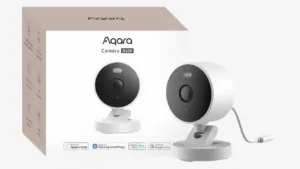
Best for excellent value, flexible local storage, strong HomeKit support, and indoor/outdoor versatility. Skip it if you need battery power, premium image quality, or the simplest app experience.
Pros: Overall satisfaction, Video resolution and detail
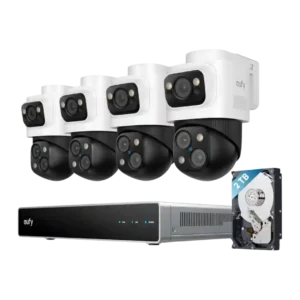
Choose the S4 Max for serious wired security, local AI, sharp 4K footage, and strong tracking. Skip it if you need easy wireless setup, broad smart-home integration, or a budget...
Pros: Cross-camera tracking, Smart search accuracy
Cons: Installation and Mounting, Smart-home integration (Alexa, Google, Siri, HomeKit, Matter, Thread)
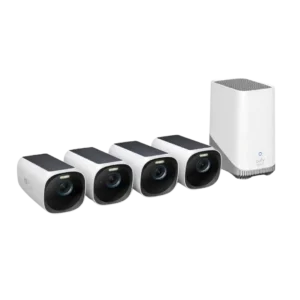
Choose the Eufy S330 if you want sharp 4K outdoor video, solar charging, local storage, and strong AI without monthly fees. Skip it if you need HomeKit/IFTTT, 24/7 recording, or...
Pros: Video resolution and detail, Power options (solar panel)
Cons: HomeKit integration
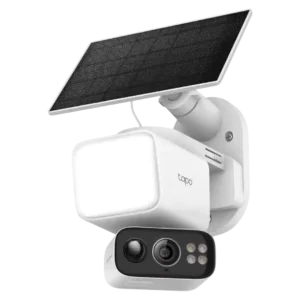
Best for solar-powered, wire-free yard coverage with strong value and bright lighting. Skip it if you need flawless app reliability, true continuous video, or premium low-light tracking.
Pros: Floodlight brightness, Detection features
Cons: Continuous recording capability, Detection range