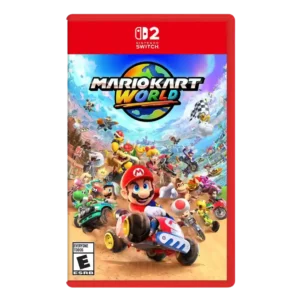
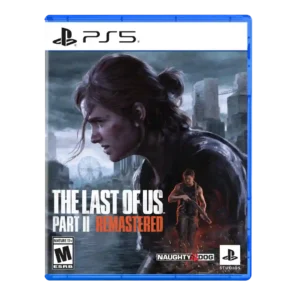
Mario Kart World
Where It Has the Edge
- replay value is 4.7 vs 4.4. Replay value is strong, with several reviewers expecting long-term play through online races, time trials, and repeated multiplayer...

Scorata scores summarize analyzed review evidence on a 1–5 scale; they are not laboratory measurements or a simple average of customer star ratings. Feature scores summarize the reviews covering that feature. The overall score averages feature scores within each review, then combines review averages. When both expert and customer evidence are available, those two groups receive equal weight. Products can have different review coverage, so small score gaps do not establish a winner.
Recommendations prioritize important features for the category, with a score of at least 3.5, a gap of at least 0.25 points and at least two supporting reviews per product. Features with widely varying scores or broad connectivity contexts are excluded from recommendations. These safeguards do not establish statistical significance.
Quick verdict
The review evidence points to a tradeoff: replay value versus progression system and difficulty balance. Choose according to which strengths matter more to you; the overall score alone does not settle that choice.
Choose Mario Kart World for replay value.
Choose The Last of Us Part II Remastered for progression system and difficulty balance.
Scores are out of 5. Missing scores mean missing review evidence, not a missing feature.
Family friendliness was strong, with reviewers saying children, families, and broad audiences enjoyed it.
Family friendliness scored low because one reviewer explicitly described the game as gritty, intense, and extremely violent.
AI behavior drew negative evidence where computer racers and rubber-banding were described as harsh or frustrating.
AI behavior was praised in combat-focused reviews for swarming, faction pressure, and strong arena behavior.
Progression was one of the clearest weak points, with stickers, RNG character unlocks, limited rewards, and confusing costume acquisition drawing complaints.
Progression in No Return was praised for unlocks, challenges, and longer-term rewards that kept runs moving.
Narrative quality was weak by the lone opinionated mention, which noted the absence of story and wished for even a basic purpose.
Narrative quality remained divisive but mostly positive, with many reviewers calling it profound or masterful while others criticized its structure, bleakness, and execution.
Difficulty balance was criticized for lacking a sweet spot, with high settings feeling too harsh and lower settings too easy.
Difficulty was usually viewed positively as tense and intentional, with challenge options and survival pressure fitting the game’s design.
Innovation evidence was positive, with the game praised for palpable ambition and big swings.
Innovation was limited in one review, which found No Return fun but not especially unique as a mode.
Visual effects stood out mostly through water and other showcase details, which reviewers praised highly.
Visual effects were mostly strong, but one PC review noted distracting upscaling artifacts around transparencies.
Mission variety was mixed, with P-Switch missions described as interesting and skill-building by some but repetitive by others.
Mission variety in No Return was praised for randomized objectives and encounter types, with some caveats about uneven encounters.
Originality evidence was positive where the reviewer praised how World expands what Mario Kart can mean conceptually.
Originality was mixed, with one review finding No Return strange and unusual but artistically awkward.
Free Roam exploration split reviewers: some enjoyed its chill sandbox feel, while many found it sparse, repetitive, or light on meaningful activity.
Exploration was generally valued for scavenging, optional environmental stories, and player choice, though one reviewer found it sometimes too guided.
Art direction was strongly praised as stellar, charming, vibrant, and one of the game’s best aspects.
Art direction was praised as visually striking, though one review also noted the remaster could look too dark in places.
Race pacing drew repeated criticism because intermission highways and route segments often interrupt time spent on the strongest courses.
Pacing was the most consistent structural complaint, with multiple reviewers saying the campaign felt long, bloated, or uneven despite strong moments.
Bug frequency evidence was mildly positive: one review noted only a couple of small bugs and no major blockers.
Bug frequency was mixed: some PC reviewers reported minor UI or texture glitches, while others found the port clean.
Reviewers agreed the core Mario Kart racing remains fun and strong even when they criticized the open-world wrapper around it.
The No Return loop was praised as a high-stakes, rewarding way to experience the game’s encounters repeatedly.
Accessibility evidence was positive, with returning assists plus auto item throwing and Smart Steering treated as helpful options.
Accessibility options were strongly praised, with reviewers calling the expanded descriptive audio, speech-to-vibration, and broader tools meaningful additions.
Frame rate stability had limited but excellent evidence, with one review citing a rock-solid 60fps.
Frame rate stability was mostly praised, especially in performance mode, with some caveats around 30fps fidelity mode and certain PC scenes.
New mechanics such as rail grinding, wall riding, and charge jumps were often praised for depth, though one review called the broader gameplay mix uneven.
Gameplay mechanics drew mixed responses: several reviewers liked the remastered combat tools, but one felt the core stealth-loot-shoot loop had aged poorly.
Handheld play suitability was excellent in the reviewed evidence, with docked and handheld play described as smooth and visually strong.
Handheld suitability was praised in one PC review because the Steam Deck version ran well enough to deserve verification.
The character roster was praised for weird, charming additions and costumes, though unlock systems and menus created separate frustrations.
The character roster in No Return was praised for bringing secondary characters forward with different loadouts, traits, and playstyles.
Load times were praised as quick or lightning fast in the reviews that mentioned them opinionatedly.
Load times were consistently praised as much faster and a clear quality-of-life upgrade.
Polish was generally strong, though one review still saw rough edges; positive mentions emphasized Nintendo-level polish.
Polish was a consistent strength, with reviewers describing the package, presentation, and bonus modes as well-crafted.
Graphics quality received strong praise across reviews for vivid presentation, pleasing style, and launch-title visual appeal.
Graphics were widely praised as excellent or stunning, but reviewers often stressed that the jump over the PS4/PS5-patched version is modest.
Mode and content variety were often praised, especially Knockout Tour, though a few reviewers felt the broader package or Free Roam activities lacked depth.
Content variety was broadly praised, especially No Return, Lost Levels, commentary, guitar free play, skins, speedrun tools, and modifiers, though some extras were called short or uneven.
Fun factor was broadly positive, with most reviewers calling the game very fun despite concerns about structure, price, or Free Roam.
Fun factor was strongest in No Return and combat-focused extras, though the main story’s grim tone made it less relaxing for some reviewers.
Atmosphere had limited but very strong evidence, with one review framing the game as broadly welcoming and vibe-driven.
Atmosphere was praised as masterful, especially for its oppressive tension and survival-horror mood.
Sandbox freedom was generally appreciated when reviewers treated Free Roam as self-directed play, though one wanted more player freedom from the open-world premise.
No Return’s sandbox-like setup was praised as a fun way to experiment outside the campaign’s narrative constraints.
Value for money was the clearest negative consensus, with many reviewers questioning whether the $80 price is justified.
Value for money was strongly positive for the $10 upgrade, with more mixed views for first-time or double-dip buyers at full price.
Replay value is strong, with several reviewers expecting long-term play through online races, time trials, and repeated multiplayer sessions.
Replay value was one of the strongest remaster arguments, driven mainly by No Return, daily/custom runs, unlocks, and added extras.
Age appropriateness had limited positive evidence, describing the game as approachable and family-friendly.
Age appropriateness was limited by the game’s mature themes, violence, and emotional weight, with one reviewer saying younger players may not appreciate it.
Controls were consistently praised as precise, approachable, responsive, and mechanically satisfying.
Controls were usually described as smooth, responsive, and solid, with PC mouse-and-keyboard support adding precision for some players.
Dedicated courses earned broad praise, especially standout tracks and Rainbow Road, but route-driven structure and wide connecting roads reduced enthusiasm for some.
Level design received strong praise from one reviewer for making linear spaces feel flexible and meaningful.
The open-world design was the most divisive feature, praised as clever or game-changing by some and criticized as lean, half-baked, or unnecessary by others.
The limited semi-open Seattle section stood out positively to one reviewer, who wished more of the game pursued that feeling.
Map and navigation design was a repeated concern, with weak tracking, unhelpful maps, and poor collectible visibility called out across reviews.
Map and navigation design drew one notable complaint about unclear progression paths in naturalistic environments.
Sound design had limited but very positive evidence, with one review praising nuanced audio across items and environments.
Sound design was praised for 3D audio, directionality, anxiety, and stealth-tension cues.
World-building was praised where reviewers felt the courses and regions fit together into a coherent interconnected continent.
World-building was praised for Seattle’s detail, environmental storytelling, and the way the sequel frames grief and factions.
User interface design was mixed-to-negative, with complaints about missed music selection and underdeveloped online feature presentation.
User interface design had one PC-specific criticism, where mouse-related UI elements could hurt frame rate.
The soundtrack was one of the strongest consensus positives, repeatedly described as remarkable, killer, phenomenal, or perfect.
The soundtrack was praised as atmospheric and emotionally effective.
Performance optimization was strongly praised, with smooth running, good fidelity, and few technical complaints.
Performance optimization was generally strong on PS5 and many PC setups, though one PC review reported stutter and texture issues.
Aiming precision received specific praise on PC, where mouse input gave reviewers strong control for headshots.
Animation quality was excellent, with reviewers singling out character expressiveness, micro-movements, and lively kart animations.
Battle Mode evidence is mixed but leans weak: several reviewers called it unspectacular, anaemic, regressive, or ugly, while one praised it as a series favorite.
Character development was praised for its heavy character work and risky perspective structure.
Combat was one of the strongest areas overall, with reviewers praising its brutal feel, polish, resource pressure, and ability to shine in No Return despite a few dissenting takes.
Competitive balance was mixed: item chaos and rubber-banding create excitement, but several reviewers felt luck and item volume sometimes overwhelm skill.
Couch co-op quality was consistently excellent, with reviewers emphasizing local family and friend play as a major strength.
Crafting was praised as part of the game’s excellent survival-combat foundation.
Crash stability was excellent in the available evidence, with one review reporting no crashes.
Driving and drifting were among the strongest points, with reviewers praising the feel, physics, and mechanical precision.
Resource balance was praised for keeping ammo and materials scarce enough to make survival tense.
Emotional impact was extremely strong, with reviewers repeatedly describing the story as gutting, heartbreaking, or emotionally shattering.
Enemy variety was mixed: No Return adds faction variety and AI pressure, but one reviewer criticized the limited number of new enemies.
Environmental detail drew strong praise for scenery, foliage, world texture, and dense visual craftsmanship.
Facial animation was praised as industry-leading and central to the emotional performances.
Faithfulness to franchise was generally positive because World keeps Mario Kart’s legacy intact, though one review felt it was less fun than 8 Deluxe.
Haptic feedback integration was strongly praised for bows, weapons, bandaging, traversal, and added immersion, though one reviewer found extended use tiring.
Horror tension was praised for causing anxiety, dread, and memorable scare sequences.
The learning curve is steeper than past entries, but reviewers generally framed that depth as manageable or rewarding.
Movement additions raise the skill ceiling and feel flexible for many reviewers, but some found rail and wall routes slower or less worthwhile than expected.
Online stability was widely positive, with reviewers reporting smooth sessions, easy entry, and few lag or disconnect issues.
Remaster quality was generally praised as a definitive or worthwhile edition, though the visual upgrade was often called modest and content-focused.
Skill systems were split: one reviewer liked the upgrade satisfaction, while another felt No Return upgrades did not meaningfully change play enough.
Social features were praised where GameChat, hangout play, and online social spaces made the game feel like a strong social racing experience.
Split-screen quality was mixed: reviewers praised couch chaos and smooth two-player play, but missed full Free Roam split-screen and noted compromises.
Stealth mechanics were widely praised as tense, flexible, and improved, especially when No Return encouraged new approaches.
Tutorial and mission teaching were mixed: P-Switches can teach mechanics well, but the game also explains little upfront.
The vehicle roster was mixed: reviewers liked the variety and physical feel but criticized reduced customization.
Writing quality was polarized: several reviewers praised the ambitious, intentional storytelling, while one criticized the script as unsubtle.
Boss design stood out in one PC review, which highlighted major fights as some of Naughty Dog’s best.
Multiplayer design was split: local play and friend sessions were praised, but online grouping, public Knockout Tour with friends, and mode limitations drew criticism.
Puzzle design was a weak point in one review, which complained that environmental puzzles were too few and underdeveloped.
Menu usability was criticized, especially bloated or annoying character and costume selection screens.
Protagonist appeal was mixed: Ellie was praised as carrying the sequel by some, while one reviewer found her harder to relate to.
Voice acting earned unanimous praise from scored reviews, especially for the main cast’s performances.
Platform-specific support was praised for PS5-native upgrades such as load times, DualSense features, and 3D audio.

Best for fluid traversal, rewarding exploration, striking art, and forgiving quality-of-life features. Skip it if you want deep combat, radical genre innovation, or consistently demanding bosses.
Pros: difficulty balance, boss design
Cons: innovation, sandbox freedom

Best for superb combat, inventive builds, and richly voiced characters. Skip it if repeated runs, resource gathering, or visually busy battles outweigh the appeal of steady progress.
Pros: overall quality, combat system
Cons: pacing, grind level

Good if you want a beautiful, demanding survival sandbox built around exploration, building, progression, and memorable co-op. Skip it if long resource runs, harsh death recovery, and deliberate pacing sound...
Pros: town-building system, exploration quality
Cons: grind level, fast travel convenience

Leonida is a breathtakingly alive crime sandbox with memorable protagonists, spectacular heists, and extraordinary detail. The tradeoff is a 30 fps ceiling, occasional control awkwardness, and some progression friction.
Pros: immersion, graphics quality
Cons: grind level, controls responsiveness