Compare Razer Cobra Pro vs SteelSeries Aerox 9 Wireless

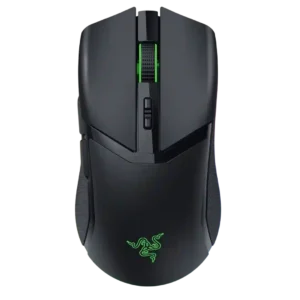
Razer Cobra Pro

Razer Cobra Pro

Overall score 4.0 / 5

Based on 23 scored reviews

vs
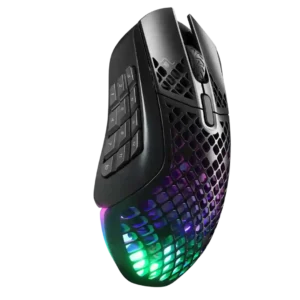
SteelSeries Aerox 9 Wireless

SteelSeries Aerox 9 Wireless

Overall score 4.1 / 5

Based on 24 scored reviews

How we score

Scorata scores summarize analyzed review evidence on a 1–5 scale; they are not laboratory measurements or a simple average of customer star ratings. Feature scores summarize the reviews covering that feature. The overall score averages feature scores within each review, then combines review averages. When both expert and customer evidence are available, those two groups receive equal weight. Products can have different review coverage, so small score gaps do not establish a winner.

Recommendations prioritize important features for the category, with a score of at least 3.5, a gap of at least 0.25 points and at least two supporting reviews per product. Features with widely varying scores or broad connectivity contexts are excluded from recommendations. These safeguards do not establish statistical significance.

Quick verdict

What each product is best for

The review evidence points to a tradeoff: claw grip comfort and click latency versus MOBA gaming suitability and MMO gaming suitability. Choose according to which strengths matter more to you; the overall score alone does not settle that choice.

Choose Razer Cobra Pro for claw grip comfort and click latency.

Choose SteelSeries Aerox 9 Wireless for MOBA gaming suitability and MMO gaming suitability.

Why these recommendations?

Razer Cobra Pro

Where It Has the Edge

  • claw grip comfort is 4.6 vs 2.2. Claw grip comfort was consistently strong, with reviewers repeatedly identifying claw grip as one of the Cobra Pro’s...
  • click latency is 4.7 vs 4.0. Click latency was viewed positively, with optical switches and wireless performance described as low-latency or delay-free in gaming...
  • connection stability is 4.7 vs 4.0. Connection stability was positively supported by reviewers who reported no connectivity or reliability issues.

SteelSeries Aerox 9 Wireless

Where It Has the Edge

  • MOBA gaming suitability is 4.5 vs 2.2. MOBA gaming suitability was strongly positive overall, with reviewers emphasizing button access and genre-focused customization.
  • MMO gaming suitability is 4.3 vs 2.2. MMO gaming suitability was broadly strong but not unanimous because side-button usability and learning curve divided reviewers.
  • balance and weight distribution is 4.3 vs 2.5. Balance was described positively, with reviewers noting it avoided pulling to one side and felt stable.
Razer Cobra Pro 4.0 overall score
SteelSeries Aerox 9 Wireless 4.1 overall score

Compare features

Scores are out of 5. Missing scores mean missing review evidence, not a missing feature.

Scored on both products

Battery and charging

Battery life
Razer Cobra Pro
3.9

Battery life was mixed overall: reviewers liked endurance with restrained lighting or Bluetooth, but RGB and HyperPolling could cut runtime sharply.

SteelSeries Aerox 9 Wireless
4.0

Battery life was mixed: reviewers praised long claims and real endurance, but RGB and 2.4GHz use reduced runtime substantially for some.

Charging convenience
Razer Cobra Pro
4.0

Charging convenience was useful but accessory-dependent, with praise for cable play-and-charge and dock charging offset by complaints that charging accessories cost extra.

SteelSeries Aerox 9 Wireless
4.6

Charging convenience was a strength, with reviewers praising fast charging, quick top-ups, and easy cable access.

Other features

Onboard memory
Razer Cobra Pro
4.4

Onboard memory was praised for storing profiles and reducing dependence on software once settings were configured.

SteelSeries Aerox 9 Wireless
1.5

Onboard memory was criticized because profiles, macros, and RGB suites could not be fully carried between PCs.

MOBA gaming suitability
Razer Cobra Pro
2.2

MOBA gaming suitability was similarly weak because reviewers wanted more extra keys for MOBA use.

SteelSeries Aerox 9 Wireless
4.5

MOBA gaming suitability was strongly positive overall, with reviewers emphasizing button access and genre-focused customization.

MMO gaming suitability
Razer Cobra Pro
2.2

MMO gaming suitability was weak because reviewers said the Cobra Pro lacks enough inputs for MMO-style play.

SteelSeries Aerox 9 Wireless
4.3

MMO gaming suitability was broadly strong but not unanimous because side-button usability and learning curve divided reviewers.

Balance and weight distribution
Razer Cobra Pro
2.5

Balance and weight distribution were a recurring concern among critical reviewers, especially reports of rear heaviness, although one review noted the underside cover could slightly alter balance.

SteelSeries Aerox 9 Wireless
4.3

Balance was described positively, with reviewers noting it avoided pulling to one side and felt stable.

Dock compatibility
Razer Cobra Pro
3.7

Dock compatibility was useful for charging and HyperPolling when available, but reviewers noted limited dock compatibility and added cost.

SteelSeries Aerox 9 Wireless
2.0

Dock compatibility was weakly supported by complaints about the dongle/stand situation rather than praise for a dock setup.

Weight
Razer Cobra Pro
3.3

Weight drew the most divided responses: some liked the 77g middle ground, while many FPS-focused reviewers called it heavy, sluggish, or disproportionate for its size.

SteelSeries Aerox 9 Wireless
4.7

Weight was the clearest strength, repeatedly praised as unusually light for a wireless MMO/MOBA mouse with so many buttons.

Cross-platform compatibility
Razer Cobra Pro
4.0

Cross-platform compatibility was supported by travel use with laptops and tablets, though evidence beyond that was limited.

SteelSeries Aerox 9 Wireless
5.0

Cross-platform compatibility was praised by one reviewer because the software works on Windows and macOS.

Handedness options
Razer Cobra Pro
2.4

Handedness options were weak because the symmetrical shell still places side buttons only on one side, limiting true left-handed usability.

SteelSeries Aerox 9 Wireless
1.5

Handedness options were criticized because the side-button grid makes the mouse poor for left-handers or ambidextrous use.

Polling rate
Razer Cobra Pro
3.9

Polling support was useful and sometimes praised for reducing lag, but reviewers noted higher rates require extra accessories and that the stock 1,000Hz rate trails some competitors.

SteelSeries Aerox 9 Wireless
4.8

The 1000Hz polling-rate implementation was described as flawless or issue-free by the reviewers who discussed it.

Click latency
Razer Cobra Pro
4.7

Click latency was viewed positively, with optical switches and wireless performance described as low-latency or delay-free in gaming use.

SteelSeries Aerox 9 Wireless
4.0

Click latency was mostly praised for quick actuation and minimal travel, with one review criticizing post-travel in the main clicks.

Connection stability
Razer Cobra Pro
4.7

Connection stability was positively supported by reviewers who reported no connectivity or reliability issues.

SteelSeries Aerox 9 Wireless
4.0

Connection stability was generally positive, but one reviewer reported random disconnects that significantly hurt reliability.

Cable flexibility
Razer Cobra Pro
3.5

Cable flexibility was mixed, with some reviewers praising a strong, light cable and others finding it stiff or prone to pull.

SteelSeries Aerox 9 Wireless
4.2

Cable flexibility and charging cable quality were positively mentioned, especially the detachable, fast-charge, and ultraflex cable setup.

RGB features
Razer Cobra Pro
4.6

RGB was one of the strongest positives, repeatedly praised for vivid underglow, tasteful placement, and customization, though it affected battery life.

SteelSeries Aerox 9 Wireless
4.1

RGB was generally praised for brightness, zones, and visual appeal, but several reviewers questioned the battery-life tradeoff.

DPI range
Razer Cobra Pro
3.6

DPI control was mixed: dedicated up/down controls were praised for fast switching, but some reviewers called 30,000 DPI overkill, wonky at extremes, or cheaply implemented on the top buttons.

SteelSeries Aerox 9 Wireless
4.1

DPI/CPI range was viewed as more than enough for most gamers, with some caveats that rivals offer higher maximum specs.

Ecosystem integration
Razer Cobra Pro
4.4

Ecosystem integration was a strength for Razer users, with multi-device dongles, Chroma sync, onboard profiles, and Razer accessory compatibility praised.

SteelSeries Aerox 9 Wireless
4.0

Ecosystem integration had limited support, mainly from RGB synchronization with other SteelSeries peripherals.

FPS gaming suitability
Razer Cobra Pro
3.8

FPS gaming suitability was mixed: reviewers praised tracking and responsiveness, but ultralight-focused players often preferred lighter mice.

SteelSeries Aerox 9 Wireless
3.4

FPS gaming suitability was mixed: some reviewers liked it in shooters, while others found the MMO grid or grip demands unsuitable.

Surface compatibility
Razer Cobra Pro
4.6

Surface compatibility was strong, with reviewers praising tracking on glass and other surfaces, plus calibration for changing setups.

SteelSeries Aerox 9 Wireless
5.0

Surface compatibility was excellent where tested, with strong performance on desks, multiple pads, and varied surfaces.

2.4GHz connectivity
Razer Cobra Pro
4.5

2.4GHz connectivity was viewed as the preferred gaming mode thanks to fast, low-latency HyperSpeed use and dongle placement options.

SteelSeries Aerox 9 Wireless
4.1

2.4GHz connectivity was generally viewed as the best gaming connection, though USB-C dongle ergonomics drew some caveats.

Premium feel
Razer Cobra Pro
4.5

Premium feel was praised in the grip, futuristic design, solid construction, and overall quality impression.

SteelSeries Aerox 9 Wireless
4.8

Premium feel was repeatedly positive, with reviewers describing the mouse as premium, unique, and satisfying overall.

Portability
Razer Cobra Pro
4.5

Portability was a positive for the compact body, dongle storage, and laptop-bag use.

SteelSeries Aerox 9 Wireless
4.7

Portability was praised through low weight, Bluetooth travel use, and dongle-free convenience.

Motion consistency
Razer Cobra Pro
4.8

Motion consistency was praised in one review that found movement smoother and more accurate than most mice in the reviewer’s collection.

SteelSeries Aerox 9 Wireless
5.0

Motion consistency received strong support where tested, with the sensor described as free of unwanted acceleration or hiccups.

Profile switching
Razer Cobra Pro
3.8

Profile switching was polarizing: some liked stored profiles and software-free switching, while others found the underside button odd or awkward.

SteelSeries Aerox 9 Wireless
3.9

Profile switching was mixed: some found setup and switching simple, while one productivity-focused review found switching unresponsive.

Switch feel
Razer Cobra Pro
4.4

Switch feel was generally praised as tactile, clicky, satisfying, and premium, though a few reviewers found the feel heavier or preferred other switch implementations.

SteelSeries Aerox 9 Wireless
4.5

Switch feel was consistently positive, with reviewers calling the clicks sharp, soft-clicky, crispy, tactile, or satisfying.

Wireless latency
Razer Cobra Pro
4.6

Wireless latency was widely praised as low or imperceptible over HyperSpeed, while Bluetooth was treated as slower and less suitable for serious gaming.

SteelSeries Aerox 9 Wireless
4.5

Wireless latency was mostly praised, especially over 2.4GHz, while Bluetooth was treated as less suitable for serious gaming.

Left and right click quality
Razer Cobra Pro
4.1

Main click quality was generally positive for speed and confidence, but one reviewer preferred competing click implementations.

SteelSeries Aerox 9 Wireless
4.2

Left and right click quality was generally praised, though one reviewer found some crunchiness in the primary click movement.

Scroll wheel quality
Razer Cobra Pro
4.0

Scroll wheel feedback was mixed: some reviewers found it secure, precise, or solid, while others disliked the locked, bumpy, or ordinary feel.

SteelSeries Aerox 9 Wireless
3.9

Scroll wheel quality was mostly solid, with praise for steps and smoothness, but some criticism of low positioning and tilt access.

Grip texture
Razer Cobra Pro
3.8

Grip texture was divisive: many reviewers liked the rubberized sides, while others criticized wear, slipperiness, fingerprints, or the inability to remove the grips.

SteelSeries Aerox 9 Wireless
3.8

Grip texture was mixed, with some comfort and sweat-control praise offset by a complaint that the plastic could be grippier.

Glide smoothness
Razer Cobra Pro
4.7

Glide smoothness was one of the most consistent positives, with PTFE feet described as smooth, controlled, effortless, or excellent.

SteelSeries Aerox 9 Wireless
4.7

Glide smoothness was strongly praised across reviews, with PTFE skates repeatedly described as smooth, low-drag, or dreamlike.

Acceleration control
Razer Cobra Pro
4.5

Acceleration capability received one positive performance-oriented mention tying the 70G rating to a high placement on the performance leaderboard.

SteelSeries Aerox 9 Wireless
4.5

Acceleration control was praised when tested or configurable, including one review that found no unwanted acceleration.

Comfort and build

Claw grip comfort
Razer Cobra Pro
4.6

Claw grip comfort was consistently strong, with reviewers repeatedly identifying claw grip as one of the Cobra Pro’s best fits.

SteelSeries Aerox 9 Wireless
2.2

Claw grip comfort was a recurring weakness because the top holes, size, and side-button cluster made claw use awkward for several reviewers.

Fingertip grip comfort
Razer Cobra Pro
4.5

Fingertip grip comfort was also strong, with the compact body and grip shape praised by multiple reviewers.

SteelSeries Aerox 9 Wireless
2.5

Fingertip grip comfort was mostly weak except for one palm-or-fingertip-friendly review; larger size and side buttons limited fingertip use.

Durability over time
Razer Cobra Pro
2.5

Durability over time had limited negative evidence, focused on rubber side grips wearing down.

SteelSeries Aerox 9 Wireless
4.0

Durability over time had limited but positive support from expected multi-year click durability.

Palm grip comfort
Razer Cobra Pro
3.8

Palm grip comfort depended heavily on hand size, working for small-to-medium hands but not for larger palm-grip users.

SteelSeries Aerox 9 Wireless
4.6

Palm grip comfort was a clear strength, with several reviewers calling it comfortable, stable, and well-suited to long use.

Ergonomic design
Razer Cobra Pro
3.8

Ergonomic design was context-dependent: reviewers liked the compact streamlined design for gaming, but larger hands and productivity-first users often preferred larger ergonomic mice.

SteelSeries Aerox 9 Wireless
4.6

Ergonomic design was praised for comfort, hand support, and a relaxed shape, though one reviewer needed adjustment to the length.

Long-session comfort
Razer Cobra Pro
3.8

Long-session comfort was mixed, with some reviewers reporting fatigue-free use and others finding the mouse cumbersome or uncomfortable over time.

SteelSeries Aerox 9 Wireless
4.3

Long-session comfort was mostly strong due to light weight and palm support, though holes and grip caution hurt some users.

Materials quality
Razer Cobra Pro
4.0

Materials quality received limited but positive support from a reviewer who called the skates high quality.

SteelSeries Aerox 9 Wireless
4.3

Materials quality was viewed positively, especially the hard plastic texture, despite one review only moderately praising the ABS feel.

Shape comfort
Razer Cobra Pro
4.3

Shape comfort was broadly positive for small and medium hands and mixed grip styles, but reviewers with larger hands or Viper Mini expectations were less convinced.

SteelSeries Aerox 9 Wireless
4.2

Shape comfort was mostly positive for larger or palm-oriented hands, with reservations about fatigue, size, or mixed grip support.

Build quality
Razer Cobra Pro
4.5

Build quality was mostly praised as sturdy, solid, and high-quality, although one critical reviewer felt the overall product lacked refinement.

SteelSeries Aerox 9 Wireless
4.4

Build quality was mostly strong, with sturdy shell praise, though one review called the build hit-and-miss around the triggers.

Switch durability
Razer Cobra Pro
4.5

Switch durability was supported by reviewer confidence in long click life, though most mentions of the 90-million-click rating were factual rather than tested long-term.

SteelSeries Aerox 9 Wireless
4.5

Switch durability was supported by one review that tied the 80-million-click rating to expected years of use.

Controls and connectivity

Programmable buttons
Razer Cobra Pro
4.0

Programmable-button opinions were mixed: reviewers liked the extra utility, but some said the 10-control claim was inflated by underside or scroll functions.

SteelSeries Aerox 9 Wireless
4.8

Programmable-button coverage was a major strength, with reviewers repeatedly valuing the 18-button layout.

Side button quality
Razer Cobra Pro
4.4

Side buttons were usually praised for access, low travel, and tactility, with a few reviewers finding them softer or simply adequate.

SteelSeries Aerox 9 Wireless
3.6

Side button quality was the most divided attribute: some found the grid tactile and easy, while others found it cramped, stiff, or hard to distinguish.

Software usability
Razer Cobra Pro
3.9

Software usability was mixed: Synapse offered deep control and customization, but several reviewers found it bloaty, unpleasant, or only necessary for advanced setup.

SteelSeries Aerox 9 Wireless
4.1

Software usability was polarized but leaned positive: many praised customization ease, while several disliked bloat or dongle-only limitations.

Button responsiveness
Razer Cobra Pro
4.4

Button responsiveness was mostly strong, with fast, precise, solid clicks, though a few reviewers found some top controls harder to reach or less convenient.

SteelSeries Aerox 9 Wireless
4.6

Button responsiveness was usually strong across main and side inputs, though some reviews focused more on accidental-click prevention than speed.

Button customization
Razer Cobra Pro
4.6

Button customization was a clear strength, with Synapse remapping, profiles, and extra functions repeatedly praised as useful.

SteelSeries Aerox 9 Wireless
4.8

Button customization was one of the strongest themes, with reviewers praising remapping, flexible profiles, and broad control options.

Software stability
Razer Cobra Pro
2.2

Software stability had limited negative support from one reviewer who said Synapse had been less stable than in the past.

SteelSeries Aerox 9 Wireless
2.4

Software stability was a concern, with battery reporting, sleep behavior, disconnects, and profile switching called unreliable by some.

Bluetooth support
Razer Cobra Pro
4.0

Bluetooth support was valued for travel, laptops, and productivity, but multiple reviewers warned it adds latency for serious gaming.

SteelSeries Aerox 9 Wireless
3.8

Bluetooth support was useful for travel and secondary devices, but reviewers also noted latency and configuration limitations.

Ownership and support

Macro support
Razer Cobra Pro
3.8

Macro support was split: some reviewers praised easy macros and presets, while another noted the software did not offer fully programmable macros in their assessment.

SteelSeries Aerox 9 Wireless
4.6

Macro support was a strong positive for games and productivity, though one reviewer complained about limited Windows shortcut handling.

Value for money
Razer Cobra Pro
3.6

Value for money was sharply divided: some reviewers saw a premium package worth the price, while others criticized the high base price and extra accessory costs.

SteelSeries Aerox 9 Wireless
3.2

Value for money was mixed: supporters justified the premium through weight and features, while critics called the price too high.

Performance

Sensor performance
Razer Cobra Pro
4.8

The Focus Pro sensor was a major strength, repeatedly described as smooth, accurate, and top-tier, with only skeptical reviewers focusing more on the mouse’s design than sensor output.

SteelSeries Aerox 9 Wireless
4.6

Sensor performance was widely praised as fast and reliable, though one review noted the CPI ceiling is not class-leading.

Click noise
Razer Cobra Pro
3.8

Click noise was mixed but generally acceptable, ranging from pronounced and loud to pleasant rather than overpowering.

SteelSeries Aerox 9 Wireless
4.0

Click noise was lightly praised in one review where audible clicks helped confirm registered button presses.

Wireless performance
Razer Cobra Pro
4.7

Wireless performance was strong, with reviewers reporting responsive 2.4GHz performance, seamless response, and no perceptible latency in normal wireless play.

SteelSeries Aerox 9 Wireless
4.6

Wireless performance was usually praised as reliable, responsive, or excellent, with only scattered software-related caveats.

Tracking and training

Accuracy and tracking precision
Razer Cobra Pro
4.7

Reviewers largely praised tracking as accurate and precise across fast gaming, fine movements, and multiple surfaces, with one caveat that very high DPI could become jittery.

SteelSeries Aerox 9 Wireless
4.6

Reviewers generally found tracking precise, with praise for accurate target selection, Photoshop-style control, and clean cursor placement.

Evidence available for one product

Other features

AI Prompt Master
Razer Cobra Pro
4.2

One review positively mentioned AI functions as performance-enhancing, but this attribute had limited support compared with core mouse features.

SteelSeries Aerox 9 WirelessNo score yet
Lift-off distance
Razer Cobra Pro
4.3

Lift-off distance and tracking-distance options were praised where tested, especially Synapse’s granular adjustment and asymmetric cut-off support.

SteelSeries Aerox 9 WirelessNo score yet
Water and dust resistance
Razer Cobra ProNo score yet
SteelSeries Aerox 9 Wireless
4.1

Water and dust resistance was mostly reassuring, though one owner still worried the open casing would attract dust.

Ownership and support

Firmware reliability
Razer Cobra ProNo score yet
SteelSeries Aerox 9 Wireless
2.0

Firmware reliability was criticized by one reviewer who could not update firmware on an older USB-C-limited desktop setup.

Controls and connectivity

Tilt gesture controls
Razer Cobra ProNo score yet
SteelSeries Aerox 9 Wireless
3.3

Tilt gesture controls were mixed: some reviewers liked the extra inputs, while others found the wheel too low or hard to use.

Other Top Gaming Mice to Consider

#1 ASUS ROG Harpe II Ace
4.6

Choose the ROG Harpe II Ace for ultralight FPS play, precise tracking, smooth glide, and web-based tuning. Skip it if you need palm-grip support, MMO buttons, onboard profiles, or long...

Pros: glide smoothness, weight

Cons: handedness options

#2 Razer Viper V4 Pro
4.4

Best for ultra-light, competition-focused speed, precise tracking, stable wireless, and long battery life. Skip it if you need quieter clicks, left-handed support, Bluetooth, more buttons, or better value for casual...

Pros: value for money, weight

Cons: click noise, RGB features

#3 Corsair Scimitar Elite Wireless SE
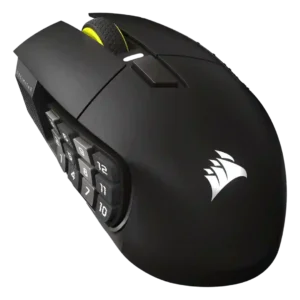
4.4

Choose it if you want a premium MMO/productivity mouse with 12 adjustable side buttons, strong battery life, and Stream Deck integration. Skip it if you need an ultralight FPS mouse,...

Pros: button customization, MMO gaming suitability

Cons: FPS gaming suitability

#4 MSI Versa 300 Wireless 8K
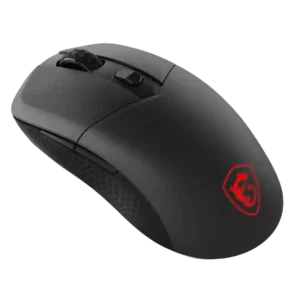
4.4

Best for precise wireless tracking, smooth glide, strong battery life, and unusually good 8K value. Skip it if you need polished software, quiet snappy clicks, true left-handed controls, or gentle...

Pros: software usability, sensor performance

Cons: RGB features, scroll wheel quality