Scorata scores summarize analyzed review evidence on a 1–5 scale; they are not laboratory measurements or a simple average of customer star ratings. Feature scores summarize the reviews covering that feature. The overall score averages feature scores within each review, then combines review averages. When both expert and customer evidence are available, those two groups receive equal weight. Products can have different review coverage, so small score gaps do not establish a winner.
Recommendations prioritize important features for the category, with a score of at least 3.5, a gap of at least 0.25 points and at least two supporting reviews per product. Features with widely varying scores or broad connectivity contexts are excluded from recommendations. These safeguards do not establish statistical significance.
Quick verdict
What each product is best for
The review evidence points to a tradeoff: materials quality and polling rate versus premium feel and software usability. Choose according to which strengths matter more to you; the overall score alone does not settle that choice.
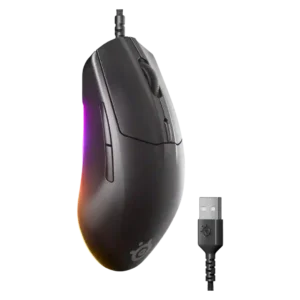
Choose SteelSeries Rival 3 Gen 2 Wired for materials quality and polling rate.
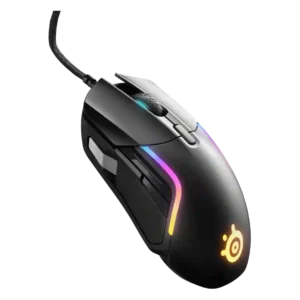
Choose SteelSeries Rival 5 for premium feel and software usability.
Why these recommendations?
SteelSeries Rival 3 Gen 2 Wired
Where It Has the Edge
materials quality is 4.5 vs 3.0. Materials were praised as thick, textured matte plastic, with another review describing improved build materials.
polling rate is 4.0 vs 3.3. Polling-rate feedback was mixed but generally adequate: 1,000Hz was called standard or delay-free, while PCMag called it low...
FPS gaming suitability is 4.3 vs 3.9. FPS gaming suitability was strong across reviews, with positive examples from Call of Duty, Counter-Strike 2, Valorant, and...
SteelSeries Rival 5
Where It Has the Edge
premium feel is 4.8 vs 3.2. Premium feel was praised in limited but strong evidence, with reviewers saying the mouse looked or felt more...
software usability is 4.6 vs 3.5. Software usability was a major strength overall, especially for SteelSeries GG/Engine customization, though a few reviewers found the...
shape comfort is 4.6 vs 3.8. Shape comfort was mostly positive, with reviewers praising the hand fit and general comfort, though size and edge...
SteelSeries Rival 3 Gen 2 Wired4.1 overall score
SteelSeries Rival 54.2 overall score
Compare features
Scores are out of 5. Missing scores mean missing review evidence, not a missing feature.
Scored on both products
Other features
Onboard memory
SteelSeries Rival 3 Gen 2 Wired
4.5
Onboard memory was useful for preserving settings across computers without relying on local software.
SteelSeries Rival 5
2.7
Onboard memory was a recurring weakness because RGB or broader profiles often required software, though one reviewer found saved DPI and polling adequate for events.
Premium feel
SteelSeries Rival 3 Gen 2 Wired
3.2
Premium feel was mixed: reviewers liked the fundamentals but said it lacked higher-end flair or felt less premium than Aerox models.
SteelSeries Rival 5
4.8
Premium feel was praised in limited but strong evidence, with reviewers saying the mouse looked or felt more expensive than expected.
Portability
SteelSeries Rival 3 Gen 2 Wired
4.0
Portability was a plus for users who value a smaller mouse, even if that is a performance tradeoff for some.
SteelSeries Rival 5
2.5
Portability had limited negative evidence because software-dependent settings could become a hassle when carrying the mouse to tournaments or other systems.
Profile switching
SteelSeries Rival 3 Gen 2 Wired
3.0
Profile switching was somewhat limited because there is no dedicated profile button by default, though remapping is possible.
SteelSeries Rival 5
4.5
Profile switching evidence was positive but limited, centered on easy game-specific switching and automatic settings changes.
Cable flexibility
SteelSeries Rival 3 Gen 2 Wired
4.6
The braided/paracord-style cable drew consistent praise for staying unobtrusive, avoiding friction, and feeling almost unnoticeable in fast play.
SteelSeries Rival 5
3.5
Cable flexibility was highly mixed: some praised low drag or flexibility, while many criticized stiffness, non-detachability, or non-paracord feel.
Polling rate
SteelSeries Rival 3 Gen 2 Wired
4.0
Polling-rate feedback was mixed but generally adequate: 1,000Hz was called standard or delay-free, while PCMag called it low but acceptable.
SteelSeries Rival 5
3.3
Polling-rate feedback was limited and mixed: one reviewer valued the adjustable feedback, while another treated the polling rate as a comparative weakness.
Acceleration control
SteelSeries Rival 3 Gen 2 Wired
4.0
Acceleration settings were considered easy to understand in SteelSeries GG, with clear graphs and sliders.
SteelSeries Rival 5
4.5
Acceleration-related controls were praised as unusually advanced and useful for fine-tuning, especially through SteelSeries software.
Surface compatibility
SteelSeries Rival 3 Gen 2 Wired
4.5
Surface compatibility was positive, with smooth feet described as gliding across most surfaces.
SteelSeries Rival 5
5.0
Surface compatibility had limited but very positive evidence, with reviewers saying the Rival 5 gripped or skated well across surfaces.
FPS gaming suitability
SteelSeries Rival 3 Gen 2 Wired
4.3
FPS gaming suitability was strong across reviews, with positive examples from Call of Duty, Counter-Strike 2, Valorant, and similar aim-focused testing.
SteelSeries Rival 5
3.9
FPS suitability was mixed: tracking and speed were praised, but several reviewers said side-button reach or layout made it less ideal for dedicated FPS use.
Motion consistency
SteelSeries Rival 3 Gen 2 Wired
4.5
Motion consistency was strong, with easy recoil control and predictable responses in low-DPI/high-sensitivity play.
SteelSeries Rival 5
4.9
Motion consistency received strong praise, with reviewers reporting smooth, predictable movement and little to no dragging, drifting, or missed tracking.
DPI range
SteelSeries Rival 3 Gen 2 Wired
3.8
The 8,500 DPI ceiling was usually considered enough for gaming, though one reviewer warned the lower peak sensitivity could matter to some users.
SteelSeries Rival 5
4.2
The wide DPI/CPI range was viewed as useful and flexible, although several reviewers noted the highest settings were more than they personally needed.
Click latency
SteelSeries Rival 3 Gen 2 Wired
4.5
Latency impressions were positive, with reviewers reporting no lag or missed inputs and direct, delay-free movement response.
SteelSeries Rival 5
4.2
Click latency was mostly seen as fine or negligible, though one test-oriented reviewer said it lagged behind some competitors.
Scroll wheel quality
SteelSeries Rival 3 Gen 2 Wired
4.0
The scroll wheel was considered simple but well suited, with distinct notches and usable firmness.
SteelSeries Rival 5
3.7
Scroll wheel feedback was mixed, with some finding it satisfying and tactile while others disliked the middle-of-the-road resistance for games or documents.
Cross-platform compatibility
SteelSeries Rival 3 Gen 2 Wired
4.5
Cross-system use was supported by onboard settings, with one review calling personal settings seamless across different computers.
SteelSeries Rival 5
4.8
Cross-platform compatibility had limited positive evidence, including Xbox support and software working across macOS and Windows.
Left and right click quality
SteelSeries Rival 3 Gen 2 Wired
4.8
Primary click quality was praised as firm, balanced, and close to best-in-class for feel and performance.
SteelSeries Rival 5
4.5
Left and right clicks were praised for a deep, tactile, well-weighted feel with good actuation force.
RGB features
SteelSeries Rival 3 Gen 2 Wired
4.4
RGB was a consistent wired-model strength, with praise for tasteful underglow and extensive customization.
SteelSeries Rival 5
4.6
RGB features were widely praised for rich zones and customization, though some reviewers found the lighting distracting, too bright, or partially hidden during use.
Ecosystem integration
SteelSeries Rival 3 Gen 2 Wired
4.0
SteelSeries GG and Prism integration was treated as a useful bonus for adding personal RGB and settings touches.
SteelSeries Rival 5
4.2
Ecosystem integration was positive but conditional, with reviewers valuing lighting sync and brand-wide software most when already using SteelSeries gear.
Grip texture
SteelSeries Rival 3 Gen 2 Wired
4.0
Grip texture was mostly positive for matte, grippy plastic, though one review wished the side grooves were deeper.
SteelSeries Rival 5
3.9
Grip texture was generally helpful for stability, although one reviewer preferred a competitor’s more textured side grips.
Glide smoothness
SteelSeries Rival 3 Gen 2 Wired
4.5
Glide was consistently praised, with PTFE feet and smooth skates keeping movement low-friction across mousepads and surfaces.
SteelSeries Rival 5
4.6
Glide smoothness was strongly positive, with reviewers repeatedly reporting smooth, low-friction movement on mouse pads and surfaces.
Switch feel
SteelSeries Rival 3 Gen 2 Wired
4.5
Switch feel was praised as crisp, clicky, balanced, and responsive without being too heavy.
SteelSeries Rival 5
4.6
Switch feel was broadly praised as crisp, deliberate, snappy, and satisfying, with only minor force-preference caveats.
Weight
SteelSeries Rival 3 Gen 2 Wired
4.3
Weight was generally praised for quick movements and reduced fatigue, though reviewers noted it is not ultralight compared with some rivals.
SteelSeries Rival 5
4.2
Most reviewers liked the 85g weight as light or balanced for the feature set, while a few wished it were lighter or disagreed with the marketing emphasis.
Comfort and build
Materials quality
SteelSeries Rival 3 Gen 2 Wired
4.5
Materials were praised as thick, textured matte plastic, with another review describing improved build materials.
SteelSeries Rival 5
3.0
Materials quality was mixed because the plastic shell was expected and serviceable, but reviewers did not always find it premium.
Switch durability
SteelSeries Rival 3 Gen 2 Wired
3.8
Switch durability evidence was mixed: one review reported a lodged switch issue, while another described consistent long-term performance.
SteelSeries Rival 5
5.0
Switch durability had limited but strongly positive evidence, focused on the high durability rating compared with many mice.
Fingertip grip comfort
SteelSeries Rival 3 Gen 2 Wired
4.5
Fingertip grip comfort was strong, with the low-profile shape repeatedly described as comfortable or ideal for that style.
SteelSeries Rival 5
3.5
Fingertip grip comfort was split, with one reviewer finding it excellent and another warning the mouse was too large for fingertip users.
Palm grip comfort
SteelSeries Rival 3 Gen 2 Wired
2.3
Palm grip comfort was the clearest fit issue, with reviewers saying palm users may find it too small or should look elsewhere.
SteelSeries Rival 5
3.2
Palm grip comfort was mixed: one reviewer strongly favored it, while others reported palm pinching or desk contact.
Shape comfort
SteelSeries Rival 3 Gen 2 Wired
3.8
Shape comfort was generally good but not universal: reviewers liked the in-hand feel while noting limited contouring for some grips.
SteelSeries Rival 5
4.6
Shape comfort was mostly positive, with reviewers praising the hand fit and general comfort, though size and edge geometry did not suit everyone.
Claw grip comfort
SteelSeries Rival 3 Gen 2 Wired
4.5
Claw grip users were well served, with multiple reviewers calling the shape comfortable or ideal for claw-style handling.
SteelSeries Rival 5
4.0
Claw grip comfort was mostly positive for suitable hand sizes, but at least one reviewer with smaller hands found it too big to claw comfortably.
Durability over time
SteelSeries Rival 3 Gen 2 Wired
4.5
Durability over time was supported by comments about consistent switch performance in long-term use.
SteelSeries Rival 5
5.0
Durability over time was praised through switch durability language and expectations that the switches would last rigorous use.
Long-session comfort
SteelSeries Rival 3 Gen 2 Wired
4.3
Long-session comfort was repeatedly positive for workday use, prolonged use, and reduced sweat or fatigue.
SteelSeries Rival 5
4.8
Long-session comfort was positive where discussed, with reviewers noting comfortable extended use and fewer pressure issues.
Ergonomic design
SteelSeries Rival 3 Gen 2 Wired
4.5
Ergonomics were mostly positive, with reviewers describing the wired mouse as comfortable and improved, though not highly sculpted.
SteelSeries Rival 5
4.8
Ergonomic design was praised for thumb support, rounded edges, and a comfortable grip profile.
Build quality
SteelSeries Rival 3 Gen 2 Wired
4.8
Build quality was praised as sturdy and solid, including zero flex or creaking in one hands-on teardown-oriented review.
SteelSeries Rival 5
4.7
Build quality was a clear strength, with reviewers repeatedly describing the mouse as sturdy, solid, and free from flex or rattling.
Controls and connectivity
Software usability
SteelSeries Rival 3 Gen 2 Wired
3.5
Software usability was mixed: GG was praised by some, but other reviewers found it cluttered or unintuitive.
SteelSeries Rival 5
4.6
Software usability was a major strength overall, especially for SteelSeries GG/Engine customization, though a few reviewers found the layout cluttered.
Button customization
SteelSeries Rival 3 Gen 2 Wired
4.0
Button customization was seen as giving useful flexibility and control over play style through software adjustments.
SteelSeries Rival 5
4.9
Button customization was a strength, with reviewers praising remapping, media controls, and broad function assignment through software.
Side button quality
SteelSeries Rival 3 Gen 2 Wired
3.6
Side button quality was mixed, ranging from thin and less premium to easily accessible and functional.
SteelSeries Rival 5
3.0
Side-button quality was the most divisive area: some liked the paddle or natural placement, while many struggled with the front/silver button or crowded layout.
Button responsiveness
SteelSeries Rival 3 Gen 2 Wired
4.3
Buttons were generally satisfying and responsive, with reviewers praising rapid tapping, quick rebound, and a lack of accidental presses.
SteelSeries Rival 5
4.7
Button responsiveness was strongly positive, with reviewers reporting tactile clicks, no repeated clicks, and no meaningful double-click or travel problems.
Programmable buttons
SteelSeries Rival 3 Gen 2 Wired
4.0
Programmable buttons were seen as adding practical flexibility and control when customized in software.
SteelSeries Rival 5
4.3
Programmable buttons were generally valued for multi-genre play, though some reviewers felt awkward placement reduced how many were truly usable.
Ownership and support
Macro support
SteelSeries Rival 3 Gen 2 Wired
4.0
Macro support was viewed as flexible, with side buttons able to be macroed through SteelSeries software.
SteelSeries Rival 5
4.8
Macro support was praised where tested, with reviewers finding macro creation intuitive, comfortable, or reliable even for longer macros.
Value for money
SteelSeries Rival 3 Gen 2 Wired
4.6
Value was the strongest consensus point, with reviewers repeatedly praising the mouse as budget-friendly, cost-effective, and a strong class option.
SteelSeries Rival 5
4.5
Value for money was the strongest consensus point: most reviewers found the Rival 5 well priced or feature-rich, with only a few dissenting value judgments.
Performance
Click noise
SteelSeries Rival 3 Gen 2 Wired
4.0
Click noise was acceptable: the switches were described as crisp without being overly loud or heavy.
SteelSeries Rival 5
4.5
Click noise was viewed positively, with reviewers describing the switches or pressure points as quiet or pleasant rather than distracting.
Sensor performance
SteelSeries Rival 3 Gen 2 Wired
4.3
Sensor performance was broadly positive for a budget mouse, with snappy response, smooth tracking, and satisfying gaming performance.
SteelSeries Rival 5
4.7
The TrueMove Air sensor was one of the most consistently praised parts, described as strong, accurate, responsive, and problem-free across reviews.
Tracking and training
Accuracy and tracking precision
SteelSeries Rival 3 Gen 2 Wired
4.4
Accuracy was a major strength: reviewers reported precise swipes, strong aim-trainer results, and little practical impact from the modest sensor ceiling.
SteelSeries Rival 5
4.8
Reviewers consistently found the Rival 5 precise and accurate in gaming and general use, with repeated praise for controlled aiming and tracking.
Evidence available for one product
Other features
Balance and weight distribution
SteelSeries Rival 3 Gen 2 WiredNo score yet
SteelSeries Rival 5
4.5
Balance and weight distribution had limited but positive evidence, with one reviewer calling the mouse well balanced for its feature set.
Connection stability
SteelSeries Rival 3 Gen 2 Wired
5.0
The wired setup was praised for stable, consistent performance without connection drops or battery-related interruptions.
SteelSeries Rival 5No score yet
Handedness options
SteelSeries Rival 3 Gen 2 Wired
3.0
Handedness support was mixed because the shape is symmetrical but one review said it is optimized for right-handed use.
SteelSeries Rival 5No score yet
Lift-off distance
SteelSeries Rival 3 Gen 2 WiredNo score yet
SteelSeries Rival 5
4.3
Lift-off behavior was generally praised as effective or near-perfect, with a minority caveat that medium or non-adjustable lift-off could bother some users.
MMO gaming suitability
SteelSeries Rival 3 Gen 2 WiredNo score yet
SteelSeries Rival 5
4.1
MMO suitability was generally positive for a multi-genre mouse, but reviewers still saw dedicated MMO mice as better for heavy hotkey users.
MOBA gaming suitability
SteelSeries Rival 3 Gen 2 WiredNo score yet
SteelSeries Rival 5
3.9
MOBA suitability was moderately positive because side buttons could map abilities, though the learning curve and limited usable buttons were caveats.
Weight tuning
SteelSeries Rival 3 Gen 2 WiredNo score yet
SteelSeries Rival 5
2.2
Weight tuning scored poorly because reviewers repeatedly noted the lack of tunable or customizable weights as a tradeoff versus some competitors.
Comfort and build
Skate durability
SteelSeries Rival 3 Gen 2 Wired
4.0
Skate durability and serviceability were mildly positive because divots helped remove the feet without damage.
SteelSeries Rival 5No score yet
Controls and connectivity
Software stability
SteelSeries Rival 3 Gen 2 Wired
3.8
Software stability and performance were acceptable, with comments that GG was not resource-heavy and functioned well at its core.
Choose the ROG Harpe II Ace for ultralight FPS play, precise tracking, smooth glide, and web-based tuning. Skip it if you need palm-grip support, MMO buttons, onboard profiles, or long...
Excellent tracking, comfortable right-handed ergonomics and a versatile scroll wheel make the Basilisk V3 a strong gaming and productivity mouse. Its substantial weight, fixed cable and sometimes over-sensitive automatic scrolling...
The L7 Pro delivers remarkably light handling, precise aiming and a grippy shell at a budget price. Stock skates are less impressive, and conflicting click-latency measurements warrant caution for latency-sensitive...
Best for ultra-light, competition-focused speed, precise tracking, stable wireless, and long battery life. Skip it if you need quieter clicks, left-handed support, Bluetooth, more buttons, or better value for casual...