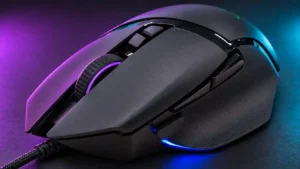
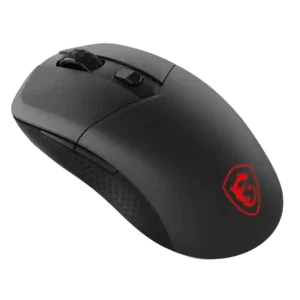
Compare Razer DeathAdder V3 vs Razer Basilisk V3

Razer DeathAdder V3

Razer DeathAdder V3

Overall score 4.4 / 5

Based on 17 scored reviews

vs
Razer Basilisk V3

Razer Basilisk V3

Overall score 4.5 / 5

Based on 34 scored reviews

How we score

Scorata scores summarize analyzed review evidence on a 1–5 scale; they are not laboratory measurements or a simple average of customer star ratings. Feature scores summarize the reviews covering that feature. The overall score averages feature scores within each review, then combines review averages. When both expert and customer evidence are available, those two groups receive equal weight. Products can have different review coverage, so small score gaps do not establish a winner.

Recommendations prioritize important features for the category, with a score of at least 3.5, a gap of at least 0.25 points and at least two supporting reviews per product. Features with widely varying scores or broad connectivity contexts are excluded from recommendations. These safeguards do not establish statistical significance.

Quick verdict

What each product is best for

The review evidence points to a tradeoff: DPI range and polling rate versus RGB features and materials quality. Choose according to which strengths matter more to you; the overall score alone does not settle that choice.

Choose Razer DeathAdder V3 for DPI range and polling rate.

Choose Razer Basilisk V3 for RGB features and materials quality.

Why these recommendations?

Razer DeathAdder V3

Where It Has the Edge

  • DPI range is 5.0 vs 3.6. DPI range evidence was positive, with reviewers treating the 30K ceiling and wider adjustment range as a precision...
  • polling rate is 4.1 vs 3.8. Polling-rate feedback was positive overall, but mixed in practice: reviewers liked 8,000Hz support while some saw little benefit...
  • value for money is 4.8 vs 4.5. Value for money was strong overall, especially at lower prices, though one reviewer thought the feature set made...

Razer Basilisk V3

Where It Has the Edge

  • RGB features is 4.8 vs 3.0. Chroma provides extensive customization and an attractive underglow that complements other compatible peripherals.
  • materials quality is 4.6 vs 3.0. Matte plastic and grippy rubber feel durable and pleasant, although the plastic scroll wheel can feel less premium...
  • macro support is 4.9 vs 3.5. Macros and secondary mappings let users build extensive shortcuts for games and other tasks.
Razer DeathAdder V3 4.4 overall score
Razer Basilisk V3 4.5 overall score

Compare features

Scores are out of 5. Missing scores mean missing review evidence, not a missing feature.

Scored on both products

Other features

RGB features
Razer DeathAdder V3
3.0

RGB feedback was context-dependent: some reviewers missed RGB, while esports-focused reviewers liked or accepted the no-RGB design.

Razer Basilisk V3
4.8

Chroma provides extensive customization and an attractive underglow that complements other compatible peripherals.

Weight
Razer DeathAdder V3
5.0

Weight was one of the clearest strengths, with reviewers repeatedly praising the sub-60g build as light, fast, and fatigue-reducing.

Razer Basilisk V3
3.4

At roughly 101 grams, the mouse is substantial compared with modern ultralights. Its shape and smooth feet help offset the heft for many users.

DPI range
Razer DeathAdder V3
5.0

DPI range evidence was positive, with reviewers treating the 30K ceiling and wider adjustment range as a precision benefit.

Razer Basilisk V3
3.6

The broad sensitivity range accommodates individual preferences; the extreme maximum is generally viewed as unnecessary rather than a reason to upgrade.

Onboard memory
Razer DeathAdder V3
3.3

Onboard memory was mixed because profiles exist, but one reviewer criticized internal memory limitations for button assignments.

Razer Basilisk V3
4.6

Five stored profiles help retain settings across computers; lighting customizations may not carry over.

Profile switching
Razer DeathAdder V3
3.3

Profile switching was mixed, with convenient profile toggling offset by complaints about the underside DPI/profile button placement.

Razer Basilisk V3
4.4

The underside switch makes changing saved profiles straightforward, although flipping the mouse over can interrupt use.

Scroll wheel quality
Razer DeathAdder V3
3.6

Scroll wheel quality was one of the more mixed areas, ranging from smooth and reliable to soft, indistinct, loose, or insufficiently clicky.

Razer Basilisk V3
4.4

Tactile and free-spin modes are major strengths. Automatic switching is divisive, while a few users report wheel wobble or faults.

Left and right click quality
Razer DeathAdder V3
4.1

Main click quality was mixed: several reviewers liked the left and right clicks, while one found them floaty with too much movement.

Razer Basilisk V3
4.8

Main clicks feel crisp and satisfying with minimal travel, although one tester noticed slightly different feel between left and right.

Balance and weight distribution
Razer DeathAdder V3
4.0

Balance was slightly front-heavy in two reviews, but reviewers generally described the imbalance as minor and not disruptive.

Razer Basilisk V3
4.7

The weight distribution feels balanced in hand, avoiding the front-heavy sensation some wired mice have.

Cable flexibility
Razer DeathAdder V3
4.0

Cable flexibility was highly divisive, ranging from light and unobtrusive to stiff, heavy, or merely passable.

Razer Basilisk V3
4.6

The soft braided Speedflex cable usually moves freely with little drag, though a few testers report stiffness or kinks.

Lift-off distance
Razer DeathAdder V3
4.4

Lift-off distance was viewed as a useful tuning feature, though some reviewers framed it as niche or only useful for advanced users.

Razer Basilisk V3
5.0

Very low lift-off distance is a strength, with adjustable cutoff settings for players who frequently reposition the mouse.

Glide smoothness
Razer DeathAdder V3
4.4

Glide smoothness was generally strong thanks to PTFE feet and smooth movement, though a few reviewers disliked or replaced the stock skates.

Razer Basilisk V3
4.9

PTFE feet offer smooth, easy movement that helps compensate for the weight; one reviewer noticed slight drag along the right edge.

Grip texture
Razer DeathAdder V3
4.3

Grip texture was mostly praised as smooth, grippy, or improved, though a few reviewers found it slippery or requiring extra force.

Razer Basilisk V3
4.7

Textured rubber side grips and subtle button texture provide secure control without a cheap feel.

Handedness options
Razer DeathAdder V3
2.0

Handedness options were a limitation because reviewers repeatedly emphasized the right-handed-only shape.

Razer Basilisk V3
1.6

The asymmetric design is dedicated to right-handed users, leaving left-handed buyers without an equivalent orientation.

Switch feel
Razer DeathAdder V3
4.6

Switch feel was generally positive thanks to crisp or satisfying optical clicks, though a few reviewers found them hollow, mushy, or less pleasant than mechanical switches.

Razer Basilisk V3
4.9

The second-generation optical switches have a crisp, tactile feel, with a pleasing balance of pressure and responsiveness.

Polling rate
Razer DeathAdder V3
4.1

Polling-rate feedback was positive overall, but mixed in practice: reviewers liked 8,000Hz support while some saw little benefit or stuttering.

Razer Basilisk V3
3.8

The standard 1,000Hz polling rate feels responsive compared with office mice, but lacks the higher rates some esports enthusiasts seek.

Premium feel
Razer DeathAdder V3
4.8

Premium feel was praised in limited evidence, particularly for the logo finish and improved coating feel.

Razer Basilisk V3
5.0

The substantial thumb rest and textured grips contribute to a premium look and feel.

Portability
Razer DeathAdder V3
2.2

Portability was a weakness because reviewers cited the large body, fixed cable, and wired setup as inconvenient for travel.

Razer Basilisk V3
2.0

A broad shell and permanently attached cable make it less convenient to carry between devices than compact wireless mice.

Acceleration control
Razer DeathAdder V3
5.0

Acceleration-related performance was praised in the broader performance package, with reviewers reporting no concerns and strong online-game responsiveness.

Razer Basilisk V3
5.0

Cursor motion follows hand movements accurately without unwanted acceleration.

Click latency
Razer DeathAdder V3
5.0

Click latency was strongly praised, with reviewers describing the wired optical-switch setup as very fast and responsive.

Razer Basilisk V3
5.0

Optical switches deliver notably low click latency, with quick actuation and little perceived delay.

FPS gaming suitability
Razer DeathAdder V3
5.0

FPS gaming suitability was one of the strongest areas, with repeated praise for speed, weight, clicks, tracking, and esports focus.

Razer Basilisk V3
5.0

Accurate tracking and fast clicks make it an excellent shooter mouse, with weight the principal competitive compromise.

Motion consistency
Razer DeathAdder V3
5.0

Motion consistency evidence was limited but very positive, with one reviewer reporting no stutters, missed movements, or unexpected shifts.

Razer Basilisk V3
5.0

Tracking remains consistent through fast flicks and sweeping movements, without obvious stuttering or jitter.

Surface compatibility
Razer DeathAdder V3
5.0

Surface compatibility evidence was limited but positive, with one reviewer praising gliding on different surfaces.

Razer Basilisk V3
5.0

The mouse glides smoothly over a range of mousepads and desk surfaces.

Comfort and build

Durability over time
Razer DeathAdder V3
5.0

Durability over time evidence was positive but limited, with reviewers expecting stable construction to last through years of gaming.

Razer Basilisk V3
3.3

Long-term experiences differ: one multi-year test found no durability issues, but an embedded customer account described repeated middle-button failures.

Materials quality
Razer DeathAdder V3
3.0

Materials quality was mixed, with criticism of cable fit or cheap-looking underside balanced against otherwise solid construction.

Razer Basilisk V3
4.6

Matte plastic and grippy rubber feel durable and pleasant, although the plastic scroll wheel can feel less premium than metal alternatives.

Fingertip grip comfort
Razer DeathAdder V3
2.6

Fingertip grip comfort was mixed-to-negative because the large hump and body often limited fingertip control for smaller hands.

Razer Basilisk V3
3.8

Fingertip grip works for some users thanks to the side grips, but smaller hands and those preferring compact mice may struggle.

Shape comfort
Razer DeathAdder V3
4.0

Shape comfort was strong for the right user but divisive, praised for large or palm-oriented hands and criticized by some smaller-hand or fingertip users.

Razer Basilisk V3
4.7

The sculpted shape feels natural to many hands, though the generous width and right-handed contours are personal preferences.

Switch durability
Razer DeathAdder V3
5.0

Switch durability evidence was limited but positive, with the high click-life rating treated as a strong durability point.

Razer Basilisk V3
4.6

Optical switches are rated for many clicks and are expected to avoid mechanical contact problems; multi-year testing was also favorable.

Palm grip comfort
Razer DeathAdder V3
4.8

Palm grip comfort was strongly praised, with reviewers repeatedly identifying palm grip and medium-to-large hands as the best fit.

Razer Basilisk V3
4.5

Palm grip is a particularly strong match for the thumb rest and broad body, though outer finger support or rear width can be limiting for some hands.

Claw grip comfort
Razer DeathAdder V3
4.0

Claw grip comfort was mixed-to-positive, working well for some larger-hand users but less naturally for others.

Razer Basilisk V3
4.2

Many users find claw grip comfortable, but the forward trigger can be harder to reach and some prefer a different shape.

Build quality
Razer DeathAdder V3
5.0

Build quality was strongly praised, with reviewers repeatedly reporting no creaking, flex, rattling, or quality-control issues.

Razer Basilisk V3
4.9

The sturdy shell and solid construction inspire confidence, with occasional minor flex or wheel rattle.

Ergonomic design
Razer DeathAdder V3
4.9

Ergonomic design was a standout strength, repeatedly described as comfortable, hand-friendly, and effective for longer gaming sessions.

Razer Basilisk V3
4.8

The sculpted right-handed shell, thumb rest and grippy surfaces consistently earn praise for comfort.

Long-session comfort
Razer DeathAdder V3
4.8

Long-session comfort was praised, especially for large-hand users who benefit from the low weight and ergonomic shape.

Razer Basilisk V3
4.9

The comfortable shell and thumb support help reduce hand fatigue over many hours of use.

Ownership and support

Macro support
Razer DeathAdder V3
3.5

Macro support was adequate but limited: Hypershift helped, while the small number of extra macro inputs held it back.

Razer Basilisk V3
4.9

Macros and secondary mappings let users build extensive shortcuts for games and other tasks.

Value for money
Razer DeathAdder V3
4.8

Value for money was strong overall, especially at lower prices, though one reviewer thought the feature set made the price a little high.

Razer Basilisk V3
4.5

Most consider the mouse excellent value for its performance and extensive controls. Price comparisons against discounted older models are less favorable.

Controls and connectivity

Programmable buttons
Razer DeathAdder V3
3.5

Programmable-button feedback was mixed because the buttons are useful and remappable, but reviewers also saw the mouse as basic with few extra inputs.

Razer Basilisk V3
4.8

Numerous remappable buttons and HyperShift provide more control options than most conventional gaming mice.

Software usability
Razer DeathAdder V3
3.5

Software usability was mixed: Synapse was useful and intuitive for settings, but one reviewer called it bloated and frustrating.

Razer Basilisk V3
4.7

Synapse is generally easy to navigate and offers deep customization, although its many options can take time to learn.

Button customization
Razer DeathAdder V3
4.1

Button customization was positive overall through Synapse remapping and Hypershift, but reviewers still considered overall customization limited.

Razer Basilisk V3
4.9

Synapse supports a wide range of button assignments and secondary commands, though not every scrolling option can be assigned directly to a button.

Software stability
Razer DeathAdder V3
4.5

Software stability evidence was limited but positive, with one reviewer reporting no issues with settings being forgotten.

Razer Basilisk V3
5.0

Several reviewers found Synapse stable and reliable in use, with no problems configuring settings.

Side button quality
Razer DeathAdder V3
4.7

Side button quality was mostly praised for placement, tactile feel, and low accidental-press risk, though one reviewer struggled with reach.

Razer Basilisk V3
4.2

Side buttons are often easy and satisfying to press, but some find the sensitivity trigger mushy or slightly wobbly.

Button responsiveness
Razer DeathAdder V3
5.0

Button responsiveness was praised across reviews, especially for fast feedback and tight repeated clicking during games.

Razer Basilisk V3
5.0

Buttons respond quickly, making rapid actions feel immediate during games.

Performance

Click noise
Razer DeathAdder V3
5.0

Click noise evidence was limited but positive, with one reviewer saying the clicks were quieter than a comparable Razer mouse.

Razer Basilisk V3
4.6

Main clicks have a crisp, satisfying sound; some find them slightly more audible than earlier switches, but not excessively loud.

Sensor performance
Razer DeathAdder V3
5.0

Sensor performance was a major strength, with reviewers repeatedly calling the Focus Pro 30K implementation accurate, responsive, stable, or flawless.

Razer Basilisk V3
4.9

The Focus+ sensor performs exceptionally well in practice, even though its headline 26,000 DPI is more than most people need.

Tracking and training

Accuracy and tracking precision
Razer DeathAdder V3
5.0

Reviewers consistently praised tracking accuracy and in-game precision, with no meaningful complaints about aim or cursor accuracy.

Razer Basilisk V3
5.0

Tracking is consistently smooth and accurate, with little reported jitter or unwanted acceleration during gameplay.

Evidence available for one product

Ownership and support

Reliability
Razer DeathAdder V3No score yet
Razer Basilisk V3
3.5

Tracking and overall operation are reliable in most testing, but an embedded customer report described repeated middle-click failure.

Customer support
Razer DeathAdder V3No score yet
Razer Basilisk V3
1.0

One customer reported being denied manufacturer assistance because the mouse came from an unauthorized seller.

Double-click reliability
Razer DeathAdder V3No score yet
Razer Basilisk V3
4.5

Optical switches are favored for their potential to avoid double-click faults, though some praise is based on design rather than long-term testing.

Hand support
Razer DeathAdder V3No score yet
Razer Basilisk V3
4.7

The thumb rest prevents drag and supports the hand, though ring and little finger support could be more generous.

Tilt wheel support
Razer DeathAdder V3No score yet
Razer Basilisk V3
4.8

Left and right tilt inputs add two useful commands, with some reviewers preferring their tactile response over competing wheels.

Upgrade value
Razer DeathAdder V3No score yet
Razer Basilisk V3
3.9

The wheel and RGB are worthwhile refinements, especially for first-time buyers. Upgrading from the V2 is harder to justify unless those changes matter to you.

Warranty
Razer DeathAdder V3No score yet
Razer Basilisk V3
4.5

The included two-year limited warranty was viewed favorably.

Controls and connectivity

Accidental button activation
Razer DeathAdder V3No score yet
Razer Basilisk V3
5.0

Well-judged button resistance and placement help prevent accidental presses while keeping commands easy to access.

Button count
Razer DeathAdder V3No score yet
Razer Basilisk V3
4.7

The 10+1 layout offers many more inputs than standard gaming mice without needing a full MMO keypad.

Button placement
Razer DeathAdder V3No score yet
Razer Basilisk V3
3.9

Many controls fall naturally under the fingers, but the forward thumb trigger can be awkward for smaller hands and some grip styles.

Button quality
Razer DeathAdder V3No score yet
Razer Basilisk V3
4.3

Most buttons feel crisp and solid with good feedback; the middle-click reliability complaint and occasional mushy thumb trigger are caveats.

DPI customization
Razer DeathAdder V3No score yet
Razer Basilisk V3
4.8

Fine CPI steps, multiple sensitivity stages and separate X/Y adjustment give users precise control over cursor speed.

Polling rate customization
Razer DeathAdder V3No score yet
Razer Basilisk V3
4.5

Adjustable polling rate adds another layer of control for users who prefer to fine-tune performance.

Scroll wheel customization
Razer DeathAdder V3No score yet
Razer Basilisk V3
4.8

Multiple scrolling modes are easy to select and tune, making the wheel more adaptable than a conventional notched design.

Software and driver support
Razer DeathAdder V3No score yet
Razer Basilisk V3
2.3

Synapse unlocks extensive configuration but some features require it to remain running, and Mac users miss out on customization.

Software quality
Razer DeathAdder V3No score yet
Razer Basilisk V3
4.8

Synapse offers detailed customization for sensitivity, macros, lighting and scrolling, and most testers find it intuitive.

Software resource usage
Razer DeathAdder V3No score yet
Razer Basilisk V3
2.5

Synapse offers deep customization at the cost of software bloat and relatively high memory usage.

Software update frequency
Razer DeathAdder V3No score yet
Razer Basilisk V3
2.3

Frequent Synapse updates can be intrusive despite its useful customization options.

Tilt gesture controls
Razer DeathAdder V3
2.0

Tilt gesture control support was a weakness because one reviewer specifically wished the scroll wheel had tilt functionality.

Razer Basilisk V3No score yet

Comfort and build

Aesthetic design
Razer DeathAdder V3No score yet
Razer Basilisk V3
4.8

The angular matte-black shell and glowing underside give the mouse a distinctive appearance without overwhelming the desk.

Grip comfort
Razer DeathAdder V3No score yet
Razer Basilisk V3
4.9

The rubber side panels and sculpted grip make the mouse comfortable to hold for extended periods.

Hand size compatibility
Razer DeathAdder V3No score yet
Razer Basilisk V3
4.2

The shape accommodates many hands, especially medium and large sizes; smaller hands often struggle with the forward thumb button.

Size
Razer DeathAdder V3No score yet
Razer Basilisk V3
3.6

The relatively broad body is more substantial than compact mice, but some testers found it less bulky than it initially appears.

Other features

Automatic scroll mode switching
Razer DeathAdder V3No score yet
Razer Basilisk V3
4.0

Smart-Reel makes long-page navigation easier, but experiences vary widely: some find it intuitive while others disable it because it activates too readily.

Built-in RGB lighting
Razer DeathAdder V3No score yet
Razer Basilisk V3
4.9

The underglow, illuminated logo and wheel make the mouse stand out, particularly in dark setups.

Cable quality
Razer DeathAdder V3No score yet
Razer Basilisk V3
4.7

The braided cable is generally light, flexible and resistant to tangles, though it can retain some stiffness.

Click consistency
Razer DeathAdder V3No score yet
Razer Basilisk V3
3.2

Main clicks generally feel consistent, but one tester noticed slightly different click feel and a customer reported unreliable middle clicks.

Coating quality
Razer DeathAdder V3No score yet
Razer Basilisk V3
4.7

Textured surfaces provide comfortable traction and help keep fingers from slipping during use.

Console compatibility
Razer DeathAdder V3No score yet
Razer Basilisk V3
4.0

Basic input works on the tested PS5 and Xbox Series X, though console button mapping is limited.

Cursor control
Razer DeathAdder V3No score yet
Razer Basilisk V3
3.5

Precise tracking aids aim and cursor movement, though one embedded customer complaint reported recurring sensitivity problems.

Device switching
Razer DeathAdder V3No score yet
Razer Basilisk V3
4.4

Saved profiles help when changing computers, though software-dependent scrolling features and the cable can complicate moving between setups.

Ecosystem integration
Razer DeathAdder V3No score yet
Razer Basilisk V3
4.9

Chroma lighting can synchronize with other Razer peripherals and supported games, making it attractive for matching setups.

Feet quality
Razer DeathAdder V3No score yet
Razer Basilisk V3
4.9

Large PTFE skates deliver very smooth movement, although one reviewer would have liked another foot on the right side.

Fingerprint and smudge resistance
Razer DeathAdder V3No score yet
Razer Basilisk V3
2.0

Glossy accents pick up fingerprints readily, even though the main shell has a matte finish.

Free-spin scrolling
Razer DeathAdder V3No score yet
Razer Basilisk V3
4.8

Free spin excels at getting through long pages, documents and spreadsheets without repeated finger movements.

Horizontal scrolling
Razer DeathAdder V3No score yet
Razer Basilisk V3
5.0

Side-to-side wheel input is valuable for large spreadsheets and can also be mapped to shortcuts such as changing browser tabs.

MacOS compatibility
Razer DeathAdder V3No score yet
Razer Basilisk V3
1.8

Synapse customization is not available on macOS, reducing the appeal for Apple users.

MMO gaming suitability
Razer DeathAdder V3No score yet
Razer Basilisk V3
4.0

It can handle MMOs well, but dedicated MMO mice have a more specialized array of thumb controls.

MOBA gaming suitability
Razer DeathAdder V3No score yet
Razer Basilisk V3
4.3

Configurable controls work well in MOBA titles, though a genre-specific mouse may be preferable for more demanding layouts.

Model naming clarity
Razer DeathAdder V3No score yet
Razer Basilisk V3
2.5

The wired original is easy to confuse with similarly named wireless and updated sensor variants; check the exact model.

Motion latency
Razer DeathAdder V3No score yet
Razer Basilisk V3
5.0

Movement feels immediate even during large sweeps and quick turns, with virtually no noticeable lag in testing.

Mouse cable detachability
Razer DeathAdder V3No score yet
Razer Basilisk V3
2.0

The cable cannot be detached, so it is unsuitable for those who like swapping or replacing mouse cables easily.

Packaging quality and presentation
Razer DeathAdder V3No score yet
Razer Basilisk V3
4.0

The packaging is simple but adequately protects the mouse during shipping.

Power cable length
Razer DeathAdder V3No score yet
Razer Basilisk V3
5.0

The six-foot cable provides enough reach for most desktop arrangements.

Profile management
Razer DeathAdder V3No score yet
Razer Basilisk V3
4.8

Profiles make it easy to keep different controls and sensitivities for games and desktop applications.

Removable thumb trigger
Razer DeathAdder V3No score yet
Razer Basilisk V3
2.9

The fixed trigger is sturdy and cannot get lost, but losing the removable paddle makes fit and reach less flexible.

Responsiveness
Razer DeathAdder V3No score yet
Razer Basilisk V3
4.9

Sensor tracking and button actions feel responsive both in games and during routine use.

Scroll acceleration
Razer DeathAdder V3No score yet
Razer Basilisk V3
4.3

Accelerated scrolling makes lengthy pages easier to traverse, but can be too aggressive for detailed work or gaming.

Scroll wheel precision
Razer DeathAdder V3No score yet
Razer Basilisk V3
4.8

The tactile mode provides clearly defined steps for precise item selection or controlled scrolling.

Scroll wheel resistance
Razer DeathAdder V3No score yet
Razer Basilisk V3
4.4

Tactile and free-spin modes feel useful and easy to select, though some miss the continuously adjustable resistance dial from the V2.

Scroll wheel usefulness in games
Razer DeathAdder V3No score yet
Razer Basilisk V3
4.1

Tactile steps and tilt inputs work well for selecting weapons and abilities. Automatic free spin is less useful in some games and can cause accidental changes.

Sensitivity clutch usefulness
Razer DeathAdder V3No score yet
Razer Basilisk V3
4.5

The sensitivity clutch is handy for precise shots and can be remapped, though some players prefer in-game sensitivity settings and smaller hands can struggle to reach it.

Surface calibration
Razer DeathAdder V3No score yet
Razer Basilisk V3
4.9

Automatic surface tracking and optional manual calibration help the sensor perform accurately across different setups.

Switch quality
Razer DeathAdder V3No score yet
Razer Basilisk V3
5.0

The optical switches are fast and tactile, with the design avoiding the mechanical debounce delay of traditional switches.

Weight tuning
Razer DeathAdder V3No score yet
Razer Basilisk V3
2.3

There is no adjustable weight system, which disappoints people who prefer tuning mouse weight themselves.

Windows compatibility
Razer DeathAdder V3No score yet
Razer Basilisk V3
4.0

Windows users get the full range of Synapse customization, though the software can feel bloated.

Wired connectivity
Razer DeathAdder V3No score yet
Razer Basilisk V3
4.0

Wired connectivity delivers a dependable, responsive experience without battery concerns, but it is a compromise for wireless fans.

Battery and charging

Charging convenience
Razer DeathAdder V3
5.0

Charging convenience was praised because the wired design avoids charging and battery maintenance entirely.

Razer Basilisk V3No score yet

Performance

Gaming performance
Razer DeathAdder V3No score yet
Razer Basilisk V3
5.0

Strong sensor performance, fast switches and versatile controls make it a capable gaming mouse across many genres.

Productivity performance
Razer DeathAdder V3No score yet
Razer Basilisk V3
4.8

Free-spin and accelerated scrolling plus programmable controls are especially useful for office tasks and general navigation.

Scroll wheel noise
Razer DeathAdder V3No score yet
Razer Basilisk V3
3.8

Free spin can be nearly silent, but some testers find the wheel fairly loud or rattly in normal operation.

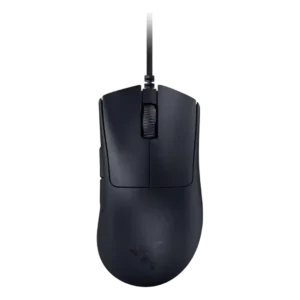
Other Top Gaming Mice to Consider

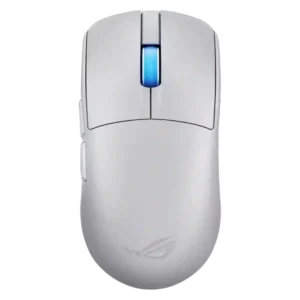
#1 ASUS ROG Harpe II Ace
4.6

Choose the ROG Harpe II Ace for ultralight FPS play, precise tracking, smooth glide, and web-based tuning. Skip it if you need palm-grip support, MMO buttons, onboard profiles, or long...

Pros: glide smoothness, weight

Cons: handedness options

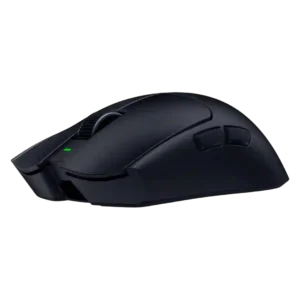
#3 Razer Viper V4 Pro
4.4

Best for ultra-light, competition-focused speed, precise tracking, stable wireless, and long battery life. Skip it if you need quieter clicks, left-handed support, Bluetooth, more buttons, or better value for casual...

Pros: value for money, weight

Cons: click noise, RGB features

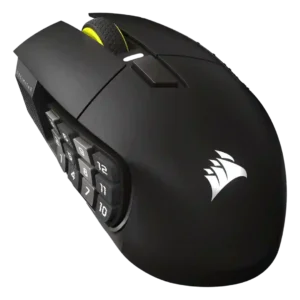
#4 Corsair Scimitar Elite Wireless SE
4.4

Choose it if you want a premium MMO/productivity mouse with 12 adjustable side buttons, strong battery life, and Stream Deck integration. Skip it if you need an ultralight FPS mouse,...

Pros: button customization, MMO gaming suitability

Cons: FPS gaming suitability

#5 MSI Versa 300 Wireless 8K
4.4

Best for precise wireless tracking, smooth glide, strong battery life, and unusually good 8K value. Skip it if you need polished software, quiet snappy clicks, true left-handed controls, or gentle...

Pros: software usability, sensor performance

Cons: RGB features, scroll wheel quality