
Compare ASUS ROG Keris II Ace vs Glorious Model D 2 Pro 4k/8k

ASUS ROG Keris II Ace

ASUS ROG Keris II Ace

Overall score 4.2 / 5

Based on 17 scored reviews

vs
Glorious Model D 2 Pro 4k/8k

Glorious Model D 2 Pro 4k/8k

Overall score 3.7 / 5

Based on 10 scored reviews

How we score

Scorata scores summarize analyzed review evidence on a 1–5 scale; they are not laboratory measurements or a simple average of customer star ratings. Feature scores summarize the reviews covering that feature. The overall score averages feature scores within each review, then combines review averages. When both expert and customer evidence are available, those two groups receive equal weight. Products can have different review coverage, so small score gaps do not establish a winner.

Recommendations prioritize important features for the category, with a score of at least 3.5, a gap of at least 0.25 points and at least two supporting reviews per product. Features with widely varying scores or broad connectivity contexts are excluded from recommendations. These safeguards do not establish statistical significance.

Quick verdict

What each product is best for

The review evidence points to a tradeoff: connection stability and click noise versus software usability and button customization. Choose according to which strengths matter more to you; the overall score alone does not settle that choice.

Choose ASUS ROG Keris II Ace for connection stability and click noise.

Choose Glorious Model D 2 Pro 4k/8k for software usability and button customization.

Why these recommendations?

ASUS ROG Keris II Ace

Where It Has the Edge

  • connection stability is 5.0 vs 2.2. Connection stability was strongly praised, with reviewers reporting no dropouts, hiccups, or interference.
  • click noise is 4.2 vs 2.7. Click noise impressions were mixed, from quiet and pleasant to fairly loud, depending on reviewer and switch comparison.
  • polling rate is 4.4 vs 3.4. Polling rate support was widely praised, especially 4K wireless and included booster access, with some debate over 8K...

Glorious Model D 2 Pro 4k/8k

Where It Has the Edge

  • software usability is 4.2 vs 2.9. Software usability was broadly praised as simple, clean, intuitive, and easy to use, despite some feature-depth and platform...
  • button customization is 4.5 vs 4.0. Customization drew strong praise because Glorious Core made remapping and performance settings easy, with many options available.
ASUS ROG Keris II Ace 4.2 overall score
Glorious Model D 2 Pro 4k/8k 3.7 overall score

Compare features

Scores are out of 5. Missing scores mean missing review evidence, not a missing feature.

Scored on both products

Battery and charging

Battery life
ASUS ROG Keris II Ace
4.2

Battery life was generally praised as good to excellent, with caveats that high polling rates and active use drain it faster.

Glorious Model D 2 Pro 4k/8k
2.9

Battery life was the most divided area: 1,000Hz runtime drew praise, but 4,000Hz use caused rapid drain, surprise shutdowns, and battery anxiety.

Charging convenience
ASUS ROG Keris II Ace
3.8

Charging and dongle convenience were mixed: USB-C and cable placement helped, but the booster/dongle setup could feel chunky.

Glorious Model D 2 Pro 4k/8k
2.3

Charging convenience scored poorly because reviewers disliked the recessed or one-way USB-C connection, dongle cable setup, frequent charging, and weak low-battery warnings.

Controls and connectivity

Bluetooth support
ASUS ROG Keris II Ace
4.5

Bluetooth was viewed as a useful convenience for work, travel, and multi-device use, not as the preferred competitive mode.

Glorious Model D 2 Pro 4k/8k
1.5

Bluetooth absence became a practical complaint in one test because a 2.4GHz issue forced wired use.

Software stability
ASUS ROG Keris II Ace
4.0

Software stability had limited evidence, with Armoury Crate Gear praised for not affecting system performance.

Glorious Model D 2 Pro 4k/8k
2.5

Software stability was weak where directly discussed, especially when firmware updating required reinstalling software.

Software usability
ASUS ROG Keris II Ace
2.9

Software usability was the clearest weakness, with repeated complaints about Armoury Crate being bloated, slow, or needing improvement.

Glorious Model D 2 Pro 4k/8k
4.2

Software usability was broadly praised as simple, clean, intuitive, and easy to use, despite some feature-depth and platform caveats.

Side button quality
ASUS ROG Keris II Ace
3.8

Side button quality was mixed: several reviewers praised crisp placement, while others found them small, high, or stiff.

Glorious Model D 2 Pro 4k/8k
3.1

Side button quality was highly mixed, with some reviewers praising access and solidity while others found the placement awkward or too close.

Button customization
ASUS ROG Keris II Ace
4.0

Customization was considered adequate to strong where reviewers described remapping, DPI, and profile tools as straightforward or sufficient.

Glorious Model D 2 Pro 4k/8k
4.5

Customization drew strong praise because Glorious Core made remapping and performance settings easy, with many options available.

Programmable buttons
ASUS ROG Keris II Ace
4.0

Programmable buttons were considered competitive and sufficient for this class, though not extensive like MMO mice.

Glorious Model D 2 Pro 4k/8k
4.3

Programmable buttons were positively judged because reviewers could remap all buttons and assign macros or key bindings.

Button responsiveness
ASUS ROG Keris II Ace
4.8

Button responsiveness was praised for snappy, reliable, and fast actuation in several reviews.

Glorious Model D 2 Pro 4k/8k
4.5

Button responsiveness was praised by YouTube reviewers who found the optical switches quick, light, and spammable.

Other features

Connection stability
ASUS ROG Keris II Ace
5.0

Connection stability was strongly praised, with reviewers reporting no dropouts, hiccups, or interference.

Glorious Model D 2 Pro 4k/8k
2.2

Connection stability was a concern in two reviews, with one reporting dropouts and another describing random direction clicks at 4K.

2.4GHz connectivity
ASUS ROG Keris II Ace
4.5

Reviewers discussed the 2.4GHz receiver mainly as part of the broader wireless setup, with praise for low-latency use when paired with the booster.

Glorious Model D 2 Pro 4k/8k
2.0

One reviewer reported a real 2.4GHz adapter drawback, saying it could strain connected devices, so evidence for the wireless dongle was negative rather than broadly tested.

RGB features
ASUS ROG Keris II Ace
4.4

RGB was generally appreciated as a rare lightweight-mouse touch, though a few reviewers disliked the implementation.

Glorious Model D 2 Pro 4k/8k
2.0

RGB features were a negative for reviewers who felt the lack of lighting made the mouse look generic.

Cross-platform compatibility
ASUS ROG Keris II Ace
4.8

Cross-platform use was praised through Bluetooth multi-device pairing and easy movement between PCs, laptops, tablets, and handhelds.

Glorious Model D 2 Pro 4k/8k
2.5

Cross-platform compatibility was mixed because the mouse worked on macOS, but the required Glorious Core software was not available on Apple devices.

Portability
ASUS ROG Keris II Ace
4.5

Portability was supported by dongle storage, Bluetooth, and multi-device/travel use.

Glorious Model D 2 Pro 4k/8k
3.0

Portability was mixed, helped by profile transfer but hurt by the lack of onboard dongle storage.

Motion consistency
ASUS ROG Keris II Ace
4.5

Motion consistency was praised through comments about precise recognition, consistent tracking, and polling stability.

Glorious Model D 2 Pro 4k/8k
3.4

Motion consistency split sharply: lab-style testing found the sensor consistent, while one reviewer saw random direction clicks at 4K.

Profile switching
ASUS ROG Keris II Ace
3.3

Profile switching was mixed, with praise for onboard switching but criticism of the underside DPI/profile button placement.

Glorious Model D 2 Pro 4k/8k
4.4

Profile switching was praised where discussed, especially for quickly changing profiles and swapping settings between PCs or games.

Polling rate
ASUS ROG Keris II Ace
4.4

Polling rate support was widely praised, especially 4K wireless and included booster access, with some debate over 8K usefulness.

Glorious Model D 2 Pro 4k/8k
3.4

Polling rate was the main tradeoff: reviewers valued the high ceiling for serious competitors but often called it overkill or hard to notice.

Left and right click quality
ASUS ROG Keris II Ace
4.2

Left and right click quality was mostly positive, with praise for consistency and similar actuation between sides.

Glorious Model D 2 Pro 4k/8k
3.5

Primary click quality was mixed, ranging from impeccable optical buttons to complaints about less refined or less tactile clicks.

Premium feel
ASUS ROG Keris II Ace
3.5

Premium feel was mixed: some found the mouse premium, while others felt the coating or hollow shell hurt the premium impression.

Glorious Model D 2 Pro 4k/8k
2.9

Premium feel was mixed-to-negative overall, with some saying it did not feel cheap and others saying it looked tacky or less premium.

Click latency
ASUS ROG Keris II Ace
4.5

Click latency was praised as very low or competitive, including measured or perceived fast response.

Glorious Model D 2 Pro 4k/8k
5.0

The direct click-latency evidence was very positive, with the optical switches described as triggering particularly quickly.

Scroll wheel quality
ASUS ROG Keris II Ace
3.6

Scroll wheel quality was mixed, ranging from excellent and distinct to average, light, or prone to overscrolling.

Glorious Model D 2 Pro 4k/8k
4.1

Scroll wheel quality was generally positive, though one reviewer found it merely average.

Onboard memory
ASUS ROG Keris II Ace
4.8

Onboard control and memory features were praised when reviewers could change settings or avoid software.

Glorious Model D 2 Pro 4k/8k
4.4

Onboard memory was praised because settings and multiple profiles could be stored without relying on software every time.

Weight
ASUS ROG Keris II Ace
4.9

Weight was consistently praised as very light, impressive, and control-friendly.

Glorious Model D 2 Pro 4k/8k
4.5

Weight was a major strength, with reviewers repeatedly praising the very light 60-62g body.

Lift-off distance
ASUS ROG Keris II Ace
3.8

Lift-off distance was mixed: one reviewer liked the low setting, while another found low too low and high too high.

Glorious Model D 2 Pro 4k/8k
4.2

Lift-off distance customization was positively received as a fine-tuning option in the software.

FPS gaming suitability
ASUS ROG Keris II Ace
4.8

FPS suitability was one of the strongest areas, with repeated praise for competitive aiming, speed, and esports performance.

Glorious Model D 2 Pro 4k/8k
4.5

Reviewers strongly agreed the mouse is suited to FPS and competitive gaming because it is light, accurate, and responsive.

Handedness options
ASUS ROG Keris II Ace
2.0

Handedness scored low because reviewers repeatedly noted the right-handed ergonomic shape and lack of a left-handed option.

Glorious Model D 2 Pro 4k/8k
1.8

Handedness options were negative because reviewers repeatedly called out the right-handed-only design and lack of a left-handed variant.

Balance and weight distribution
ASUS ROG Keris II Ace
4.7

Weight distribution was usually praised as well balanced, though one reviewer found the mouse slightly forward-balanced.

Glorious Model D 2 Pro 4k/8k
4.5

The only direct balance judgment was positive, with the reviewer calling the weight balancing solid.

Grip texture
ASUS ROG Keris II Ace
3.4

Grip texture was the most divided attribute, ranging from non-slip praise to strong complaints about slippery coating.

Glorious Model D 2 Pro 4k/8k
3.6

Grip texture was mixed: some praised the grippy coating, while others found it ordinary, less soft, or a tradeoff for weight.

Surface compatibility
ASUS ROG Keris II Ace
4.9

Surface compatibility was strongly praised, including glass, mouse pads, tables, and varied surfaces.

Glorious Model D 2 Pro 4k/8k
4.8

Surface compatibility was positive in the direct evidence, including tracking on glass and clear glass.

DPI range
ASUS ROG Keris II Ace
4.0

The DPI ceiling was seen as technically impressive, but one reviewer found very high DPI practically unusable.

Glorious Model D 2 Pro 4k/8k
3.9

DPI evidence was mixed but generally useful: reviewers valued adjustment and 26,000 DPI headroom, while one found very high DPI practically unusable.

Glide smoothness
ASUS ROG Keris II Ace
4.6

Glide smoothness was consistently praised across stock PTFE feet and multiple surfaces.

Glorious Model D 2 Pro 4k/8k
4.7

Glide smoothness was one of the strongest attributes, with nearly every direct review praising the PTFE feet or smooth movement.

Switch feel
ASUS ROG Keris II Ace
4.1

Switch feel was mixed but often positive, with some crisp/punchy praise and some dull or mushy complaints.

Glorious Model D 2 Pro 4k/8k
4.0

Switch feel was generally positive for light, spammable, tactile optical clicks, though one reviewer found them less refined than rivals.

Wireless latency
ASUS ROG Keris II Ace
4.1

Wireless latency was praised in 2.4GHz mode but Bluetooth was criticized as too latent for competitive gaming.

Glorious Model D 2 Pro 4k/8k
4.1

Wireless latency was judged strong for serious competitors, though multiple reviewers could not feel the advantage over lower polling rates.

Performance

Click noise
ASUS ROG Keris II Ace
4.2

Click noise impressions were mixed, from quiet and pleasant to fairly loud, depending on reviewer and switch comparison.

Glorious Model D 2 Pro 4k/8k
2.7

Click noise was a drawback: reviewers repeatedly noted the switches were loud or noticeably picked up.

Wireless performance
ASUS ROG Keris II Ace
4.8

Wireless performance was repeatedly praised as low-latency, stable, and responsive.

Glorious Model D 2 Pro 4k/8k
3.8

Wireless performance was mixed, with strong praise from some reviewers but dropouts or battery tradeoffs in others.

Sensor performance
ASUS ROG Keris II Ace
4.9

Sensor performance was one of the best-reviewed areas, repeatedly described as accurate, top-tier, or flawless.

Glorious Model D 2 Pro 4k/8k
4.6

Sensor performance was strongly praised for smooth, consistent updates and problem-free tracking across games and surfaces.

Comfort and build

Materials quality
ASUS ROG Keris II Ace
4.5

Materials quality was scored through reviewer judgments about the nylon/PBT shell, coating, and perceived premium or slippery feel.

Glorious Model D 2 Pro 4k/8k
3.2

Materials quality was split between sturdy, high-quality impressions and complaints that the plastic or coating felt cheaper than rivals.

Palm grip comfort
ASUS ROG Keris II Ace
4.2

Palm grip comfort was positive for average or compatible hands, though not universal for larger hands.

Glorious Model D 2 Pro 4k/8k
3.1

Palm comfort was highly dependent on hand and button reach, ranging from a very good palm fit to awkward thumb stretching or narrowness.

Ergonomic design
ASUS ROG Keris II Ace
4.5

The ergonomic design was broadly praised for right-handed comfort, while left-handed users were consistently excluded.

Glorious Model D 2 Pro 4k/8k
4.0

Ergonomics were generally praised for right-handed comfort, but one reviewer disliked the front and left-side slope.

Long-session comfort
ASUS ROG Keris II Ace
4.8

Long-session comfort was strongly positive where reviewers mentioned low strain, no hand pain, or reduced fatigue.

Glorious Model D 2 Pro 4k/8k
4.5

The one direct long-session comfort judgment was positive, linking the ergonomic angle to reduced fatigue over marathon play.

Switch durability
ASUS ROG Keris II Ace
4.5

Switch durability was scored where reviewers linked optical switches to double-click prevention, hot-swapping, or durability.

Glorious Model D 2 Pro 4k/8k
4.8

Switch durability evidence was positive but limited to the reviewer’s judgment of the optical switches as durable.

Shape comfort
ASUS ROG Keris II Ace
4.2

Shape comfort was generally praised, especially for right-handed ergonomic users, but hand size and finger length created caveats.

Glorious Model D 2 Pro 4k/8k
4.0

Shape comfort was mostly positive, especially for ergonomic right-handed use, but some reviewers found the side/front shape imperfect.

Skate durability
ASUS ROG Keris II Ace
4.0

Skate durability had limited evidence, but one reviewer said the skates held up well on glass.

Glorious Model D 2 Pro 4k/8k
4.2

Skate durability had limited but positive evidence, with one reviewer saying the skates were good enough not to replace.

Claw grip comfort
ASUS ROG Keris II Ace
4.4

Claw-grip comfort was generally positive, especially relaxed claw, though hand size affected comfort.

Glorious Model D 2 Pro 4k/8k
4.2

Claw grip comfort was positive in the two direct mentions, with reviewers finding the shape easier or nicer for claw grip.

Build quality
ASUS ROG Keris II Ace
4.5

Build quality was mostly strong, with repeated praise for rigidity and lack of flex, though one reviewer reported average build with creaking.

Glorious Model D 2 Pro 4k/8k
4.4

Build quality was mostly positive, with several reviewers finding the shell sturdy or well built, despite some premium-feel complaints elsewhere.

Tracking and training

Accuracy and tracking precision
ASUS ROG Keris II Ace
4.5

Reviewers consistently praised tracking accuracy and precision, with only one reviewer warning that extreme DPI values became irregular.

Glorious Model D 2 Pro 4k/8k
4.6

Reviewers consistently praised tracking and in-game precision, though one noted extreme DPI levels became difficult or unusable.

Ownership and support

Value for money
ASUS ROG Keris II Ace
3.6

Value was mixed: reviewers praised the feature set but often called the price expensive or hard to justify.

Glorious Model D 2 Pro 4k/8k
3.5

Value for money was mixed: several reviewers liked the competitive price, while others preferred the 1K model or rival mice due to battery and polish concerns.

Evidence available for one product

Other features

Acceleration control
ASUS ROG Keris II Ace
4.5

The acceleration spec was only scored where a reviewer connected the 50g capability to confident fast maneuvers in FPS play.

Glorious Model D 2 Pro 4k/8kNo score yet
Cable flexibility
ASUS ROG Keris II Ace
4.5

The cable was usually praised as flexible, free-flowing, and low-friction, with one reviewer calling it a bit stiff.

Glorious Model D 2 Pro 4k/8kNo score yet
Ecosystem integration
ASUS ROG Keris II Ace
4.5

Ecosystem integration was praised where reviewers used the Omni receiver or Aura Sync-style setup without delays.

Glorious Model D 2 Pro 4k/8kNo score yet
MMO gaming suitability
ASUS ROG Keris II Ace
4.0

MMO suitability had limited but positive evidence from FFXIV/raid use and button mapping comments.

Glorious Model D 2 Pro 4k/8kNo score yet

Controls and connectivity

Debounce customization
ASUS ROG Keris II AceNo score yet
Glorious Model D 2 Pro 4k/8k
4.3

Debounce customization was viewed positively where discussed, with reviewers noting accessible performance-parameter and debounce settings.

Comfort and build

Durability over time
ASUS ROG Keris II Ace
4.0

Long-term durability was not directly tested, but switch durability and repairability evidence supported limited durability scoring.

Glorious Model D 2 Pro 4k/8kNo score yet
Fingertip grip comfort
ASUS ROG Keris II Ace
3.3

Fingertip grip comfort was mixed; some found it possible, while others found the ergonomic shell awkward for fingertip use.

Glorious Model D 2 Pro 4k/8kNo score yet

Ownership and support

Firmware reliability
ASUS ROG Keris II AceNo score yet
Glorious Model D 2 Pro 4k/8k
2.3

Firmware reliability was a recurring weak spot, with reviewers needing multiple attempts or reinstalling software after failed updates.

Macro support
ASUS ROG Keris II AceNo score yet
Glorious Model D 2 Pro 4k/8k
3.7

Macro support was mixed: reviewers liked having a macro recorder and extensive functions, but one found macros hit-or-miss in practice.

Other Top Gaming Mice to Consider

#1 ASUS ROG Harpe II Ace
4.6

Choose the ROG Harpe II Ace for ultralight FPS play, precise tracking, smooth glide, and web-based tuning. Skip it if you need palm-grip support, MMO buttons, onboard profiles, or long...

Pros: glide smoothness, weight

Cons: handedness options

#2 Razer Viper V4 Pro

4.4

Best for ultra-light, competition-focused speed, precise tracking, stable wireless, and long battery life. Skip it if you need quieter clicks, left-handed support, Bluetooth, more buttons, or better value for casual...

Pros: value for money, weight

Cons: click noise, RGB features

#3 Corsair Scimitar Elite Wireless SE
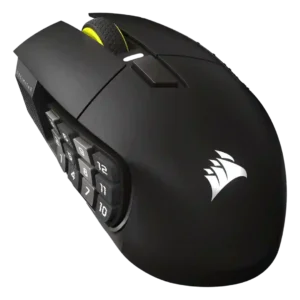
4.4

Choose it if you want a premium MMO/productivity mouse with 12 adjustable side buttons, strong battery life, and Stream Deck integration. Skip it if you need an ultralight FPS mouse,...

Pros: button customization, MMO gaming suitability

Cons: FPS gaming suitability

#4 MSI Versa 300 Wireless 8K
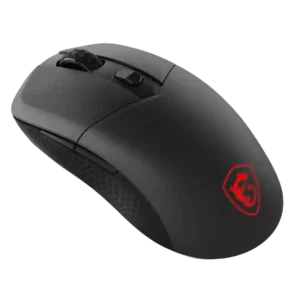
4.4

Best for precise wireless tracking, smooth glide, strong battery life, and unusually good 8K value. Skip it if you need polished software, quiet snappy clicks, true left-handed controls, or gentle...

Pros: software usability, sensor performance

Cons: RGB features, scroll wheel quality