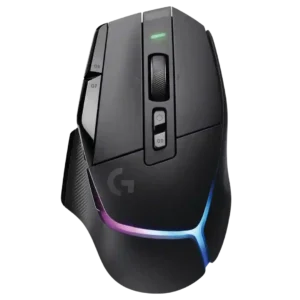
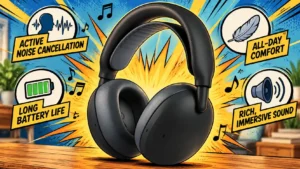
Logitech G502 X Plus
Where It Has the Edge
No clear scored advantage over the other product.

Scorata scores summarize analyzed review evidence on a 1–5 scale; they are not laboratory measurements or a simple average of customer star ratings. Feature scores summarize the reviews covering that feature. The overall score averages feature scores within each review, then combines review averages. When both expert and customer evidence are available, those two groups receive equal weight. Products can have different review coverage, so small score gaps do not establish a winner.
Recommendations prioritize important features for the category, with a score of at least 3.5, a gap of at least 0.25 points and at least two supporting reviews per product. Features with widely varying scores or broad connectivity contexts are excluded from recommendations. These safeguards do not establish statistical significance.
Quick verdict
There is not enough consistent, comparable evidence for a clear recommendation. Use the feature details and supporting reviews to weigh the tradeoffs.
There is not enough comparable review evidence to recommend Logitech G502 X Plus over the other product.
There is not enough comparable review evidence to recommend Logitech Zone Vibe Pro over the other product.
No clear scored advantage over the other product.
No clear scored advantage over the other product.
Scores are out of 5. Missing scores mean missing review evidence, not a missing feature.
Battery life was mostly positive and often praised as long, but RGB drain and one poor real-world result kept opinions from being unanimous.
Rated endurance is generally judged solid, with particular enthusiasm for the 66-hour ANC-off figure. The shorter 18-hour ANC-on talk rating is still considered enough for two full workdays.
Continuing to use USB audio while charging is a valued convenience for long call days.
Charging convenience was generally positive thanks to USB-C and charge-while-playing, though one reviewer found the USB-C port fiddly.
Accessible physical controls and a dedicated mute button make everyday operation straightforward. One first-time user still needs time to learn sidetone and the app.
2.4GHz connectivity was mixed: setup through the dongle was easy, but one review disliked the rattly dongle storage.
The included USB-C-to-3.5mm cable is a welcome option for analog sources, including aircraft entertainment systems.
One review praised the lack of smoothing or acceleration, tying it directly to accurate, predictable tracking.
The included USB-C and analog cables make the headset useful with different audio connections, including airline entertainment. That flexibility attracts praise, although the base package’s USB receiver remains a separate purchase.
The unobtrusive boomless design looks suitable away from the desk, with restrained colors and a low-profile fit for some wearers. Others find the earcups a little large or prefer slimmer rivals.
Automatic pause and resume when removing or replacing the headset are missing. That omission is disappointing for buyers expecting the convenience at this price.
CNET awards the headset its Editors’ Choice distinction despite several smaller drawbacks.
Weight balance evidence was limited and mixed-positive, with one reviewer noting back-heaviness and another saying balance improved.
Cable flexibility was criticized in one review because the included cable felt basic compared with flexible braided alternatives.
The included five-foot USB-C cable earns praise for its practical length.
The soft pouch is compact and feels pleasant to one owner, but others find it cheap or lightly protective. It organizes the headset and cables without preventing crushing or drop damage.
Click latency and response were viewed positively overall, with reviewers praising snappier timing, low-latency response, and instant-feeling switches.
Connection stability was excellent in the scored evidence, with reviewers reporting no hiccups or meaningful slip-ups.
The combination of wired audio options and wireless use adds flexibility across personal and work setups. The analog cable is a specifically appreciated inclusion.
Cross-platform compatibility had limited positive evidence through onboard memory helping when using the mouse on multiple systems.
Premium alternatives sound a little cleaner and reveal more refinement. This is a comparative limitation rather than a complaint that music sounds poor.
Work-computer compatibility depends on the selected version, host setup, and connection. Meeting certifications should be checked against the intended computer rather than assumed universally.
Dock compatibility was useful when paired with Powerplay, but reviewers criticized the extra cost or missing included puck.
The base Bluetooth package’s lack of a receiver attracts criticism. Buyers wanting that connection should compare the receiver-equipped Business package.
DPI control was generally praised for its wide range and fine increments, though one reviewer questioned the practical value of ultra-high DPI.
Soft memory-foam cushions earn enthusiastic praise for their plush feel and comfortable contact around the ears.
Ecosystem integration was a strength, with praise for shared receivers, G Hub device management, Lightsync, and Logitech peripheral syncing.
Existing Logitech peripheral users may appreciate the familiar appearance and ecosystem positioning. The endorsement is an expectation rather than a demonstrated integration test.
FPS suitability was mixed: accuracy, buttons, and DPI helped some reviewers, while weight made others reject it for serious competitive FPS.
Glide smoothness was one of the strongest traits, with reviewers praising PTFE feet, low drag, and smooth movement on desks and pads.
Grip texture was mostly praised for comfort, reliable hold, and premium-feeling rubber, though one reviewer disliked the sticky rubber sides.
Handedness options were poor in the available evidence because the mouse is designed for right-handed users only.
A good range of adjustment earns praise, including an accommodating fit on a large head.
The soft suspension strap supports the head and spreads pressure across the crown. Hands-on impressions praise both its softness and its supportive feel.
Instrument placement is less sharply resolved than on the premium Sony comparison.
The included analog adapter and long USB-C cable are appreciated. The base package’s missing receiver is the main accessory caveat.
Premium Sony headphones separate instruments more cleanly, leaving the Vibe Pro a capable but less precise choice for complex mixes.
Left and right click quality was positive overall, with praise for satisfying primary clicks and pleasant pressure points.
Lift-off distance tuning was a weakness in one review because adjustable lift-off distance was missing.
Clear, natural vocals are a consistent strength. The voice-focused tuning also comes across well in the initial music and preset tests.
MMO suitability was mixed, with enough controls for some MMO/RPG use but not enough buttons for dedicated MMO players.
MOBA suitability was positive in limited evidence, with reviewers saying the controls worked well for MOBA play.
Motion consistency drew strong praise where tested, with reviewers reporting no stutter and true tracking during long use.
Onboard memory was useful for carrying profiles or avoiding software after setup, but one review criticized Logitech's implementation.
The overall recommendation favors combining dependable work calls with enjoyable everyday listening. Premium sound, stronger ANC, and a fuller feature set remain reasons to compare alternatives.
Polling rate was a limitation in one review because the mouse is capped at 1kHz with no higher-rate dongle option.
Portability was positive in limited evidence, with reviewers liking receiver storage and easy bag carry.
The headset folds flat but does not fold up, limiting how compactly it can be packed.
Premium feel was mostly positive, with reviewers describing premium, stylish, polished qualities, though one said it could feel cheap.
The Pro is positioned as more premium than the basic Zone Vibe, yet it still lacks the luxurious finish offered by some competitors.
The default sound tuning is enjoyable immediately, without requiring EQ changes.
Profile switching had limited but positive evidence, with one reviewer appreciating quick profile cycling in loading screens.
Replaceable battery and contact parts are major ownership advantages. Regional spare-part availability and a broken battery-help link in one setup test make repair access less certain.
Replaceable battery and contact parts are major ownership advantages. Regional spare-part availability and a broken battery-help link in one setup test make repair access less certain.
Replaceable ear cushions are welcomed as a way to extend the headset’s useful life rather than replace the entire device.
Replaceable cushions and headstrap provide a useful way to refresh worn contact surfaces. Availability should be checked locally before counting on future replacements.
RGB was praised for style, customization, and vivid lighting, but several reviewers noted battery drain or questioned whether the Plus model is worth it for RGB alone.
Scroll wheel quality was the most divisive feature, with some praising versatility and improved stability while others criticized stiffness, noise, wobble, backlash, or cheap feel.
Sidetone is useful at moderate settings, but high levels can let distracting ambient noise through. Another first-time user finds the sound and controls awkward to understand.
The soft travel pouch occupies less bag space than a hard case.
Surface compatibility evidence was positive, with reviewers noting smooth glide or hiccup-free performance across surfaces and environments.
Replacing worn cushions, strap, or battery can avoid discarding an otherwise usable headset. That practical route to longer ownership is widely welcomed.
Switch feel was one of the strongest areas, with reviewers repeatedly praising crisp, tactile, clicky, premium-feeling hybrid switches.
Transparency lets the wearer hear their own voice clearly without an overly boomy sound. The comparative test still finds Apple’s implementation more natural.
Treble remains comfortable over longer listening and avoids fatigue in the comparative review. The premium Sony still adds more sparkle.
USB-C audio lets the headset remain useful while charging, an appealing feature for frequent callers. One test finds no sound-quality improvement over Bluetooth and slightly lower volume.
One initial listening test finds the output potentially ample, while another reports slightly lower loudness over USB-C. Volume therefore depends partly on the connection used.
Clear left and right earcup labels make orientation easier and are explicitly appreciated.
Weight opinions were mixed: some appreciated the lighter G502 refresh or balanced heft, while competitive-focused reviewers still found it heavy.
Weight tuning was consistently viewed as a downgrade because the older adjustable weight system is gone.
Wireless latency was strongly praised overall, though one review noted the 1kHz limit can feel subtly behind higher-polling mice in elite play.
Reviewers consistently praised tracking accuracy, saying the mouse stayed precise, true, and hiccup-free across gaming and everyday use.
ANC substantially reduces everyday and household noise and performs respectably across frequencies. Leading premium headphones remove some residual noise more completely.
Bass has a satisfying punch and earns repeated praise. One first-listen test finds little extra boost necessary to get an enjoyable result.
Click noise had limited negative evidence, with one review saying the primary keys and especially the wheel were relatively loud.
Tonal accuracy and refinement fall short of the premium Sony comparison, even though everyday music listening remains enjoyable.
Loud keyboards and construction noise are suppressed impressively in hands-on tests. Speech remains understandable even in demanding surroundings, making this a standout strength.
A good earcup seal blocks substantial ambient noise before ANC is considered. Initial wear testing also finds the passive isolation immediately noticeable.
Sensor feedback was strongly positive; reviewers described the HERO sensor as snappy, smooth, precise, and still among the best they had used.
Music sounds enjoyable and surprisingly capable for a work headset, with punchy bass and clear vocals. More expensive headphones deliver cleaner detail and greater refinement.
The presentation has a reasonably wide soundstage and a welcome sense of openness.
Outdoor call testing retains fairly clear speech in conditions that include wind. Occasional artifacts still appear in the broader noisy-street test.
Wireless performance was a major strength, with reviewers repeatedly describing it as excellent, stable, responsive, or effectively wired-like.
The app provides useful controls, but sidetone takes some learning and one battery-replacement help link fails during initial setup.
Bluetooth connectivity earns praise for keeping the standard model simple and versatile.
Bluetooth support was a repeated weakness because reviewers noted the mouse lacks Bluetooth and is less versatile for multi-device use.
Accessible physical buttons, a dedicated mute control, and a real power switch make operation straightforward. Playback actions on the multifunction button also work well in the initial test.
Button customization was a clear strength, with reviewers praising remapping, physical DPI-shift adjustability, and flexible control setups.
Button responsiveness was consistently strong, with tactile, well-built, satisfying clicks and quick in-game response.
Custom EQ can produce satisfying sound with restrained bass adjustments. The initial listening test finds little need for aggressive extra boost.
Calling is the strongest performance area, with clear speech even around substantial background noise. Occasional faint artifacts prevent a completely flawless result.
Programmable buttons were widely valued for genre flexibility, productivity, and accessible control layouts.
Side button feedback was mixed: some reviewers liked the improved shapes and placement, while many complained about accidental presses or squeaks.
The initial firmware update takes longer than one user wants and interrupts setup.
Software stability had one negative report involving an apparent DPI-setting loop.
Software usability split reviewers: some found G Hub easy or intuitive, while others called button programming complicated or the software poor.
Tilt controls were criticized because side-scrolling could require extra force or cause accidental scroll-wheel side inputs.
Heavy background filtering can introduce faint static, whooshing, or slight voice warbling. Speech generally stays clear despite those occasional artifacts.
A configurable automatic shutoff helps preserve battery life if the headset is accidentally left on.
Macro support was positively received, with reviewers finding macro setup and assignment options useful despite broader software complaints.
Multipoint pairing is welcomed as an everyday convenience, although the supplied assessment does not establish switching reliability through testing.
Value for money was the biggest broad concern, with many reviewers calling the mouse expensive or questioning the Plus price premium.
The price undercuts several premium work and consumer headphones while preserving strong call performance. It remains a substantial purchase, especially when the optional receiver is needed.
Build quality was rated highly, with reviewers calling it solid, sturdy, durable, and well-built.
The plastic construction feels good in hand, but the comparative test finds it less refined than Jabra’s premium headset.
Claw grip comfort was mixed, with one review saying it suits claw or hybrid grips and another saying claw users may want a smaller mouse.
Soft cushions and a supportive headband create encouraging comfort impressions for work and listening. Warm earcups in hotter surroundings are a notable caveat, and several reports are only first impressions.
The boomless shape successfully blends office-headset practicality with everyday headphone styling. Color choices and the futuristic look attract praise, although the design is not especially slim.
Durability over time had limited but positive long-term evidence from an 18-month owner who remained satisfied.
The earcups can trap more warmth than some alternatives in hotter surroundings.
Ergonomic design was praised for refined comfort, natural hand fit, and better extended-use ergonomics.
Fingertip comfort was generally positive but size-dependent, with one reviewer warning fingertip users may prefer a less substantial mouse.
Long-session comfort was strongly positive where mentioned, with reviewers praising multi-hour and extended-use comfort.
Materials quality was mixed: one review praised the plastics and rubber linings, while another disliked the slicker scroll-wheel material.
Palm grip comfort was favorable, with reviewers saying the shape supports palm grip well.
Shape comfort was broadly positive, especially for larger hands and G502 fans, though a few reviewers found it cramped or size-dependent.
Switch durability had limited evidence, but one reviewer reported no double-click issues during their testing period.
Most assessments find the headset reasonably light, although one calls it far from ultralight. Several premium competitors weigh less.
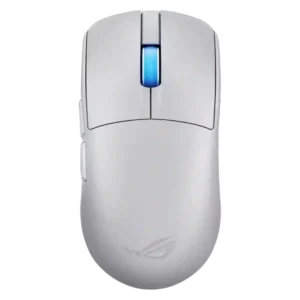
Choose the ROG Harpe II Ace for ultralight FPS play, precise tracking, smooth glide, and web-based tuning. Skip it if you need palm-grip support, MMO buttons, onboard profiles, or long...
Pros: glide smoothness, weight
Cons: handedness options
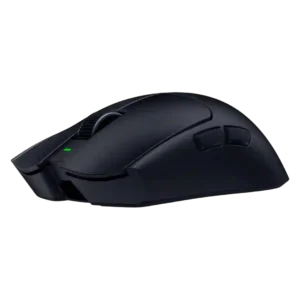
Best for ultra-light, competition-focused speed, precise tracking, stable wireless, and long battery life. Skip it if you need quieter clicks, left-handed support, Bluetooth, more buttons, or better value for casual...
Pros: value for money, weight
Cons: click noise, RGB features
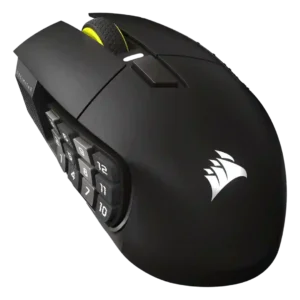
Choose it if you want a premium MMO/productivity mouse with 12 adjustable side buttons, strong battery life, and Stream Deck integration. Skip it if you need an ultralight FPS mouse,...
Pros: button customization, MMO gaming suitability
Cons: FPS gaming suitability
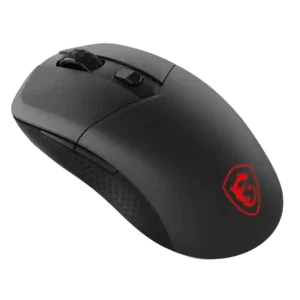
Best for precise wireless tracking, smooth glide, strong battery life, and unusually good 8K value. Skip it if you need polished software, quiet snappy clicks, true left-handed controls, or gentle...
Pros: software usability, sensor performance
Cons: RGB features, scroll wheel quality