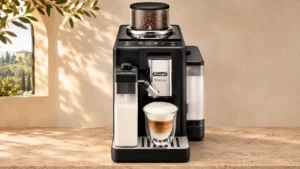
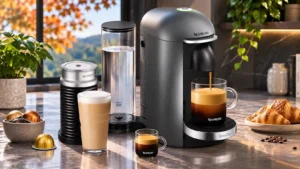
De’Longhi Rivelia Automatic Espresso Machine
Where It Has the Edge
- Setup simplicity is 5.0 vs 4.5. The initial setup is straightforward thanks to on-screen instructions that guide the user through installing parts, filling and...

Scorata scores summarize analyzed review evidence on a 1–5 scale; they are not laboratory measurements or a simple average of customer star ratings. Feature scores summarize the reviews covering that feature. The overall score averages feature scores within each review, then combines review averages. When both expert and customer evidence are available, those two groups receive equal weight. Products can have different review coverage, so small score gaps do not establish a winner.
Recommendations prioritize important features for the category, with a score of at least 3.5, a gap of at least 0.25 points and at least two supporting reviews per product. Features with widely varying scores or broad connectivity contexts are excluded from recommendations. These safeguards do not establish statistical significance.
Quick verdict
The review evidence points to a tradeoff: Setup simplicity versus Automation and sensors. Choose according to which strengths matter more to you; the overall score alone does not settle that choice.
Choose De’Longhi Rivelia Automatic Espresso Machine for Setup simplicity.
Choose Nespresso Vertuo Plus Coffee Maker for Automation and sensors.
Scores are out of 5. Missing scores mean missing review evidence, not a missing feature.
The bean-switching and guided-coffee features largely deliver on their promise. The novelty of the technology and claims about milk frothing are less convincing to some reviewers.
One detailed test found the advertised 25-second warm-up accurate, adding confidence to the quick-start promise.
Automatic rinsing and purge cycles help keep internal circuits clean, but unexpected water discharges can fill the drip tray and interrupt use.
Automatic rinsing reduces manual work, although the cleaning cycle uses considerable water and can take longer than competing models.
Several reviewers found grinding surprisingly quiet for a bean-to-cup machine, while others described its grinding or brewing noise as loud or grating.
Several comparisons find this model quieter than the Vertuo Next, though its spinning extraction still makes an audible whir.
The optional water filter is useful in hard-water areas and can improve flavor while helping prevent limescale buildup.
A favorable account describes a reusable-filter approach as reducing waste, although other reviews emphasize the machine’s proprietary capsule dependence.
Once dialed in, the machine repeatedly delivers well-extracted coffee with minimal effort. Default strength can be weak and the first cup may not be as flavorful as subsequent cups.
Most users get repeatable, satisfying coffee from one pod to the next. One comparative test found weaker temperature consistency during back-to-back brews.
The compact water reservoir and grounds bin suit modest daily consumption, but heavy use and long black coffees require more frequent refilling and emptying.
The larger reservoir and spent-pod container mean fewer interruptions, particularly in households making several drinks. Standard and Deluxe reservoir sizes differ.
Recyclable cardboard was appreciated in one package, although another unboxing involved considerable protective plastic.
The recyclable cardboard box and carefully considered unboxing experience earn praise for combining sustainability with practical design.
The on-screen guidance is useful, but some packages lack a full printed manual and less-obvious functions can be missed.
One long-term owner found the manual particularly helpful for understanding rinse and descaling procedures, despite the learning curve of those functions.
The included accessories and optional cold-foam carafe extend versatility. The separately purchased cold-frothing kit is a recurring cost concern.
Starter capsules help newcomers sample flavors, and some bundles add a useful Aeroccino frother. Check the exact package, since machine-only configurations are also discussed.
Water-hardness-based maintenance and guided descaling help take the guesswork out of upkeep. Filtered water and regular descaling remain important.
Routine reservoir filling, capsule emptying, and drip-tray rinsing are simple for most owners. Descaling is more involved, with some confusing sequences and occasional lockouts.
The machine is generally well protected and neatly presented, although packaging materials vary.
The easy-to-open, mostly cardboard packaging makes unboxing less awkward and earns praise for its thoughtful presentation.
Adjustable spouts help prevent splashing with small cups, and removable trays make access convenient. Wide mugs and tall travel cups may not fit comfortably.
The multi-position cup stand fits espresso cups and taller mugs and helps prevent splashes. A few users found the tray awkward or noticed cups shifting as the machine vibrates.
The automatic milk carafe produces impressively smooth foam with adjustable texture, especially for flat whites and cappuccinos. It cannot match all the control of a manual steam wand, and results vary with milk type.
The separate Aeroccino draws praise for smooth hot or cold foam and easy cleaning, but it takes another appliance and some owners experienced frother problems. The brewer itself lacks integrated milk steaming.
Espresso and black coffee are generally served hot, while milk drinks commonly arrive at comfortable drinking temperature. Those who like exceptionally hot lattes may be disappointed.
Many cups emerge suitably hot for immediate drinking. Adding cold milk may cool them too far, and some tests found lower brew temperatures than expected.
The machine offers adjustable presets but deliberately sacrifices the hands-on control of traditional espresso preparation and manual milk steaming.
Automatic pod recipes make brewing easy but restrict direct adjustments to temperature and extraction. Some users appreciate cup-volume programming as a partial workaround.
Bean Adapt guides grind and brew settings to suit different coffees, while automatic processes reduce daily effort. Recommendations may need refinement, and the guidance is not a substitute for complete manual control.
Barcode recognition takes care of drink size and brewing parameters, removing nearly all guesswork. This automatic approach is especially useful for users who want consistent results without tinkering.
The used-puck container generally slides out for easy emptying and rinsing without loose grounds. One reviewer found that a component could fall and spill if not supported.
Automatic used-capsule ejection makes cleanup unusually hands-off. Occasional sticking or lid obstructions can waste a capsule.
Espresso is generally smooth, rich and satisfying for a fully automatic machine, particularly with fresh beans and adjusted settings. Some tasters found it merely adequate or less nuanced than a good manual espresso shot.
Rich, smooth coffee and a generous foamy top are major attractions. Some tasters find certain long coffees watery, bitter, or less complex than freshly ground alternatives.
The Rivelia excels at producing varied coffee drinks with little effort, friendly guidance and saved preferences. A few compromises in price, cleaning and espresso precision prevent it from being ideal for everyone.
Daily operation is widely praised for its simplicity: insert a capsule, close the motorized head, and press one button. Convenience remains the biggest reason people keep using it.
Quick warm-up and automatic grinding, brewing and frothing make coffee with little hands-on time. Adding an extra shot lengthens the cycle, but the machine can work while you do other things.
Short heat-up times and one-button brewing make quick morning coffee easy. Espresso-size drinks usually finish faster than larger cups.
Rich crema and fine automatic milk foam are frequent highlights, especially at intermediate foam settings. Some users found the foam bubbly or less silky than manually steamed milk.
The thick, silky foam is a signature attraction and makes cups feel indulgent. It is aerated coffee foam rather than crema formed by conventional espresso pressure.
The largely recyclable cardboard packaging was appreciated for avoiding unnecessary waste.
The recyclable carton and inserts are appreciated as part of a thoughtfully designed, easy-to-open package.
Some users report reliable operation and a solid design, including after extended use. Others find the plastic housing and carafe less substantial than expected for the price.
Owners often praise the solid construction and smooth motorized mechanism, including after extended daily use. A few accounts mention malfunctions or concerns about long-term reliability.
Rounded styling and a narrow body make the machine more attractive and compact than many super-automatics. Its depth, height and upward-facing display still deserve attention when planning counter space.
Its curved styling and movable water tank get plenty of praise for counter placement. The body and lid clearance can still be too bulky for a small nook or low cabinets.
The bean-change function can be hard to locate initially, and some users report splashes or awkward parts that need to be held during removal.
The perforated tray and awkward placement of some components can look or feel less refined than the rest of the machine.
The registered three-year warranty described by the Canadian reviewer adds reassurance; coverage may depend on market and registration.
A user welcomed the stated warranty term for their regional machine, though coverage can vary by market and configuration.
The convenience, milk texture and bean-switching flexibility can justify the premium for frequent coffee drinkers. US pricing drew stronger criticism than UK pricing, and buyers who rarely use the extra features may find better value elsewhere.
The purchase price can look attractive on sale, especially beside café visits or premium espresso equipment. Ongoing Vertuo capsule costs are the central financial drawback.
The initial setup is straightforward thanks to on-screen instructions that guide the user through installing parts, filling and rinsing the machine.
Getting started is usually a quick rinse-and-fill procedure, but first-time users may need the guide to decipher the button sequence.
On-screen setup instructions lead users through installation, initial rinsing and water settings. Getting the first coffee is relatively quick, even for a first-time automatic-machine owner.
Initial setup is generally straightforward: position the tank, run the rinse cycle, and start brewing. Some owners found the single-button cleaning instructions less intuitive at first.
One long-term owner found customer assistance quick to resolve a problem.
An owner who contacted Nespresso found its support staff helpful and knowledgeable about troubleshooting and service.
Customer assistance resolved one owner's problem quickly; another reviewer appreciated the extended registered warranty offered in their market.
An owner describes helpful Nespresso assistance and a service process that begins with troubleshooting before repair.
A broad menu, adjustable drink size, strength, milk texture and extra shots make customization easy. Some default settings need tweaking, and several recipes are closely related.
One brewer handles short espresso shots, double shots, lungos, and regular coffee, with pod-dependent sizes. Limited XL compatibility and fixed automatic settings reduce flexibility.
The machine handles its smart features directly through its display, avoiding the need for a separate app or voice assistant.
Swapping hoppers is easy, but beans remain in the grinder and need to be brewed or discarded first. The amount left behind varies, so plan switches rather than assuming completely waste-free or caffeine-free changes.
The removable hoppers help users keep bean varieties separate, but their lids are not airtight enough for long-term freshness preservation.
Cord placement can be awkward when moving the brewer toward the sink for cleaning, depending on where the outlet sits.
Free return bags and collection locations make capsule recycling workable, yet the need for a special drop-off or mailing step is less convenient than curbside collection.
Vertuo offers many appealing blends and roast strengths, but proprietary capsules restrict third-party choices and make each cup relatively expensive.
The color touchscreen is responsive, clear and intuitive, with useful guidance throughout brewing. Its upward-facing position is awkward for shorter users, and a few functions are hidden or overly sensitive.
Some brewing vibrations can move a mug on the support, so it is worth keeping an eye on the cup while the machine spins.
The automatic shutoff is useful in principle, but one tester finds its nine-minute delay long compared with a newer model.
The attractive finish can show dust and fingerprints, so it may require frequent wiping to stay looking clean.
The interchangeable bean hoppers and accessible grind adjustment are major strengths, making it easy to explore different beans. The integrated grinder can grind finely enough for convincing espresso, though it requires calibration and clearing between bean changes.
The detachable hot-water spout is useful for Americanos and other drinks. Temperature and splashing limit its appeal as a full kettle replacement.
The iced presets adjust the brew for ice, and some users found the flavor well balanced. Others were disappointed that the machine dispenses hot coffee over ice rather than genuinely cold extraction.
On-screen prompts simplify rinsing, descaling and emptying the machine. Some of the reminders are more frequent than necessary and the chatty interface can feel intrusive.
The carafe heats only the milk dispensed, so the remainder can go back in the fridge; portion markings also help avoid waste.
The light-touch opening and closing action is often considered a standout daily convenience. A minority find it slower or dislike that obstructions can waste pods.
The machine is comparatively light for some super-automatics, but several users found its weight and lack of convenient handles awkward when moving it.
The larger body and movable tank make this less convenient to carry around than compact Original-line machines.
The ground-coffee chute is handy for occasional decaf or flavored coffee, and it can be removed for cleaning. Other experiences are less positive, including jams, weak coffee and the risk of moist grounds accumulating.
A short warm-up of around 30 seconds contributes to the quick and convenient morning routine.
The design awards recognize the machine's interface, appearance and user experience, qualities that contribute to its appeal in daily use.
The hidden compartment keeps the coffee scoop and hot-water spout together, reducing countertop clutter and making small accessories harder to lose.
Grinder specifications and the actual coffee dose at each intensity are not clearly disclosed, making it harder to understand precisely how brewing settings translate to a shot.
The detachable milk carafe stores conveniently in the refrigerator, and the top compartment keeps small accessories close at hand.
Low, medium and high temperature choices are useful, though the machine does not let users set an exact number of degrees.
One tester found extraction temperature consistent across the first four cups.
Saved drink settings, bean profiles and time-of-day suggestions make personalized coffee effortless. The machine can remember favorite strengths, sizes and extra shots without repeated adjustments.
Regular rinses and beverage preparation can use a considerable amount of water, so expect to refill the reservoir and empty the drip tray.
The side-mounted removable tank is easy to access for many users and stands upright at the sink. The tilting motion and side clearance are less convenient for some.
Removable parts, dishwasher-compatible components and guided cycles make routine maintenance approachable. The milk carafe needs periodic disassembly, and drip trays and grounds containers need regular attention.
Filter replacement and descaling supplies add to the purchase cost, particularly in hard-water areas.
The hopper lids are not airtight, so the containers are better suited to short-term use than long-term bean storage.
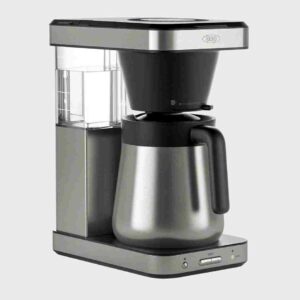
Choose the OXO Brew 8-Cup if you want fast, consistent drip coffee in small or full batches. Skip it if you need programming, app controls, a larger pot, or the...
Pros: Brewing performance and consistency, Overall user experience
Cons: Design flaws
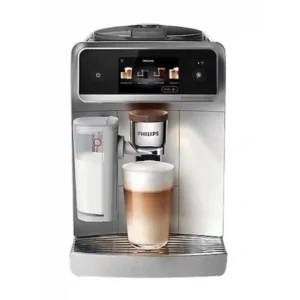
Best for effortless, highly personalized hot and cold coffee in a busy multi-drinker home. Skip it if counter space is tight, you demand silky adjustable microfoam, or the premium price...
Pros: Automation and sensors, Overall user experience
Cons: Design flaws, Mess-free used-puck disposal
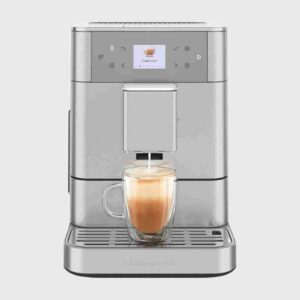
Choose the KitchenAid KF6 for rich espresso, quiet operation, easy cleaning, and strong value in a super-automatic. Skip it if dense cappuccino foam, plant-milk presets, touchscreen controls, or an included...
Pros: Water system, maintenance and descaling, Overall user experience
Cons: Accessories, Design flaws
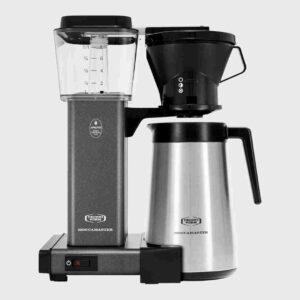
Choose the Moccamaster KBT for fast, excellent drip coffee, durable build, and a thermal carafe that keeps coffee hot. Skip it if you need programmability, a compact footprint, or a...
Pros: Brewing performance and consistency, Espresso and beverage quality
Cons: Automation and sensors, Design flaws