Scorata scores summarize analyzed review evidence on a 1–5 scale; they are not laboratory measurements or a simple average of customer star ratings. Feature scores summarize the reviews covering that feature. The overall score averages feature scores within each review, then combines review averages. When both expert and customer evidence are available, those two groups receive equal weight. Products can have different review coverage, so small score gaps do not establish a winner.
Recommendations prioritize important features for the category, with a score of at least 3.5, a gap of at least 0.25 points and at least two supporting reviews per product. Features with widely varying scores or broad connectivity contexts are excluded from recommendations. These safeguards do not establish statistical significance.
Quick verdict
What each product is best for
The review evidence points to a tradeoff: portability and FPS gaming suitability versus cable flexibility and profile switching. Choose according to which strengths matter more to you; the overall score alone does not settle that choice.
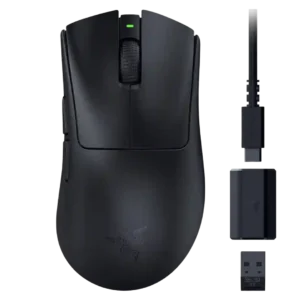
Choose Razer DeathAdder V3 HyperSpeed for portability and FPS gaming suitability.
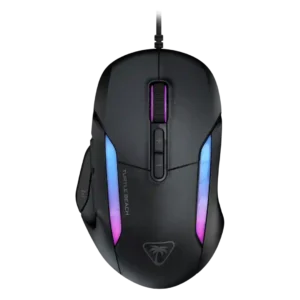
Choose Turtle Beach Kone II for cable flexibility and profile switching.
Why these recommendations?
Razer DeathAdder V3 HyperSpeed
Where It Has the Edge
portability is 4.8 vs 2.5. Portability benefited from lightweight design and onboard dongle storage, which reviewers found convenient for travel or switching systems.
FPS gaming suitability is 4.8 vs 3.6. FPS gaming suitability was excellent overall, with reviewers praising flickability, low-latency clicks, accurate tracking, and strong competitive-shooter performance.
premium feel is 4.7 vs 4.0. Premium feel was stronger than the HyperSpeed label implied, with reviewers saying the mouse felt high-tier, well-built, and...
Turtle Beach Kone II
Where It Has the Edge
cable flexibility is 4.5 vs 2.1. Cable feedback was mostly positive, especially for the strong anti-fray and low-drag flex cable, with one minor complaint...
profile switching is 4.5 vs 2.8. Profile switching was useful in the reviews that discussed it, especially for setting up different games or work...
programmable buttons is 4.9 vs 3.6. Programmable buttons were a major strength, with reviewers valuing the extra inputs, Easy-Shift layering, and seven-button expandability.
Razer DeathAdder V3 HyperSpeed4.3 overall score
Turtle Beach Kone II4.3 overall score
Compare features
Scores are out of 5. Missing scores mean missing review evidence, not a missing feature.
Scored on both products
Battery and charging
Battery life
Razer DeathAdder V3 HyperSpeed
4.6
Battery life was consistently strong in testing or use, with reviewers saying the 100-hour claim felt believable or that charging was rarely needed.
Turtle Beach Kone II
5.0
Battery life evidence was very strong in the Air review, which exceeded the quoted 130-hour 2.4GHz mark in testing.
Charging convenience
Razer DeathAdder V3 HyperSpeed
3.2
Charging itself was convenient by USB-C, but the short or unpleasant cable hurt the charging-and-play experience for some reviewers.
Turtle Beach Kone II
4.0
Charging convenience was acceptable to the reviewer because plugging in during breaks was not treated as a major burden.
Other features
Cable flexibility
Razer DeathAdder V3 HyperSpeed
2.1
The included cable was one of the clearest complaints, described as stiff, short, rubbery, cheap-feeling, or impractical for wired play.
Turtle Beach Kone II
4.5
Cable feedback was mostly positive, especially for the strong anti-fray and low-drag flex cable, with one minor complaint about fuzzy braiding.
Portability
Razer DeathAdder V3 HyperSpeed
4.8
Portability benefited from lightweight design and onboard dongle storage, which reviewers found convenient for travel or switching systems.
Turtle Beach Kone II
2.5
Portability was weak because reviewers emphasized the Kone II's large, heavy body and unsuitability for laptop-style use.
Profile switching
Razer DeathAdder V3 HyperSpeed
2.8
Profile switching was limited by the single onboard profile, forcing more manual settings changes for different games or PCs.
Turtle Beach Kone II
4.5
Profile switching was useful in the reviews that discussed it, especially for setting up different games or work profiles.
Weight
Razer DeathAdder V3 HyperSpeed
4.9
Weight was a standout strength, with reviewers repeatedly praising the 53-55g body as featherweight, effortless, nimble, and easy to flick.
Turtle Beach Kone II
3.5
Weight divided reviewers: some found the wired version light for its size, while others felt the Kone II line was too big and heavy for competitive use.
Onboard memory
Razer DeathAdder V3 HyperSpeed
3.2
Onboard memory was mixed: saving settings was useful, but the single onboard profile limited travel or multi-game convenience.
Turtle Beach Kone II
4.5
Onboard profile handling was described as straightforward in the software, supporting a positive score for onboard memory/profile use.
FPS gaming suitability
Razer DeathAdder V3 HyperSpeed
4.8
FPS gaming suitability was excellent overall, with reviewers praising flickability, low-latency clicks, accurate tracking, and strong competitive-shooter performance.
Turtle Beach Kone II
3.6
FPS suitability was mixed: general shooter use was fine, but several reviewers warned it is not ideal for high-speed or high-level competitive FPS play.
RGB features
Razer DeathAdder V3 HyperSpeed
3.5
RGB evidence was mixed: some reviewers liked the performance-first, no-distraction approach, while others missed Razer Chroma or visual flair.
Turtle Beach Kone II
4.4
RGB feedback was mostly positive for vivid lighting, zones, gradients, and customization, with a few caveats about muddled or choppy lighting.
Premium feel
Razer DeathAdder V3 HyperSpeed
4.7
Premium feel was stronger than the HyperSpeed label implied, with reviewers saying the mouse felt high-tier, well-built, and close to Razer's pro models.
Turtle Beach Kone II
4.0
Premium feel was mixed: one review liked the robust build and RGB additions, while another found the design somewhat tacky despite comfort.
DPI range
Razer DeathAdder V3 HyperSpeed
4.0
The 26K DPI ceiling was considered enough for nearly all gamers, even though some reviewers noted it is lower than flagship sensors or impractical at the top end.
Turtle Beach Kone II
4.6
The 26K DPI range was treated as high-end and useful for users who want very high sensitivity, even if most reviewers did not need the maximum.
Grip texture
Razer DeathAdder V3 HyperSpeed
4.1
Grip texture was polarizing: many liked the smooth-touch coating, but sweaty hands, clamminess, or slipperiness remained concerns in several reviews.
Turtle Beach Kone II
3.5
Grip texture was mixed: some liked the sticky texture or included tape, while others found the surface slippery or the tape too hard.
Balance and weight distribution
Razer DeathAdder V3 HyperSpeed
5.0
Weight balance was praised as well-centered and controlled, helping the mouse feel nimble rather than unstable despite its low mass.
Turtle Beach Kone II
4.5
Weight distribution was positively described on the Kone II Air, where the weight was said to hit a sweet spot in actual use.
Connection stability
Razer DeathAdder V3 HyperSpeed
5.0
Connection stability was a strength, with reviewers reporting no lag, no signal issues, and stable wireless behavior in gaming.
Turtle Beach Kone II
4.5
Connection stability was positive overall, led by praise that the wireless connection never failed; one reviewer only lightly qualified a tracking concern as possibly subjective.
Wireless latency
Razer DeathAdder V3 HyperSpeed
4.7
Wireless latency was praised as low, imperceptible, or quick enough for competitive gaming, even before optional high-polling upgrades.
Turtle Beach Kone II
5.0
Wireless latency was viewed favorably thanks to low-latency 2.4GHz use and the absence of latency delays called out by reviewers.
Polling rate
Razer DeathAdder V3 HyperSpeed
3.8
Polling-rate evidence was mixed-positive: 1,000Hz was widely considered enough, while the separate HyperPolling dongle was a repeated caveat.
Turtle Beach Kone II
3.5
Polling-rate feedback was mixed: one review liked the easy adjustment up to 1000Hz, while another found 1000Hz less compelling for very high-refresh displays.
Handedness options
Razer DeathAdder V3 HyperSpeed
2.0
Handedness options were limited because the shape favors right-handed users, making it unsuitable for left-handed gamers.
Turtle Beach Kone II
1.8
Handedness options were a clear weakness because reviewers noted the mouse is not ambidextrous and is unsuitable for left-handed mouse users.
Surface compatibility
Razer DeathAdder V3 HyperSpeed
4.8
Surface compatibility was positive where tested, with reviewers reporting smooth feet across multiple mousepads or surfaces.
Turtle Beach Kone II
5.0
Surface compatibility was praised in the reviews that tested it, including smooth movement on cloth, hard surfaces, and multiple household surfaces.
Glide smoothness
Razer DeathAdder V3 HyperSpeed
4.6
Glide smoothness was one of the strongest attributes, with large PTFE feet repeatedly praised for smooth, controlled movement across pads or surfaces.
Turtle Beach Kone II
4.8
Glide smoothness was consistently positive, with reviewers describing smooth travel, effortless movement, and low friction from the PTFE feet.
Left and right click quality
Razer DeathAdder V3 HyperSpeed
4.8
Left and right click quality was strongly praised for tactile, satisfying, crisp, or solid main clicks, with only minor preference-based caveats.
Turtle Beach Kone II
5.0
The main left and right clicks were well received for uniform feel, snappy action, and excellent responsiveness.
Switch feel
Razer DeathAdder V3 HyperSpeed
4.7
Switch feel was strongly positive overall, with reviewers praising crisp, tactile, satisfying, snappy optical switches, despite individual firmness preferences.
Turtle Beach Kone II
4.6
Switch feel was mostly praised as crisp, tactile, and satisfying, though one comparison found the Kone II slightly mushier and hollower than a related model.
Scroll wheel quality
Razer DeathAdder V3 HyperSpeed
4.3
Scroll wheel quality was generally solid and precise, though a few reviewers found middle click awkward or document scrolling tedious.
Turtle Beach Kone II
4.3
The scroll wheel earned praise for tactile feedback, tilt, versatility, and stability, but some reviewers disliked the lack of dual-mode or smooth scrolling on the wired model.
2.4GHz connectivity
Razer DeathAdder V3 HyperSpeed
5.0
Reviewers who discussed the 2.4GHz link found it responsive, with solid signal behavior and wired-like performance when using the dongle.
Turtle Beach Kone II
5.0
The 2.4GHz connection was praised for higher performance, lower latency, and a much higher polling rate than Bluetooth.
Click latency
Razer DeathAdder V3 HyperSpeed
5.0
Click latency was praised as extremely low or imperceptible, with measured wireless results supporting fast competitive use.
Turtle Beach Kone II
5.0
Click latency was viewed positively, with reviewers describing fast actuation, highly responsive clicks, and freedom from latency delays.
Motion consistency
Razer DeathAdder V3 HyperSpeed
5.0
Motion consistency was praised in testing where movement appeared accurate, smooth, and consistent.
Turtle Beach Kone II
5.0
Motion consistency was strong in the supportive reviews, with no tracking issues, glitches, or smoothing reported.
Controls and connectivity
Software stability
Razer DeathAdder V3 HyperSpeed
2.7
Software stability had mixed evidence: one reviewer found Synapse more reliable, while others called it erratic or resource-heavy.
Turtle Beach Kone II
4.0
Software stability and maturity were mixed: PCMag praised the revamp, while TrustedReviews found the experience intuitive only up to a point.
Programmable buttons
Razer DeathAdder V3 HyperSpeed
3.6
Programmable-button evidence was mixed: reviewers valued practical FPS-side-button use, but criticized the claimed button count as essentially standard.
Turtle Beach Kone II
4.9
Programmable buttons were a major strength, with reviewers valuing the extra inputs, Easy-Shift layering, and seven-button expandability.
Bluetooth support
Razer DeathAdder V3 HyperSpeed
2.0
Bluetooth was a repeated drawback: reviewers liked the wireless performance but noted the lack of Bluetooth reduced multi-device versatility.
Turtle Beach Kone II
3.0
Bluetooth support was seen as a useful power-efficient option, but with the caveat that performance is lower than 2.4GHz.
Button customization
Razer DeathAdder V3 HyperSpeed
4.1
Button customization and rebinding were useful through Synapse, although most of the praise was tied to practical remapping rather than a large button count.
Turtle Beach Kone II
4.8
Button customization was one of the most consistently praised features, with reviewers emphasizing Easy-Shift, broad remapping, and extensive command options.
Software usability
Razer DeathAdder V3 HyperSpeed
4.2
Software usability was generally useful for DPI, remapping, Dynamic Sensitivity, and rotation tools, though Synapse could feel unwieldy or bloated.
Turtle Beach Kone II
4.7
Software usability was usually praised for clean, intuitive customization, though one reviewer found parts of the UI wasteful and less intuitive.
Button responsiveness
Razer DeathAdder V3 HyperSpeed
4.7
Button responsiveness was praised for fast actuation, rapid firing, and easy operation during play.
Turtle Beach Kone II
4.9
Button responsiveness was one of the strongest areas, with repeated praise for fast, balanced, and reliable actuation in games and general use.
Side button quality
Razer DeathAdder V3 HyperSpeed
4.7
Side button quality was widely praised for placement, spacing, access, and responsiveness, with a few reviews noting mushiness or preference caveats.
Turtle Beach Kone II
4.6
Side button quality was usually praised for reachable placement and easy actuation, although one reviewer warned their position can invite accidental presses.
Ownership and support
Macro support
Razer DeathAdder V3 HyperSpeed
3.4
Macro support was mixed: software allowed macro-style reassignment, but one reviewer criticized the practical usefulness of the bottom button for macros.
Turtle Beach Kone II
4.7
Macro support was praised for game and productivity use, with several reviewers highlighting easy macro setup or useful extra mapped actions.
Value for money
Razer DeathAdder V3 HyperSpeed
4.7
Value for money was one of the strongest consensus points, with reviewers repeatedly calling it a great, competitive, or top-tier value at around $100.
Turtle Beach Kone II
4.1
Value was mostly positive at the wired price, with many reviewers calling it worthwhile or a steal, though some wanted a lower price or saw stronger alternatives.
Performance
Click noise
Razer DeathAdder V3 HyperSpeed
2.2
Click noise was a drawback in several reviews, especially outside headset gaming, where the primary clicks could sound loud or grating.
Turtle Beach Kone II
3.3
Click noise was mixed, with one reviewer calling the sound hollow and another noting the optical switches are on the louder side.
Wireless performance
Razer DeathAdder V3 HyperSpeed
4.8
Wireless performance was consistently positive, with reviewers describing the mouse as free-feeling, reliable, flawless, or strong in gaming.
Turtle Beach Kone II
5.0
Wireless performance on the Kone II Air was praised, especially over the 2.4GHz mode where perceived performance stayed consistent.
Sensor performance
Razer DeathAdder V3 HyperSpeed
4.8
Sensor performance was a major strength, with the Focus X 26K repeatedly described as flawless, fast, precise, or essentially indistinguishable in real play.
Turtle Beach Kone II
4.6
Sensor performance was widely praised as top-tier, responsive, and dependable, though one reviewer reported a slight tracking quirk.
Comfort and build
Switch durability
Razer DeathAdder V3 HyperSpeed
4.3
Switch durability received limited positive evidence from reviewers who treated optical switches as longer-lasting or suitable for years of use.
Turtle Beach Kone II
5.0
Switch durability was supported by a positive judgment that the optical switches are built to survive many gaming sessions.
Build quality
Razer DeathAdder V3 HyperSpeed
4.9
Build quality was a major strength, with reviewers repeatedly reporting a solid shell, little or no flex, and a surprisingly sturdy lightweight chassis.
Turtle Beach Kone II
4.4
Build quality was generally positive, with reviewers calling the mouse sturdy, solid, and free of weak spots.
Shape comfort
Razer DeathAdder V3 HyperSpeed
4.2
Shape comfort was the most context-dependent attribute: many liked the smaller ergonomic shell, while some disliked the front flare, smaller size, or hand-fit tradeoffs.
Turtle Beach Kone II
4.6
Shape comfort was the dominant theme: reviewers loved the large ergonomic shape for the right hands, while warning that its size is not universal.
Long-session comfort
Razer DeathAdder V3 HyperSpeed
4.8
Long-session comfort was positive, with reviewers citing long play sessions, reduced wrist stress, and comfort over extended gaming or work use.
Turtle Beach Kone II
4.4
Long-session comfort was generally strong for large-hand users and everyday work, though one medium-hand reviewer felt fatigue after a while.
Fingertip grip comfort
Razer DeathAdder V3 HyperSpeed
2.8
Fingertip grip comfort was more limited: some reviewers could make it work, but several advised fingertip users or smaller/larger hand extremes to be careful.
Turtle Beach Kone II
3.1
Fingertip grip comfort was mixed to negative, with some comfort for hybrid users but stronger concerns that the big rear flare and weight hurt fingertip use.
Ergonomic design
Razer DeathAdder V3 HyperSpeed
4.4
The ergonomic design was generally praised for right-handed support, palm contouring, and comfort, while a few shape-specific caveats remained.
Turtle Beach Kone II
4.7
Ergonomics were the product's broadest strength, repeatedly described as comfortable, glove-like, and well shaped for larger hands.
Claw grip comfort
Razer DeathAdder V3 HyperSpeed
4.2
Claw grip comfort was broadly positive for small-to-medium hands, though larger hands or aggressive claw users sometimes found the shape less ideal.
Turtle Beach Kone II
4.2
Claw grip comfort was generally positive, with reviewers saying claw use worked well or felt excellent despite the large shell.
Palm grip comfort
Razer DeathAdder V3 HyperSpeed
4.3
Palm grip comfort was good for many users, particularly smaller-to-medium hands, though size and side flares made it less universal.
Turtle Beach Kone II
4.3
Palm grip comfort was strong for larger hands, though one reviewer with big hands found fingertip and claw more comfortable than full palm.
Materials quality
Razer DeathAdder V3 HyperSpeed
3.5
Materials quality was mixed-to-positive: reviewers liked the premium feel but noted grease, grime, fingerprints, or clammy plastic in some conditions.
Turtle Beach Kone II
3.5
Materials quality was mixed: one review liked the lightweight sturdy matte plastic, while another thought it had a regular hard-plastic feel.
Tracking and training
Accuracy and tracking precision
Razer DeathAdder V3 HyperSpeed
4.9
Tracking precision drew strong praise, with reviewers reporting pinpoint aiming, better enemy tracking, and accurate gaming-session control.
Turtle Beach Kone II
4.5
Reviewers generally found tracking accurate and responsive, with one clear dissent noting a small precision quirk during tiny aim corrections.
Evidence available for one product
Other features
Acceleration control
Razer DeathAdder V3 HyperSpeed
4.2
Dynamic Sensitivity was widely treated as useful for low-sensitivity FPS play and quick turns, though a few reviewers called it niche, unnatural, or gimmicky.
Turtle Beach Kone IINo score yet
Cross-platform compatibility
Razer DeathAdder V3 HyperSpeedNo score yet
Turtle Beach Kone II
3.2
Cross-platform compatibility was mixed: Xbox plug-and-play was a plus, but lack of macOS and non-Windows support limited the PC software experience.
Ecosystem integration
Razer DeathAdder V3 HyperSpeed
2.5
Ecosystem integration was mixed because HyperPolling dongle compatibility and naming created confusion or fragmentation across Razer mice.
Turtle Beach Kone IINo score yet
Lift-off distance
Razer DeathAdder V3 HyperSpeed
3.6
Lift-off distance and smart tracking received useful but narrower praise, especially for maintaining accuracy or surface consistency; one review wanted more advanced tweaks.
Turtle Beach Kone IINo score yet
MMO gaming suitability
Razer DeathAdder V3 HyperSpeedNo score yet
Turtle Beach Kone II
4.8
MMO suitability was very positive because the extra buttons, Easy-Shift commands, and comfortable long-session shape fit MMO-style play well.
MOBA gaming suitability
Razer DeathAdder V3 HyperSpeedNo score yet
Turtle Beach Kone II
4.5
MOBA suitability was supported by one gaming-performance review that included a shooter-MOBA and found the mouse fast, responsive, and issue-free.
Comfort and build
Durability over time
Razer DeathAdder V3 HyperSpeedNo score yet
Turtle Beach Kone II
5.0
Long-term durability was supported by the positive assessment that the switches are built to survive many sessions.
Controls and connectivity
Tilt gesture controls
Razer DeathAdder V3 HyperSpeedNo score yet
Turtle Beach Kone II
4.7
Tilt gesture controls were praised as fresh, useful, and easy to flick, giving the mouse extra functions beyond a standard wheel.
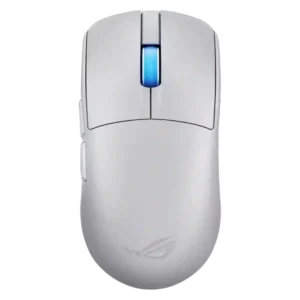
Choose the ROG Harpe II Ace for ultralight FPS play, precise tracking, smooth glide, and web-based tuning. Skip it if you need palm-grip support, MMO buttons, onboard profiles, or long...
Excellent tracking, comfortable right-handed ergonomics and a versatile scroll wheel make the Basilisk V3 a strong gaming and productivity mouse. Its substantial weight, fixed cable and sometimes over-sensitive automatic scrolling...
The L7 Pro delivers remarkably light handling, precise aiming and a grippy shell at a budget price. Stock skates are less impressive, and conflicting click-latency measurements warrant caution for latency-sensitive...
Best for ultra-light, competition-focused speed, precise tracking, stable wireless, and long battery life. Skip it if you need quieter clicks, left-handed support, Bluetooth, more buttons, or better value for casual...