Scorata scores summarize analyzed review evidence on a 1–5 scale; they are not laboratory measurements or a simple average of customer star ratings. Feature scores summarize the reviews covering that feature. The overall score averages feature scores within each review, then combines review averages. When both expert and customer evidence are available, those two groups receive equal weight. Products can have different review coverage, so small score gaps do not establish a winner.
Recommendations prioritize important features for the category, with a score of at least 3.5, a gap of at least 0.25 points and at least two supporting reviews per product. Features with widely varying scores or broad connectivity contexts are excluded from recommendations. These safeguards do not establish statistical significance.
Quick verdict
What each product is best for
The review evidence points to a tradeoff: software usability and lift-off distance versus click noise and scroll wheel quality. Choose according to which strengths matter more to you; the overall score alone does not settle that choice.
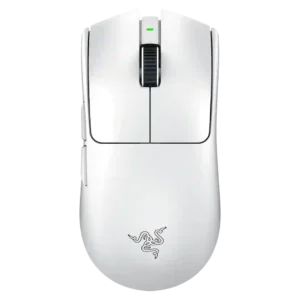
Choose Razer Viper V3 Pro for software usability and lift-off distance.
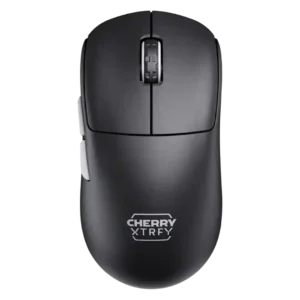
Choose Cherry M68 Pro for click noise and scroll wheel quality.
Why these recommendations?
Razer Viper V3 Pro
Where It Has the Edge
software usability is 4.0 vs 2.4. Software usability was mixed: Synapse offers deep, useful tuning, but some reviewers disliked its bloat, ads, crashes, or...
lift-off distance is 4.3 vs 3.3. Lift-off and landing distance controls were viewed as useful parts of the precise sensor package, especially for different...
surface compatibility is 4.5 vs 3.8. Surface compatibility was praised where tested, including cloth, wood, glass, leather, concrete, and other mousepad surfaces.
Cherry M68 Pro
Where It Has the Edge
click noise is 3.8 vs 3.0. Click noise was acceptable to positive for some reviewers, but another found the buttons pretty loud.
scroll wheel quality is 4.0 vs 3.2. The scroll wheel was generally smooth, controlled, and pleasant, with a few reviewers describing it as merely okay...
polling rate is 4.2 vs 3.4. The 8K polling rate impressed some reviewers with smooth responsiveness, while others found little detectable difference and noted...
Razer Viper V3 Pro4.2 overall score
Cherry M68 Pro4.0 overall score
Compare features
Scores are out of 5. Missing scores mean missing review evidence, not a missing feature.
Scored on both products
Battery and charging
Battery life
Razer Viper V3 Pro
3.6
Battery life was context-dependent: strong at 1K polling, acceptable at mid polling, and repeatedly criticized at 8K polling.
Cherry M68 Pro
4.0
Battery life was good in standard or lower polling modes, but 8K/Pro modes shortened runtime and battery warnings were a recurring weakness.
Charging convenience
Razer Viper V3 Pro
3.0
Charging convenience was only lightly covered, but reviewers appreciated fast or usable charging while wishing for a dock or stand.
Cherry M68 Pro
2.9
Charging convenience was sharply mixed: quick charging and flexible cables helped, but the side USB-C placement annoyed many reviewers.
Other features
2.4GHz connectivity
Razer Viper V3 Pro
2.0
The HyperPolling receiver supports elite wireless performance, but lack of a simpler 2.4GHz USB dongle was criticized as inconvenient.
Cherry M68 Pro
5.0
The 2.4GHz connection was praised directly as fast and reliable in competitive use.
Cable flexibility
Razer Viper V3 Pro
2.4
Cable feedback was negative to mixed because wired use felt stiff, draggy, or less flexible than expected for such a light wireless mouse.
Cherry M68 Pro
3.9
Cable impressions were mixed: reviewers liked the flexible braided/EZcord cables, but side-cable movement could feel encumbered.
Lift-off distance
Razer Viper V3 Pro
4.3
Lift-off and landing distance controls were viewed as useful parts of the precise sensor package, especially for different surfaces.
Cherry M68 Pro
3.3
Lift-off options were adequate but not standout, and one reviewer had to raise LOD on hard surfaces.
Premium feel
Razer Viper V3 Pro
3.0
Premium feel was mostly positive, but a few reviewers felt the featherlight plastic made it seem less premium than its price suggests.
Cherry M68 Pro
4.0
Premium feel was mostly positive due to a solid, non-hollow shell, though one reviewer felt some details were not top-tier.
Scroll wheel quality
Razer Viper V3 Pro
3.2
Scroll wheel feedback was split: reviewers liked its tactility for gaming, but several found it stiff or uncomfortable for heavy everyday scrolling.
Cherry M68 Pro
4.0
The scroll wheel was generally smooth, controlled, and pleasant, with a few reviewers describing it as merely okay or not ideal for repeated clicks.
Polling rate
Razer Viper V3 Pro
3.4
The 8K polling capability impressed reviewers technically, but many found its real-world benefit subtle, hardware-dependent, or not worth constant use.
Cherry M68 Pro
4.2
The 8K polling rate impressed some reviewers with smooth responsiveness, while others found little detectable difference and noted battery tradeoffs.
Surface compatibility
Razer Viper V3 Pro
4.5
Surface compatibility was praised where tested, including cloth, wood, glass, leather, concrete, and other mousepad surfaces.
Cherry M68 Pro
3.8
Surface compatibility was solid on pads and several non-glass surfaces, but reviewers still recommended a mouse pad or adjusted LOD on hard surfaces.
Connection stability
Razer Viper V3 Pro
4.3
Connection stability was mostly strong, with no drops in several tests, but a few reviewers reported slow wake or brief connection behavior.
Cherry M68 Pro
4.8
Connection stability was strong, especially over 2.4GHz, with repeated reports of no hiccups, lag, or stuttering.
Click latency
Razer Viper V3 Pro
5.0
Latency feedback was extremely positive, with reviewers describing the mouse as class-leading, delay-free, or nearly predictive in competitive play.
Cherry M68 Pro
4.5
Primary clicks were described as quick, responsive, and swift to reset, supporting low-latency-feeling inputs in the reviewed units.
Grip texture
Razer Viper V3 Pro
4.1
Grip texture was a common strength, praised for secure smooth-touch traction, though a few reviewers found it slippery or prone to grime and fingerprints.
Cherry M68 Pro
3.6
Grip texture was mixed: several reviewers liked the traction or rubber grip, while the black coating drew fingerprint complaints.
Motion consistency
Razer Viper V3 Pro
4.3
Motion was usually described as buttery, smooth, and accurate, though one reviewer found micro-adjustments jerky with certain large feet and pads.
Cherry M68 Pro
4.8
Motion consistency was a major strength, with reviewers reporting no inconsistencies, no hiccups, and flawless wireless tracking.
Glide smoothness
Razer Viper V3 Pro
4.6
Glide was one of the strongest areas, with large PTFE feet repeatedly praised for smooth, effortless movement on many pads and surfaces.
Cherry M68 Pro
4.1
Glide was usually smooth and easy, though reviewers noted skates, hard surfaces, or the missing center foot could affect feel.
Left and right click quality
Razer Viper V3 Pro
4.6
Primary clicks were praised for speed, low travel, tactility, and reduced misclick risk, with several reviewers preferring their feel to rivals.
Cherry M68 Pro
4.3
Left and right clicks were generally solid, easy, and satisfying, though one reviewer noted the M68 felt a little stiffer than the M64.
Balance and weight distribution
Razer Viper V3 Pro
5.0
Balance was praised by several video reviewers, who found the light body planted and evenly balanced without front or rear tipping.
Cherry M68 Pro
4.8
The mouse was described as well-balanced by reviewers who focused on weight distribution and in-hand balance.
Switch feel
Razer Viper V3 Pro
4.4
Switch feel was mostly praised as firm, crisp, snappy, and satisfying, with a few reviewers noting softness or loudness preferences.
Cherry M68 Pro
4.2
Switch feel was mostly praised as excellent or snappy, with one early-look reviewer finding the implementation only okay.
DPI range
Razer Viper V3 Pro
3.7
Reviewers treated the 35K DPI ceiling and single-step adjustment as technically impressive, though often more than most players need.
Cherry M68 Pro
3.5
DPI/CPI coverage was useful for preset users, but reviewers criticized the lack of granular software tuning for non-preset sensitivities.
Weight
Razer Viper V3 Pro
4.7
Weight was one of the clearest strengths: reviewers repeatedly called the 54g body featherlight, fatigue-reducing, and easy to move.
Cherry M68 Pro
4.6
Reviewers strongly agreed the mouse is impressively light and easy to move, with the 55g class weight repeatedly praised.
FPS gaming suitability
Razer Viper V3 Pro
4.7
FPS and esports suitability was the strongest consensus: reviewers repeatedly called it a top-tier competitive shooter mouse.
Cherry M68 Pro
4.6
FPS suitability was a major strength, with reviewers praising precise, responsive performance in shooters such as Counter-Strike, Valorant, and CS:GO.
Wireless latency
Razer Viper V3 Pro
4.8
Wireless latency was widely praised as near-zero or virtually lag-free, though reviewers often framed 8K gains as only relevant to elite players.
Cherry M68 Pro
4.8
Wireless latency impressions were excellent, with reviewers reporting instantaneous responsiveness, no lag, and no delays.
Controls and connectivity
Button customization
Razer Viper V3 Pro
4.0
Button customization was considered strong because Synapse supports remapping, HyperShift layers, and profile-specific setup.
Cherry M68 Pro
2.0
Button customization was limited by the software-free design, especially for remapping and fine adjustments.
Programmable buttons
Razer Viper V3 Pro
4.0
Programmable controls and remapping were seen as useful through Synapse, though the esports-focused button count limits broader genre flexibility.
Cherry M68 Pro
2.0
Programmable-button support was weak because reviewers noted that buttons could not be reprogrammed without software.
Software usability
Razer Viper V3 Pro
4.0
Software usability was mixed: Synapse offers deep, useful tuning, but some reviewers disliked its bloat, ads, crashes, or general feel.
Cherry M68 Pro
2.4
Software usability was the most repeated complaint: no software meant awkward manuals, color LEDs, and button-combo setup.
Side button quality
Razer Viper V3 Pro
4.6
Side buttons were generally a strength, often called well placed, firm, separated, and easy to identify, though one review found tactility only decent.
Cherry M68 Pro
4.0
Side buttons received positive notes for feedback and positioning, but some criticism appeared around travel and feel.
Button responsiveness
Razer Viper V3 Pro
4.7
Button responsiveness was widely praised, with clicks described as fast, immediate, smooth, and dependable in competitive play.
Cherry M68 Pro
4.2
Button responsiveness was usually praised for quick actuation and reset, though one reviewer treated the buttons as merely fine in-game.
Comfort and build
Durability over time
Razer Viper V3 Pro
4.5
Durability over time had limited but positive long-term evidence, with a year-later reviewer reporting few issues across units.
Cherry M68 Pro
2.8
Durability-over-time evidence was mixed-negative, centered on coating residue and concern about click wobble rather than failures.
Palm grip comfort
Razer Viper V3 Pro
4.3
Palm support received some positive notes thanks to the rear hump and larger shell, though the mouse is primarily tuned for claw and fingertip users.
Cherry M68 Pro
2.5
Palm grip comfort was limited for larger hands, with one reviewer specifically calling it cramped in palm grips.
Fingertip grip comfort
Razer Viper V3 Pro
3.8
Fingertip comfort was positive for some reviewers but less consistent, as the larger, taller V3 Pro was not ideal for all fingertip users.
Cherry M68 Pro
3.0
Fingertip grip support was less certain, with one reviewer saying a G Pro X was probably the safer fingertip option.
Materials quality
Razer Viper V3 Pro
2.8
Materials were mixed: the lightweight shell and coating helped performance, but some reviewers found it cheap-feeling, grimy, or fingerprint-prone.
Cherry M68 Pro
3.4
Materials quality was good but imperfect, combining useful traction and durable plastic with residue and fingerprint concerns.
Long-session comfort
Razer Viper V3 Pro
4.6
Long-session comfort was praised thanks to low weight, supportive shape, smooth glide, and reduced fatigue in long work or gaming sessions.
Cherry M68 Pro
5.0
Long-session comfort had limited but strong support, with one reviewer reporting no hand fatigue over extended gaming.
Shape comfort
Razer Viper V3 Pro
3.9
Shape comfort was mostly positive for medium-to-large hands, but not universal; some reviewers preferred earlier shapes or found sizing narrow or specialized.
Cherry M68 Pro
4.1
Shape comfort was the most polarizing area: several reviewers loved the low, controlled feel, while others found it cramped, wide, or odd.
Claw grip comfort
Razer Viper V3 Pro
4.6
Claw grip support was a major strength, with multiple reviewers calling the shape ideal or especially comfortable for claw variants.
Cherry M68 Pro
4.4
Claw grip support was a clear strength, with multiple reviewers saying the low-front shape suits relaxed or claw-style control.
Ergonomic design
Razer Viper V3 Pro
4.7
Ergonomics were broadly praised for comfort and hand support, with reviewers highlighting long-session usability and a safe symmetrical design.
Cherry M68 Pro
4.5
The low-front ergonomic design was widely credited with improving control, grip security, and comfort.
Build quality
Razer Viper V3 Pro
4.5
Build quality drew strong agreement, with most reviewers reporting a solid shell, little flex, no creaking, and high-quality construction.
Cherry M68 Pro
4.3
Build quality was consistently strong, with reviewers describing the shell as sturdy, solid, well-constructed, or tank-like.
Performance
Click noise
Razer Viper V3 Pro
3.0
Click noise was mixed; reviewers liked the click feel but some found the optical clicks loud or potentially distracting.
Cherry M68 Pro
3.8
Click noise was acceptable to positive for some reviewers, but another found the buttons pretty loud.
Wireless performance
Razer Viper V3 Pro
4.7
Wireless performance was a major strength, with reviewers describing it as stellar, flawless, snappy, and effectively wired-like.
Cherry M68 Pro
4.6
Wireless performance was praised across reviews for smooth operation, reliable tracking, and no obvious hiccups.
Sensor performance
Razer Viper V3 Pro
4.8
The Focus Pro sensor was consistently praised as accurate, smooth, and high-end, with several reviewers calling it among the best or flawless in use.
Cherry M68 Pro
4.7
The Pixart sensor drew broad praise for responsive, accurate tracking, with several reviewers calling it wonderful, snappy, or beautiful in use.
Tracking and training
Accuracy and tracking precision
Razer Viper V3 Pro
4.8
Reviewers repeatedly described tracking and aim translation as precise, reliable, or noticeably confidence-building in shooters and aim trainers.
Cherry M68 Pro
4.6
Reviewers consistently found tracking precise and confidence-inspiring, from accurate desktop movement to flawless aim adjustments in games.
Ownership and support
Value for money
Razer Viper V3 Pro
3.3
Value was the main tradeoff: reviewers loved the performance but often questioned the high price and bundled dongle for non-elite users.
Cherry M68 Pro
3.3
Value was mixed: reviewers liked the performance and shape, yet several thought the price was hard to justify against rivals.
Evidence available for one product
Controls and connectivity
Bluetooth support
Razer Viper V3 Pro
2.2
Bluetooth support was a clear limitation; reviewers repeatedly noted its absence reduces versatility outside dedicated esports setups.
Cherry M68 ProNo score yet
Debounce customization
Razer Viper V3 ProNo score yet
Cherry M68 Pro
4.0
Debounce customization had enough increments for preferences in one review, but broader setup friction remained tied to no software.
Software stability
Razer Viper V3 Pro
2.0
Software stability was inconsistent, with a few reviewers reporting Synapse loading issues, crashes, or slow wake behavior.
Cherry M68 ProNo score yet
Ownership and support
Firmware reliability
Razer Viper V3 ProNo score yet
Cherry M68 Pro
4.5
Firmware reliability had limited evidence, but one reviewer found the dongle and mouse firmware update easy.
Macro support
Razer Viper V3 Pro
4.5
Macro and custom action support was described as useful for assigning extra in-game controls to the side buttons.
Cherry M68 ProNo score yet
Other features
Handedness options
Razer Viper V3 Pro
3.8
Handedness was mixed: the symmetrical shell helped left-handed use, but left-side-only thumb buttons limited true ambidextrous comfort.
Cherry M68 ProNo score yet
MMO gaming suitability
Razer Viper V3 Pro
2.5
MMO suitability was weak because the mouse is genre-specific and lacks the extra buttons many MMO players want.
Cherry M68 ProNo score yet
MOBA gaming suitability
Razer Viper V3 Pro
2.5
MOBA suitability was similarly limited; reviewers framed it as an FPS-first mouse rather than a button-rich MOBA tool.
Cherry M68 ProNo score yet
Onboard memory
Razer Viper V3 Pro
3.3
Onboard memory was valued for carrying settings between PCs, but the single-profile limitation drew criticism.
Cherry M68 ProNo score yet
Portability
Razer Viper V3 Pro
2.0
Portability suffered because the required receiver-and-cable setup was considered awkward for travel despite the light mouse body.
Cherry M68 ProNo score yet
Profile switching
Razer Viper V3 Pro
3.0
Profile switching was mixed because software profiles are useful, but bottom-mounted DPI/profile control felt awkward or finicky to some reviewers.
Cherry M68 ProNo score yet
RGB features
Razer Viper V3 Pro
4.0
The lack of RGB was often treated as an esports-minded tradeoff that saves weight and battery, though some users may miss the flash.
Cherry M68 ProNo score yet
Comfort and build
Skate durability
Razer Viper V3 Pro
4.0
Skate durability had limited evidence, but larger PTFE pads were expected to wear slower and feel more stable.
Cherry M68 ProNo score yet
Switch durability
Razer Viper V3 Pro
4.0
Switch durability was mainly supported by praise around optical switches avoiding double-click risk and long click life, though long-term proof was limited.
Choose the ROG Harpe II Ace for ultralight FPS play, precise tracking, smooth glide, and web-based tuning. Skip it if you need palm-grip support, MMO buttons, onboard profiles, or long...
Excellent tracking, comfortable right-handed ergonomics and a versatile scroll wheel make the Basilisk V3 a strong gaming and productivity mouse. Its substantial weight, fixed cable and sometimes over-sensitive automatic scrolling...
The L7 Pro delivers remarkably light handling, precise aiming and a grippy shell at a budget price. Stock skates are less impressive, and conflicting click-latency measurements warrant caution for latency-sensitive...
Best for ultra-light, competition-focused speed, precise tracking, stable wireless, and long battery life. Skip it if you need quieter clicks, left-handed support, Bluetooth, more buttons, or better value for casual...