Scorata scores summarize analyzed review evidence on a 1–5 scale; they are not laboratory measurements or a simple average of customer star ratings. Feature scores summarize the reviews covering that feature. The overall score averages feature scores within each review, then combines review averages. When both expert and customer evidence are available, those two groups receive equal weight. Products can have different review coverage, so small score gaps do not establish a winner.
Recommendations prioritize important features for the category, with a score of at least 3.5, a gap of at least 0.25 points and at least two supporting reviews per product. Features with widely varying scores or broad connectivity contexts are excluded from recommendations. These safeguards do not establish statistical significance.
Quick verdict
What each product is best for
The review evidence points to a tradeoff: battery life and wireless latency versus cable flexibility and cross-platform compatibility. Choose according to which strengths matter more to you; the overall score alone does not settle that choice.
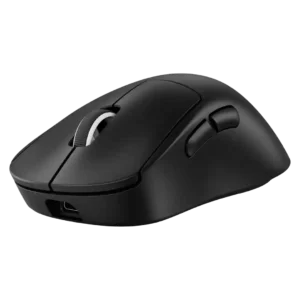
Choose Logitech G PRO X Superlight 2 DEX for battery life and wireless latency.
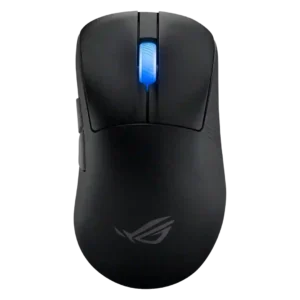
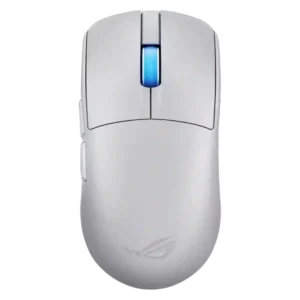
Choose ASUS ROG Keris II Ace for cable flexibility and cross-platform compatibility.
Why these recommendations?
Logitech G PRO X Superlight 2 DEX
Where It Has the Edge
battery life is 4.5 vs 4.2. Battery life was widely praised as long-lasting, often exceeding expectations, though high polling rates were noted to drain...
wireless latency is 4.9 vs 4.1. Wireless latency was praised as low or highly responsive, helping several reviewers feel comfortable using it wirelessly for...
motion consistency is 5.0 vs 4.5. Motion stayed consistent in fast movements, with reviewers reporting no acceleration, smoothing, or loss of tracking while sliding...
ASUS ROG Keris II Ace
Where It Has the Edge
cable flexibility is 4.5 vs 2.0. The cable was usually praised as flexible, free-flowing, and low-friction, with one reviewer calling it a bit stiff.
cross-platform compatibility is 4.8 vs 2.3. Cross-platform use was praised through Bluetooth multi-device pairing and easy movement between PCs, laptops, tablets, and handhelds.
Bluetooth support is 4.5 vs 2.4. Bluetooth was viewed as a useful convenience for work, travel, and multi-device use, not as the preferred competitive...
Logitech G PRO X Superlight 2 DEX4.1 overall score
ASUS ROG Keris II Ace4.2 overall score
Compare features
Scores are out of 5. Missing scores mean missing review evidence, not a missing feature.
Scored on both products
Battery and charging
Battery life
Logitech G PRO X Superlight 2 DEX
4.5
Battery life was widely praised as long-lasting, often exceeding expectations, though high polling rates were noted to drain it faster.
ASUS ROG Keris II Ace
4.2
Battery life was generally praised as good to excellent, with caveats that high polling rates and active use drain it faster.
Charging convenience
Logitech G PRO X Superlight 2 DEX
4.3
Charging convenience was strong when using USB-C or Powerplay, though one reviewer criticized the full recharge time.
ASUS ROG Keris II Ace
3.8
Charging and dongle convenience were mixed: USB-C and cable placement helped, but the booster/dongle setup could feel chunky.
Other features
Cable flexibility
Logitech G PRO X Superlight 2 DEX
2.0
Cable flexibility was a repeated complaint, with reviewers calling the cable bad, not ultralight, or unsuitable for wired use.
ASUS ROG Keris II Ace
4.5
The cable was usually praised as flexible, free-flowing, and low-friction, with one reviewer calling it a bit stiff.
Cross-platform compatibility
Logitech G PRO X Superlight 2 DEX
2.3
Cross-platform compatibility was limited by the lack of Bluetooth and multi-device switching, making it less flexible than generalist mice.
ASUS ROG Keris II Ace
4.8
Cross-platform use was praised through Bluetooth multi-device pairing and easy movement between PCs, laptops, tablets, and handhelds.
Surface compatibility
Logitech G PRO X Superlight 2 DEX
3.5
Surface compatibility was adequate but not universal, with one reviewer preferring padded surfaces and another reporting no glass-pad tracking issues.
ASUS ROG Keris II Ace
4.9
Surface compatibility was strongly praised, including glass, mouse pads, tables, and varied surfaces.
Glide smoothness
Logitech G PRO X Superlight 2 DEX
3.6
Glide smoothness was mixed: some praised effortless movement and PTFE feet, while many enthusiasts disliked the stock skates and wanted replacements.
ASUS ROG Keris II Ace
4.6
Glide smoothness was consistently praised across stock PTFE feet and multiple surfaces.
Lift-off distance
Logitech G PRO X Superlight 2 DEX
3.0
Lift-off options were inconsistent across reviews: one reviewer could set LOD, another disliked the lack of millimeter values, and another found no adjustment.
ASUS ROG Keris II Ace
3.8
Lift-off distance was mixed: one reviewer liked the low setting, while another found low too low and high too high.
Wireless latency
Logitech G PRO X Superlight 2 DEX
4.9
Wireless latency was praised as low or highly responsive, helping several reviewers feel comfortable using it wirelessly for serious gaming.
ASUS ROG Keris II Ace
4.1
Wireless latency was praised in 2.4GHz mode but Bluetooth was criticized as too latent for competitive gaming.
DPI range
Logitech G PRO X Superlight 2 DEX
4.8
The DPI ceiling was treated as extremely high and impressive, with fine adjustment praised by reviewers who used G Hub.
ASUS ROG Keris II Ace
4.0
The DPI ceiling was seen as technically impressive, but one reviewer found very high DPI practically unusable.
Profile switching
Logitech G PRO X Superlight 2 DEX
2.7
Profile switching was a recurring weakness because reviewers missed a physical DPI/profile button and disliked leaving games to change settings.
ASUS ROG Keris II Ace
3.3
Profile switching was mixed, with praise for onboard switching but criticism of the underside DPI/profile button placement.
Acceleration control
Logitech G PRO X Superlight 2 DEX
5.0
Acceleration control was positively judged where tested, with movement described as consistent and free of acceleration or smoothing.
ASUS ROG Keris II Ace
4.5
The acceleration spec was only scored where a reviewer connected the 50g capability to confident fast maneuvers in FPS play.
Motion consistency
Logitech G PRO X Superlight 2 DEX
5.0
Motion stayed consistent in fast movements, with reviewers reporting no acceleration, smoothing, or loss of tracking while sliding quickly.
ASUS ROG Keris II Ace
4.5
Motion consistency was praised through comments about precise recognition, consistent tracking, and polling stability.
Portability
Logitech G PRO X Superlight 2 DEX
5.0
Portability was excellent because the compact receiver and onboard storage make the high-polling setup easy to pack.
ASUS ROG Keris II Ace
4.5
Portability was supported by dongle storage, Bluetooth, and multi-device/travel use.
Premium feel
Logitech G PRO X Superlight 2 DEX
4.0
Premium feel was mixed: one reviewer initially found it budget-like due to lightness, while another praised the in-hand quality.
ASUS ROG Keris II Ace
3.5
Premium feel was mixed: some found the mouse premium, while others felt the coating or hollow shell hurt the premium impression.
RGB features
Logitech G PRO X Superlight 2 DEX
3.9
RGB absence was mostly framed as acceptable or even beneficial for battery and subtle looks, though it makes the mouse less flashy.
ASUS ROG Keris II Ace
4.4
RGB was generally appreciated as a rare lightweight-mouse touch, though a few reviewers disliked the implementation.
FPS gaming suitability
Logitech G PRO X Superlight 2 DEX
4.4
FPS gaming suitability was strong overall, with praise for shooters, responsiveness, and control; negative reports centered on hand-size/shape fit rather than sensor performance.
ASUS ROG Keris II Ace
4.8
FPS suitability was one of the strongest areas, with repeated praise for competitive aiming, speed, and esports performance.
Switch feel
Logitech G PRO X Superlight 2 DEX
4.5
Switch feel was mostly praised for crisp, tactile Lightforce clicks, though some reviewers found them inconsistent, loud, or merely satisfactory.
ASUS ROG Keris II Ace
4.1
Switch feel was mixed but often positive, with some crisp/punchy praise and some dull or mushy complaints.
Handedness options
Logitech G PRO X Superlight 2 DEX
2.4
Handedness options were a drawback because the DEX is strongly right-handed and several reviewers warned left-handers away.
ASUS ROG Keris II Ace
2.0
Handedness scored low because reviewers repeatedly noted the right-handed ergonomic shape and lack of a left-handed option.
Scroll wheel quality
Logitech G PRO X Superlight 2 DEX
4.0
Scroll wheel feedback was generally usable and often quiet or tactile, but several reviewers noted rattle, mushiness, or weaker click feel.
ASUS ROG Keris II Ace
3.6
Scroll wheel quality was mixed, ranging from excellent and distinct to average, light, or prone to overscrolling.
Grip texture
Logitech G PRO X Superlight 2 DEX
3.7
Grip texture was mixed: some liked the dry or grippy coating, while others found it too smooth, sticky over time, or in need of tape.
ASUS ROG Keris II Ace
3.4
Grip texture was the most divided attribute, ranging from non-slip praise to strong complaints about slippery coating.
2.4GHz connectivity
Logitech G PRO X Superlight 2 DEX
4.8
2.4GHz connectivity was praised for stable, speedy Lightspeed/2.4GHz operation and high polling without a bulky receiver.
ASUS ROG Keris II Ace
4.5
Reviewers discussed the 2.4GHz receiver mainly as part of the broader wireless setup, with praise for low-latency use when paired with the booster.
Left and right click quality
Logitech G PRO X Superlight 2 DEX
4.5
Main click quality was usually strong, with repeated praise for tactile, crisp, snappy clicks, though a few reviewers wanted a sharper or more premium feel.
ASUS ROG Keris II Ace
4.2
Left and right click quality was mostly positive, with praise for consistency and similar actuation between sides.
Click latency
Logitech G PRO X Superlight 2 DEX
4.8
Click/input latency was mostly praised as immediate, responsive, or low, with one measured latency result landing only mid-pack despite still being usable.
ASUS ROG Keris II Ace
4.5
Click latency was praised as very low or competitive, including measured or perceived fast response.
Balance and weight distribution
Logitech G PRO X Superlight 2 DEX
4.4
Balance was mostly praised as well distributed and fatigue-free, though one reviewer felt the rear-heavy balance hurt lift-offs.
ASUS ROG Keris II Ace
4.7
Weight distribution was usually praised as well balanced, though one reviewer found the mouse slightly forward-balanced.
Connection stability
Logitech G PRO X Superlight 2 DEX
4.8
Connection stability was positive where tested, with no issues on Windows, reliable wireless impressions, and supportive receiver setup comments.
ASUS ROG Keris II Ace
5.0
Connection stability was strongly praised, with reviewers reporting no dropouts, hiccups, or interference.
Ecosystem integration
Logitech G PRO X Superlight 2 DEX
4.8
Ecosystem integration was strong where mentioned, especially G Hub plus Logitech hardware features that set the mouse apart.
ASUS ROG Keris II Ace
4.5
Ecosystem integration was praised where reviewers used the Omni receiver or Aura Sync-style setup without delays.
Weight
Logitech G PRO X Superlight 2 DEX
4.8
Weight was one of the clearest strengths, repeatedly described as feather-light, ultra-light, or impressively low for its size.
ASUS ROG Keris II Ace
4.9
Weight was consistently praised as very light, impressive, and control-friendly.
Polling rate
Logitech G PRO X Superlight 2 DEX
4.5
The 8K wireless polling rate impressed reviewers for speed and smoothness, though several called it overkill or battery-hungry outside competitive play.
ASUS ROG Keris II Ace
4.4
Polling rate support was widely praised, especially 4K wireless and included booster access, with some debate over 8K usefulness.
Onboard memory
Logitech G PRO X Superlight 2 DEX
4.7
Onboard memory was valued for saving profiles and reducing dependence on G Hub, with reviewers noting multiple memory slots or dongle/profile convenience.
ASUS ROG Keris II Ace
4.8
Onboard control and memory features were praised when reviewers could change settings or avoid software.
Controls and connectivity
Bluetooth support
Logitech G PRO X Superlight 2 DEX
2.4
Bluetooth support was a weakness because it is absent, though some reviewers accepted the tradeoff for weight and responsiveness.
ASUS ROG Keris II Ace
4.5
Bluetooth was viewed as a useful convenience for work, travel, and multi-device use, not as the preferred competitive mode.
Software stability
Logitech G PRO X Superlight 2 DEX
2.5
Software stability was mixed to poor, led by a PC Gamer report of freezes, crashes, and reinstall trouble despite another reviewer finding basics usable.
ASUS ROG Keris II Ace
4.0
Software stability had limited evidence, with Armoury Crate Gear praised for not affecting system performance.
Programmable buttons
Logitech G PRO X Superlight 2 DEX
2.8
Programmable button evidence was mixed: G Hub assignment was useful, but the five-button layout and lack of extra controls limited flexibility.
ASUS ROG Keris II Ace
4.0
Programmable buttons were considered competitive and sufficient for this class, though not extensive like MMO mice.
Software usability
Logitech G PRO X Superlight 2 DEX
4.0
Software usability was generally good when G Hub worked, with useful profiles, remapping, macros, and calibration; memory use and interface speed drew criticism.
ASUS ROG Keris II Ace
2.9
Software usability was the clearest weakness, with repeated complaints about Armoury Crate being bloated, slow, or needing improvement.
Side button quality
Logitech G PRO X Superlight 2 DEX
2.8
Side buttons were the most divisive control: some found them easy and great in game, while many criticized mushiness, high placement, or extra travel.
ASUS ROG Keris II Ace
3.8
Side button quality was mixed: several reviewers praised crisp placement, while others found them small, high, or stiff.
Button customization
Logitech G PRO X Superlight 2 DEX
4.1
Button customization was strong in software, especially drag-and-drop remapping, but constrained by the DEX's simplified button layout.
ASUS ROG Keris II Ace
4.0
Customization was considered adequate to strong where reviewers described remapping, DPI, and profile tools as straightforward or sufficient.
Button responsiveness
Logitech G PRO X Superlight 2 DEX
4.8
Button responsiveness was one of the stronger areas, with many reviewers calling clicks tactile, immediate, snappy, or super responsive.
ASUS ROG Keris II Ace
4.8
Button responsiveness was praised for snappy, reliable, and fast actuation in several reviews.
Performance
Click noise
Logitech G PRO X Superlight 2 DEX
2.9
Click noise was a caveat: main clicks were often loud or high-pitched, though some found the noise acceptable or preference-based.
ASUS ROG Keris II Ace
4.2
Click noise impressions were mixed, from quiet and pleasant to fairly loud, depending on reviewer and switch comparison.
Wireless performance
Logitech G PRO X Superlight 2 DEX
4.9
Wireless performance was consistently excellent, with reviewers reporting fast, stable, lag-free, high-performance wireless use.
ASUS ROG Keris II Ace
4.8
Wireless performance was repeatedly praised as low-latency, stable, and responsive.
Sensor performance
Logitech G PRO X Superlight 2 DEX
4.8
The Hero 2 sensor was repeatedly described as top-tier, flawless, or working perfectly, with only isolated uncertainty around real-world need for the highest specs.
ASUS ROG Keris II Ace
4.9
Sensor performance was one of the best-reviewed areas, repeatedly described as accurate, top-tier, or flawless.
Comfort and build
Claw grip comfort
Logitech G PRO X Superlight 2 DEX
3.5
Claw grip comfort was mixed, working for relaxed claw or some users while feeling too large or high for others.
ASUS ROG Keris II Ace
4.4
Claw-grip comfort was generally positive, especially relaxed claw, though hand size affected comfort.
Skate durability
Logitech G PRO X Superlight 2 DEX
3.2
Skate durability was mixed: one reviewer valued long-lasting skates, while others recommended replacement or noted wear concerns.
ASUS ROG Keris II Ace
4.0
Skate durability had limited evidence, but one reviewer said the skates held up well on glass.
Long-session comfort
Logitech G PRO X Superlight 2 DEX
4.2
Long-session comfort was generally positive thanks to low weight and ergonomics, though awkward grip demands caused fatigue for one reviewer.
ASUS ROG Keris II Ace
4.8
Long-session comfort was strongly positive where reviewers mentioned low strain, no hand pain, or reduced fatigue.
Fingertip grip comfort
Logitech G PRO X Superlight 2 DEX
2.8
Fingertip comfort was generally weak because the larger hump and body interfered with finger micro-adjustments, with only one reviewer finding it workable.
ASUS ROG Keris II Ace
3.3
Fingertip grip comfort was mixed; some found it possible, while others found the ergonomic shell awkward for fingertip use.
Durability over time
Logitech G PRO X Superlight 2 DEX
4.5
Durability over time had limited evidence but one month of use showed the coating had not decayed.
ASUS ROG Keris II Ace
4.0
Long-term durability was not directly tested, but switch durability and repairability evidence supported limited durability scoring.
Build quality
Logitech G PRO X Superlight 2 DEX
4.9
Build quality was consistently strong, with reviewers reporting sturdy construction, no flex, no rattle, and solid fit despite the low weight.
ASUS ROG Keris II Ace
4.5
Build quality was mostly strong, with repeated praise for rigidity and lack of flex, though one reviewer reported average build with creaking.
Ergonomic design
Logitech G PRO X Superlight 2 DEX
4.8
Ergonomic design was a major positive overall, with reviewers praising the hand support, contoured right-handed form, and FPS-friendly ergonomic balance.
ASUS ROG Keris II Ace
4.5
The ergonomic design was broadly praised for right-handed comfort, while left-handed users were consistently excluded.
Palm grip comfort
Logitech G PRO X Superlight 2 DEX
4.4
Palm grip comfort was usually strong, with reviewers praising the larger ergonomic rear and palm support; one source still advised some palm users toward a rival.
ASUS ROG Keris II Ace
4.2
Palm grip comfort was positive for average or compatible hands, though not universal for larger hands.
Shape comfort
Logitech G PRO X Superlight 2 DEX
4.2
Shape comfort split reviewers: many loved the ergonomic, right-handed shape, while several found it too bulky, awkward, or hand-size dependent.
ASUS ROG Keris II Ace
4.2
Shape comfort was generally praised, especially for right-handed ergonomic users, but hand size and finger length created caveats.
Materials quality
Logitech G PRO X Superlight 2 DEX
4.5
Materials quality was praised as premium and well assembled in the few reviews that explicitly judged the materials.
ASUS ROG Keris II Ace
4.5
Materials quality was scored through reviewer judgments about the nylon/PBT shell, coating, and perceived premium or slippery feel.
Switch durability
Logitech G PRO X Superlight 2 DEX
4.5
Switch durability evidence was limited but positive, with one reviewer reporting no double clicks or related issues during testing.
ASUS ROG Keris II Ace
4.5
Switch durability was scored where reviewers linked optical switches to double-click prevention, hot-swapping, or durability.
Ownership and support
Value for money
Logitech G PRO X Superlight 2 DEX
2.9
Value for money was the most common strategic concern because reviewers liked the performance but repeatedly called the price high or premium.
ASUS ROG Keris II Ace
3.6
Value was mixed: reviewers praised the feature set but often called the price expensive or hard to justify.
Tracking and training
Accuracy and tracking precision
Logitech G PRO X Superlight 2 DEX
4.6
Reviewers generally found tracking and aiming precise, with praise for pinpoint pixel work, fast shooters, and smooth control; one reviewer struggled mainly because the shape hurt aim.
ASUS ROG Keris II Ace
4.5
Reviewers consistently praised tracking accuracy and precision, with only one reviewer warning that extreme DPI values became irregular.
Evidence available for one product
Other features
Dock compatibility
Logitech G PRO X Superlight 2 DEX
4.6
Dock compatibility was valued through Powerplay support, with reviewers praising continuous charging or easy mat integration despite cost caveats.
ASUS ROG Keris II AceNo score yet
MMO gaming suitability
Logitech G PRO X Superlight 2 DEXNo score yet
ASUS ROG Keris II Ace
4.0
MMO suitability had limited but positive evidence from FFXIV/raid use and button mapping comments.
MOBA gaming suitability
Logitech G PRO X Superlight 2 DEX
3.5
MOBA gaming suitability had limited, mixed evidence, with one reviewer saying DOTA2 did not reveal much difference.
ASUS ROG Keris II AceNo score yet
Weight tuning
Logitech G PRO X Superlight 2 DEX
2.5
Weight tuning evidence was limited to modding; removing components lowered weight but hurt the reviewer’s sense of balance.
ASUS ROG Keris II AceNo score yet
Ownership and support
Macro support
Logitech G PRO X Superlight 2 DEX
3.9
Macro support was useful through G Hub, but the limited button count reduced how far reviewers could take macro-heavy setups.
Choose the ROG Harpe II Ace for ultralight FPS play, precise tracking, smooth glide, and web-based tuning. Skip it if you need palm-grip support, MMO buttons, onboard profiles, or long...
Excellent tracking, comfortable right-handed ergonomics and a versatile scroll wheel make the Basilisk V3 a strong gaming and productivity mouse. Its substantial weight, fixed cable and sometimes over-sensitive automatic scrolling...
The L7 Pro delivers remarkably light handling, precise aiming and a grippy shell at a budget price. Stock skates are less impressive, and conflicting click-latency measurements warrant caution for latency-sensitive...
Best for ultra-light, competition-focused speed, precise tracking, stable wireless, and long battery life. Skip it if you need quieter clicks, left-handed support, Bluetooth, more buttons, or better value for casual...