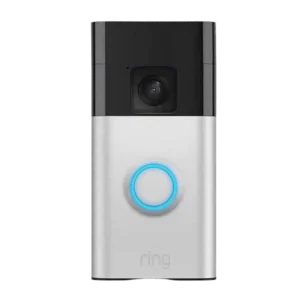
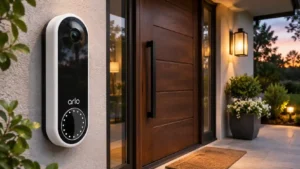
Ring Video Doorbell Battery
Where It Has the Edge
No clear scored advantage over the other product.

Scorata scores summarize analyzed review evidence on a 1–5 scale; they are not laboratory measurements or a simple average of customer star ratings. Feature scores summarize the reviews covering that feature. The overall score averages feature scores within each review, then combines review averages. When both expert and customer evidence are available, those two groups receive equal weight. Products can have different review coverage, so small score gaps do not establish a winner.
Recommendations prioritize important features for the category, with a score of at least 3.5, a gap of at least 0.25 points and at least two supporting reviews per product. Features with widely varying scores or broad connectivity contexts are excluded from recommendations. These safeguards do not establish statistical significance.
Quick verdict
The available evidence supports the recommendation below, but does not establish an overall winner. Check the remaining features against your priorities.
There is not enough comparable review evidence to recommend Ring Video Doorbell Battery over the other product.
Choose Arlo Essential Video Doorbell for Field of view and framing.
No clear scored advantage over the other product.
Scores are out of 5. Missing scores mean missing review evidence, not a missing feature.
Upgrade value was weak from a Plus-owner perspective because the new model lost removable battery and faceplate flexibility.
Battery power adds a meaningful installation advantage over older wired Arlo doorbells. A newer higher-resolution generation gives upgraders another option.
General reliability was split between a highly positive T3 experience and TechGearLab's more restrained 'gets the job done' conclusion.
The core setup performs well for many homes, yet failed live-view loads, dropped connections and unexpected changes undermine confidence for others.
Price/value was often praised at the entry price, though that value is reduced for buyers who need paid Ring features.
Strong camera coverage and smart detection can justify the purchase, especially on sale. High list prices, recurring storage fees and optional accessories make value more debatable.
Ongoing cost was a repeated concern because useful recording and smart features depend on recurring Ring plan fees.
A subscription and optional indoor chime or spare battery raise the ongoing cost beyond the hardware price. Bundled features improve utility but reduce budget appeal.
Installation was usually a standout strength, described as quick, beginner-friendly, or app-guided, though replacing older mounts could add hassle.
Mounting is generally quick, especially without wiring, and the included angled plate helps positioning. Drilling and a bulky housing can complicate some door frames.
Lag evidence was positive where reviewed, with PCMag reporting instant motion and doorbell notifications.
Doorbell calls and live view sometimes arrive within seconds, but other tests reveal several seconds of delay or painfully slow camera loading. Speed depends on the setup and connection.
Base and alarm integration was praised in the automation review, especially Ring alarm mode behavior.
The doorbell can connect to Wi-Fi without a hub, simplifying first use. Local recording and some older Arlo base-station pairings have caused frustration.
Tamper security was criticized because the newer release mechanism seemed easier to unlock.
A recessed release and tamper features deter casual interference, but the mounting latch is not viewed as theft-proof by everyone.
Weather tolerance evidence was mixed: one review praised reliability across weather, while another warned cold temperatures can significantly cut battery life.
Weather-sealed outdoor construction is intended for wide temperature swings and receives favorable remarks for exposed installations.
Night vision was polarizing: some reviewers liked color night vision, while others found it washed out, weak in dark scenes, or an Achilles heel.
Night vision often delivers usable faces and doorstep detail in near-darkness. A few tests find softer details and glowing outlines compared with competitors.
Motion detection was generally effective, with instant alerts and useful smart filtering, though testing varied by environment.
Motion sensing can catch doorstep activity promptly, but crowded corridors and moving leaves sometimes cause excessive triggers or occasional missed events.
The wide head-to-toe field of view was usually praised for coverage, but some reviewers noted placement limits, distortion, or missed space near the door.
The 1:1 frame and broad viewing angle make faces and parcels easier to see together. Very close packages can still land in a blind spot beneath the doorbell.
Package monitoring was useful where available, but reviewers also emphasized that package alerts are subscription-tied.
The tall square view and package-recognition alerts are especially useful for deliveries. Depending on installation height, parcels immediately below the camera can still disappear from view.
Person/object detection was useful when available and performed well in one test, but subscription gating reduced its value for non-subscribers.
Person, animal and parcel recognition is a standout when accurate, reducing generic motion alerts. Accuracy is not universal, particularly with unusual objects or nearby activity.
Automation flexibility was a strength in the automation review, especially custom routines and linked-device behaviors.
SmartThings, IFTTT, routines, schedules and smart-light connections add possibilities, but selective control over speakers and incoming call behavior can be limited.
The included kit drew mixed evidence: basic tools and hardware were appreciated, but missing wedges, angle mounts, or extras frustrated some reviewers.
The kit generally provides mounting screws, an angled plate, wiring aids and a charging cable. The absence of a dedicated indoor chime or tools disappoints some buyers.
Privacy controls were reviewed positively through privacy zones and data-protection-oriented masking.
Two-factor authentication, device-login approval and encrypted storage offer useful safeguards for controlling who can access the video feed.
Recording drew mixed evidence: paywalls frustrated reviewers, but linked-device recording was useful within Ring's ecosystem.
Stored clips are convenient when the paid recording service is active, but a few tests found short, incomplete or missing event captures.
Personalization was useful where reviewed, including motion sensitivity adjustments and mode-specific smart replies.
A broad range of settings lets you refine video, motion and notification behavior. Fixed call workflows and limited ringtone or message options can get in the way.
Video detail drew mixed evidence: several reviewers found the 1440p image solid or impressive, while TechGearLab reported unclear, pixelated footage.
Video is often crisp, with HDR and enough detail to recognize visitors. Some side-by-side tests find darker colors, softer edges or fuzzier faces than competitors.
Quick Replies were tested positively by PCMag and worked as intended.
Prepared visitor responses are handy when working, traveling or handling deliveries. Options are limited in some software versions, and one test had trouble recording visitor messages.
AI-related value was supported mainly through Ring's Smart Video Search, which the automation review called a great feature.
Cloud-based AI classification can identify people, vehicles, animals, and parcels with impressive accuracy, although some misidentifications and the paid-plan requirement limit the appeal.
Subscription requirements were the most consistent negative theme, with reviewers objecting to paywalled recordings, smart alerts, and cloud history.
The paid plan unlocks cloud clips, custom zones and smart identification, and some consider the modest fee worthwhile. Others dislike how heavily basic security usefulness depends on subscribing.
Zones and activity areas were praised for detailed adjustment, package zones, and flexible motion-zone setup.
Drawing zones can cut unwanted street and neighbor alerts. Rectangular boundaries and less intuitive settings menus can make fine-tuning frustrating.
Lens distortion was a clear weakness in TechGearLab's testing, especially near image corners.
The extremely broad lens gives welcome coverage but sometimes bends the edges with visible fish-eye distortion.
Peace of mind was supported by one review that emphasized staying connected and secure at home or away.
Remote doorstep visibility, siren options and account safeguards help people feel more comfortable leaving their home unattended.
Do-not-disturb/snooze controls were useful, with options extending up to 12 hours.
Silent mode, geofencing and scheduled arming can reduce disruptions at bedtime or when home. Some call-routing and speaker settings remain stubbornly inflexible.
Security ecosystem integration was strongly praised when using other Ring products.
The doorbell is a natural addition for households already using Arlo cameras, although support for older hubs and local storage is not consistent.
System completeness was praised in T3's review as offering nearly everything expected from this type of doorbell.
Motion alerts, visitor calls, smart detection and siren make it a capable front-door system, but paid features and a separate indoor chime may be needed to complete the experience.
Power options were flexible, with battery, hardwire, and existing doorbell support, though trickle charging may not prevent drain in heavy use.
The wire-free model can run on its rechargeable battery or existing doorbell wiring. This flexibility makes it attractive for entrances without a suitable powered doorbell.
Recommendations were generally positive for new Ring/Alexa or budget buyers, but TechGearLab recommended other cameras for video quality.
Several testers recommend this as a capable doorbell with a strong view and rich features. Reservations center on subscriptions, latency and varying hardware polish.
Chime support was useful but context-dependent: one reviewer disliked the extra cost, while others found Ring chime options helpful or working properly.
Existing mechanical chimes and smart speakers can work well, but battery-only households may need to buy an Arlo Chime separately for dependable indoor ringing.
Storage was a major weakness because reviewers repeatedly noted cloud storage and recorded video access require payment.
Lack of free clip history or direct onboard storage is a recurring disappointment. Some configurations support hub storage, but accessing and saving events may require payment.
Color options were limited by the fixed cover/faceplate design, making color choice more consequential.
Black and white finishes help match different entries, though there are fewer decorative faceplate choices than some rivals.
Sharing access appeared easy in the app because adding another user only required an email address.
Giving trusted family members or housemates access through the app is straightforward, letting more than one person receive door activity.
The form factor was praised for being slimmer than higher-end removable-battery models.
The battery enclosure adds noticeable depth compared with slim wired models. It may protrude awkwardly at narrow doors despite the tidy styling.
Design aesthetics were praised for tidy looks, slimmer construction, and durable-feeling styling.
Many like the simple rounded shape and understated black-and-white finish. Other assessments find the plastic casing too cheap-looking for the asking price.
Video feed stability was good in one review, while another warned Wi-Fi limitations and network congestion can create problems.
A strong, stable 2.4GHz signal is important. Weak coverage can disrupt connection and drain the battery faster, and pairing may be awkward on dual-band routers.
Notifications were one of the strongest areas, repeatedly described as instant, reliable, timely, or convenient, with one caveat about potential annoyance.
Smart alerts can be fast, descriptive and helpful, but reviewers also report repeated motion notifications, forced phone-call ringing, and occasional long delays.
The app and software were usually praised as clear, intuitive, and easy to navigate, though one Blink user disliked adding another app.
The app offers extensive camera controls and generally straightforward navigation. A few owners hit awkward menus, firmware-induced behavior changes, or live-feed failures.
Physical controls and indicators were praised for the button pressure and easier quick-release charging mechanism.
The illuminated pushbutton is usually easy to locate and press, although a few people find the lighting subtle or insufficient as a visitor cue.
Phone-call style integration was useful, but one reviewer noted the feature sat behind a higher Ring plan tier.
Incoming doorbell calls make it possible to speak with guests from a phone, often very naturally. The mandatory call style and extra step to open video annoy some owners.
Smart-home integration is strongest with Alexa and Ring devices, but weaker overall because reviewers criticized missing Google Assistant and HomeKit support.
Alexa, Google, SmartThings and IFTTT integrations offer useful smart-display and automation options. HomeKit gaps and occasional smart-display quirks are important limits.
Battery and charging drew mixed reactions: reviewers liked USB-C, efficiency, and easy detachment, but disliked the non-removable battery and recharge interruptions.
A replaceable rechargeable battery allows flexible placement and backup swaps, but real-world endurance ranges from months to just weeks under heavy traffic. Charging can temporarily leave the doorway unprotected.
Audio was positively reviewed in the available tests, with reviewers impressed by quality or able to understand visitors clearly.
Two-way conversation is often clear and practical for deliveries. Others encounter choppy speech, muted microphones, low recorded audio, or noticeable delays.
Audible notifications can be inconsistent: some find the doorbell or smart-speaker cue too quiet, while others say the speaker volume is overly aggressive.
Community features were divisive: one reviewer found them a nuisance, while another highlighted lost-pet usefulness.
Faceplate and accessory evidence was negative because reviewers noted older faceplates or covers were not interchangeable.
Illustrated in-app steps and mounting guidance make setup approachable, although a few network-band requirements could have been clearer.
Battery operation lacks the useful pre-event recording available on some wired alternatives, increasing the chance of missing how an incident began.
The built-in siren can be piercing enough to attract attention and discourage visitors, though its reach and perceived loudness vary.
Saved clips can be downloaded and passed along through the app with a plan, but free users cannot reliably save or share recorded incidents.
Customer service disappointed when persistent notifications or hub-connection issues needed attention, with unhelpful answers and missed callbacks.
QR-code pairing and guided app setup are usually quick. Some people encounter finicky 2.4GHz pairing or smart-speaker discovery.
Lens maintenance evidence was positive in one review because the smaller exposed area was considered less scratch-prone.
Voice controls and smart-display viewing can make answering the door more convenient, although some Alexa and Google connections need troubleshooting.
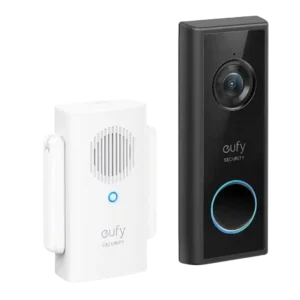
Choose the Eufy C210 if you want a no-fee, battery-friendly doorbell with local storage and good 1080p video. Skip it if you need hardwired charging, HomeKit, or consistently instant motion...
Pros: Installation and Mounting, Video resolution and detail
Cons: Power Options and Compatibility
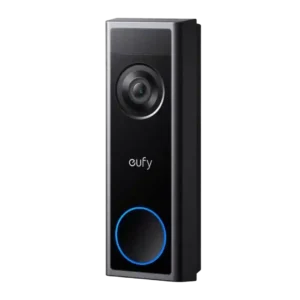
Good if you want an easy, no-fee doorbell with wired/battery power, local storage, and solid 2K coverage. Skip it if you need premium video bitrates, effortless chime coexistence, or built-in...
Pros: Installation and Mounting, App, software and firmware
Cons: Chime
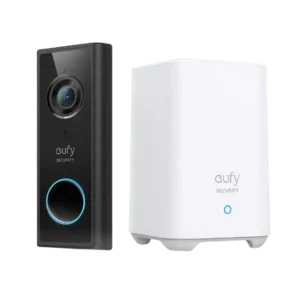
Good if you want sharp video, local storage and no required subscription. Skip it if you need 24/7 recording, flawless AI alerts, broad smart-home support or true six-month battery life.
Pros: Video resolution and detail, Recommendation for new buyers
Cons: Recording, Battery and Charging
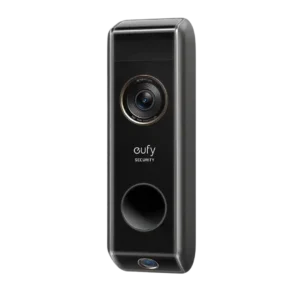
Choose the Eufy S330 if package monitoring, local storage, and no subscription matter most. Skip it if you need slim hardware, HomeKit, consistently fast live view, or stronger night vision.
Pros: Delivery package monitoring, Video resolution and detail
Cons: lag), Smart-home integration (Alexa, Google, Siri, HomeKit, Matter, Thread)