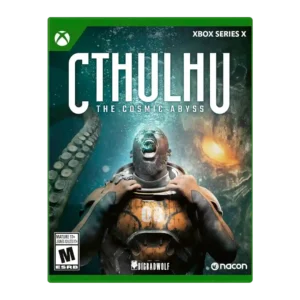
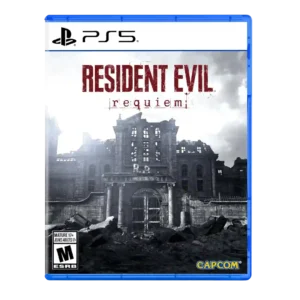
Cthulhu: The Cosmic Abyss
Where It Has the Edge
No clear scored advantage over the other product.

Scorata scores summarize analyzed review evidence on a 1–5 scale; they are not laboratory measurements or a simple average of customer star ratings. Feature scores summarize the reviews covering that feature. The overall score averages feature scores within each review, then combines review averages. When both expert and customer evidence are available, those two groups receive equal weight. Products can have different review coverage, so small score gaps do not establish a winner.
Recommendations prioritize important features for the category, with a score of at least 3.5, a gap of at least 0.25 points and at least two supporting reviews per product. Features with widely varying scores or broad connectivity contexts are excluded from recommendations. These safeguards do not establish statistical significance.
Quick verdict
The available evidence supports the recommendation below, but does not establish an overall winner. Check the remaining features against your priorities.
There is not enough comparable review evidence to recommend Cthulhu: The Cosmic Abyss over the other product.
Choose Resident Evil Requiem for controls responsiveness and polish.
No clear scored advantage over the other product.
Scores are out of 5. Missing scores mean missing review evidence, not a missing feature.
The only scored enemy-variety evidence was strongly negative, emphasizing the absence of monsters in areas that built expectations for them.
Enemy variety was praised through zombies with different retained behaviors and personalities.
Crash stability was the most consistent technical complaint, with many reviewers reporting crashes, instability, or progress loss.
Crash stability was praised in a performance review that reported no hard crashes.
The only animation-quality score was negative, tied to a late-game model glitch that disrupted the scene.
Animation quality received positive evidence through praise for Leon’s reload animations.
Facial animation evidence was mixed-to-negative overall: one reviewer liked motion capture, but others found faces uncanny or distracting.
Facial animations were specifically praised as increasingly impressive later in the game.
The only scored combat evidence was negative, describing the limited combat as clunky and weighty rather than a major strength.
Combat drew broad praise for weight, weapon handling, Leon’s action toolkit, and entertaining encounters, though one review noted some harassment-style friction.
Polish scored low overall because multiple reviewers cited rough edges, technical issues, bugs, and blockers that hurt the experience.
Polish was praised in reviews that saw Requiem as a polished, confident fusion of old and new Resident Evil.
Art direction scored mixed-to-low where reviewers criticized lazy-feeling lighting or wished the visual art matched the mechanics’ ambition.
Art direction was praised for grotesque beauty and an effective old/new visual mix.
Handheld suitability was limited by small text, even though the reviewer considered the game playable on Steam Deck.
Handheld suitability was praised because the Switch 2 version looked and ran well both docked and handheld.
Bugs were a recurring concern, ranging from minor issues to progress-blocking or stability problems, though one review noted final-build fixes.
Bug frequency was praised by one reviewer who reported no bugs or wall clips.
Energy and analysis resources were mostly criticized as superfluous or pointless because reviewers often scanned everything anyway.
Resource balance was praised for forcing tactical decisions about injectors, ammo, and room-clearing.
Stealth was scored only where a reviewer found late-game stealth and scanning unreliable rather than tense.
Stealth was mostly praised for making Grace’s routes tense and tactical, though one reviewer found stealth options limited.
Horror tension was divisive: some reviewers praised restraint and dread, while others felt the game lacked danger, scares, or true cosmic fear.
Horror tension was broadly praised, especially Grace’s early sections, though some reviews found the scares frontloaded or less intense than past entries.
Frame rate evidence was highly variable, from severe sonar-related drops to one strong PC report of stable performance.
Frame rate stability was praised on Switch 2 for a mostly consistent 60 fps with minor dips.
Writing evidence was split between praise for dialogue and concepts and criticism that exposition or lore delivery sometimes fell short.
Writing quality drew strong praise from reviewers who felt Requiem delivered some of the series’ better character work.
One review praised the visual package as eye-catching, supporting a positive but narrow score.
Visual effects quality was praised through the game’s extreme gore and violent presentation.
Atmosphere was one of the clearest strengths, with many reviews praising dread, isolation, sinister mood, and unsettling underwater spaces.
Atmosphere was a major strength, with tense staging, lighting, audio, and Switch 2 presentation preserving the mood.
Originality was usually praised for the future setting and fresh investigation ideas, but one negative review called the overall result wasted potential.
Originality was mixed: reviewers liked the structure and perspective split, but several felt the game was safe, familiar, or too referential.
Pacing was context-dependent: meditative, slow-burn discovery worked for some, but trial-and-error navigation dragged for others.
Pacing was the most discussed tradeoff: many praised the action-horror balance, while others found the character split lopsided or jarring.
Fun factor was positive for puzzle and detective fans, though one review framed enjoyment as conditional on patience and setting preference.
Fun factor was very strong overall, with reviewers repeatedly describing the game as exciting, entertaining, and highly enjoyable.
One review praised the cast connection and personal battles, supporting a positive but limited score for character development.
Character development evidence centered on Grace’s growth and consistency, with reviewers finding her arc effective.
Difficulty was one of the biggest caveats, with reviewers calling puzzles challenging and sometimes rewarding but also deflating, opaque, or obnoxiously hidden.
Difficulty balance was mixed: some praised flexible challenge, while others felt the game had too much firepower or lacked a hardcore mode.
Environmental detail was praised for dense, detailed, non-barren spaces that connected players to the investigation.
Environmental detail was praised for corridors and spaces that felt time-worn and secretive.
One reviewer strongly praised the game for feeling like a Lovecraft story experienced first-hand.
Immersion was praised through Grace’s vulnerability and how strongly it affected player behavior.
Load times were praised in both scored references for being almost instantaneous when the game ran well.
Load times received strong praise for being nearly nonexistent.
One reviewer praised the refreshing lack of hand-holding, treating it as a positive for detective-game players.
Onboarding was praised for easing players into story and lore without demanding deep series knowledge immediately.
Upgrades split reviewers: one liked the exploration incentive, while others felt abilities added little or were not especially useful.
The upgrade system received positive evidence for its weapon-upgrade structure and replay incentive.
Reviewers broadly praised the investigation systems, especially sonar and deduction, though a few found the mechanics clunky or occasionally stumbling.
Gameplay mechanics were usually praised for combining survival horror and action cleanly, with Grace’s sections singled out as especially strong.
Visuals were a major strength, with repeated praise for gorgeous, impressive, realistic, and striking underwater environments.
Graphics quality was consistently praised across platforms, from PS5 presentation to Switch 2 fidelity.
Exploration and investigation were usually praised for rewarding thorough searching, though one review stressed the lack of guidance.
Exploration and backtracking were praised when the layouts made revisiting spaces enjoyable rather than tedious.
Story reactions were mixed: some praised the premise and construction, while others found it underdeveloped, familiar, or unengaging.
Narrative quality was polarized, with some calling the story strong or captivating and others finding it disappointing, messy, or thin.
Positive evidence highlighted fresh chapter tricks and varied locations that helped the game avoid repeating itself.
Content variety was praised for breadth, though some wanted the smaller experiences expanded further.
One review praised the lore as well-written and meaningful to the station’s backstory and investigation.
Lore depth was praised for giving long-time fans a lot to sift through.
Lovecraft and Cthulhu faithfulness scored strongly, with reviewers praising source-material respect, mythos references, and effective adaptation.
Faithfulness to franchise was consistently praised as a love letter or culmination that honors Resident Evil’s history.
Difficulty and assist options were consistently praised as helpful, granular, and customizable without fully removing the investigative challenge.
One reviewer praised the way difficulty and accessibility were balanced rather than treating options as a pure checklist.
One review strongly praised the sci-fi Lovecraft blend, suggesting the game made that approach feel newly appealing.
Innovation drew praise where reviewers saw Requiem as a step forward or ambitious new baseline for the franchise.
The corruption and evolution system was praised as fun mechanical depth that supports exploration without overwhelming the puzzle focus.
Leon’s progression system was viewed positively as a fairly fleshed-out way to build out his arsenal.
The only scored navigation evidence was negative, focused on the lack of an in-game map and feeling lost.
Map and navigation design was praised as a useful tool for tracking rooms and missed resources.
Level design ranged from intuitive and propulsive in positive reviews to overly restrictive or lacking interpretive room in a negative one.
Level design was a major strength, especially the care center’s loops, agency, and interconnected mansion-like structure.
Sound design was mostly praised for eerie soundscapes and strong audio, though one review felt ambient menace was underused.
Sound design was repeatedly praised as a major driver of fear and atmosphere.
Puzzle reactions were the core split: many reviewers loved the demanding detective structure, while others found solutions obtuse, fiddly, or punishingly unclear.
Puzzle design landed unevenly: one review liked the body-part riddles, while another said puzzles lacked focus overall.
One review strongly praised how the game explains otherworldly concepts without stopping the gameplay.
World-building was praised for making the setting feel grotesquely alive.
Control feedback was a repeated weakness, with reviewers citing annoying object manipulation, input issues, weak precision, and awkward keybindings.
Controls were praised as responsive and purpose-built, with reviewers saying characters did what they expected and combat balanced heft with responsiveness.
Noah divided reviewers, with some finding him underdeveloped or uninteresting and one praising how his reactions connected with the player.
Protagonist appeal was strong where reviewers called Grace the standout lead.
Voice acting was generally positive for Noah and Key, but several reviews noted uneven or weak supporting performances.
Voice acting was mostly praised, especially Grace’s performance, but one review found her delivery manufactured.
Value was mixed: one reviewer praised it as a budget release, while others recommended waiting, buying on sale, or checking stability first.
Value for money received direct positive evidence from a reviewer who called the game super worth it.
Replay value was generally strong because of multiple endings, corruption paths, and alternate puzzle solutions, though one reviewer found some endings too similar.
Replay value was mixed: several reviewers liked unlocks and repeat runs, while others lamented thin post-game offerings or weaker second playthroughs.
Performance optimization was uneven, with several reviews citing slowdowns, memory-leak behavior, lag, or disappointing performance, while one found it mostly good.
Performance optimization was generally strong, with multiple reviewers calling performance solid or flawless.
The soundtrack was consistently a highlight, described as excellent, creepy, tension-building, and even magnificent.
Soundtrack quality was praised for tracks that complemented Leon’s action-heavy sequences.
Enemy behavior was often praised as eerie and strategic, though one review found a later stalker overused.
Aiming evidence was mixed: Grace’s shaky aim reinforced vulnerability, while Switch 2 gyro aiming was criticized as poor for horizontal aim.
Camera behavior was praised for making first- and third-person play feel effective, though the choice also shapes the experience heavily.
Checkpointing drew criticism from one reviewer who reported being set back 30 minutes after dying.
Key was often a highlight, praised as a strong companion and useful investigation tool, though one reviewer felt her hints could become a crutch.
The evidence frames the game as investigation-first: rewarding for players who like clue work, but obtuse for those who want smoother progression.
Crafting was generally seen as strategic and interesting, especially the blood/injector system, though one reviewer found it weird.
Dialogue quality was mixed between enjoyable deadpan jokes and criticism that Leon could sound corny or caricatured.
The motorcycle action sequence was praised as one of the most fun moments in the series.
Emotional impact was a clear strength for reviewers moved by Grace, Leon, and the story’s legacy themes.
Endgame content was a repeated concern, especially the lack of Mercenaries or similarly meaningful side content.
The early learning curve was described as overwhelming or hurdle-like, though some reviewers accepted that complexity as part of the game’s appeal.
Microtransaction impact was praised indirectly through the absence of greedy monetization practices.
Monetization fairness was praised because the game was described as free of greedy practices.
Movement drew criticism around water traversal, swimming disorientation, and heavy character handling in sections that demanded precision.
One review valued the freeform puzzle-story influence provided by alternate paths, even within an otherwise linear adventure.
The lone scored evidence criticized inadequate guidance, especially in the trickier puzzle flow.
Weapon balance was praised because different weapons had clear uses and opportunities to shine.
The strongest evidence praised how the game encourages touching, reading, scanning, and physically engaging with its puzzle spaces.
Boss design split reviewers sharply, from excellent and varied encounters to weak, forgettable, or underwhelming boss fights.
UI evidence was split between praise for The Vault and clean interface and complaints about text size or clumsy controls.
Menu usability was mixed, with some finding the mental map useful but several calling it fiddly, finicky, cluttered, or disorganized.
Platform-specific support was criticized on Switch 2 for not meaningfully using mouse, touchscreen, or useful gyro features.
Autosaves were a repeated weakness, with reviewers citing unclear save timing, progress loss, and unreliable checkpoint behavior.

Best for fluid traversal, rewarding exploration, striking art, and forgiving quality-of-life features. Skip it if you want deep combat, radical genre innovation, or consistently demanding bosses.
Pros: difficulty balance, boss design
Cons: innovation, sandbox freedom

Best for superb combat, inventive builds, and richly voiced characters. Skip it if repeated runs, resource gathering, or visually busy battles outweigh the appeal of steady progress.
Pros: overall quality, combat system
Cons: pacing, grind level

Good if you want a beautiful, demanding survival sandbox built around exploration, building, progression, and memorable co-op. Skip it if long resource runs, harsh death recovery, and deliberate pacing sound...
Pros: town-building system, exploration quality
Cons: grind level, fast travel convenience

Leonida is a breathtakingly alive crime sandbox with memorable protagonists, spectacular heists, and extraordinary detail. The tradeoff is a 30 fps ceiling, occasional control awkwardness, and some progression friction.
Pros: immersion, graphics quality
Cons: grind level, controls responsiveness