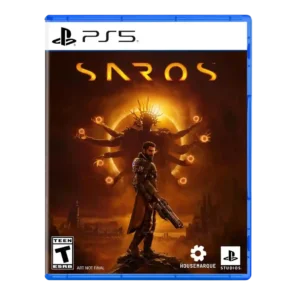
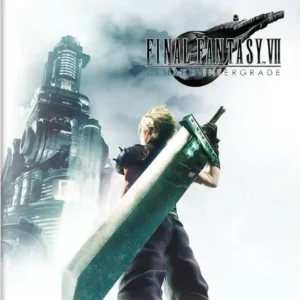
Saros
Where It Has the Edge
- content variety is 4.5 vs 2.5. Several reviews found the game rich in sections, weapons, collectibles, and sights, though the content variety was usually...

Scorata scores summarize analyzed review evidence on a 1–5 scale; they are not laboratory measurements or a simple average of customer star ratings. Feature scores summarize the reviews covering that feature. The overall score averages feature scores within each review, then combines review averages. When both expert and customer evidence are available, those two groups receive equal weight. Products can have different review coverage, so small score gaps do not establish a winner.
Recommendations prioritize important features for the category, with a score of at least 3.5, a gap of at least 0.25 points and at least two supporting reviews per product. Features with widely varying scores or broad connectivity contexts are excluded from recommendations. These safeguards do not establish statistical significance.
Quick verdict
The review evidence points to a tradeoff: content variety versus writing quality and boss design. Choose according to which strengths matter more to you; the overall score alone does not settle that choice.
Choose Saros for content variety.
Choose Final Fantasy VII Remake Intergrade for writing quality and boss design.
Scores are out of 5. Missing scores mean missing review evidence, not a missing feature.
Camera controls were specifically praised as quick enough for combat without becoming disorienting.
The camera is usually serviceable but can become frustrating in crowded battles.
Grind and repetition drew mixed-to-negative comments, especially around repeated boss attempts and artifact droughts.
Optional boosts reduce grinding, and several reviewers say the base game rarely demands it.
Aiming was generally considered forgiving and readable thanks to auto-aim and tracking, though some no-auto-aim weapons were harder to master.
Barret’s ranged role is useful, but one reviewer finds his aiming feedback stilted.
Several reviews found the game rich in sections, weapons, collectibles, and sights, though the content variety was usually discussed through exploration and spectacle.
Story chapters, side quests, minigames, combat challenges, and Materia experimentation add variety, but some reviewers want more.
Reviewers praised Saros for broad accessibility and difficulty-tuning options, including modifiers, visual recoloring, remapping, and ways to soften or intensify challenge.
Optional progression boosts, Classic mode, and difficulty settings help players bypass grind, though some reviewers find the boosts overpowered.
The cast received mixed reactions, with some reviews praising performances while others wanted more depth beyond Arjun.
The playable cast feels distinct and memorable, while supporting characters gain welcome personality and screen time.
Exploration was praised for hidden paths, secrets, and optional areas that reward revisiting biomes.
The city rewards wandering and discovery, though its linear structure and limited interaction disappoint open-world-minded players.
Writing quality was mixed, with praise for logs and media-literate storytelling but criticism of hollow or unclear themes.
Writing is praised for warmth, humor, and character depth, though some reviewers dislike its excesses and convoluted additions.
Dialogue quality was mixed to weak, with several reviewers noting stilted conversations, unnatural backlog delivery, or long quiet stretches.
Dialogue and banter often land with humor and personality, though some lines are called cringe-worthy or overly cheesy.
Environmental detail was a frequent highlight, with reviewers praising Carcosa’s biomes, architecture, and alien spaces.
Midgar’s slums, markets, reactors, and skyline are densely detailed, with occasional soft textures or pop-in.
Pacing drew mixed responses, from tighter run pacing to complaints that story, repetition, or traversal could drag.
Reviewers enjoy the major beats but repeatedly flag slow walks, padded chapters, and occasional pacing whiplash.
Difficulty balance split reviewers: many called it tough but fair and customizable, while some felt ganks, repetition, or modifiers could undermine balance.
Normal difficulty is usually fair and engaging, while Hard mode offers a sharper post-game challenge.
Narrative quality was the most mixed major attribute, ranging from gripping and coherent to underdeveloped, opaque, or overambitious.
The story is praised for emotional scale and character focus, though meta twists and the unresolved trilogy structure are divisive.
The upgrade system was praised for making attempts feel worthwhile and improving approachability.
Weapon upgrades and Materia builds encourage experimentation and weakness-based planning.
Reviewers repeatedly praised the unnerving, dread-soaked atmosphere, even when they disagreed about the story itself.
Midgar feels oppressive, beautiful, and alive, with lighting and environmental detail reinforcing its mood.
Movement feel was praised as smooth, nimble, precise, and joyful across several reviews.
Movement and combat flow feel precise and responsive in handheld play.
DualSense haptics and adaptive triggers were a standout, repeatedly praised as tactile, innovative, and deeply integrated.
One reviewer appreciates HD Rumble 2 for adding subtle feedback without distraction.
Frame rate was generally strong, with most reviewers reporting near-locked or rock-solid 60fps and only occasional dips.
The locked 30fps is usually stable and responsive, with occasional cutscene dips; some reviewers still want 40 or 60fps.
Handheld or remote play suitability had limited evidence, but one reviewer said it looked and played beautifully on PlayStation Portal.
Portability is the defining strength: reviewers call handheld play viable, convenient, or the best portable way to play.
Load times had limited but strong evidence, with Digital Foundry praising nearly instant transitions.
Switch 2 load times are repeatedly praised as fast or nearly absent.
Arjun’s arc drew praise where reviewers felt his development became darker, more complex, and captivating.
Expanded scenes give Cloud, Aerith, Tifa, Barret, Jessie, Biggs, and Wedge more depth; one reviewer finds the main cast less likable.
Fun factor was very high, with reviewers repeatedly describing the act of playing, replaying, and mastering Saros as joyful or addictive.
Reviewers repeatedly describe the game as fun, engrossing, and hard to put down, especially in combat and replay sessions.
Combat was the strongest consensus point, described as thrilling, precise, tactile, and among Housemarque’s best work.
The hybrid real-time and ATB system is a consensus strength: strategic, flashy, and rewarding, though aerial combat and some controls draw criticism.
Polish was praised frequently, with reviewers calling Saros smooth, refined, and consistently excellent.
The Switch 2 release is widely characterized as polished, smooth, and unusually well finished.
Graphics quality was praised across reviews for visual flair, PS5 showcase value, and striking Unreal Engine 5 presentation.
The Switch 2 version is widely praised for lighting, models, and cinematic presentation, with softer textures and hair artifacts as tradeoffs.
Level design was strongly praised for handcrafted chunks, biome structure, combat spaces, and a balance between freshness and mastery.
Linear chapters and dungeons are often polished but can feel corridor-like, padded, or less interesting than the larger sequel.
Bosses were widely admired for spectacle, challenge, and memorability, though a few reviewers found some fights long or uneven.
Bosses are a recurring highlight, combining spectacle with demanding patterns and memorable multi-stage fights.
World-building was praised through Carcosa’s mysteries, logs, lore, and thematic environmental storytelling.
The expanded Midgar turns a few original hours into a dense, memorable city shaped by class, industry, and resistance.
Menu usability had limited negative evidence, focused on hidden information and unclear equipment-screen navigation.
Menus and command navigation are generally clear and quick, with combat options easy to reach once learned.
Voice acting was widely praised, especially Rahul Kohli’s performance, with the broader cast also receiving positive notes.
The main cast is praised for expressive performances, though some reviewers note uneven delivery or cheesy NPC work.
Controls were heavily praised for responsiveness, tactile feel, and precise movement/shooting, with only rare complaints about input conflicts.
Controls are generally responsive and combat inputs feel clean, though Joy-Con layouts and crowded fights can take adjustment.
Value for money had limited but explicit support from one reviewer who said they would pay full price.
At $40, reviewers call the package exceptional value for its length and included Intermission; storage and key-card costs temper that praise.
Replay value was strong, with reviewers saying they wanted to dive back in or keep running even after credits.
Replay options, Hard mode, fast-forwarding, and streamlined progression make revisiting attractive.
The soundtrack was praised for oppressive, unnerving, and complex music that supports Carcosa’s tone.
The reimagined score is a consistent strength, balancing orchestral emotion, industrial texture, and memorable battle themes.
Performance optimization was praised overall, especially on PS5/PS5 Pro, with only minor dips or loading-related hitches noted.
The port is treated as a technical showcase, preserving a large AAA experience with surprisingly few compromises.
Animation comments were mostly negative, focused on stiff dialogue animation and odd or weak face animation outside stronger cinematic moments.
Art direction was a clear strength, with reviewers highlighting Carcosa’s strong, alien visual identity and memorable environmental design.
The port is generally stable, although one review reports no bugs while another source notes a clipping incident.
Saros’ checkpoint-like structure and biome restart options were praised for reducing repetition and respecting time.
The core loop was usually seen as compelling and satisfying, though Polygon felt progression systems weakened the roguelike loop.
Resource balance drew limited but mixed evidence, with one review noting balance concerns and another criticizing excess currency gains.
Emotional impact was mixed, with some reviewers admiring ideas but others saying the narrative and characters did not fully move them.
Endgame content was a limited concern, with one reviewer specifically wishing for a dedicated post-game activity.
Enemy variety was praised for diverse, escalating, and biome-changing threats that keep combat fresh.
Facial animations were a repeated weakness, especially outside cutscenes where faces could not match the vocal performances.
Reviewers generally felt Saros honors Housemarque and Returnal’s lineage while refining or expanding the studio’s formula.
Fast travel and biome teleporting were widely praised as major quality-of-life improvements that reduce tedium.
The expanded Midgar arc commonly takes about 30–40 hours, with side content and completionist runs stretching much longer.
Gameplay mechanics, especially the shield, parry, eclipse, and modifier systems, were praised, though one review felt the systems could overprotect players.
Horror tension was supported through praise for dread, anxiety, cosmic horror, and the unsettling eclipse-driven world.
HUD/readability comments were positive but limited, emphasizing that the intense spectacle remained coherent and not visually confusing.
Immersion was praised through tactile feedback, 3D audio, and audiovisual design that pulled reviewers into Carcosa.
Innovation centered on the shield, bullet-as-resource design, haptic implementation, and a more flexible challenge structure.
The learning curve was approachable for some but still initially demanding, with trial-and-error teaching and a tough early adjustment.
Loot drew mixed feedback: some liked risky artifacts and weapon discovery, while others disliked artifact droughts or limited replacement control.
Lore depth was praised where reviewers enjoyed logs, mysteries, and hidden material that encouraged deeper digging.
Onboarding was mixed: some reviewers said mechanics ramped up well, while one felt the many systems were poorly communicated.
Originality was mixed, with praise for bold changes and criticism that Saros repeats Returnal-like beats with minimal variation.
The physical release is a Game Key Card requiring a large download, which collectors describe as disappointing.
Platforming precision had limited but positive evidence around precise jumping, dodging, and reduced geometry snagging.
Progression was usually praised for meaningful permanent upgrades, though one reviewer felt it overemphasized numbers over skill.
Side character depth was a common weakness, with reviewers describing the supporting cast as shallow, disposable, or stock.
Skill-tree depth was mixed, from exhaustive and satisfying to more of a limited trunk than a deep build system.
Tutorial quality had limited but positive evidence, with reviewers noting trial-and-error teaching and encounter design that prepares players for bosses.
Visual effects were a major highlight, especially the particle-heavy combat fireworks and colorful VFX.
Weapon balance was mostly positive for variety and viability, though some weapons or no-autohit variants frustrated reviewers.
World interactivity had limited evidence, mostly around movement-reactive effects and environmental destruction.
The lack of cross-save is a small but real disappointment for players moving between platforms.
Intermission adds a worthwhile Yuffie campaign and extra perspective, but its story is often found shorter and less complete than the main game.
Platform-specific support was praised through PS5 showcase features, Pro upscaling, DualSense use, and 3D audio.
Save/run continuation quality was praised via suspend, leave-and-return, and day-one roguelite quality-of-life comments.
Navigation drew criticism from one reviewer who found objective direction poor despite liking the map.
Optional challenge-space design was praised as brutal but rewarding.
Side quests add character and rewards, though many are viewed as basic fetch work or filler.
Sound design and 3D audio were praised for intensity, dread, positional clarity, and haunting effects.
User interface design had limited mixed evidence, with one reviewer finding it good enough but imperfect.
Protagonist appeal was mixed: several reviewers found Arjun compelling or well-acted, while one found him unpleasant by design.

Best for fluid traversal, rewarding exploration, striking art, and forgiving quality-of-life features. Skip it if you want deep combat, radical genre innovation, or consistently demanding bosses.
Pros: difficulty balance, boss design
Cons: innovation, sandbox freedom

Best for superb combat, inventive builds, and richly voiced characters. Skip it if repeated runs, resource gathering, or visually busy battles outweigh the appeal of steady progress.
Pros: overall quality, combat system
Cons: pacing, grind level

Good if you want a beautiful, demanding survival sandbox built around exploration, building, progression, and memorable co-op. Skip it if long resource runs, harsh death recovery, and deliberate pacing sound...
Pros: town-building system, exploration quality
Cons: grind level, fast travel convenience

Leonida is a breathtakingly alive crime sandbox with memorable protagonists, spectacular heists, and extraordinary detail. The tradeoff is a 30 fps ceiling, occasional control awkwardness, and some progression friction.
Pros: immersion, graphics quality
Cons: grind level, controls responsiveness