Scorata scores summarize analyzed review evidence on a 1–5 scale; they are not laboratory measurements or a simple average of customer star ratings. Feature scores summarize the reviews covering that feature. The overall score averages feature scores within each review, then combines review averages. When both expert and customer evidence are available, those two groups receive equal weight. Products can have different review coverage, so small score gaps do not establish a winner.
Recommendations prioritize important features for the category, with a score of at least 3.5, a gap of at least 0.25 points and at least two supporting reviews per product. Features with widely varying scores or broad connectivity contexts are excluded from recommendations. These safeguards do not establish statistical significance.
Quick verdict
What each product is best for
The review evidence points to a tradeoff: onboarding experience and polish versus soundtrack quality and sound design. Choose according to which strengths matter more to you; the overall score alone does not settle that choice.
Choose Forza Horizon 6 for onboarding experience and polish.
Choose NHL 27 for soundtrack quality and sound design.
Why these recommendations?
Forza Horizon 6
Where It Has the Edge
onboarding experience is 4.3 vs 1.0. Onboarding is considered welcoming, with assisted introductions and early pacing that helps new players understand racing lines and...
polish is 4.4 vs 1.5. Polish is praised through AAA presentation and overall refinement.
value for money is 4.3 vs 1.7. Value for money is positive where reviews cite a worthwhile step up or best-in-class racing value.
NHL 27
Where It Has the Edge
soundtrack quality is 4.8 vs 3.9. Music is one of the most consistently praised elements. Authentic goal songs, arena staples, and hockey-linked tracks fit...
sound design is 5.0 vs 4.3. Arena audio is a standout, with crowd reactions, horns, impacts, and rink sounds delivering a powerful, authentic hockey...
environmental detail is 5.0 vs 4.7. Arena detail is excellent, from real-world landmarks and lighting to ice wear, scratched glass, and team-specific presentation touches.
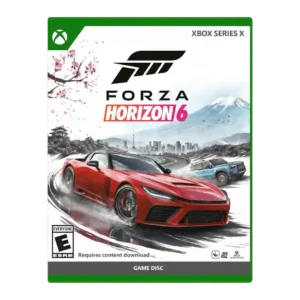
Forza Horizon 64.2 overall score
NHL 272.9 overall score
Compare features
Scores are out of 5. Missing scores mean missing review evidence, not a missing feature.
Scored on both products
Other features
Load times
Forza Horizon 6
4.8
NHL 27
1.0
Details and evidence for load times
Forza Horizon 6
Load times/install flow receive limited but strong praise for launching quickly before full install completion.
NHL 27 is particularly unfriendly to newcomers, with minimal startup guidance and little help bridging the gap from basic skating to real hockey techniques.
Training is one of the weakest parts of the package. The hidden practice rink and sparse hints do little to teach shooting, dekes, or other essential techniques.
Animation quality is a major weak spot outside the best goalie motion. Jerky skater physics, stiff crowds, and collision transitions repeatedly make the game look less polished than its current-gen setting suggests.
Polish is a consistent concern. Unfinished-feeling systems, glitches, sloppy presentation, and visual roughness often distract from otherwise solid hockey.
Monetization is one of the weakest areas. HUT and World of CHEL are repeatedly criticized for letting money buy faster progression or stronger competitive positioning.
Bugs range from minor pre-release roughness to severe replay, cutscene, UI, loading, and visual glitches. Several sources describe presentation problems as frequent enough to undercut the new broadcast focus.
Details and evidence for economy and resource balance
Forza Horizon 6
The economy is forgiving, with credits and cars arriving quickly; reviewers generally prefer generosity, though it may weaken the feeling of earning rewards.
Graphics are a major strength across reviews, with Japan, cars, weather, lighting, and environmental presentation repeatedly described as beautiful or stunning.
Visual quality is sharply mixed. Ice, lighting, and some arena work impress, but face scans, crowds, coaches, and character models are repeatedly described as dated or inconsistent.
Seasonal progression is mixed: a free CHEL pass and quality-of-life changes help, but repeated season-by-season grinding and paid shortcuts reduce enthusiasm.
Content variety is widely positive, covering cars, garages, events, customization, activities, and map variety, with only preview limitations tempering enthusiasm.
There is plenty to do for newcomers, including multiple leagues and familiar modes, but long-time players repeatedly note that many major modes are nearly unchanged.
Progression quality varies by mode: Be a Pro remains enjoyable for some and CHEL gains useful build changes, but repetitive career systems, missing franchise growth, and paid seasonal advancement hold it back.
Most sources see NHL 27 as refinement rather than reinvention. The strongest additions are playbooks, Connected Franchise, and presentation upgrades, but the broader package often feels too close to recent entries.
Skating can feel crisp, deliberate, and natural, but some players dislike the slower pace or inconsistent heaviness. The reduced abuse of old pivot mechanics is generally seen as a realism gain.
The range of control and difficulty choices can make the game adaptable for different skill levels, even though separate newcomer guidance is much weaker.
Arena atmosphere is one of the clearest strengths, with authentic goal songs, lighting, chants, jumbotrons, and team-specific details making NHL rinks feel alive. A few sources still find intros repetitive or generic.
Upgrade and customization systems are useful and sometimes deep, but several reviewers note familiar options, criticism around customization limits, or overwhelming tuning.
The game can still be exciting and satisfying on the ice, especially when skating, passing, and scoring click. Frustrating pacing, controls, and difficulty keep that enjoyment from being universal.
Authentic arenas, music, and broadcast touches can make games feel remarkably immersive, but collision errors, lifeless sequences, and inconsistent presentation can break the illusion quickly.
The underlying hockey remains a strong point for many players, with satisfying goals, physical play, and a generally enjoyable on-ice foundation. Even harsher critics acknowledge flashes of good hockey.
Reviewers describe the mechanics as familiar Horizon/Forza systems with useful switching, mods, and driving tweaks, but not every implementation feels equally strong.
The best mechanical changes improve passing, puck battles, checking, skating penalties, goalie fatigue, and tactical play. Opinions split sharply on whether those refinements are meaningful enough or are undermined by legacy problems.
AI behavior is mixed: some Drivatar implementations feel convincing, while other reviews complain about empty roads, reckless autodrive, inconsistent racing AI, or pack chaos.
Team AI is one of the most divisive upgrades. Some players see smarter positioning, situational pressure, and useful playbook identities, while others find teammates lost, teams too similar, or the advertised tactics barely visible.
Balance changes help curb some spam and improve offense-versus-defense play, but pay-to-win progression and persistent high-percentage exploits can still undermine fair competition.
World of CHEL build tradeoffs are handled well, with taller or heavier characters gaining durability or strength while sacrificing speed or acceleration.
Difficulty balance is one of the weaker areas in older Motorsport reviews, with complaints about inconsistency and frustrating gating despite customization options.
Difficulty tuning is uneven. Higher settings can create rewarding defensive pressure, but several players find goalies too strong or even easier modes unexpectedly punishing.
Full-price value is the biggest consensus problem. Lapsed players may find enough improvements to justify returning, but recent owners are repeatedly advised to wait for a sale or skip the annual upgrade.
Platform-specific support is mixed: Xbox Quick Resume is genuinely useful, while a PS5 create-button conflict can unexpectedly trigger the pause screen.
Connected Franchise is a popular idea but a polarizing implementation. Playing leagues with friends is appealing, yet missing CPU teams, drafts, progression, and long-term depth leave many calling it incomplete.
Sound design is broadly positive for weather, tires, engines, spatial/audio updates, and overall race feedback, with some concern about repeated engine-swap sounds.
The interface can look clean and attractive, and some updates improve lineup handling, but glitches and inconsistent responsiveness keep the UI from feeling fully polished.
Menu performance varies widely by mode and platform. Some players praise much faster, smoother navigation, while others still find HUT and franchise menus slow, clunky, or needlessly cumbersome.
Defensive inputs can feel tighter and more successful, but broader control frustrations remain, especially when passing or other actions do not respond as intended.
Music is one of the most consistently praised elements. Authentic goal songs, arena staples, and hockey-linked tracks fit the sport far better than many previous generic soundtracks.
Performance optimization is praised in previews and requirements analysis, with reviewers highlighting polish, smoothness, and likely strong PC scaling.
The new booth is highly inconsistent. Some like the fresher personalities and situational energy, but repeated lines, flat delivery, bad pronunciations, and mismatched calls are among the most common complaints.
Driving receives broad praise for controller feel, physics, wet-weather realism, and accessibility, but some reviewers call certain handling slow, loose, or oversteer-heavy.
Mission variety is generally strong due to race types, Horizon Rush, map activities, and event diversity, though familiar modes remain part of the package.
World interactivity is mixed: smashable vegetation, traffic, and track objects help, but several reviewers criticize barriers, nonreactive traffic, and lifeless city behavior.
The paid seasonal progression is viewed as poor value because spending can instantly unlock advantages that otherwise take substantial playtime to earn.
The first major update is a positive sign, addressing gameplay, Connected Franchise, HUT, commentary, stability, and quality-of-life complaints raised after launch.
Created-player systems gain some meaningful build tradeoffs and trait choices, but generic creation tools and visual limitations keep customization from feeling uniformly modern.
Details and evidence for map and navigation design
Forza Horizon 6
Map and navigation design are praised for scale, density, GPS clarity, region variety, and highway complexity, with some criticism of traffic/road choices.
World-building is mostly praised for regional identity, Japanese details, and authentic-feeling spaces, though one review says the city can feel soulless.
Several sources feel major features were oversold, especially team AI and Connected Franchise, creating a gap between pre-release promises and the shipped experience.