Scorata scores summarize analyzed review evidence on a 1–5 scale; they are not laboratory measurements or a simple average of customer star ratings. Feature scores summarize the reviews covering that feature. The overall score averages feature scores within each review, then combines review averages. When both expert and customer evidence are available, those two groups receive equal weight. Products can have different review coverage, so small score gaps do not establish a winner.
Recommendations prioritize important features for the category, with a score of at least 3.5, a gap of at least 0.25 points and at least two supporting reviews per product. Features with widely varying scores or broad connectivity contexts are excluded from recommendations. These safeguards do not establish statistical significance.
Quick verdict
What each product is best for
The review evidence points to a tradeoff: ecosystem integration and fingertip grip comfort versus portability and value for money. Choose according to which strengths matter more to you; the overall score alone does not settle that choice.
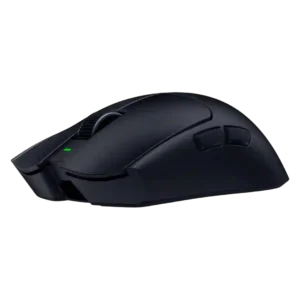
Choose Razer Viper V4 Pro for ecosystem integration and fingertip grip comfort.
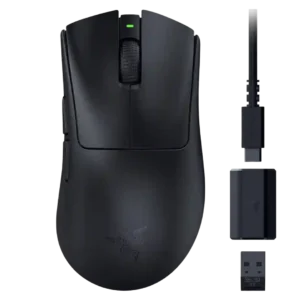
Choose Razer DeathAdder V3 HyperSpeed for portability and value for money.
Why these recommendations?
Razer Viper V4 Pro
Where It Has the Edge
ecosystem integration is 4.6 vs 2.5. Ecosystem integration was positive where reviewers paired the Viper with Razer's mouse pad and software ecosystem.
fingertip grip comfort is 4.5 vs 2.8. Fingertip grip comfort was strong overall, though aggressive fingertip users were sometimes pointed toward smaller alternatives.
materials quality is 4.8 vs 3.5. Materials quality was praised for sturdy plastics and a premium-feeling coating, especially compared with cheaper ultralight shells.
Razer DeathAdder V3 HyperSpeed
Where It Has the Edge
portability is 4.8 vs 3.2. Portability benefited from lightweight design and onboard dongle storage, which reviewers found convenient for travel or switching systems.
value for money is 4.7 vs 3.8. Value for money was one of the strongest consensus points, with reviewers repeatedly calling it a great, competitive,...
palm grip comfort is 4.3 vs 3.8. Palm grip comfort was good for many users, particularly smaller-to-medium hands, though size and side flares made it...
Razer Viper V4 Pro4.4 overall score
Razer DeathAdder V3 HyperSpeed4.3 overall score
Compare features
Scores are out of 5. Missing scores mean missing review evidence, not a missing feature.
Scored on both products
Battery and charging
Battery life
Razer Viper V4 Pro
4.7
Battery life was one of the clearest upgrades, with broad praise for 180 hours at 1,000Hz and useful endurance even at 8,000Hz.
Razer DeathAdder V3 HyperSpeed
4.6
Battery life was consistently strong in testing or use, with reviewers saying the 100-hour claim felt believable or that charging was rarely needed.
Charging convenience
Razer Viper V4 Pro
3.4
Charging convenience was mixed: long battery life reduces the issue, but cable-only charging and stiff cables drew criticism.
Razer DeathAdder V3 HyperSpeed
3.2
Charging itself was convenient by USB-C, but the short or unpleasant cable hurt the charging-and-play experience for some reviewers.
Other features
Ecosystem integration
Razer Viper V4 Pro
4.6
Ecosystem integration was positive where reviewers paired the Viper with Razer's mouse pad and software ecosystem.
Razer DeathAdder V3 HyperSpeed
2.5
Ecosystem integration was mixed because HyperPolling dongle compatibility and naming created confusion or fragmentation across Razer mice.
Portability
Razer Viper V4 Pro
3.2
Portability was mixed because the desktop dongle improves wireless reliability but can be bulkier or less travel-friendly.
Razer DeathAdder V3 HyperSpeed
4.8
Portability benefited from lightweight design and onboard dongle storage, which reviewers found convenient for travel or switching systems.
Onboard memory
Razer Viper V4 Pro
4.4
Onboard memory/profile storage was praised where mentioned because browser-based changes can be saved directly to the mouse.
Razer DeathAdder V3 HyperSpeed
3.2
Onboard memory was mixed: saving settings was useful, but the single onboard profile limited travel or multi-game convenience.
Lift-off distance
Razer Viper V4 Pro
4.3
Lift-off and tracking controls were useful overall, though one reviewer found the default lift-off distance slightly higher than ideal.
Razer DeathAdder V3 HyperSpeed
3.6
Lift-off distance and smart tracking received useful but narrower praise, especially for maintaining accuracy or surface consistency; one review wanted more advanced tweaks.
RGB features
Razer Viper V4 Pro
2.7
RGB support is minimal or absent; reviewers often accepted this as part of the focused esports design, but it limits desk-lighting appeal.
Razer DeathAdder V3 HyperSpeed
3.5
RGB evidence was mixed: some reviewers liked the performance-first, no-distraction approach, while others missed Razer Chroma or visual flair.
Polling rate
Razer Viper V4 Pro
4.3
8,000Hz polling earned praise from competitive-focused reviewers, while others found the difference subtle or unnecessary for most players.
Razer DeathAdder V3 HyperSpeed
3.8
Polling-rate evidence was mixed-positive: 1,000Hz was widely considered enough, while the separate HyperPolling dongle was a repeated caveat.
Grip texture
Razer Viper V4 Pro
4.5
Grip texture and coating received strong praise for feeling matte, grippy, and secure, with one concern about long-term shine.
Razer DeathAdder V3 HyperSpeed
4.1
Grip texture was polarizing: many liked the smooth-touch coating, but sweaty hands, clamminess, or slipperiness remained concerns in several reviews.
Handedness options
Razer Viper V4 Pro
2.4
Handedness options were a repeated limitation because the mouse is effectively right-handed despite its symmetrical shell.
Razer DeathAdder V3 HyperSpeed
2.0
Handedness options were limited because the shape favors right-handed users, making it unsuitable for left-handed gamers.
Click latency
Razer Viper V4 Pro
4.7
Click and wireless latency were repeatedly judged excellent, with reviewers calling the mouse extremely fast and low-latency in real use.
Razer DeathAdder V3 HyperSpeed
5.0
Click latency was praised as extremely low or imperceptible, with measured wireless results supporting fast competitive use.
Scroll wheel quality
Razer Viper V4 Pro
4.6
The optical scroll wheel was one of the most consistently praised parts, with reviewers highlighting precision, tactility, and reliable steps.
Razer DeathAdder V3 HyperSpeed
4.3
Scroll wheel quality was generally solid and precise, though a few reviewers found middle click awkward or document scrolling tedious.
2.4GHz connectivity
Razer Viper V4 Pro
4.8
Dongle-based wireless connectivity was praised for helpful indicators, strong signal, and improved convenience over older dongles.
Razer DeathAdder V3 HyperSpeed
5.0
Reviewers who discussed the 2.4GHz link found it responsive, with solid signal behavior and wired-like performance when using the dongle.
Left and right click quality
Razer Viper V4 Pro
4.6
Primary click quality was generally excellent, though one review found the left click less bouncy than preferred.
Razer DeathAdder V3 HyperSpeed
4.8
Left and right click quality was strongly praised for tactile, satisfying, crisp, or solid main clicks, with only minor preference-based caveats.
Connection stability
Razer Viper V4 Pro
4.8
Connection stability was a major positive thanks to the Gen-2 dongle, strong signal, and stable desk placement.
Razer DeathAdder V3 HyperSpeed
5.0
Connection stability was a strength, with reviewers reporting no lag, no signal issues, and stable wireless behavior in gaming.
Glide smoothness
Razer Viper V4 Pro
4.8
Glide smoothness was widely praised, with skates and low weight making swipes feel smooth and fast.
Razer DeathAdder V3 HyperSpeed
4.6
Glide smoothness was one of the strongest attributes, with large PTFE feet repeatedly praised for smooth, controlled movement across pads or surfaces.
Premium feel
Razer Viper V4 Pro
4.9
Premium feel was a major positive, with reviewers describing the mouse as refined, rigid, and quality-focused.
Razer DeathAdder V3 HyperSpeed
4.7
Premium feel was stronger than the HyperSpeed label implied, with reviewers saying the mouse felt high-tier, well-built, and close to Razer's pro models.
Switch feel
Razer Viper V4 Pro
4.5
Switch feel drew mostly positive feedback for sharp tactile response, but some reviewers wished for newer rapid-trigger-style click tech.
Razer DeathAdder V3 HyperSpeed
4.7
Switch feel was strongly positive overall, with reviewers praising crisp, tactile, satisfying, snappy optical switches, despite individual firmness preferences.
Cable flexibility
Razer Viper V4 Pro
2.3
Cable flexibility was a weakness where tested, with reviewers finding the cable too stiff or intrusive for wired play.
Razer DeathAdder V3 HyperSpeed
2.1
The included cable was one of the clearest complaints, described as stiff, short, rubbery, cheap-feeling, or impractical for wired play.
Motion consistency
Razer Viper V4 Pro
4.9
Motion consistency received strong praise in the few reviews that tested it directly, especially for smooth tracking and micro-adjustments.
Razer DeathAdder V3 HyperSpeed
5.0
Motion consistency was praised in testing where movement appeared accurate, smooth, and consistent.
Wireless latency
Razer Viper V4 Pro
4.8
Wireless latency was widely praised as extremely low, with some reviewers citing noticeable responsiveness in games.
Razer DeathAdder V3 HyperSpeed
4.7
Wireless latency was praised as low, imperceptible, or quick enough for competitive gaming, even before optional high-polling upgrades.
Acceleration control
Razer Viper V4 Pro
4.3
Dynamic sensitivity, rotation, and acceleration-style controls were valued by advanced users, but some reviewers framed them as niche tuning tools.
Razer DeathAdder V3 HyperSpeed
4.2
Dynamic Sensitivity was widely treated as useful for low-sensitivity FPS play and quick turns, though a few reviewers called it niche, unnatural, or gimmicky.
Weight
Razer Viper V4 Pro
4.8
The 49–50g weight was one of the strongest positives, making the mouse feel fast, effortless, and competitive.
Razer DeathAdder V3 HyperSpeed
4.9
Weight was a standout strength, with reviewers repeatedly praising the 53-55g body as featherweight, effortless, nimble, and easy to flick.
Surface compatibility
Razer Viper V4 Pro
4.7
Surface compatibility was positive where tested, with lift-off and sensor tracking staying reliable across surfaces.
Razer DeathAdder V3 HyperSpeed
4.8
Surface compatibility was positive where tested, with reviewers reporting smooth feet across multiple mousepads or surfaces.
FPS gaming suitability
Razer Viper V4 Pro
4.7
FPS suitability was extremely strong, with many reviewers tying its speed, weight, accuracy, and responsiveness to shooter performance.
Razer DeathAdder V3 HyperSpeed
4.8
FPS gaming suitability was excellent overall, with reviewers praising flickability, low-latency clicks, accurate tracking, and strong competitive-shooter performance.
DPI range
Razer Viper V4 Pro
3.9
The huge DPI range was seen as flexible and impressive, but several reviewers said the extreme 50K ceiling is more experimental than necessary.
Razer DeathAdder V3 HyperSpeed
4.0
The 26K DPI ceiling was considered enough for nearly all gamers, even though some reviewers noted it is lower than flagship sensors or impractical at the top end.
Balance and weight distribution
Razer Viper V4 Pro
5.0
Weight distribution was strongly praised, with reviewers describing the mouse as centered, balanced, and lighter-feeling in motion.
Razer DeathAdder V3 HyperSpeed
5.0
Weight balance was praised as well-centered and controlled, helping the mouse feel nimble rather than unstable despite its low mass.
Comfort and build
Fingertip grip comfort
Razer Viper V4 Pro
4.5
Fingertip grip comfort was strong overall, though aggressive fingertip users were sometimes pointed toward smaller alternatives.
Razer DeathAdder V3 HyperSpeed
2.8
Fingertip grip comfort was more limited: some reviewers could make it work, but several advised fingertip users or smaller/larger hand extremes to be careful.
Materials quality
Razer Viper V4 Pro
4.8
Materials quality was praised for sturdy plastics and a premium-feeling coating, especially compared with cheaper ultralight shells.
Razer DeathAdder V3 HyperSpeed
3.5
Materials quality was mixed-to-positive: reviewers liked the premium feel but noted grease, grime, fingerprints, or clammy plastic in some conditions.
Palm grip comfort
Razer Viper V4 Pro
3.8
Palm grip comfort was mixed: several reviewers could use it comfortably, but others preferred more ergonomic or vertical shapes.
Razer DeathAdder V3 HyperSpeed
4.3
Palm grip comfort was good for many users, particularly smaller-to-medium hands, though size and side flares made it less universal.
Shape comfort
Razer Viper V4 Pro
4.7
Shape comfort was widely positive for the familiar symmetrical Viper shell, though it remains preference-dependent.
Razer DeathAdder V3 HyperSpeed
4.2
Shape comfort was the most context-dependent attribute: many liked the smaller ergonomic shell, while some disliked the front flare, smaller size, or hand-fit tradeoffs.
Switch durability
Razer Viper V4 Pro
4.7
Optical switch durability was viewed positively because reviewers cited longevity, reduced wear, and confidence under heavy use.
Razer DeathAdder V3 HyperSpeed
4.3
Switch durability received limited positive evidence from reviewers who treated optical switches as longer-lasting or suitable for years of use.
Claw grip comfort
Razer Viper V4 Pro
4.6
Claw grip comfort was a major strength, with many reviewers calling the Viper shape especially suited to claw users.
Razer DeathAdder V3 HyperSpeed
4.2
Claw grip comfort was broadly positive for small-to-medium hands, though larger hands or aggressive claw users sometimes found the shape less ideal.
Ergonomic design
Razer Viper V4 Pro
4.1
Ergonomics were solid for a symmetrical esports mouse, but reviewers noted it lacks the contouring of more ergonomic shapes.
Razer DeathAdder V3 HyperSpeed
4.4
The ergonomic design was generally praised for right-handed support, palm contouring, and comfort, while a few shape-specific caveats remained.
Long-session comfort
Razer Viper V4 Pro
4.6
Long-session comfort was generally strong thanks to low weight and balanced shape, though vertical-mouse comfort fans may disagree.
Razer DeathAdder V3 HyperSpeed
4.8
Long-session comfort was positive, with reviewers citing long play sessions, reduced wrist stress, and comfort over extended gaming or work use.
Build quality
Razer Viper V4 Pro
4.9
Build quality was a standout strength, with reviewers repeatedly noting rigidity, no creak, and premium construction.
Razer DeathAdder V3 HyperSpeed
4.9
Build quality was a major strength, with reviewers repeatedly reporting a solid shell, little or no flex, and a surprisingly sturdy lightweight chassis.
Controls and connectivity
Software stability
Razer Viper V4 Pro
3.9
Software stability was mixed: several reviewers had smooth experiences, but one reported a persistent web-app conflict with desktop Synapse.
Razer DeathAdder V3 HyperSpeed
2.7
Software stability had mixed evidence: one reviewer found Synapse more reliable, while others called it erratic or resource-heavy.
Programmable buttons
Razer Viper V4 Pro
4.3
Programmable buttons were viewed as useful through Synapse customization, though the mouse remains a minimalist, low-button design.
Razer DeathAdder V3 HyperSpeed
3.6
Programmable-button evidence was mixed: reviewers valued practical FPS-side-button use, but criticized the claimed button count as essentially standard.
Bluetooth support
Razer Viper V4 Pro
1.5
Bluetooth support is absent, which reviewers treated as a limitation rather than a performance issue.
Razer DeathAdder V3 HyperSpeed
2.0
Bluetooth was a repeated drawback: reviewers liked the wireless performance but noted the lack of Bluetooth reduced multi-device versatility.
Button customization
Razer Viper V4 Pro
4.5
Button customization was consistently treated as flexible and easy through Synapse or Synapse Web.
Razer DeathAdder V3 HyperSpeed
4.1
Button customization and rebinding were useful through Synapse, although most of the praise was tied to practical remapping rather than a large button count.
Software usability
Razer Viper V4 Pro
4.6
Software usability was mostly strong, especially with Synapse Web reducing install friction, though Synapse still drew occasional caveats.
Razer DeathAdder V3 HyperSpeed
4.2
Software usability was generally useful for DPI, remapping, Dynamic Sensitivity, and rotation tools, though Synapse could feel unwieldy or bloated.
Button responsiveness
Razer Viper V4 Pro
4.5
Button responsiveness was usually praised as crisp and quick, with one reviewer noting occasional stickiness under spam-clicking.
Razer DeathAdder V3 HyperSpeed
4.7
Button responsiveness was praised for fast actuation, rapid firing, and easy operation during play.
Side button quality
Razer Viper V4 Pro
4.7
Side buttons were often praised as tactile, reachable, and top-tier, with a minor caveat that they are not always as satisfying as the main clicks.
Razer DeathAdder V3 HyperSpeed
4.7
Side button quality was widely praised for placement, spacing, access, and responsiveness, with a few reviews noting mushiness or preference caveats.
Ownership and support
Value for money
Razer Viper V4 Pro
3.8
Value for money was mixed: reviewers admired the performance but repeatedly warned that the premium price is best justified for competitive users.
Razer DeathAdder V3 HyperSpeed
4.7
Value for money was one of the strongest consensus points, with reviewers repeatedly calling it a great, competitive, or top-tier value at around $100.
Performance
Click noise
Razer Viper V4 Pro
2.6
Click noise was the most repeated sensory complaint; reviewers often liked the feel but called the optical switches loud or hollow.
Razer DeathAdder V3 HyperSpeed
2.2
Click noise was a drawback in several reviews, especially outside headset gaming, where the primary clicks could sound loud or grating.
Wireless performance
Razer Viper V4 Pro
4.9
Wireless performance was consistently described as fast, reliable, and comparable to wired use.
Razer DeathAdder V3 HyperSpeed
4.8
Wireless performance was consistently positive, with reviewers describing the mouse as free-feeling, reliable, flawless, or strong in gaming.
Sensor performance
Razer Viper V4 Pro
4.8
The Focus Pro sensor was widely praised as elite, fast, and reliable, though some reviewers felt modern top sensors already feel close in practice.
Razer DeathAdder V3 HyperSpeed
4.8
Sensor performance was a major strength, with the Focus X 26K repeatedly described as flawless, fast, precise, or essentially indistinguishable in real play.
Tracking and training
Accuracy and tracking precision
Razer Viper V4 Pro
4.8
Reviewers consistently described tracking as highly precise and confidence-inspiring, with only a few saying gains are incremental at the very high end.
Razer DeathAdder V3 HyperSpeed
4.9
Tracking precision drew strong praise, with reviewers reporting pinpoint aiming, better enemy tracking, and accurate gaming-session control.
Evidence available for one product
Other features
Cross-platform compatibility
Razer Viper V4 Pro
4.3
Cross-platform compatibility was helped by browser-based configuration across computers, though it is still browser/software dependent.
Razer DeathAdder V3 HyperSpeedNo score yet
Dock compatibility
Razer Viper V4 Pro
1.5
Dock compatibility was a clear downside where mentioned because the mouse does not support dock-style charging.
Razer DeathAdder V3 HyperSpeedNo score yet
MOBA gaming suitability
Razer Viper V4 Pro
4.2
MOBA suitability was only lightly supported through scroll-wheel reliability for weapon-wheel-style mechanics, so evidence is limited.
Razer DeathAdder V3 HyperSpeedNo score yet
Profile switching
Razer Viper V4 ProNo score yet
Razer DeathAdder V3 HyperSpeed
2.8
Profile switching was limited by the single onboard profile, forcing more manual settings changes for different games or PCs.
Comfort and build
Durability over time
Razer Viper V4 Pro
4.5
Durability over time was supported mainly by one review's longer-lasting assessment rather than broad long-term testing.
Razer DeathAdder V3 HyperSpeedNo score yet
Ownership and support
Macro support
Razer Viper V4 ProNo score yet
Razer DeathAdder V3 HyperSpeed
3.4
Macro support was mixed: software allowed macro-style reassignment, but one reviewer criticized the practical usefulness of the bottom button for macros.
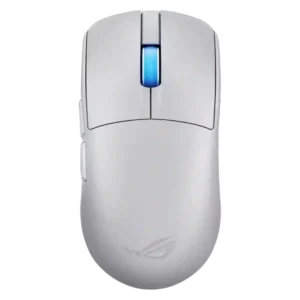
Choose the ROG Harpe II Ace for ultralight FPS play, precise tracking, smooth glide, and web-based tuning. Skip it if you need palm-grip support, MMO buttons, onboard profiles, or long...
Excellent tracking, comfortable right-handed ergonomics and a versatile scroll wheel make the Basilisk V3 a strong gaming and productivity mouse. Its substantial weight, fixed cable and sometimes over-sensitive automatic scrolling...
The L7 Pro delivers remarkably light handling, precise aiming and a grippy shell at a budget price. Stock skates are less impressive, and conflicting click-latency measurements warrant caution for latency-sensitive...
Choose it if you want a premium MMO/productivity mouse with 12 adjustable side buttons, strong battery life, and Stream Deck integration. Skip it if you need an ultralight FPS mouse,...