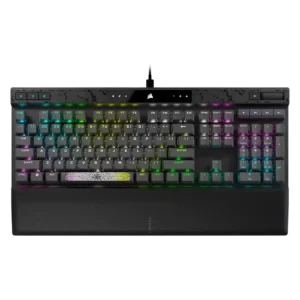
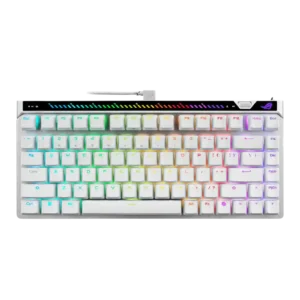
Corsair K70 MAX
Where It Has the Edge
No clear scored advantage over the other product.

Scorata scores summarize analyzed review evidence on a 1–5 scale; they are not laboratory measurements or a simple average of customer star ratings. Feature scores summarize the reviews covering that feature. The overall score averages feature scores within each review, then combines review averages. When both expert and customer evidence are available, those two groups receive equal weight. Products can have different review coverage, so small score gaps do not establish a winner.
Recommendations prioritize important features for the category, with a score of at least 3.5, a gap of at least 0.25 points and at least two supporting reviews per product. Features with widely varying scores or broad connectivity contexts are excluded from recommendations. These safeguards do not establish statistical significance.
Quick verdict
The available evidence supports the recommendation below, but does not establish an overall winner. Check the remaining features against your priorities.
There is not enough comparable review evidence to recommend Corsair K70 MAX over the other product.
Choose ASUS ROG Falchion Ace 75 HE for portability and key stability.
No clear scored advantage over the other product.
Scores are out of 5. Missing scores mean missing review evidence, not a missing feature.
Ergonomics were generally helped by the desk stability, soft palm rest, and incline, though the evidence focused on comfort rather than compactness.
Ergonomics were mostly praised, but the rear touchbar placement was criticized as awkward by one reviewer.
Size and form factor were a drawback for many reviewers because the keyboard is chunky, full-size, and large-footprint.
The form factor was widely praised as a sweet spot between compactness, familiarity, and daily usability.
Design aesthetics ranged from gorgeous, refined, and sleek to dated or too plastic-looking depending on the reviewer.
Design aesthetics were strongly positive, especially for the clean, modern, futuristic look.
Materials quality was usually positive because of aluminum and premium finishes, but some reviewers felt the finish looked plastic or should have used more metal.
Materials were mostly praised, especially metal plates and premium feel, but one reviewer wanted a fuller metal build at the price.
Typing comfort was often good thanks to the wrist rest and smooth keys, but fatigue and loudness made it less ideal for some long typing sessions.
Typing comfort was positive, with reviewers mentioning low fatigue and comfortable long-session use.
Durability received strong marks from reviewers who praised the tough frame, robust keycaps, and drop survival.
Durability evidence centered on PBT keycaps resisting gloss and holding up after prolonged use.
Build quality was widely praised as solid, premium, rock solid, or excellent, though one reviewer felt it was merely okay for the price.
Build quality was a consistent strength, with reviewers calling the board premium, solid, well assembled, and excellent in fit and finish.
Reliability evidence was limited but very positive where Hall-effect sensing was described as highly reliable.
Reliability was positive, with reviewers saying features worked as expected, inputs kept up, and response stayed predictable.
Ease of switch replacement had limited but positive evidence from one reviewer who valued being able to swap switches if they fail.
Ease of switch replacement was weak because third-party replacement is not freely supported.
Analog-style capability was treated as limited; one reviewer noted the K70 Max lacks more advanced analog movement found elsewhere.
Analog support was a clear weakness because one reviewer specifically noted the lack of analog mode.
Rapid Trigger support was treated as useful but not decisive; reviewers saw promise, but some noted timing, uniqueness, or practical-use caveats.
Rapid Trigger was a core strength across reviews, valued for fast reset behavior and competitive tuning.
Value for money was the most divided category, with some reviewers calling it worth the premium and others saying cheaper competitors make it hard to justify.
Value was the main recurring compromise: reviewers liked the keyboard but questioned the premium price and cheaper competition.
Wrist rest quality was one of the strongest consensus positives, widely praised as plush, comfortable, magnetic, soft, or a major improvement.
Wrist-rest sentiment was negative because a reviewer felt the lack of an included wrist rest was stingy at this price.
Desk-space efficiency was consistently weak because the full-size-plus body and wrist rest take a large amount of desk room.
Desk space efficiency was positive where discussed, with the smaller profile taking up less space.
Portability was weak because reviewers found the heavy full-size board unsuitable for carrying around.
Portability was positive due to the included carrying case and on-the-go readiness.
Stabilizer quality was a frequent weak point, especially around spacebar rattle or dry stabilizers, with only mild praise in one review.
Stabilizers received a strong score where evaluated, with minimal rattle and a solid feel on larger keys.
Key stability was a recurring weakness in negative reviews, with rattliness, wobble, or moving keycaps mentioned.
Key stability was strong, with reviewers reporting little wobble and a firm, stable board feel.
Profile management was mixed: one reviewer liked setting up profiles, while another criticized iCUE for not saving changes properly.
Profile management was praised for cloud saving and usefulness across multiple systems.
Cable-related comments were mixed: reviewers liked the removable or braided cable and routing, but one criticized wobble at the port.
Cable quality was criticized where evaluated because the L-shaped cable looked awkward in a normal desk orientation.
Connectivity evidence was narrow but positive where the wired connection was described as reliable.
Connectivity was mixed: wired operation is fast and latency-free, but multiple reviewers missed wireless/battery support.
Acoustic impressions split sharply: some reviewers liked the snappy or satisfying sound, while others called the board poor, unpleasant, or terrible sounding.
Acoustic impressions were mostly positive for controlled, smooth, and better-than-expected sound, though one reviewer found the sound clacky and annoying.
Typing feel was highly divided: some reviewers loved the smooth, comfortable feel, while others found it aggressive, clunky, or not best-in-class.
Typing feel was generally positive, ranging from controlled and premium to good for a gaming-focused keyboard, though one reviewer found it less premium than expected.
Polling rate evidence was positive for responsiveness in some reviews, but others said 8,000Hz was unnoticeable or not worth the resource tradeoff.
The high polling rate was treated as a competitive advantage, though one reviewer framed its benefit as most relevant to pros.
Latency performance was mostly praised, especially with fast polling and instant-feeling registration, though some reviewers framed the highest settings as niche.
Latency feedback was excellent, with reviewers praising the wired connection and minimal signal delay.
Compatibility evidence centered on iCUE being one of the few peripheral apps noted as macOS compatible.
Compatibility was praised in the software context for platform independence across computers.
Extra gaming features were praised for dual actuation, tournament mode, and magnetic-switch tricks, but several reviewers found some features niche or hard to use in games.
Extra gaming features were strongly praised overall, including rapid trigger, 8K polling, physical toggles, and on-board adjustment tools.
Frame rigidity was usually a strength, with reviewers reporting a solid aluminum frame or no flex, aside from one more moderate build assessment.
Frame rigidity was excellent, with no flex or looseness reported and a torsion-resistant feel.
Keycap quality was mostly praised for thick, durable PBT construction, but texture and RGB masking drew a few complaints.
Keycaps were mostly praised for PBT durability, texture, feel, and premium impression.
RGB lighting quality was mixed but leaned positive, with bright, crisp, or superb shine-through offset by one reviewer’s disappointing uniformity complaint.
RGB lighting quality was positive, with comments on integration, brightness, evenness, and vibrant presentation.
Key responsiveness was a major strength, often described as instant, flawless, precise, or extremely rapid.
Responsiveness was a major strength, with reviewers describing immediate inputs and especially fast movement behavior.
Switch options were weak because one reviewer specifically disliked the lack of tactile or clicky alternatives.
Switch option sentiment was weak because reviewers repeatedly noted proprietary or limited magnetic-switch compatibility, which restricts experimentation.
Switch feel was generally praised as smooth, friction-free, and satisfying, though a few reviewers found it merely fine or rattlier than normal.
Reviewers consistently liked the HFX V2/V2X switch feel, calling it smooth, pleasing, light, and well suited to both gaming and typing, with only minor preference differences.
Volume control was generally praised for the dedicated wheel or premium roller feel, though one reviewer disliked the separate mute-button layout.
Volume control was useful but mixed because reviewers liked direct control while one wished the roller handled volume more naturally.
Actuation consistency drew praise when reviewers described the switches as consistent and tunable, though evidence was limited to a few reviewers.
Actuation consistency was praised through even resistance, precise inputs, and consistent key behavior.
Hot-swappability had limited positive evidence from one reviewer who called it a major bonus for serviceability.
Hot-swap sentiment was mixed because the board supports swapping but practical compatibility is limited.
Software quality was polarizing: several reviewers found iCUE powerful, clear, or easy enough, while others called it messy or harder than it should be.
Software was a major upgrade over Armoury Crate, with Gear Link described as reliable, lighter, responsive, and easy to use.
Macro customization was supported by onboard recording and flexible assignments, though evidence was not as extensive as general customization.
Macro customization was supported by Gear Link's settings coverage, including macros and reliable browser-based configuration.
Media controls were usually appreciated, especially dedicated keys, though one reviewer found some buttons stiff or spongy.
Media controls were useful and clever for some reviewers, but the rear touchbar placement was awkward for another.
Customization was one of the strongest themes, with reviewers praising granular actuation, RGB, profiles, and per-key tuning depth, despite some software caveats.
Customization was a strong point, with actuation, rapid trigger, RGB, key assignments, and browser-based tuning repeatedly praised.
RGB customization was consistently strong, with reviewers praising layered effects, per-key color control, and broad iCUE lighting options.
RGB customization was praised through customizable lighting and software control.
Sound dampening was improved over some Corsair boards and praised by several reviewers, but others said it was insufficient for the price.
Sound dampening was praised for reducing ping, rattle, and resonance across several reviews.
Noise level was the most common concern: many reviewers called the keyboard loud, clacky, rattly, or not quiet despite some exceptions.
Noise-level evidence was split: one reviewer praised the lack of rattle and ping, while another called the sound clacky and annoying.
Gaming performance was usually excellent, especially for responsiveness and configurability, though a few reviewers said it did not transform their play.
Gaming performance was strongly praised for speed, fluidity, precision, and competitive FPS usefulness.
Backlighting was generally bright enough, with reviewers calling out bright RGB and visible lighting through the keycaps.
Backlight brightness was positively described as bright and vibrant.
Wireless performance scored poorly because one reviewer treated the lack of wireless capability as a major downside for casual users.
Wireless performance was a major weakness because the keyboard lacks wireless operation despite premium pricing.
Legend visibility was mixed: some reviewers praised vibrant shine-through, while others found certain legends dim or hard to read.
Legend and font styling was divisive; reviewers found the futuristic/gamey look a matter of taste.
The 75% layout was broadly liked for keeping function keys, arrows, and productivity-friendly controls while staying compact.
Onboard memory had limited positive evidence, with one reviewer finding the number of onboard profiles more than most users need.
Per-key lighting control was praised where reviewers highlighted individually coloring keys, buttons, and icons.

Good if you want a premium 96% Hall Effect keyboard for work and gaming with excellent build, sound, and customization. Skip it if you need cheaper esports-first speed, 8,000Hz polling,...
Pros: size and form factor, typing feel
Cons: switch options, portability

Choose it if competitive gaming speed, Rapid Trigger, and deep per-key customization matter more than extras. Skip it if you need wireless, dedicated arrows/media keys, adjustable height, or a lower-cost...
Pros: overall satisfaction, customization options
Cons: value for money, switch options

Good if you want a premium, quiet TKL Hall Effect keyboard for typing and gaming. Skip it if price, portability, 8,000Hz polling, or broad switch choice matters most.
Pros: build quality, switch feel
Cons: switch options

Good if you want a premium full-size Hall Effect keyboard with smooth switches, quiet sound, and deep customization. Skip it if you need a portable, budget-friendly board or broad switch...
Pros: build quality, keycap quality
Cons: switch options, portability