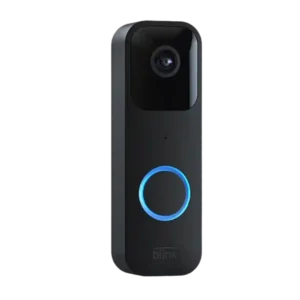
Blink Black Doorbell
Where It Has the Edge
- Storage is 4.3 vs 1.6. Storage was praised when using Blink's local Sync Module option or existing free Blink storage.

Scorata scores summarize analyzed review evidence on a 1–5 scale; they are not laboratory measurements or a simple average of customer star ratings. Feature scores summarize the reviews covering that feature. The overall score averages feature scores within each review, then combines review averages. When both expert and customer evidence are available, those two groups receive equal weight. Products can have different review coverage, so small score gaps do not establish a winner.
Recommendations prioritize important features for the category, with a score of at least 3.5, a gap of at least 0.25 points and at least two supporting reviews per product. Features with widely varying scores or broad connectivity contexts are excluded from recommendations. These safeguards do not establish statistical significance.
Quick verdict
The review evidence points to a tradeoff: Storage versus Field of view and framing and App, software and firmware. Choose according to which strengths matter more to you; the overall score alone does not settle that choice.
Choose Blink Black Doorbell for Storage.
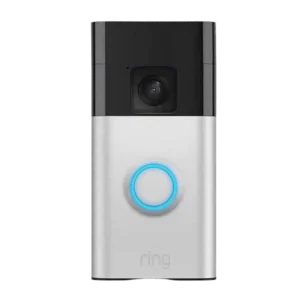
Choose Ring Video Doorbell Battery for Field of view and framing and App, software and firmware.
Scores are out of 5. Missing scores mean missing review evidence, not a missing feature.
AI features were a clear weakness because reviewers noted the absence of AI, person, human, or object classification.
AI-related value was supported mainly through Ring's Smart Video Search, which the automation review called a great feature.
Subscription handling was a strength when paired with Sync Module/local storage because reviewers liked avoiding required ongoing fees.
Subscription requirements were the most consistent negative theme, with reviewers objecting to paywalled recordings, smart alerts, and cloud history.
Storage was praised when using Blink's local Sync Module option or existing free Blink storage.
Storage was a major weakness because reviewers repeatedly noted cloud storage and recorded video access require payment.
Sync Module integration adds useful live view and storage flexibility, but one reviewer said needing it can undermine the cheap appeal.
Base and alarm integration was praised in the automation review, especially Ring alarm mode behavior.
Lag was a common limitation: reviewers found live view loading, voice delay, or intervention speed slower than ideal, even if sometimes tolerable.
Lag evidence was positive where reviewed, with PCMag reporting instant motion and doorbell notifications.
Package monitoring was a weakness where discussed because reviewers noted no package detection or limited ability to see packages below the camera.
Package monitoring was useful where available, but reviewers also emphasized that package alerts are subscription-tied.
Object, person, and face handling was a weak point because reviewers emphasized the lack of AI distinction and inconsistent face identification.
Person/object detection was useful when available and performed well in one test, but subscription gating reduced its value for non-subscribers.
Field of view drew mixed reactions because it covers people well enough but can miss packages or low doorstep areas due to limited vertical framing.
The wide head-to-toe field of view was usually praised for coverage, but some reviewers noted placement limits, distortion, or missed space near the door.
One reviewer noted a visible fisheye effect from the wide-angle lens, making distortion a mild drawback.
Lens distortion was a clear weakness in TechGearLab's testing, especially near image corners.
Theft/tamper opinions were mixed, with one review calling removal easy and another saying the mount requires the release tool.
Tamper security was criticized because the newer release mechanism seemed easier to unlock.
Recommendation sentiment was split: some reviewers highly recommended it for Blink/Alexa or budget users, while others preferred competitors.
Recommendations were generally positive for new Ring/Alexa or budget buyers, but TechGearLab recommended other cameras for video quality.
Chime feedback was mixed: some liked the loud built-in or phone/Echo options, while others criticized missing indoor hardware or imperfect wired chime behavior.
Chime support was useful but context-dependent: one reviewer disliked the extra cost, while others found Ring chime options helpful or working properly.
Power flexibility was praised by a reviewer who preferred battery operation for homes without wired doorbells.
Power options were flexible, with battery, hardwire, and existing doorbell support, though trickle charging may not prevent drain in heavy use.
Zones were seen as useful for reducing false alarms and narrowing motion areas.
Zones and activity areas were praised for detailed adjustment, package zones, and flexible motion-zone setup.
Motion detection was usually praised as responsive and reliable, with several reviewers saying it captured visitors or matched Ring's detection in their use.
Motion detection was generally effective, with instant alerts and useful smart filtering, though testing varied by environment.
Night vision was viewed as workable, though reviewers described tradeoffs with IR intensity, washout, and close-up visibility.
Night vision was polarizing: some reviewers liked color night vision, while others found it washed out, weak in dark scenes, or an Achilles heel.
Recording was adequate but not flawless, with one reviewer noting a saved clip that cut off too early during package-theft testing.
Recording drew mixed evidence: paywalls frustrated reviewers, but linked-device recording was useful within Ring's ecosystem.
Reviewers generally found the 1080p image usable or clear for basic door monitoring, but some noted compression, shadowed faces, or only adequate detail.
Video detail drew mixed evidence: several reviewers found the 1440p image solid or impressive, while TechGearLab reported unclear, pixelated footage.
Privacy zones were praised for blocking sensitive areas from both motion detection and recordings.
Privacy controls were reviewed positively through privacy zones and data-protection-oriented masking.
Wireless range received a concern from one reviewer who found Sync Module range not great in larger homes.
Video feed stability was good in one review, while another warned Wi-Fi limitations and network congestion can create problems.
The app and software were mostly seen as simple and user-friendly, but reviewers also noted bugs and limited battery status details.
The app and software were usually praised as clear, intuitive, and easy to navigate, though one Blink user disliked adding another app.
Alexa integration was a strength, but reviewers criticized missing Google Home/HomeKit support and weaker Echo Show behavior than Ring.
Smart-home integration is strongest with Alexa and Ring devices, but weaker overall because reviewers criticized missing Google Assistant and HomeKit support.
Notification speed was praised as quick, especially for motion events, though broader response speed was still limited elsewhere.
Notifications were one of the strongest areas, repeatedly described as instant, reliable, timely, or convenient, with one caveat about potential annoyance.
The physical button received positive feedback for responsiveness and clear click feedback.
Physical controls and indicators were praised for the button pressure and easier quick-release charging mechanism.
Battery life was described favorably in lower-traffic contexts, though reviewers repeatedly tied performance to activity and settings.
Battery and charging drew mixed reactions: reviewers liked USB-C, efficiency, and easy detachment, but disliked the non-removable battery and recharge interruptions.
Audio was generally considered clear enough for two-way conversations, with one reviewer calling the speaker loud and clear.
Audio was positively reviewed in the available tests, with reviewers impressed by quality or able to understand visitors clearly.
Maintenance was lightly positive, with one reviewer saying occasional wiping was enough.
Lens maintenance evidence was positive in one review because the smaller exposed area was considered less scratch-prone.
Design was generally liked, especially its sleek look and acceptable size, though one reviewer found materials less premium than photos suggested.
Design aesthetics were praised for tidy looks, slimmer construction, and durable-feeling styling.
Size and form factor were praised as compact or appropriately sized for a doorway.
The form factor was praised for being slimmer than higher-end removable-battery models.
Ownership costs were criticized by one reviewer because subscription or Sync Module/local storage additions raise the real cost for new buyers.
Ongoing cost was a repeated concern because useful recording and smart features depend on recurring Ring plan fees.
Price and value were a major strength, with reviewers repeatedly calling it affordable, competitive, or strong for budget buyers.
Price/value was often praised at the entry price, though that value is reduced for buyers who need paid Ring features.
Installation was a consistent strength, described as quick, simple, easy, or a breeze.
Installation was usually a standout strength, described as quick, beginner-friendly, or app-guided, though replacing older mounts could add hassle.
General reliability was positive where mentioned, especially for basic budget performance and ongoing Blink-family use.
General reliability was split between a highly positive T3 experience and TechGearLab's more restrained 'gets the job done' conclusion.
Automation flexibility was a strength in the automation review, especially custom routines and linked-device behaviors.
Color options were limited by the fixed cover/faceplate design, making color choice more consequential.
Community features were divisive: one reviewer found them a nuisance, while another highlighted lost-pet usefulness.
The included kit drew mixed evidence: basic tools and hardware were appreciated, but missing wedges, angle mounts, or extras frustrated some reviewers.
Faceplate and accessory evidence was negative because reviewers noted older faceplates or covers were not interchangeable.
Sharing access appeared easy in the app because adding another user only required an email address.
Peace of mind was supported by one review that emphasized staying connected and secure at home or away.
Personalization was useful where reviewed, including motion sensitivity adjustments and mode-specific smart replies.
Quick Replies were tested positively by PCMag and worked as intended.
Do-not-disturb/snooze controls were useful, with options extending up to 12 hours.
Security ecosystem integration was strongly praised when using other Ring products.
Snapshot capture was criticized as an imperfect substitute for true on-demand live view.
System completeness was praised in T3's review as offering nearly everything expected from this type of doorbell.
Weather tolerance evidence was mixed: one review praised reliability across weather, while another warned cold temperatures can significantly cut battery life.
Phone-call style integration was useful, but one reviewer noted the feature sat behind a higher Ring plan tier.
Upgrade value was weak from a Plus-owner perspective because the new model lost removable battery and faceplate flexibility.
These are a few of the reviews included in our analysis.
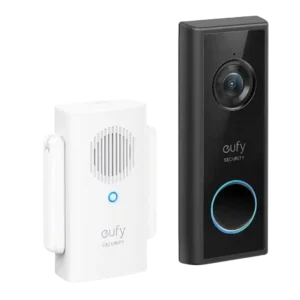
Choose the Eufy C210 if you want a no-fee, battery-friendly doorbell with local storage and good 1080p video. Skip it if you need hardwired charging, HomeKit, or consistently instant motion...
Pros: Installation and Mounting, Video resolution and detail
Cons: Power Options and Compatibility
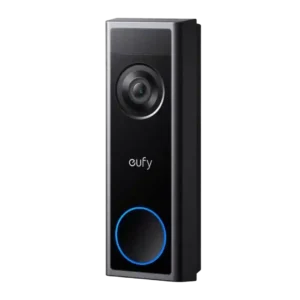
Good if you want an easy, no-fee doorbell with wired/battery power, local storage, and solid 2K coverage. Skip it if you need premium video bitrates, effortless chime coexistence, or built-in...
Pros: Installation and Mounting, App, software and firmware
Cons: Chime
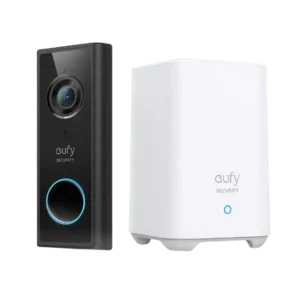
Good if you want sharp video, local storage and no required subscription. Skip it if you need 24/7 recording, flawless AI alerts, broad smart-home support or true six-month battery life.
Pros: Video resolution and detail, Recommendation for new buyers
Cons: Recording, Battery and Charging
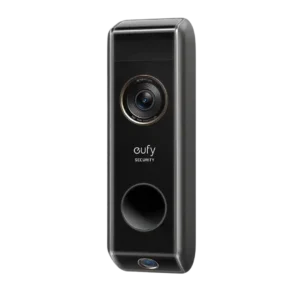
Choose the Eufy S330 if package monitoring, local storage, and no subscription matter most. Skip it if you need slim hardware, HomeKit, consistently fast live view, or stronger night vision.
Pros: Delivery package monitoring, Video resolution and detail
Cons: lag), Smart-home integration (Alexa, Google, Siri, HomeKit, Matter, Thread)