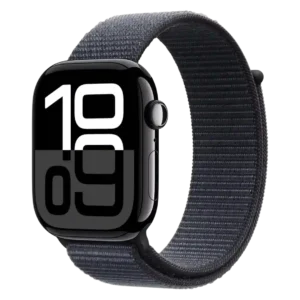
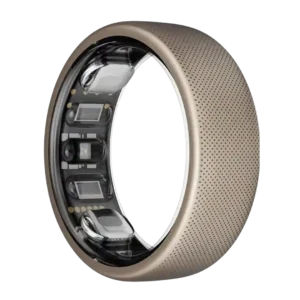
Apple Watch Series 10
Where It Has the Edge
No clear scored advantage over the other product.

Scorata scores summarize analyzed review evidence on a 1–5 scale; they are not laboratory measurements or a simple average of customer star ratings. Feature scores summarize the reviews covering that feature. The overall score averages feature scores within each review, then combines review averages. When both expert and customer evidence are available, those two groups receive equal weight. Products can have different review coverage, so small score gaps do not establish a winner.
Recommendations prioritize important features for the category, with a score of at least 3.5, a gap of at least 0.25 points and at least two supporting reviews per product. Features with widely varying scores or broad connectivity contexts are excluded from recommendations. These safeguards do not establish statistical significance.
Quick verdict
There is not enough consistent, comparable evidence for a clear recommendation. Use the feature details and supporting reviews to weigh the tradeoffs.
There is not enough comparable review evidence to recommend Apple Watch Series 10 over the other product.
There is not enough comparable review evidence to recommend Amazfit Helio Ring over the other product.
No clear scored advantage over the other product.
No clear scored advantage over the other product.
Scores are out of 5. Missing scores mean missing review evidence, not a missing feature.
GPS accuracy was consistently praised as quite good to spot-on, with one caveat that dual-band sports watches can still outperform it.
GPS accuracy had one mixed assessment, where the phone-based GPS was considered usable but not great.
Heart-rate evidence was strongly positive across running, cycling, and chest-strap comparisons, though one reviewer noted occasional errors and dropouts.
Heart-rate accuracy split sharply by use case: resting or running data could be strong, but several reviewers found intensive workouts, cycling, or spikes unreliable.
Workout and fitness tracking accuracy was praised in cardio, structured workout, and general fitness/sleep contexts.
Sleep duration tracking was generally trusted, with reviewers finding timing or duration usable; caveats centered on limited sleep-stage confidence and weak actionability.
Sleep tracking was usually considered a strength for duration, scores, naps, and overnight insights, though a few reviewers found overestimation or weaker detail.
Coaching features were useful but uneven: pep talks and Training Load helped, while reviewers wanted more depth, feedback, or Garmin-level detail.
Recovery and Training Load insights were useful and easy to digest, but reviewers repeatedly wanted more numbers, guidance, or actionability.
Recovery insights were often useful for sleep-and-recovery focused users, but some reviewers criticized weak sensitivity or confusing recovery/readiness signals.
Workout variety was broad and versatile, covering many mainstream uses, though reviewers still framed Garmin-style depth as stronger for dedicated athletes.
General activity tracking was mixed: some reviewers found useful or accurate daily health data, while others said daytime activity tracking was basic, incomplete, or not a standalone fitness-tracker replacement.
Automatic workout detection was consistently criticized or absent, with reviewers repeatedly noting that workouts must be started manually.
Blood oxygen tracking drew mixed evidence: one updated review said it was available, while several others criticized or noted disabled U.S. availability.
Blood oxygen tracking was viewed as broadly in line with expectations or comparable devices where reviewers discussed it with sentiment.
One reviewer criticized the low exercise threshold, making calorie/exercise credit feel too easy rather than especially meaningful.
Calorie tracking drew qualified feedback, with one reviewer seeing higher calorie burn than Apple Watch and another finding passive calorie estimates modest unless workouts were recorded.
Connected GPS reliability was limited by phone dependence and connection issues, including one review that lost ring connection during a ride.
Distance tracking received a single positive accuracy assessment during walking and biking tests against established fitness trackers.
Fitness coaching was not valued highly; reviewers questioned what the paid coaching added or found the advice trivial.
One review characterized the broader health and fitness tracking as strong, with the Series 10 continuing to perform well as a health-focused watch.
Menstrual cycle tracking was treated as a useful inclusion, though one review noted limited sharing with popular women’s health apps.
Pace tracking received a single mixed note, with pace reported slightly faster than the Apple Watch.
Resting heart-rate and HRV tracking were consistently praised or found close to comparison devices, making this one of the more reliable health metrics.
Route tracking was useful only when the phone was present, and one reviewer explicitly complained that forgetting the phone means no map.
Effort and score tracking were mixed: reviewers generally understood the ratings, but manual splits or score context could frustrate athletes.
Sleep-stage tracking was less trusted than overall sleep tracking, with several reviewers warning that stages were overestimated, unreliable, or hard to trust.
Step counting was often close to watches or competing rings, though one reviewer reported inaccurate step tracking and another treated it as only approximate.
Stress tracking was divisive: some reviewers found emotional-response detection accurate or useful, while others found it confusing, unhelpful, or poorly aligned.
Wellness insights such as Vitals, sleep apnea context, and health-conscious features were appreciated, but some reviewers wanted more practical guidance.
Workout mode variety was a repeated weakness because the ring supports only a handful of modes and often pushes users toward an Amazfit watch for broader tracking.
Workout tracking accuracy was mixed to weak overall, with good results in some running or supported-workout tests but significant gaps, dropouts, and limited exercise support.
Comfort was the strongest consensus point, with reviewers praising the thinner, lighter design for all-day wear, workouts, and sleep.
Comfort was a major strength, with many reviewers finding the ring lightweight, unobtrusive, comfortable for sleep, and easy to forget during daily wear.
Materials were praised for the lighter titanium, polished finishes, premium look, and improved perceived luxury.
Band quality and compatibility were praised through excellent bands, older strap compatibility, and a well-designed band mechanism.
Build quality evidence centered on durable sapphire glass as a recommended premium durability upgrade.
Build quality was broadly strong, with titanium construction and well-made hardware praised across multiple reviews.
Design and appearance were widely praised for the titanium look, subtle pattern, minimalist style, and wearable jewelry-like profile.
Durability evidence was mixed: some reviewers saw no blemishes or scratches, while others warned about scratch risk and newer-model improvements.
Durability was mostly positive for scratches and everyday wear, though several reviewers still warned about surface marks or removing it for rough activities.
Fit mattered for sensor performance; the Sport Band was praised as adjustable and effective for running accuracy.
Fit depended heavily on finger size: reviewers with a good size liked the fit, but others struggled with looseness, tightness, orientation, or lack of sizing kit.
Size options were mixed: bigger displays helped usability, but reviewers worried about small wrists and the loss of very small options.
Size options were a major weakness, with reviewers repeatedly calling the limited size range restrictive or excluding smaller and larger hands.
Style and design were broadly praised as sleek, refined, and jewelry-like, though a few reviewers disliked the square form.
Water features were polarizing: depth and temperature tools impressed some reviewers, while snorkeling session handling frustrated others.
Water resistance was a strong point, with reviewers repeatedly using the ring for showers, swimming, washing up, or general water exposure without issues.
Battery life was the most common concern: some reviewers got acceptable or improved results, but many called daily charging the biggest flaw.
Battery life was the most repeated concern, commonly landing around two to four days and often falling short of competitors or reviewer expectations.
Charging convenience was strong because short charging sessions could cover sleep tracking or daily use and fit into routines.
Charging convenience was mostly criticized because the puck or dock required precise alignment, lacked a case-style approach, or was easy to disturb.
Charging speed was a major strength, repeatedly verified or praised as very fast and helpful.
Charging speed was generally acceptable, with reviewers describing roughly 1.4 hours to under two hours as relatively quick or reasonable.
Display quality was one of the clearest strengths, with repeated praise for the bigger, readable, premium-feeling screen.
Brightness was generally good, especially for glancing and always-on use, but several reviewers said the off-angle improvement was subtle.
Outdoor and angled visibility was praised for making quick glances easier during runs, rides, and everyday use.
Reliability evidence was excellent, with reviewers describing the watch as something that simply works without crashes or weirdness.
Overall reliability was mixed to weak, with good performance in some tests but repeated concerns about beta feel, faulty units, app dependence, and inconsistent operation.
Data syncing ranged from seamless multi-device aggregation to unpredictable Apple Health, Garmin, Strava, or Bluetooth-related failures.
Subscription value was generally favorable after free or non-required services, but some reviewers disliked upsells or earlier premium feature confusion.
Value was strongest for first-time buyers and older Apple Watch owners, while recent Series owners were often told not to rush.
Value for money was mixed but often positive at discounted prices or in bundles; negative reviews argued the feature set and reliability did not justify the price.
Activity reminders were weakly supported because one reviewer noted the ring would not prompt users to stand up.
Breathing exercises had limited but positive-to-mixed evidence, with one reviewer liking free guided breathing and another saying it helped them unwind.
ECG was treated as a mature health function that continued to work seamlessly rather than a major new upgrade.
Google Fit compatibility had limited but positive evidence through easy syncing with popular third-party fitness apps.
Health trend insights were useful when presented clearly and actionably, but some reviewers wanted deeper guidance or found AI insights too basic.
LTE evidence was mixed: standalone calling worked well, but Series 10 lacked the newer 5G coverage advantage discussed for Series 11.
Readiness scores were helpful for some reviewers but inconsistent for others, especially when compared with Garmin, Oura, Samsung, or Whoop-style readiness metrics.
Pause/resume-style ring controls were appreciated for breaks, sickness, and preserving streaks.
The ring locating feature had limited evidence and was judged as potentially useful but not proven, essentially better than having no locator.
Safety features were valued, with reviewers noting emergency access, detection features, and solo-workout check-in usefulness.
Sleep apnea monitoring was viewed as a useful or interesting sleep-breathing feature, though several mentions framed it as beta or risk insight rather than diagnosis.
Strava compatibility was mixed, with one reviewer reporting failed registration and others noting useful linking or export to Strava-like platforms.
Weight was widely praised; reviewers repeatedly described the ring as light, low-profile, or easy to wear overnight.
App alerts were inconsistent: emotional and battery alerts could be useful, but multiple reviewers complained about missing or inadequate notifications.
The Apple ecosystem was a major strength, with seamless Strava syncing, Mac authentication, Apple-device continuity, and broad app support.
Review contexts may differ, so use caution when interpreting the score gap.
Apple Health compatibility was mixed because one reviewer saw Apple Health integration fail to register activity while another praised easy syncing with popular apps.
Bluetooth-related evidence was positive, covering external sensor support and effortless AirPods connection.
Review contexts may differ, so use caution when interpreting the score gap.
Bluetooth reliability was mixed: one reviewer praised reliable connection, but others reported disconnections or poor phone-to-ring connectivity.
Physical control evidence was critical: runners wanted better button workflows for splits, starting workouts, and precision start.
Call handling was a highlight, especially voice isolation; reviewers found calls clearer and useful in noisy settings.
The companion Health/Fitness app was rich and useful, but one reviewer found the volume of data overwhelming.
Companion app quality was one of the most divided areas, with praise for clean layouts and easy navigation but criticism of clutter, upsells, confusion, and lack of polish.
Contactless payments were strongly praised for speed and convenience, especially in daily routines and transit-like scenarios.
Customization was praised through adjustable goals, personalization options, and enough watch-face/app choices for most users.
Customization options had limited positive evidence from the app layout being customizable to the reviewer's preferences.
Mapping and navigation were promising but unfinished, with reviewers calling routes OK, half-baked, or not cleanly integrated with workouts.
Review contexts may differ, so use caution when interpreting the score gap.
Menu navigation benefited from the revised workout layout and larger screen, making navigation, typing, and selections easier.
Speaker-based music and media playback was convenient in quiet or headphone-free moments, but volume and audio quality were common limitations.
The operating-system experience was mostly strong, but one reviewer felt Apple’s once-simple interface is becoming more muddled.
Pairing and connection reliability had limited positive evidence from reviewers who found connection or syncing solid once set up.
Review contexts may differ, so use caution when interpreting the score gap.
Notifications remained useful when limited to important communication, keeping glanceable alerts on the wrist.
Reviewers repeatedly described it as a highly capable iPhone smartwatch with broad lifestyle, health, fitness, and convenience features.
Software smoothness was a strength, with reviewers describing fluid performance, fast app handling, and only rare bugs.
Third-party app compatibility was useful when syncing worked, but one review reported unpredictable integrations across Apple Health, Garmin, and Strava.
Third-party app support was valuable for sports and customization, though reviewers wanted better APIs for route syncing and deeper integration.
Review contexts may differ, so use caution when interpreting the score gap.
Touchscreen/display responsiveness had limited but positive evidence, with one reviewer describing the OLED as very responsive.
The interface was often described as useful and contextual, especially Smart Stack, while one reviewer complained menus are becoming cluttered.
The app user interface was generally considered easy to navigate or clean, though one reviewer noted its design borrowed heavily from another app.
Siri on the watch was praised for reliable, fast everyday tasks like timers, music, and calendar events.
Watch faces were mixed: reviewers liked the second-hand realism and customization, but criticized some new faces for lacking complications.
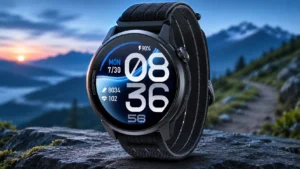
The Pace 4 Pro delivers an exceptional display, impressive battery life and reliable GPS in a remarkably light sports watch. Its wrist heart-rate tracking can be inconsistent during intense workouts,...
Pros: heart rate accuracy, display quality
Cons: band quality, smartwatch features
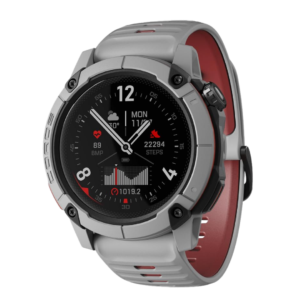
Best for long battery life, accurate GPS and useful offline maps at a strong price. Skip it if you need payments, richer apps, a built-in LED flashlight or polished smartwatch...
Pros: mapping and navigation, value for money
Cons: smartwatch features, contactless payments
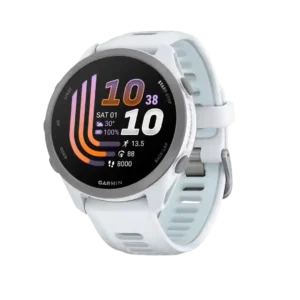
Best for accurate run tracking, deep Garmin coaching and phone-free Spotify in a light package. Skip it if you need full maps, triathlon mode, Apple Music support or the strongest...
Pros: value for money, GPS accuracy
Cons: mapping and navigation, third-party app support
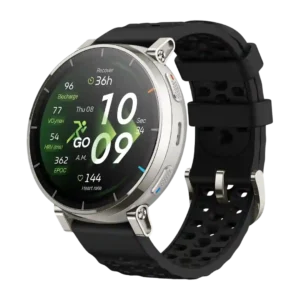
Good if you want premium running features, long battery life, and maps for under $200. Skip it if you need flawless heart-rate data, multiband GPS, LTE, or richer app support.
Pros: value for money, battery life
Cons: heart rate accuracy, third-party app support