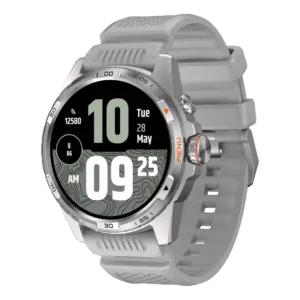
Ticwatch Atlas
Where It Has the Edge
- comfort is 4.4 vs 4.0. Comfort is widely positive despite the large case, helped by soft straps and manageable weight.

Scorata scores summarize analyzed review evidence on a 1–5 scale; they are not laboratory measurements or a simple average of customer star ratings. Feature scores summarize the reviews covering that feature. The overall score averages feature scores within each review, then combines review averages. When both expert and customer evidence are available, those two groups receive equal weight. Products can have different review coverage, so small score gaps do not establish a winner.
Recommendations prioritize important features for the category, with a score of at least 3.5, a gap of at least 0.25 points and at least two supporting reviews per product. Features with widely varying scores or broad connectivity contexts are excluded from recommendations. These safeguards do not establish statistical significance.
Quick verdict
The review evidence points to a tradeoff: comfort versus display quality and workout tracking variety. Choose according to which strengths matter more to you; the overall score alone does not settle that choice.
Choose Ticwatch Atlas for comfort.
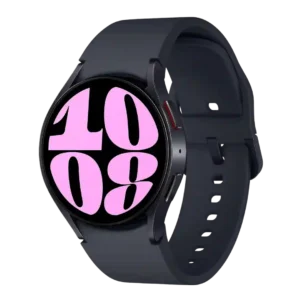
Choose Samsung Galaxy Watch 6 for display quality and workout tracking variety.
Scores are out of 5. Missing scores mean missing review evidence, not a missing feature.
Heart-rate accuracy is mostly positive in controlled or everyday use, but a few workout tests showed meaningful under- or over-reporting.
Heart rate accuracy was mixed: steady efforts often aligned well, while interval spikes and some workouts produced lag or inconsistent readings.
GPS accuracy divides reviewers: some found routes solid or Apple Watch-like, while others saw sluggish lock-on and overreported distance.
GPS accuracy ranged from fast and accurate lock-on to route wandering, corner cutting, and enough error to concern serious runners.
Fitness tracking accuracy is mixed, ranging from strong everyday results to concerns about GPS and heart-rate accuracy for serious training.
Fitness accuracy was mixed: general tracking looked good in some tests, but weight training and serious training accuracy drew notable criticism.
Sleep tracking is mixed: some reviewers found it accurate or aligned with other devices, while others saw wake time counted as sleep.
Sleep tracking accuracy was mixed: some reviewers saw strong alignment and useful sleep scores, while others reported stage errors, overcounting, or poor snoring tracking.
Recovery insights are weak, with reviewers saying suggestions felt off or required third-party apps.
Recovery insights had limited but positive evidence around at-a-glance sleep and skin-temperature recovery-related data.
Coaching is underdeveloped, with one reviewer wanting a more complete fitness feature suite instead of relying on outside apps.
Coaching features were useful but not universally compelling, with praise for heart-rate zone guidance and sleep plans but caveats about general-user relevance and gimmickry.
Workout variety is strong, with reviewers consistently citing broad sports coverage and more than 100 modes.
Workout variety was one of the clearest strengths, with reviewers repeatedly highlighting more than 90 or 100 activity profiles and broad sport coverage.
Wellness insights are basic, with reviewers saying the data exists but requires too much digging and offers limited interpretation.
Wellness insights were praised for useful sleep insights, health baselines, coaching, and comprehensive well-being views, though some wanted deeper synthesis.
Blood oxygen results are mixed: some readings matched reference devices, while others produced erratic or dodgy spot readings.
Blood oxygen tracking drew concern because two reviewers reported overnight readings that seemed unusually or slightly low compared with other devices.
Overall health tracking is generally useful and often accurate, but heart-rate reliability and insight depth remain uneven.
Health tracking accuracy was generally useful for body composition and overall health insights, but reviewers also noted awkward measurements and technology limits.
Step counting gets limited but positive support, with one reviewer finding it surprisingly consistent.
Step counting accuracy was supported by one reviewer whose steps, active calories, and average heart rate matched other watches well.
Calorie tracking is considered useful and close enough to comparison devices for everyday fitness understanding.
Calorie tracking was supported by one reviewer whose workout results aligned well with other wearables for active calories and related stats.
Battery life is the strongest consensus point, usually delivering multi-day endurance and repeatedly beating typical Wear OS expectations.
Battery life was the most divided and repeated issue, ranging from severe daily-charge complaints to better results with always-on disabled or larger models.
Charging convenience is a recurring weak spot because reviewers dislike the proprietary pogo-pin setup, loose connection risk, or USB-A cable.
Charging convenience was mixed: reverse charging and quick top-ups helped, but daily charging and daytime charging for sleep tracking were recurring annoyances.
Charging speed is mostly praised for fast top-ups, despite one reviewer calling it unimpressive.
Charging speed earned strong marks across reviews, with several reviewers reporting roughly half charges in 30 minutes or full charges in about 45–80 minutes.
Comfort is widely positive despite the large case, helped by soft straps and manageable weight.
Comfort depended heavily on size and model: lighter standard watches were comfortable, while the large Classic could be either surprisingly wearable or uncomfortable overnight.
Materials feel sturdy and high-end for the price, though one reviewer notes the Atlas still lacks true top-end premium feel.
Materials quality was praised for the Classic’s shinier, more durable stainless steel case.
Size options are poor because the Atlas comes in one large size and several reviewers warn it is not for small wrists.
Size options were appreciated, but the largest Classic was criticized as too big and heavy by one reviewer.
Fit is context-dependent: some reviewers find it comfortable, while others warn that the large body can be awkward or too big.
Fit was criticized in the long-term Classic review, where the 47mm model felt too large for the reviewer’s wrist.
Design draws mixed-to-positive reactions: many like the rugged look, while others find it bland, bulky, or too familiar.
Style and design were praised across reviews for polish, looks, and refinement, though the large Classic’s boldness was not for everyone.
Durability is one of the Atlas' clearest strengths, with scratch resistance, rugged construction, and water tests holding up well.
Durability was consistently praised, with reviewers noting sapphire crystal, water/dust protection, scratch resistance, and successful real-world wear.
Water resistance performs well in reviewer use, including swim and submersion experiences.
Water resistance received positive real-world evidence from beach and general water-resistant use.
Build quality is consistently strong, with reviewers praising the premium feel, metal construction, and sturdy rugged case.
Build quality was described as durable and premium, especially with crystal glass and a lightweight but sturdy body.
The band is mostly comfortable, grippy, breathable, and secure, though reviewers note limited 24mm options and some less-premium feel.
Band feedback was mixed: reviewers liked comfort and easier new release buttons, but some found the mechanism forceful or fiddly when reattaching straps.
Display quality is generally strong thanks to the dual-layer setup, though a few reviewers note washed-out colors or less premium vibrancy.
Display quality was one of the strongest consensus areas, with reviewers praising the larger AMOLED screen, clarity, sharpness, and overall screen experience.
Brightness is usually acceptable or strong outdoors, but some reviewers found the screen less vibrant or dimmer than premium rivals.
Brightness was widely praised outdoors, though one reviewer found adaptive brightness too aggressive indoors.
Outdoor visibility is a standout, with multiple reviewers saying the display or low-power layer remains readable in daylight.
Outdoor visibility was a major strength, with reviewers repeatedly saying the brighter display was easy to read in sunlight and outdoor conditions.
Reliability is mostly good, with stable performance and few freezes, but phantom vibrations and one watch-face glitch appear as caveats.
Reliability was positive overall but not perfect, with one reviewer calling it solid and another reporting an isolated overheating incident.
Value is context-dependent: discounts make it attractive, but several reviewers prefer cheaper or more polished alternatives.
Value depended on context: reviewers liked the Android feature set and discounted pricing, but several warned upgrades were modest or not worth it for recent owners.
Voice assistant support is the clearest smart-feature drawback because reviewers repeatedly complain that Google Assistant is missing.
Google Assistant impressed reviewers who used it, with praise for fast, seamless, useful wrist access.
Music control integration is limited because one reviewer wanted playback control inside TicExercise instead of leaving the workout app.
Music controls had positive evidence from one reviewer who found Spotify worked well on the watch.
Mapping and navigation are mixed: Google Maps and heat maps help, but reviewers want stronger native offline mapping and training tools.
Mapping and navigation were praised in both scored reviews, especially for wrist-based maps, route display, and Google Maps usefulness.
Review contexts may differ, so use caution when interpreting the score gap.
Watch face quality is split, with some reviewers loving the selection while others call Mobvoi's faces uninspiring or terrible.
Watch faces were praised for stock options, complications, and broad customization, including always-on usefulness.
Operating system experience is the most repeated tradeoff: Wear OS works, but update uncertainty and older software hurt confidence.
The operating system experience was praised as a strong Wear OS implementation, though app and ecosystem restrictions kept it from being flawless.
Pairing reliability is mixed because setup is easy once started, but app handoff between Mobvoi and Wear OS can be confusing.
Pairing and setup were generally reliable on Samsung phones and device transfers, though one reviewer found Pixel setup more tedious.
Review contexts may differ, so use caution when interpreting the score gap.
Onboard music support is useful, with storage and Spotify offline playback helping phone-free workouts.
Onboard music storage was only indirectly evaluated, with one reviewer noting Samsung app clutter consumed space that could hold offline music or podcasts.
Touchscreen responsiveness is strong in the few reviews that tested it directly.
Touchscreen responsiveness was polarizing: some reviewers called it fast and responsive, while others criticized the touch bezel as clunky or unreliable.
The user interface is mixed to weak, with reviewers criticizing drab visuals, too many Mobvoi apps, or boring animations.
The interface was often called intuitive and clear, though some reviewers found Samsung’s layout, app clutter, or ecosystem flow clunky.
The companion app is functional and sometimes informative, but several reviewers find it barebones, sluggish, or visually unimpressive.
Samsung Health and the companion experience were praised for clear data presentation, useful insights, and deep settings control, despite some complaints about old UI or limits.
Google app integration and Mobvoi's improving app layer are viewed as useful, though not as polished as leading ecosystems.
The Wear OS and Play Store ecosystem was seen as a major strength, with broad third-party app access, though one long-term reviewer still wanted faster app growth.
Review contexts may differ, so use caution when interpreting the score gap.
Button controls are mostly liked for the crown and haptics, though one reviewer found rotation missing and another found sensitivity uneven.
Button and bezel controls were a tradeoff: rotating-bezel reviewers loved the tactile control, while workout pausing and limited button mapping frustrated others.
Notifications are useful and customizable overall, though one reviewer experienced unexplained vibrations.
Notifications were praised for wrist-based convenience and readable, glanceable delivery.
Smartwatch features are broad and useful, but the experience is weakened by missing Assistant support and ecosystem tradeoffs.
Smartwatch features were widely praised, with reviewers calling the Watch 6 series robust, consistent, and feature-rich despite battery caveats.
Menu navigation is mostly easy and clearly defined, with the crown and gestures making everyday use straightforward.
Menu navigation scored highly where reviewers liked the touch or rotating bezel and easy layouts, though long-term impressions noted some randomness or friction.
Third-party app support is solid through Wear OS and the Play Store, with Strava, Spotify, and other apps working well.
Third-party app support was strong in the scored reviews, especially through Google Play and well-integrated Wear OS apps.
Review contexts may differ, so use caution when interpreting the score gap.
Call handling is well regarded, with good clarity and useful wrist calling in practical situations.
Call handling was praised for clear audio, easy acceptance/rejection, and strong speakerphone performance from the wrist.
Customization is praised across watch faces, tiles, complications, and low-power display settings.
Customization was a strength through watch faces, strap options, and settings, with reviewers specifically praising the improved band customization experience.
Software smoothness is a major strength, with reviewers repeatedly reporting snappy, fluid performance and little lag.
Software smoothness was mostly strong, with repeated praise for quick apps and smooth performance, balanced by several lag or slowdown complaints.
ECG support is a weakness because one reviewer specifically notes that the Atlas lacks an ECG sensor found on rival Wear OS watches.
ECG functionality was seen as potentially valuable but limited by Samsung-phone restrictions, confusing result presentation, and low personal usefulness for some reviewers.
Auto-detection is generally praised for quickly recognizing walks or exertion, with only minor limits around passive workout context.
Reviewers repeatedly praised automatic workout detection for walks, runs, cycling, and general activity, calling it reliable, convenient, and among the best smartwatch implementations.
Cross-platform support is limited because reviewers note Android-only use and no iPhone compatibility.
Cross-platform compatibility was a clear weakness, with multiple reviewers criticizing Samsung-phone-only health features and a more tedious non-Samsung setup.
Safety features are appreciated in principle, but fall detection produced multiple accidental triggers for some reviewers.
Safety features were appreciated for fall detection and emergency tools, but missing crash detection and failed fall tests were important caveats.
Temperature tracking split reviewers: one praised working skin-temperature readings, another found object temperature checks wrong, and one noted cycle prediction limits.
Stress tracking had limited mixed evidence, with one reviewer finding the stress view interesting but hard to inspect closely.
Wallet and NFC use were treated positively as convenient smartwatch features for wrist-based payments and day-to-day utility.
Voice recording had limited positive evidence, with one reviewer reporting no issues recording and playing voice notes on the watch.
Data control received positive notes where reviewers valued Health Connect portability and easy deletion of cycle-tracking data.
LTE is a clear limitation because one reviewer calls it the only glaring omission.

Best for long battery life, accurate GPS and useful offline maps at a strong price. Skip it if you need payments, richer apps, a built-in LED flashlight or polished smartwatch...
Pros: mapping and navigation, value for money
Cons: smartwatch features, contactless payments

Best for accurate run tracking, deep Garmin coaching and phone-free Spotify in a light package. Skip it if you need full maps, triathlon mode, Apple Music support or the strongest...
Pros: value for money, GPS accuracy
Cons: mapping and navigation, third-party app support

Good if you want premium running features, long battery life, and maps for under $200. Skip it if you need flawless heart-rate data, multiband GPS, LTE, or richer app support.
Pros: value for money, battery life
Cons: heart rate accuracy, third-party app support

Best for accurate running metrics, excellent coaching tools, a bright AMOLED display, and dependable battery life. Skip it if you need offline maps, music storage, contactless payments, multi-band GPS, or...
Pros: battery life, value for money
Cons: mapping and navigation, smartwatch features