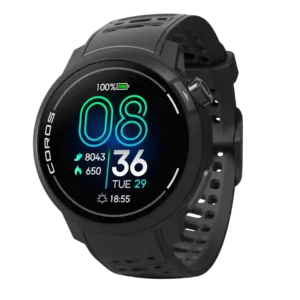
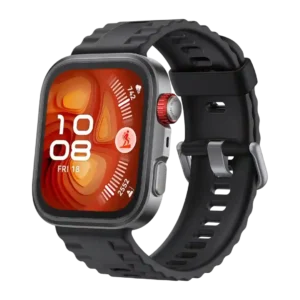
Coros Pace 4
Where It Has the Edge
- comfort is 4.9 vs 4.5. Comfort was one of the clearest strengths, with reviewers repeatedly praising the light, small watch for all-day and...

Scorata scores summarize analyzed review evidence on a 1–5 scale; they are not laboratory measurements or a simple average of customer star ratings. Feature scores summarize the reviews covering that feature. The overall score averages feature scores within each review, then combines review averages. When both expert and customer evidence are available, those two groups receive equal weight. Products can have different review coverage, so small score gaps do not establish a winner.
Recommendations prioritize important features for the category, with a score of at least 3.5, a gap of at least 0.25 points and at least two supporting reviews per product. Features with widely varying scores or broad connectivity contexts are excluded from recommendations. These safeguards do not establish statistical significance.
Quick verdict
The review evidence points to a tradeoff: comfort versus heart rate accuracy and fitness tracking accuracy. Choose according to which strengths matter more to you; the overall score alone does not settle that choice.
Choose Coros Pace 4 for comfort.
Choose Huawei Watch Fit 4 Pro for heart rate accuracy and fitness tracking accuracy.
Scores are out of 5. Missing scores mean missing review evidence, not a missing feature.
Heart-rate accuracy was usually good for steady running, but reviewers repeatedly saw weaker results in intervals, cycling, gym work, or cadence-lock situations.
Heart rate accuracy was usually praised, including close agreement with chest strap or WHOOP-style references, with a few cautions about high-intensity or average readings.
GPS accuracy drew the strongest agreement: most reviewers found tracks and distances excellent, with only occasional drift or margin-of-error complaints.
GPS accuracy was broadly positive across city, running, cycling and outdoor tests, though one scientific review described it as good rather than top-tier.
Core fitness tracking was viewed as accurate and useful overall, with some caveats around open-water swim and more difficult sensor scenarios.
Fitness tracking accuracy was one of the strongest areas, with reviewers praising workout tracking, heart-rate performance and overall sports tracking reliability.
Sleep timing was often acceptable, but sleep-stage accuracy and the watch’s judgment of poor sleep were questioned by several reviewers.
Sleep tracking split reviewers: several found it accurate, detailed or excellent, while others found stage detection unreliable compared with Oura or EEG-style references.
Recovery and training-load insights were useful for interpreting fitness, although one reviewer criticized Coros’s weekly training-load reset.
Recovery-related insight was viewed as useful when tied to trends, sleep, HRV or recovery tips, but the evidence was not as deep as for GPS or battery.
Reviewers praised the broad workout profile selection and multisport coverage, even while noting that some adventure-focused modes stay on higher-end models.
Workout variety was widely praised, especially the 100-plus modes plus golf, diving, trail running and outdoor-focused additions.
Coaching and training features were useful and unusually complete for the price, though Garmin-style guidance and some plan options were still stronger elsewhere.
Coaching features were praised for animations, workout guidance, smart companion feedback and golf swing tracking, though one review found data breakdowns basic.
Step counts were reported as aligning well with Garmin and Apple watches in testing.
Step counting evidence was mixed: one review found daily counts close enough, while another thought arm movement made counts optimistic.
Health tracking was generally useful for big-picture trends, though reviewers found some accuracy limits when heart-rate and sleep data became more demanding.
Reviewers generally found health tracking strong for the price, with broad sensor coverage and useful everyday readings, though some deeper analysis remained limited.
Stress tracking was treated as accurate enough for a general picture when combined with sleep and heart-rate data.
Stress tracking received limited but opinionated support: one reviewer found it accurate, while another called stress levels hit-or-miss.
Wellness insights such as HRV, readiness-style guidance, and training trends were helpful for many users, but not every wellness check felt actionable.
Wellness insights were useful for many reviewers, especially sleep and health summaries, but some found the analysis less deep or not useful enough.
Comfort was one of the clearest strengths, with reviewers repeatedly praising the light, small watch for all-day and overnight wear.
Comfort was one of the strongest recurring positives thanks to the lightweight, slim design and easy all-day wear.
Materials quality was mixed: the plastic helped weight and comfort, but several reviewers called it budget or not lavish.
Materials quality was praised where reviewers linked sapphire, titanium or other materials to a premium feel or high-quality build.
Durability raised concerns because mineral glass and the low bezel were seen as less protective than tougher premium materials.
Durability was strongly positive, with reviewers reporting no scratches, strong protection and rugged-feeling construction.
Build quality was acceptable and functional, but the lightweight plastic design kept it from feeling premium.
Build quality was widely praised as premium, light, sturdy and well made.
Band quality was mixed: silicone was practical and straps were comfortable, while nylon drew complaints for holding sweat or moisture.
Band quality was mostly positive, though one reviewer disliked the chunkier fabric strap.
Water resistance was adequate for wet use and casual swimming, but reviewers did not treat it as a rugged diving-level feature.
Water resistance was viewed positively for swimming, showering and recreational diving use.
Fit was positive in the available evidence, with the 43 mm case sitting well on the wrist.
Fit evidence was limited but positive, tied to the snug, comfortable nylon strap fit.
Style and design were well received, with reviewers calling the watch sleek, clean, attractive, and helped by the AMOLED display.
Style and design were generally liked, but some reviewers criticized how closely it copies Apple Watch Ultra styling.
Size options were a limitation because reviewers wanted more than one case size and found the single smaller size unsuitable for some users.
Size options were a limitation for smaller wrists, with one review noting there was no smaller option.
Battery life was a standout across nearly every review, especially given the small case and AMOLED screen.
Battery life was the strongest consensus positive, with reviewers repeatedly reporting roughly a week or more and far less charging than mainstream rivals.
Charging convenience was mixed: the small USB-C adapter and keychain were handy, but needing a separate cable added friction.
Charging convenience was positive overall thanks to magnetic or Qi wireless charging, with some caveats about temperamental wireless charging or fixed cables.
Display quality was a major upgrade, with reviewers repeatedly praising the sharp, colorful AMOLED panel.
Display quality was consistently strong, with praise for crisp visuals, color, responsiveness and AMOLED presentation.
Brightness was usually strong outdoors and in daily use, though one reviewer found the default mode conservative.
Brightness was a strong consensus point, with reviewers praising outdoor readability and the very bright screen.
Outdoor visibility was consistently good, with reviewers reporting clear readability in sunlight and varied conditions.
Outdoor visibility was excellent in tested use, including daylight and direct-sun scenarios.
Reliability was positive in the available evidence, with the watch described as a solid sports-watch performer overall.
Reliability was strong in the limited evidence, with seamless use, no lag and automatic reconnection.
Value for money was the strongest consensus point, with every review framing the Pace 4 as unusually competitive for its price.
Value for money was a major strength, with many reviewers calling it a strong buy, no-brainer or unusually capable for the price.
The Coros ecosystem scored well because training analysis is broadly shared across the range and app/training-lab access was praised as free.
The app ecosystem was consistently limited compared with Wear OS, watchOS and fuller smartwatch platforms.
Review contexts may differ, so use caution when interpreting the score gap.
Smartwatch features were consistently described as basic, making the Pace 4 more of a training tool than a full smartwatch.
Smartwatch features were viewed as capable enough for basics, but not fully competitive with conventional smartwatch platforms.
Notifications were a weak point, with reviewers calling them basic, tiny, or nearly useless while running.
Notification handling was mixed: basic alerts and replies helped, but truncation, limited reply options and inconsistent iPhone features held it back.
Onboard music support was limited because it depends on owned audio files and lacks Spotify, Apple Music, or other streaming-service integration.
Onboard music storage was useful for MP3s and podcasts, but one reviewer found it less useful without their Spotify library.
Mapping and navigation were the most common tradeoff: breadcrumb navigation worked for many runs, but the lack of offline maps pushed some reviewers toward Pace Pro or higher-end watches.
Mapping and navigation were strong for workouts, golf, offline maps and route-back features, but limited outside workout contexts.
Review contexts may differ, so use caution when interpreting the score gap.
Music controls were mixed: some reviewers praised phone media controls, while others noted absent or not-yet-available controls during testing.
Music controls worked well in the limited evidence, with direct media or podcast control from the watch.
Button controls were useful for shortcuts and navigation, but reviewers disliked the digital dial during runs and the limited action-button behavior outside activities.
Button controls were generally useful, with the rotating crown, shortcut button and customizable controls helping navigation.
Touch responsiveness was mostly good, but accidental touchscreen or dial input was a recurring annoyance.
Touchscreen responsiveness was praised in the reviews that addressed it.
Watch faces were attractive by default, but reviewers wanted more customization and richer watch-face options.
Watch faces were well supported, with many paid/free choices and good built-in variety.
The companion app was praised for ease of use, improved polish, and transcription support, though voice content stayed inside the Coros ecosystem.
The companion app drew mixed reactions: some praised quick syncing and readable data, while others called it confusing, messy or not deep enough.
Software smoothness was a strength, with reviewers describing the watch as snappy and lag-free, though less glossy than Garmin in places.
Software smoothness was a major strength, with reviewers reporting seamless use, no lag and slick performance.
Operating system experience was praised for strong performance on the updated processor.
HarmonyOS was generally smooth and workable, though reviewers noted it differs from Wear OS and has quirks.
Contactless payments were missing, which reviewers treated as part of the broader smartwatch-feature gap.
Payments were highly region-dependent and often a major limitation; some markets had usable QR/NFC support, while many reviewers found payments missing.
Third-party app support was a clear limitation, with reviewers flagging the lack of app expansion versus smarter watches.
Third-party app support was one of the most repeated negatives, with reviewers finding few useful apps and limited AppGallery access.
Review contexts may differ, so use caution when interpreting the score gap.
Pairing reliability was positive in the available evidence, with the reviewer reporting no issue connecting wireless headphones.
Pairing reliability was mixed-to-positive: setup could be finicky, but later pairing, switching and cross-device use were smooth.
Review contexts may differ, so use caution when interpreting the score gap.
Menu navigation was simple and practical, but one reviewer felt the interface lacked smartwatch polish.
Menu navigation was mostly easy and smooth, though one reviewer disliked extra notification-clearing steps.
The user interface was generally considered easy, simple, and understandable, even if it remains more basic than some rivals.
The user interface was praised as intuitive, refined and smooth.
Customization was solid for sports fields, structured workouts, and button functions, with some limitations in watch-face flexibility.
Customization options were solid, including straps, buttons, cards and watch faces.
Reviewers liked the workout voice notes when transcription worked well, but several treated the feature as niche or less convenient than it could be.
Voice note usefulness had limited positive evidence from one reviewer who liked the mic and speaker options.
Bluetooth connectivity was positive in the limited evidence, with wireless headphones connecting without issue.
Bluetooth connectivity was positive in the limited evidence, covering reliable Bluetooth calls and headphone pairing.
Review contexts may differ, so use caution when interpreting the score gap.
The display flashlight was useful in a pinch, but several reviewers said it could not match a dedicated LED flashlight.
Flashlight usefulness had limited but positive evidence, with reviewers finding torch or flashlight access handy.
Auto-detection worked well in the two reviews that tested walking, rowing or routine activity detection.
Cross-platform compatibility was a clear strength, with reviewers repeatedly praising iOS and Android support.
ECG support helped justify the Pro tier and often worked well, though one reviewer wanted more educational context around the readings.
LTE/eSIM connectivity was a weakness, with direct evidence noting no eSIM support on this model.
Call handling was generally good for quick Bluetooth calls, with clear microphones and speakers, though reviewers did not treat it as phone-quality.
Voice assistant support was a clear weakness, with multiple reviews calling it missing, region- or phone-limited, or effectively unusable.
Charging speed was consistently praised, often around a full charge in about an hour.
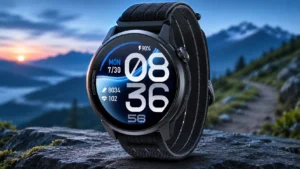
The Pace 4 Pro delivers an exceptional display, impressive battery life and reliable GPS in a remarkably light sports watch. Its wrist heart-rate tracking can be inconsistent during intense workouts,...
Pros: heart rate accuracy, display quality
Cons: band quality, smartwatch features
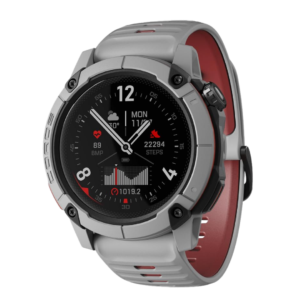
Best for long battery life, accurate GPS and useful offline maps at a strong price. Skip it if you need payments, richer apps, a built-in LED flashlight or polished smartwatch...
Pros: mapping and navigation, value for money
Cons: smartwatch features, contactless payments
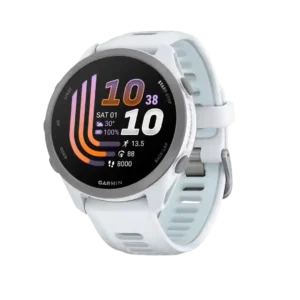
Best for accurate run tracking, deep Garmin coaching and phone-free Spotify in a light package. Skip it if you need full maps, triathlon mode, Apple Music support or the strongest...
Pros: value for money, GPS accuracy
Cons: mapping and navigation, third-party app support
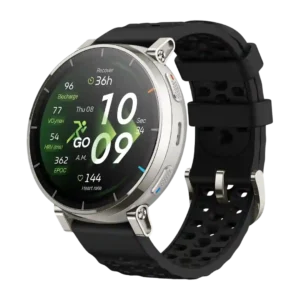
Good if you want premium running features, long battery life, and maps for under $200. Skip it if you need flawless heart-rate data, multiband GPS, LTE, or richer app support.
Pros: value for money, battery life
Cons: heart rate accuracy, third-party app support