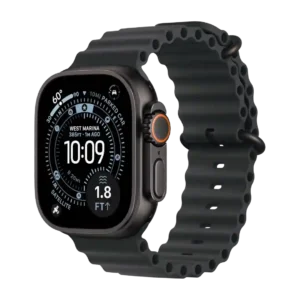
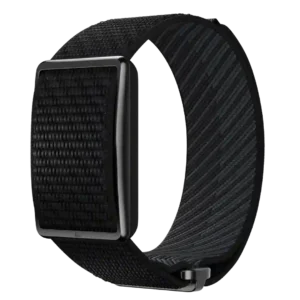
Apple Watch Ultra 3
Where It Has the Edge
No clear scored advantage over the other product.

Scorata scores summarize analyzed review evidence on a 1–5 scale; they are not laboratory measurements or a simple average of customer star ratings. Feature scores summarize the reviews covering that feature. The overall score averages feature scores within each review, then combines review averages. When both expert and customer evidence are available, those two groups receive equal weight. Products can have different review coverage, so small score gaps do not establish a winner.
Recommendations prioritize important features for the category, with a score of at least 3.5, a gap of at least 0.25 points and at least two supporting reviews per product. Features with widely varying scores or broad connectivity contexts are excluded from recommendations. These safeguards do not establish statistical significance.
Quick verdict
There is not enough consistent, comparable evidence for a clear recommendation. Use the feature details and supporting reviews to weigh the tradeoffs.
There is not enough comparable review evidence to recommend Apple Watch Ultra 3 over the other product.
There is not enough comparable review evidence to recommend Polar Loop over the other product.
No clear scored advantage over the other product.
No clear scored advantage over the other product.
Scores are out of 5. Missing scores mean missing review evidence, not a missing feature.
GPS accuracy was one of the strongest areas, with multiple reviewers calling tracks solid, impressive, precise, or market-leading.
Heart-rate results were mostly praised as close to straps and among the best wrist readings, but some reviewers reported race-day or run-session misses.
Heart-rate accuracy was the most split metric: some runs and steady sessions matched references well, while wrist use, intervals, weights, and high-intensity efforts produced misses or spikes.
General fitness metrics were considered accurate in higher-level testing, especially when GPS and heart-rate results were evaluated together.
Sleep tracking drew generally positive reactions for accuracy, clarity, and the new Sleep Score, with a few caveats around simplicity and confidence.
Sleep timing was widely praised as useful or accurate, but a few reviewers reported inconsistent or basic sleep tracking, especially in negative video reviews.
Workout Buddy and coaching were viewed as promising but uneven, with reviewers noting wrong or limited guidance and phone requirements.
Recovery and training analysis remained a recurring weakness, with reviewers saying Apple still lacks the depth of dedicated sports-watch platforms.
Recovery insights such as Nightly Recharge were often considered useful, especially for sleep-based recovery, though app presentation and workout-data gaps weakened confidence.
Workout variety was praised for strong cycling, swimming, triathlon, and other activity profiles.
Reviewers generally found daily activity data acceptable for casual lifestyle tracking, but several noted limits or odd behavior in the broader activity-tracking experience.
Automatic workout detection was inconsistent: a few reviewers found it usable, but many reported late starts, false positives, duplicate logs, missed portions, or unusable behavior.
Blood oxygen tracking was a recurring omission, and reviewers framed the lack of SpO2 as a limitation versus other wearables.
Calorie estimates were usually treated as useful or close to other trackers, with one reviewer calling the numbers wildly different from Apple’s approach.
Fitness coaching evidence was mixed: Polar’s training-load science impressed some, while others found guidance too basic, confusing, or not beginner-friendly.
Goal tracking received limited negative evidence, with one reviewer finding activity goals too easy to exceed and wanting step count included more directly.
Hypertension-related health alerts were treated as meaningful preventive signals, though evidence was limited to one reviewer’s health-feature assessment.
Resting or low heart-rate data drew limited but positive evidence, with reviewers saying it matched other trackers or showed nothing unusual.
Sleep-stage tracking was seen as useful enough for trends by some reviewers, but others warned consumer sleep-stage precision should be treated cautiously.
Step counts were often close enough for daily trends, though some reviewers saw a few-hundred-step variance or cautioned that workout step equivalents may distort true counting.
Swimming support was weak beyond water exposure; one review noted missing swim metrics and another found open-water HR performance poor.
Wellness insights were praised mainly around Sleep Score and hypertension-style health alerts, which reviewers found useful and welcome.
Workout mode variety is broad when started manually, but reviewers disliked the limited feature set, lack of shortcuts, or failure to apply labels automatically.
Workout tracking accuracy was a major weakness, with frequent reports of missed workout portions, duplicate sessions, misclassified activity, and limited manual workout usefulness.
Comfort was mixed: several reviewers found it wearable, but others called it bulky or preferred smaller/lighter watches.
Comfort was one of the strongest positives, with reviewers repeatedly saying the Loop is light, soft, forgettable, and comfortable for all-day and sleep wear.
Materials quality was praised for the slick titanium case and premium feel.
Band quality evidence was positive for the reflective Trail Loop’s workout stability compared with the Ocean Band.
Band quality was mostly positive for softness, stretch, security, and included straps, but the swapping mechanism and initial adjustment caused some complaints.
Build quality was praised as durable, refined, and rock solid.
Build quality was praised for solid hardware, stainless steel elements, premium feel, and a well-built case.
Design and appearance were mostly praised as sleek, stylish, premium, or attractive, though one reviewer disliked how it looked with dressier clothing.
Durability evidence was positive, including titanium-case praise and no visible damage after knocks.
Durability was lightly but positively discussed through rugged design language and WR30 water-resistance framing.
Fit had a specific concern: the Trail Loop worked loose enough to affect sensor contact.
Fit was mostly positive once adjusted, including reliable sensor fit, though one reviewer found buckle fitting a little painful.
Size options were a weakness because the same large case felt too thick and bulky for smaller wrists.
Size options received limited positive evidence because reviewers appreciated the spare or two included strap sizes.
Style and design were generally praised as rugged, streamlined, sophisticated, and balanced.
Water resistance was praised as dive-ready with 100-meter resistance.
Water resistance was generally viewed positively for showering, swimming, sweat, rain, and quick drying, though it was not framed as advanced swim tracking.
Battery life was broadly improved and often praised as multi-day for a smartwatch, but still short of endurance-watch rivals.
Battery life was consistently praised, usually landing around a week and sometimes longer, even if rivals like Whoop can last longer.
Charging convenience was praised because quick top-ups reduced sleep-tracking and daily-use friction.
Charging convenience was generally acceptable, helped by a good magnetic cable or shared Polar cable, though removing the band to charge was a drawback.
Charging speed was mixed-to-positive: reviewers liked 80% charging in about 45 minutes, but one saw little generational improvement.
Charging speed was viewed positively, with reviewers reporting fast or roughly one-hour charging.
Display quality was one of the strongest consensus areas, with reviewers praising screen size, clarity, brightness, and readability.
Brightness earned strong praise as the brightest display of any Apple Watch in the reviewed evidence.
Outdoor visibility was generally excellent in sunlight and canopy conditions, though reflections could still interfere for one reviewer.
Reliability was supported by evidence describing the Ultra 3 as a reliable multi-day smartwatch.
Overall reliability was mixed: some reviews called it capable or good enough, while others found it limited, not ready, or half-tested.
Data syncing drew limited but negative evidence, including stopped syncing, forum reports of syncing issues, and mobile/web mismatch during test data export.
The no-subscription model was the strongest value driver and was repeatedly praised as the Loop’s biggest advantage over Whoop-style rivals.
Value for money was mixed: reviewers praised the capability but repeatedly flagged the $799 price, upgrade case, and iPhone limitation.
Value for money was divided: no subscription and lower Whoop cost helped, but the app, automatic tracking, and cheaper alternatives made several reviewers hesitate.
Activity reminders were lightly discussed and split: app-based inactivity nudges could be useful, strict, or ineffective because the band itself does not vibrate.
Alarm function was a clear weakness because multiple reviewers criticized the absence of vibration or a wake alarm.
Cross-platform compatibility was a clear drawback because reviewers emphasized that the watch remains locked to iPhone users.
Health trend insight was a repeated app weakness, with reviewers wanting better dashboards, long-term trends, wellness guidance, and easier access to important metrics.
Cellular/5G was mixed: one reviewer saw stronger weak-signal reception, while another found little real-world benefit.
Readiness-style scoring through Nightly Recharge was praised by several reviewers, but others found the chart simplistic or missed HRV-style guidance.
Safety features were a major strength, especially satellite connectivity, SOS, and off-grid reassurance.
Strava compatibility worked but was hurt by automatic detection noise, with one reviewer turning off auto-sync after too many unwanted activities.
Weight was consistently positive where discussed, with reviewers emphasizing its light, low-profile feel.
App alerts were mixed; battery and inactivity alerts could help, but reviewers disliked that reminders rely on the phone and lack on-band vibration.
The app ecosystem was a standout strength, with reviewers praising the huge App Store and iPhone-integrated app experience.
Review contexts may differ, so use caution when interpreting the score gap.
Button and gesture controls were a strength, especially the Action button and touch-free gestures.
Controls are limited by the no-button design, and one reviewer specifically saw the lack of tap or gesture controls as a missed opportunity.
Call handling received positive evidence from smartwatch audio quality in the PhoneArena review.
The companion-app experience was criticized as disjointed across Fitness and Health.
Companion app quality was the clearest consensus problem: Polar Flow contains data, but reviewers repeatedly found it dated, disjointed, poorly optimized, or not useful enough.
Apple Pay and Wallet were cited as useful day-to-day smartwatch tools.
Customization was praised through strong third-party data-screen options for running apps.
Customization was mixed: color and strap options were appreciated, but reviewers repeatedly wanted official bicep bands, more accessories, or easier swapping.
Mapping and navigation were mixed: native Apple navigation was criticized, while turn-by-turn and third-party route tools helped.
Review contexts may differ, so use caution when interpreting the score gap.
Menu navigation in the redesigned workout app was described as easier to use.
Music controls and Apple Music access were praised as joyful when running without an iPhone.
Operating-system experience was praised for frictionless iPhone integration and ecosystem fit.
Pairing reliability was mixed: setup could be easy, but reviewers also cited pairing/sync problems or confusing sensor-pairing steps.
Review contexts may differ, so use caution when interpreting the score gap.
Notification handling benefited from wrist-flick and gesture improvements that reviewers found useful for dismissing alerts.
Reviewers consistently positioned the Ultra 3 as a top-tier smartwatch and strong daily driver, especially for iPhone users.
Software smoothness was strong, with reviewers citing fluid watchOS animations, responsiveness, and a smooth user experience.
Third-party app support was a major advantage, especially for runners using apps such as WorkOutDoors, Strava, and other services.
Review contexts may differ, so use caution when interpreting the score gap.
Touchscreen responsiveness was praised as brilliantly responsive and enjoyable.
The interface was mostly liked for Liquid Glass fluidity, though one reviewer found the softer contrast harder to read.
The user interface was one of the most criticized areas, repeatedly described as dated, clumsy, cluttered, hard to read, or less polished than rivals.
Siri responsiveness was praised in the Nextpit review as smooth and on-device responsive.
Ultra watch faces were a meaningful differentiator for one reviewer, especially Modular Ultra.
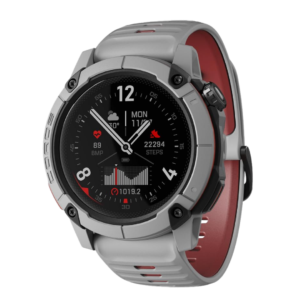
Best for long battery life, accurate GPS and useful offline maps at a strong price. Skip it if you need payments, richer apps, a built-in LED flashlight or polished smartwatch...
Pros: mapping and navigation, value for money
Cons: smartwatch features, contactless payments
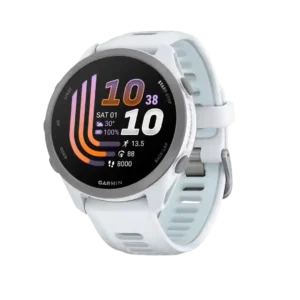
Best for accurate run tracking, deep Garmin coaching and phone-free Spotify in a light package. Skip it if you need full maps, triathlon mode, Apple Music support or the strongest...
Pros: value for money, GPS accuracy
Cons: mapping and navigation, third-party app support
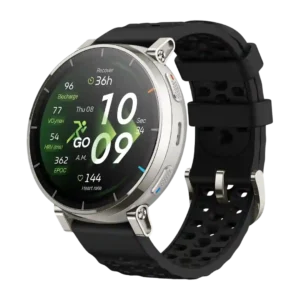
Good if you want premium running features, long battery life, and maps for under $200. Skip it if you need flawless heart-rate data, multiband GPS, LTE, or richer app support.
Pros: value for money, battery life
Cons: heart rate accuracy, third-party app support
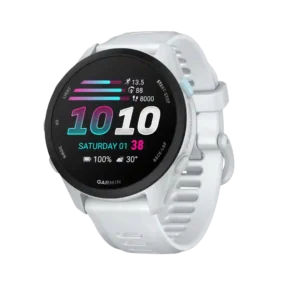
Best for accurate running metrics, excellent coaching tools, a bright AMOLED display, and dependable battery life. Skip it if you need offline maps, music storage, contactless payments, multi-band GPS, or...
Pros: battery life, value for money
Cons: mapping and navigation, smartwatch features