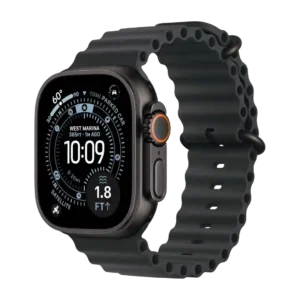
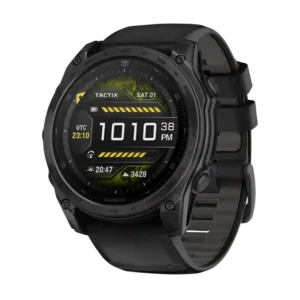
Apple Watch Ultra 3
Where It Has the Edge
- smartwatch features is 4.8 vs 4.5. Reviewers consistently positioned the Ultra 3 as a top-tier smartwatch and strong daily driver, especially for iPhone users.

Scorata scores summarize analyzed review evidence on a 1–5 scale; they are not laboratory measurements or a simple average of customer star ratings. Feature scores summarize the reviews covering that feature. The overall score averages feature scores within each review, then combines review averages. When both expert and customer evidence are available, those two groups receive equal weight. Products can have different review coverage, so small score gaps do not establish a winner.
Recommendations prioritize important features for the category, with a score of at least 3.5, a gap of at least 0.25 points and at least two supporting reviews per product. Features with widely varying scores or broad connectivity contexts are excluded from recommendations. These safeguards do not establish statistical significance.
Quick verdict
The review evidence points to a tradeoff: smartwatch features versus GPS accuracy and heart rate accuracy. Choose according to which strengths matter more to you; the overall score alone does not settle that choice.
Choose Apple Watch Ultra 3 for smartwatch features.
Choose Garmin Tactix 8 for GPS accuracy and heart rate accuracy.
Scores are out of 5. Missing scores mean missing review evidence, not a missing feature.
GPS accuracy was one of the strongest areas, with multiple reviewers calling tracks solid, impressive, precise, or market-leading.
GPS accuracy received strong praise across outdoor, running, cycling, and remote-use evidence, with routes described as precise and dependable.
Heart-rate results were mostly praised as close to straps and among the best wrist readings, but some reviewers reported race-day or run-session misses.
Heart rate feedback was broadly praised for accuracy and faster updates, though one athletic test found strength training still benefits from a chest strap.
Sleep tracking drew generally positive reactions for accuracy, clarity, and the new Sleep Score, with a few caveats around simplicity and confidence.
Sleep tracking drew positive confidence from reviewers, who said its patterns matched experience or improved over the prior generation.
General fitness metrics were considered accurate in higher-level testing, especially when GPS and heart-rate results were evaluated together.
Fitness tracking was praised as comprehensive and accurate across workouts, especially when combining heart rate, GPS, and detailed activity data.
Recovery and training analysis remained a recurring weakness, with reviewers saying Apple still lacks the depth of dedicated sports-watch platforms.
Recovery insights were one of Garmin's strongest areas, with reviewers relying on training recommendations, recovery timing, and readiness guidance.
Workout Buddy and coaching were viewed as promising but uneven, with reviewers noting wrong or limited guidance and phone requirements.
Coaching features were valued for personal-trainer-style guidance, visual workout suggestions, and readiness breakdowns.
Workout variety was praised for strong cycling, swimming, triathlon, and other activity profiles.
Workout variety was a major strength, with reviewers highlighting rucking, dozens of programs, 80 sports profiles, and broad tracking flexibility.
Wellness insights were praised mainly around Sleep Score and hypertension-style health alerts, which reviewers found useful and welcome.
Wellness insights were motivating for users who wanted health accountability, progress feedback, and practical reasons to keep moving.
Hypertension-related health alerts were treated as meaningful preventive signals, though evidence was limited to one reviewer’s health-feature assessment.
One experienced Tactix-series user judged the newer sensor package as noticeably more accurate for overall health tracking than the prior model.
Comfort was mixed: several reviewers found it wearable, but others called it bulky or preferred smaller/lighter watches.
Comfort evidence was limited but favorable: the watch can be worn daily once users adapt, and the silicone strap was called comfortable.
Materials quality was praised for the slick titanium case and premium feel.
Materials quality was praised for titanium and sapphire, though one long-term user raised a coating-wear caveat.
Band quality evidence was positive for the reflective Trail Loop’s workout stability compared with the Ocean Band.
Band quality was mixed to negative, with some silicone-band improvement noted but strong criticism of the expensive nylon strap.
Fit had a specific concern: the Trail Loop worked loose enough to affect sensor contact.
Fit was mixed because the 51mm watch is thick on the wrist even when the owner adapted to it.
Style and design were generally praised as rugged, streamlined, sophisticated, and balanced.
Style and design were consistently praised for the rugged tactical look, flatter bezel, and strong visual appeal.
Water resistance was praised as dive-ready with 100-meter resistance.
Water resistance was positive overall, including scuba/free-dive support, though one reviewer would only use it as a secondary dive device.
Durability evidence was positive, including titanium-case praise and no visible damage after knocks.
Durability was a major strength, with reviewers reporting rugged construction, military-grade toughness, and good real-world scratch resistance.
Build quality was praised as durable, refined, and rock solid.
Build quality was judged very high, rugged, stylish, and consistent with a premium outdoor watch.
Battery life was broadly improved and often praised as multi-day for a smartwatch, but still short of endurance-watch rivals.
Battery life was one of the clearest strengths, with reviewers often reporting multi-week use, though AMOLED always-on settings reduce endurance.
Charging convenience was praised because quick top-ups reduced sleep-tracking and daily-use friction.
Charging convenience was mixed: rare charging was a major benefit, but the proprietary cable frustrated one long-term user.
Charging speed was mixed-to-positive: reviewers liked 80% charging in about 45 minutes, but one saw little generational improvement.
Charging speed had limited positive evidence, with one source citing about an hour and another reporting under two hours from 17% to full.
Display quality was one of the strongest consensus areas, with reviewers praising screen size, clarity, brightness, and readability.
Display quality was one of the strongest themes, with AMOLED clarity, bright readability, and impressive display options repeatedly praised.
Outdoor visibility was generally excellent in sunlight and canopy conditions, though reflections could still interfere for one reviewer.
Outdoor visibility was praised for sunlight readability and visible display performance outside.
Brightness earned strong praise as the brightest display of any Apple Watch in the reviewed evidence.
Brightness was strongly positive, with reviewers calling the screen brighter, crisper, adaptive, and easy to see.
Reliability was supported by evidence describing the Ultra 3 as a reliable multi-day smartwatch.
Reliability was praised through real-world durability, capability, and software performance evidence.
Value for money was mixed: reviewers praised the capability but repeatedly flagged the $799 price, upgrade case, and iPhone limitation.
Value for money was the most mixed attribute: reviewers acknowledged exceptional capability but repeatedly stressed the high price.
The companion-app experience was criticized as disjointed across Fitness and Health.
The companion app experience was praised for setup guidance and deep drill-down analytics.
Mapping and navigation were mixed: native Apple navigation was criticized, while turn-by-turn and third-party route tools helped.
Mapping and navigation were praised for precise routes, excellent navigation, and useful map experiences, but one hunter said it cannot replace onXhunt.
Review contexts may differ, so use caution when interpreting the score gap.
The interface was mostly liked for Liquid Glass fluidity, though one reviewer found the softer contrast harder to read.
The user interface earned strong praise for being user-friendly, faster, and more elegant despite the huge amount of data available.
Siri responsiveness was praised in the Nextpit review as smooth and on-device responsive.
Voice assistant evidence was split, with one source calling it convenient and another finding some tactical commands did not trigger.
Reviewers consistently positioned the Ultra 3 as a top-tier smartwatch and strong daily driver, especially for iPhone users.
Reviewers consistently framed the Tactix 8 as a powerful, feature-dense smartwatch, though some lifestyle features were unnecessary for certain users.
Ultra watch faces were a meaningful differentiator for one reviewer, especially Modular Ultra.
Watch face quality had limited but positive evidence, mainly around multiple styles and configurable faces.
Touchscreen responsiveness was praised as brilliantly responsive and enjoyable.
Touchscreen response was mostly positive, with praise for responsiveness, though one prior Tactix user felt the solar model touch feel was slightly worse.
Menu navigation in the redesigned workout app was described as easier to use.
Menu navigation was described as more user-friendly and easy to learn, especially for users new to complex Garmin watches.
Software smoothness was strong, with reviewers citing fluid watchOS animations, responsiveness, and a smooth user experience.
Software smoothness was positive overall, with reviewers reporting responsive use, little lag, and smoother movement than older models.
Button and gesture controls were a strength, especially the Action button and touch-free gestures.
Button controls were mostly praised for texture and feel, but dive-rated buttons created mixed feedback from users who preferred older tactile clicks.
Operating-system experience was praised for frictionless iPhone integration and ecosystem fit.
Operating system experience was praised in the display comparison for upgraded organization and easier access to activities.
Apple Pay and Wallet were cited as useful day-to-day smartwatch tools.
Contactless payment support was viewed as easy and premium, though the evidence was brief.
Third-party app support was a major advantage, especially for runners using apps such as WorkOutDoors, Strava, and other services.
Third-party app support was positively noted for easy route loading and AllTrails-connected navigation support.
Review contexts may differ, so use caution when interpreting the score gap.
Customization was praised through strong third-party data-screen options for running apps.
Customization options were a strength, covering personalized dashboards, settings, bands, watch layout, and menus.
Call handling received positive evidence from smartwatch audio quality in the PhoneArena review.
Call handling was repeatedly praised as convenient and surprisingly useful, though it depends on a paired phone rather than standalone cellular service.
The app ecosystem was a standout strength, with reviewers praising the huge App Store and iPhone-integrated app experience.
The app ecosystem was described as vast, mainly through the breadth of available Garmin widgets and apps.
Review contexts may differ, so use caution when interpreting the score gap.
Notification handling benefited from wrist-flick and gesture improvements that reviewers found useful for dismissing alerts.
Notifications were treated as useful everyday smartwatch support, especially when paired with voice assistance or general connected features.
Cellular/5G was mixed: one reviewer saw stronger weak-signal reception, while another found little real-world benefit.
LTE connectivity was a weak point because one reviewer explicitly noted the watch lacks built-in carrier service and must stay linked to a phone.
Safety features were a major strength, especially satellite connectivity, SOS, and off-grid reassurance.
Safety features had limited positive evidence from off-route navigation alerts during hiking.
Activity auto-detection had limited but positive evidence from a fringe-sport use case where automatic measurement helped track progress.
Cross-platform compatibility was a clear drawback because reviewers emphasized that the watch remains locked to iPhone users.
Data privacy evidence was positive but narrow, centered on passcode, kill switch, and data-wiping/security features.
The flashlight was one of the most loved practical features, repeatedly described as bright, useful, and convenient for camping, night tasks, and everyday use.
Calorie tracking evidence was mixed: rucking weight was credited for improving calorie estimates, while one reviewer questioned whether pack weight changes the result.
Stress tracking was described as useful for personalized relaxation and emotional management rather than just a passive metric.
Music controls and Apple Music access were praised as joyful when running without an iPhone.
Onboard music storage was valued because offline music and podcast use reduce dependence on an internet connection.
Size options were a weakness because the same large case felt too thick and bulky for smaller wrists.

Best for long battery life, accurate GPS and useful offline maps at a strong price. Skip it if you need payments, richer apps, a built-in LED flashlight or polished smartwatch...
Pros: mapping and navigation, value for money
Cons: smartwatch features, contactless payments

Best for accurate run tracking, deep Garmin coaching and phone-free Spotify in a light package. Skip it if you need full maps, triathlon mode, Apple Music support or the strongest...
Pros: value for money, GPS accuracy
Cons: mapping and navigation, third-party app support

Good if you want premium running features, long battery life, and maps for under $200. Skip it if you need flawless heart-rate data, multiband GPS, LTE, or richer app support.
Pros: value for money, battery life
Cons: heart rate accuracy, third-party app support

Best for accurate running metrics, excellent coaching tools, a bright AMOLED display, and dependable battery life. Skip it if you need offline maps, music storage, contactless payments, multi-band GPS, or...
Pros: battery life, value for money
Cons: mapping and navigation, smartwatch features