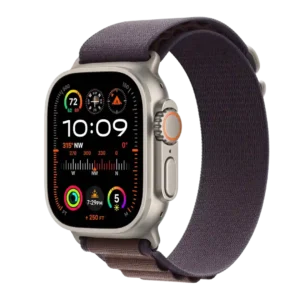
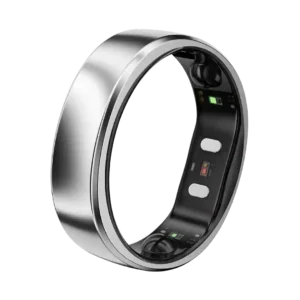
Apple Watch Ultra 2
Where It Has the Edge
No clear scored advantage over the other product.

Scorata scores summarize analyzed review evidence on a 1–5 scale; they are not laboratory measurements or a simple average of customer star ratings. Feature scores summarize the reviews covering that feature. The overall score averages feature scores within each review, then combines review averages. When both expert and customer evidence are available, those two groups receive equal weight. Products can have different review coverage, so small score gaps do not establish a winner.
Recommendations prioritize important features for the category, with a score of at least 3.5, a gap of at least 0.25 points and at least two supporting reviews per product. Features with widely varying scores or broad connectivity contexts are excluded from recommendations. These safeguards do not establish statistical significance.
Quick verdict
There is not enough consistent, comparable evidence for a clear recommendation. Use the feature details and supporting reviews to weigh the tradeoffs.
There is not enough comparable review evidence to recommend Apple Watch Ultra 2 over the other product.
There is not enough comparable review evidence to recommend RingConn Gen 2 Air over the other product.
No clear scored advantage over the other product.
No clear scored advantage over the other product.
Scores are out of 5. Missing scores mean missing review evidence, not a missing feature.
GPS accuracy received strong agreement, with reviewers praising dual-frequency/multiband performance against Garmin watches, distance tests, and difficult environments.
Heart-rate tracking was one of the strongest areas, with multiple reviewers reporting close agreement with chest straps or other control devices.
Heart-rate accuracy is split: resting and casual readings often looked acceptable, but workout and high-intensity readings drew repeated complaints.
Fitness tracking accuracy was praised, especially for workout pulse, path snapping, GPS syncing, and broad activity tracking.
Sleep tracking was generally seen as accurate for sleep/wake timing and duration, though some reviewers still wanted richer guidance from the data.
Sleep tracking was one of the strongest evidence areas, with reviewers saying timing, overnight metrics, and sleep insights usually lined up well.
Coaching features improved with Training Load, perceived effort, and structured workout support, though evidence suggests they still sit below specialist training platforms.
Recovery insights were a repeated weakness; reviewers wanted Garmin/Whoop-style readiness, training effect, and recovery interpretation.
Recovery-style insights lagged stronger competitors, with reviewers saying RingConn offers useful context but less depth and guidance than Oura-like systems.
Workout variety was viewed as strong for mainstream training, with varied sport modes and enough running coverage for most non-specialists.
Reviews describe general activity tracking as adequate for casual daily use, but inconsistent for demanding fitness work and sometimes clearly off.
Automatic workout detection was weak or missing in several reviews, though one later review noted some improvement.
Blood oxygen tracking drew negative evidence in older reviews because patent-dispute availability issues frustrated users who wanted the feature.
Blood oxygen tracking was generally viewed as useful for overnight vitals and abnormality flags, with several reviewers finding it close or informative.
Calorie tracking appears within Apple’s rings system and was judged useful as part of the broader activity-motivation loop.
Calorie data was treated as a useful basic estimate, with one reviewer finding it close and another praising the granularity.
Connected GPS depends on a phone; reviewers accepted that for basic routes but treated it as a limitation for outdoor tracking.
One reviewer found distance during a manually tracked outdoor run looked fine despite other workout-tracking weaknesses.
Fitness coaching and AI guidance were highly mixed: some found plans helpful, but many called the AI basic, undercooked, or unhelpful.
Goal tracking was useful and often free, especially through plans and sleep/activity goals, though some plans were described as basic.
One reviewer liked the ability to log notes and hashtags to connect habits with progress and possible causes.
Reviewers found the Ultra 2’s health tracking credible for sleep-related disturbances and general health metrics, with heart-rate-linked data repeatedly described as accurate.
Menstrual cycle tracking exists but evidence was limited and qualified by criticism that women’s health features were not very complete.
Resting and sleeping heart-rate tracking was generally trusted more than workout heart rate, with reviewers reporting close or reliable readings.
Sleep-stage tracking was considered useful and broadly similar to other devices, though some reviewers treated staging as only approximate.
Step counts were often close enough to comparison devices, though a few reviewers reported meaningful under- or over-counting.
Mood and mindfulness tools were viewed positively when reviewers discussed clearing the mind or logging moods, though this evidence is more about mindfulness than advanced stress analytics.
Stress tracking received mixed reactions: some liked the gentler presentation, while others felt the ring confused normal activity with stress.
Wellness insights were mixed: Vitals and glanceable health context were useful, but Apple Health was criticized for weak interpretation and poor user-friendliness.
Workout mode variety was repeatedly called limited, with reviewers wanting more exercise types beyond the small supported set.
Workout tracking was the clearest weakness, especially for serious exercise, high-intensity heart rate, and detailed post-workout analysis.
Comfort was mixed: some found the Ultra 2 comfortable, while others noted crown irritation, tugging, or adjustment time from the large case.
Comfort was strongly praised across reviews, with many saying the ring disappears, feels light, or is wearable all day and night.
Materials quality was strong, with reviewers praising titanium, premium feel, and classy finishes.
Band quality was generally positive across Trail, Alpine, and Milanese-style bands, though sweat absorption and muted colors created caveats.
Build quality was praised for the rugged titanium case, premium construction, and confidence in harsh environments.
Build quality was decent to good overall, though cheaper materials and finish details were noticed beside more premium rings.
Design drew mostly positive reactions for looking like jewelry or a sleek ring, but a few reviewers found it cheap-looking or oddly shaped.
Durability was strong overall, with evidence of no scuffs, no visible wear, and confidence against daily abuse.
Durability was mostly positive but not flawless: several rings survived daily wear, while others picked up scratches or dings.
Fit was praised in one outdoor-focused review for staying secure during daily use and activity.
Fit was mostly good after sizing, though some reviewers mentioned gaps, sensor bumps, or never fully adjusting to the shape.
Size options were a repeated drawback because the Ultra 2 is only offered in a large 49mm case.
Size options were treated positively in comparison with more limited rivals, especially for an entry-level smart ring.
Style and design were split by finish: reviewers liked the sleek black look, but some noticed scuffs more easily.
Water resistance and dive support were viewed positively, especially for recreational diving and Apple Watch-leading water friendliness.
Water resistance was strongly praised or confidently accepted, with reviewers wearing it for showers, swimming, sweat, and rain.
Battery life had the most evidence: excellent for an Apple Watch and anxiety-reducing for many reviewers, but still short versus Garmin-style endurance watches.
Battery life was the strongest consensus positive, usually lasting well over a week and often close to the promised 10 days.
Charging convenience was helped by multi-day use and quick top-ups, though reviewers still noted the need to manage charging.
Charging convenience split reviewers: the dock is easy and elegant at home, but the missing portable case was a frequent travel downside.
Charging speed was acceptable but not class-leading, with about 90 minutes to full and slower fast charging than Series 10.
Charging speed was acceptable but not outstanding, with 90-minute full charges often described as solid but not especially fast.
Display quality was one of the strongest consensus areas, with reviewers repeatedly calling the screen excellent, impressive, and among the best on any smartwatch.
Brightness was praised for the 3,000-nit upgrade and outdoor readability, though a few reviewers found the improvement subtle in practice.
Outdoor visibility was excellent, with reviewers reporting easy screen reading in bright conditions.
Reliability evidence was positive for specific features working well, but navigation/user-error risks kept it from being flawless.
Overall reliability was positive for daily wellness tracking, with most reviewers seeing a dependable ring despite fitness and app caveats.
Syncing was a repeated caveat: some found it reasonable, but others complained about no background syncing, delays, or long waits after days away.
Subscription value was unanimous: reviewers repeatedly praised full feature access without ongoing membership fees.
Value for money was mixed: some reviewers saw strong value for the feature set, while others said upgrades or the $799 price were hard to justify.
Value for money was a major consensus strength, with reviewers repeatedly calling it a bargain, smart deal, or strong entry-level choice.
Activity auto-detection worked well in the evidence, with brisk walks automatically logged into the user’s activity rings.
Activity reminders were mixed: one reviewer liked sedentary alerts, while others wanted stronger movement motivation and better nudges.
Cross-platform compatibility was a clear drawback because reviewers called iPhone dependence a real disadvantage for Android users.
Data privacy was a concern in the limited evidence, especially around health data, period tracking, and broader tracker privacy worries.
ECG was treated as part of Apple Watch’s serious health-safety suite, with reviewers connecting it to potentially life-saving monitoring.
Google Fit compatibility was positively noted in reviews that treated health-platform syncing as part of a broader tracking setup.
Trend insights were a consistent strength, with reviewers praising long-term graphs, summaries, weekly reports, and easier interpretation of changes.
LTE connectivity was treated as a practical strength, supporting calls, streaming, messaging, and phone-free smartwatch use.
The wellness/readiness-style score was easy to glance at but was criticized for showing numbers without enough actionable coaching.
Safety features were a clear strength, with siren, waypoints, crash/fall detection, and personal-safety framing earning praise.
Weight was a major strength, with reviewers repeatedly describing the ring as extremely light or barely noticeable.
App alerts were useful for vitals, battery, and goals, but reviewers also wanted better low-battery and behavior-changing reminders.
The app ecosystem was framed as a major advantage of the Ultra 2 as part of Apple’s broader smartwatch platform.
Review contexts may differ, so use caution when interpreting the score gap.
Apple Health integration was useful but not perfect, with reviewers noting it worked well in some cases and lagged in another.
Bluetooth connectivity received limited but positive evidence around cycling accessory support, especially power meters.
Review contexts may differ, so use caution when interpreting the score gap.
Button controls were mixed: the Action Button, crown, and Double Tap were often useful, but some reviewers forgot or underused them.
Call handling was strong in the evidence, with a test call described as clear, loud, and phone-like to the person on the other end.
Companion app quality was split: Apple Health was praised by one reviewer, while another disliked fragmented data across apps.
The companion app was usually seen as organized and data-rich, but reviewers still wanted more polish, faster syncing, and deeper guidance.
Contactless payments were praised as part of Apple’s top-tier smartwatch services and general usability advantage.
Customization options were strong through Modular Ultra complications, widgets, and configurable watch layouts.
Customization was mixed: some liked protectors and color/style changes, while others disliked the rubbery sleeves and limited app options.
Mapping and navigation were the most mixed outdoor feature: useful for casual hikers, but limited by phone dependence, basic compass navigation, and uneven topo detail.
Review contexts may differ, so use caution when interpreting the score gap.
Menu navigation evidence was positive around Smart Stack surfacing useful information at the right time.
Music controls and playback improved, with reviewers liking speaker playback and using the watch for audio without a phone or headphones.
Onboard music storage was viewed positively because the increased storage helps offline media use.
The operating system experience was positive overall, with watchOS and Smart Stack improving everyday usability.
Pairing reliability had one direct positive setup impression, with the watch pairing smoothly in the reviewer’s test.
Review contexts may differ, so use caution when interpreting the score gap.
Pairing was consistently easy in the reviews that evaluated setup, with no major bugs or reliability complaints.
Review contexts may differ, so use caution when interpreting the score gap.
Smartphone notifications were useful, especially with Double Tap and fast notification replies, and reviewers treated them as part of the watch’s everyday strength.
Smartphone notification value was weak because reviewers missed watch-style notifications or forgot to open the app without stronger prompts.
Smartwatch features were consistently praised, especially the Apple ecosystem, app support, connectivity, and day-to-day versatility.
Software smoothness was consistently strong, with reviewers describing the watch as zippy, responsive, snappy, and lag-free.
Third-party compatibility was mixed, with Apple Health and Google Fit working but broader integration described as limited or closed.
Third-party app support was a standout, with reviewers praising the selection and the ability to fill mapping or sports gaps with apps.
Review contexts may differ, so use caution when interpreting the score gap.
Touchscreen responsiveness was praised for accurate, hassle-free input and joy-to-use responsiveness.
The user interface was mostly easy to learn, but Apple Health organization drew criticism for feeling messy.
The user interface was usually easy for casual users, though one negative review criticized inconsistent wording and shallow AI presentation.
Voice assistant quality improved with on-device Siri and faster responses, but dictation and offline capabilities still had occasional limits.
Watch face quality was praised, especially Modular Ultra and Night Mode presentation on the large display.

Best for long battery life, accurate GPS and useful offline maps at a strong price. Skip it if you need payments, richer apps, a built-in LED flashlight or polished smartwatch...
Pros: mapping and navigation, value for money
Cons: smartwatch features, contactless payments

Best for accurate run tracking, deep Garmin coaching and phone-free Spotify in a light package. Skip it if you need full maps, triathlon mode, Apple Music support or the strongest...
Pros: value for money, GPS accuracy
Cons: mapping and navigation, third-party app support

Good if you want premium running features, long battery life, and maps for under $200. Skip it if you need flawless heart-rate data, multiband GPS, LTE, or richer app support.
Pros: value for money, battery life
Cons: heart rate accuracy, third-party app support

Best for accurate running metrics, excellent coaching tools, a bright AMOLED display, and dependable battery life. Skip it if you need offline maps, music storage, contactless payments, multi-band GPS, or...
Pros: battery life, value for money
Cons: mapping and navigation, smartwatch features