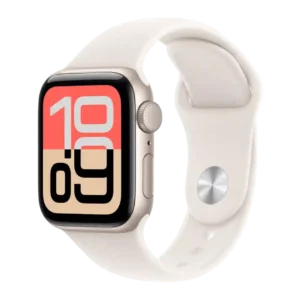
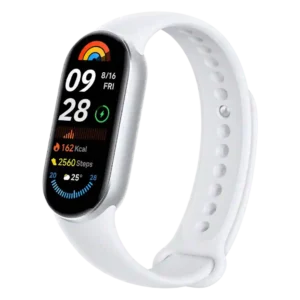
Apple Watch SE 3
Where It Has the Edge
No clear scored advantage over the other product.

Scorata scores summarize analyzed review evidence on a 1–5 scale; they are not laboratory measurements or a simple average of customer star ratings. Feature scores summarize the reviews covering that feature. The overall score averages feature scores within each review, then combines review averages. When both expert and customer evidence are available, those two groups receive equal weight. Products can have different review coverage, so small score gaps do not establish a winner.
Recommendations prioritize important features for the category, with a score of at least 3.5, a gap of at least 0.25 points and at least two supporting reviews per product. Features with widely varying scores or broad connectivity contexts are excluded from recommendations. These safeguards do not establish statistical significance.
Quick verdict
There is not enough consistent, comparable evidence for a clear recommendation. Use the feature details and supporting reviews to weigh the tradeoffs.
There is not enough comparable review evidence to recommend Apple Watch SE 3 over the other product.
There is not enough comparable review evidence to recommend Xiaomi Smart Band 9 over the other product.
No clear scored advantage over the other product.
No clear scored advantage over the other product.
Scores are out of 5. Missing scores mean missing review evidence, not a missing feature.
GPS accuracy was mostly praised for everyday workouts, though reviewers noted single-band GPS can wander in dense urban or more challenging environments.
GPS accuracy was the clearest tradeoff: reviewers repeatedly noted no built-in GPS and phone dependence, with connected results ranging from acceptable to limiting.
Heart-rate tracking drew strong praise across testing, with reviewers saying it aligned well with comparison devices and remained usable even in harder workouts.
Heart-rate accuracy was one of the most discussed attributes, ranging from excellent and close to references in several reviews to unconvinced or merely okay in tougher tests.
Fitness tracking accuracy was a clear strength, with reviewers reporting reliable workout, activity, and comparison-test results for the price.
Sleep tracking was generally useful and often accurate enough, though several reviewers felt Apple’s Sleep Score was simpler than competing systems.
Sleep tracking accuracy was sharply mixed, with some reviewers praising sleep and wake detection while others found false sleep, exaggerated duration, or only total time useful.
Workout Buddy and coaching features were appreciated as helpful motivation, though reviewers often described them as basic, repetitive, or hit-or-miss.
Recovery-related evidence was limited, but one fitness-focused review valued training-load tracking as a way to monitor workout volume over time.
Recovery insights were limited but positive, with reviewers calling the recovery period handy and noting improved comparability to reference-style training metrics.
Workout variety was viewed very positively, with reviewers noting broad sport profiles and nearly the same workout options as pricier Apple Watches.
Reviewers found overall activity tracking reasonable for casual use, though one long-term reviewer said it lagged behind Apple Watch-level accuracy.
Automatic workout detection was mixed, working really well for one reviewer but proving inconsistent or prone to false triggers for others.
Blood oxygen tracking was consistently treated as a missing premium health feature, with reviewers noting it remains reserved for higher-end Apple Watches.
Blood oxygen tracking was mixed: some reviewers found readings within range or accurate, while others saw questionable low readings and weak confidence.
Cadence tracking was positive where tested, with reviewers reporting nearly identical cadence or excellent accelerometer-based cadence tracking.
Calorie tracking appeared as part of the useful core fitness toolkit, with one test finding calorie and distance figures matched a comparison watch exactly.
Calorie tracking evidence was split, with one reviewer calling calorie estimates unreliable and another saying calories burned matched well during testing.
Connected GPS reliability varied, with one review reporting reliable quick connection and others noting overreported distance or unreliable phone connection.
Distance tracking was mixed: some runs were close to reference devices, while other reviews found underreporting or overreporting tied to GPS limitations.
Fitness coaching evidence was limited but positive, with training metrics and recovery-style data described as useful for more serious athletes.
Goal tracking centered on Vitality Score, which some found satisfying and motivating while another found it less intuitive than the prior PAI system.
Guided workout evidence was positive, especially for running courses that reviewers said could help build cardio or add structure.
Reviewers described the core health basics as adequate or mostly complete, especially heart-rate alerts and general tracking, while noting that advanced sensors remain absent.
Pace tracking had limited but positive evidence from a reviewer who called the accelerometer excellent for pace during runs.
Resting heart rate had limited but negative evidence, with one reviewer finding readings higher than comparison trackers.
Route tracking had limited negative evidence, with one reviewer seeing GPS dropouts that caused inaccurate routes.
Sleep-stage tracking was inconsistent across reviews, with some useful or improved breakdowns but repeated complaints about deep sleep, REM, and stage reliability.
Step-count evidence was mostly positive, with several reviewers calling it accurate or close to comparison devices, though one review reported undercounting and another called it not super accurate.
Stress tracking drew mixed reactions, from useful or handy for relaxation to one reviewer saying the stress reader did not inspire confidence.
Swimming tracking had limited positive evidence from one review saying swimming mode provided useful activity-specific information.
Wellness insights were considered helpful for beginners or casual users, especially Sleep Score, sleep apnea alerts, and the Vitals-style health context.
Workout mode variety was widely praised for breadth, although some reviews noted that many modes are basic or missing niche sport detail.
Workout tracking was generally good for casual exercise and easier sessions, but reviewers cautioned that serious training and weightlifting exposed accuracy limits.
Comfort was a consistent strength, especially for sleep, smaller wrists, and unobtrusive daily wear.
Comfort was mostly strong thanks to the light, unobtrusive form, but one reviewer found a loose strap uncomfortable.
Materials quality evidence was limited but positive, centered on the aluminum case, rounded body, and premium-looking construction.
Band quality evidence was limited but very positive, with praise for easily replaceable Apple Watch bands.
Band quality was mixed, with praise for quick-release and improved bands but complaints about cheap-feeling, fiddly, insecure, or hard-to-use straps.
Build quality was considered solid for the price, with reviewers calling it well made and modern enough despite the older design.
Build quality was widely praised for metal or premium feel, durability, and being better than expected for the price.
Design and appearance were generally praised as stylish, premium-feeling, polished, or unobtrusive for a budget tracker.
Durability was mixed: stronger Ion-X glass drew praise, but some reviewers noted weaker dust/scratch protection or actual scratching.
Durability was mixed: several reviewers saw good scratch or drop resistance, while others noted scratching concerns.
Fit evidence was limited and mixed, with one reviewer saying the older body did not sit as flush as the Series 11.
Fit had limited negative evidence, with one reviewer saying the band could pop off and become loose.
Size options were viewed positively for offering 40mm and 44mm choices, especially for smaller wrists.
Style and design were the main aesthetic tradeoff: reviewers liked the familiar Apple Watch look but repeatedly called it dated or bezel-heavy.
Water resistance was considered adequate for common needs, with several reviewers accepting the 50m/swimproof rating.
Water resistance had limited positive evidence, with one reviewer saying it allowed swimming or showering without worry.
Battery life was the main practical compromise, ranging from excellent in some tests to daily-charge frustration in others.
Battery life was one of the strongest areas, with most reviewers reporting a week or much more, though heavy always-on use reduced it for some.
Charging convenience was mixed because faster top-ups help, but sleep tracking still forces many users into a daily charging routine.
Charging convenience was generally positive for the magnetic charger, though one reviewer still preferred wireless charging.
Charging speed improved substantially over the SE 2 and was usually praised, even when still slower than pricier Apple Watches.
Charging speed was consistently positive, with reviewers repeatedly reporting full charges in around an hour or less.
Display quality was a major upgrade thanks to always-on functionality, though reviewers still noted smaller bezels and lower specs than Series models.
Display quality was strongly praised for OLED color, crispness, readability, and value, though one reviewer found the always-on display less useful.
Brightness was usually adequate and sometimes praised, but reviewers acknowledged it is below the brighter Series and Ultra screens.
Outdoor visibility was generally serviceable, but direct sunlight remained a repeated display limitation.
Outdoor visibility was widely praised, with most reviewers reporting easy viewing in sunlight, though one found the always-on display dim outdoors.
Screen brightness was a major strength, with reviewers repeatedly praising the brighter screen and sunlight-helping upgrade.
Reliability evidence was limited but positive, with one reviewer concluding the SE 3 has what most users need.
General reliability was positive overall, with reviewers saying the experience was smoother than expected or remained snappy long-term.
Data syncing was positive where tested, with reviewers reporting effortless syncing, seamless phone sync, or no sync issues.
Subscription value had limited but strong evidence, with one reviewer praising the lack of a monthly subscription alongside included straps.
Value for money was the strongest consensus attribute, with reviewers repeatedly calling the SE 3 a standout bargain or best-value Apple Watch.
Value for money was the strongest consensus point, with reviewers repeatedly calling the band cheap, high-value, or hard to beat for the price.
Auto-detection was useful but not flawless; reviewers found it adequate for walks and workouts, while one later review said it still lagged rivals.
Alarm evidence was positive but limited, with reviewers liking the vibrating alarm or saying the listed utility apps worked flawlessly.
Breathing exercise evidence was limited but positive, tied to relaxation and stress use.
Cross-platform compatibility was a clear limitation because the SE 3 remains an iPhone-only smartwatch.
Data privacy had limited concern-based evidence, with one reviewer noting worries about data being sent to China.
ECG was the most repeated missing health feature, often framed as the main reason some higher-risk buyers might step up to the Series line.
Find-my-phone was positively received where mentioned, described as handy or easy to use.
Health trend insights were mixed, with one app review praising recommendations and another criticizing the lack of meaningful trends.
Cellular connectivity was viewed as a useful option, with 5G improving coverage, efficiency, and phone-free use for calls, messages, and downloads.
Safety features were strongly praised, especially fall detection, crash detection, emergency features, and real family anecdotes.
Stopwatch evidence was limited but positive, supported by a reviewer saying the utility apps worked flawlessly.
Strava compatibility had limited positive evidence, with one reviewer calling the Strava sync a brilliant entry option.
Text alert evidence was mixed-positive: texts were readable and generally handled, but interaction remained limited.
Timer evidence was limited but positive, supported by a reviewer saying the utility apps worked flawlessly.
Weight was strongly positive, with reviewers repeatedly emphasizing the light or feather-light feel.
App alert evidence was mixed, ranging from buggy or noisy alerts to good grouping and basic app-notification usefulness.
The app ecosystem was one of the SE 3’s strongest advantages, repeatedly described as unmatched or far richer than competing budget watches.
Review contexts may differ, so use caution when interpreting the score gap.
Bluetooth reliability had limited positive evidence, with one review noting quick pairing and effortless sync through Bluetooth.
Button and gesture controls were widely praised, especially Double Tap, Wrist Flick, the Digital Crown, and side-button shortcuts.
Button controls were mixed: the buttonless gesture system was easy for some but confusing or undesirable for others.
Call alert evidence was limited but positive for basic alerts, with one reviewer saying incoming-call notifications got the job done.
Call handling was rated highly where tested, especially voice isolation and gesture-based call management.
The companion app setup drew a mixed note because managing Watch, Health, and Fitness across multiple iPhone apps can feel tedious.
The companion app was mostly considered useful, simple, and readable, but several reviewers found rough edges, confusing sections, or limited polish.
Apple Pay was positively mentioned as part of the compelling smartwatch feature set and deep Apple ecosystem integration.
Customization was useful through watch faces, workout views, and settings, but limited by the lack of third-party watch faces.
Customization options were positive where discussed, especially split widgets and expanded tailoring controls.
Navigation evidence was limited but positive, with offline Apple Maps presented as helpful when away from the phone.
Review contexts may differ, so use caution when interpreting the score gap.
Menu navigation evidence was limited but positive, with one reviewer describing the basic home-screen and control flow as simple.
Music controls and speaker/media features were useful additions, though reviewers were split on how often they would actually use playback from the watch speaker.
Music controls were generally positive for basic wrist controls, though evidence stayed within phone playback control rather than full music browsing.
watchOS experience received very strong marks for polish, smoothness, and making the SE 3 feel similar to pricier Apple Watches.
Pairing/setup evidence was limited but positive, with one review calling setup quick and easy.
Review contexts may differ, so use caution when interpreting the score gap.
Pairing reliability was mixed, with one reviewer finding setup easy, one finding initial pairing tricky, and another describing setup as chaotic.
Review contexts may differ, so use caution when interpreting the score gap.
Notification handling was a major everyday strength, with reviewers praising call, text, and response convenience from the wrist.
Smartphone notification handling was mixed: some reviewers found it reliable or effective, while others criticized narrow display limits, read-only behavior, or basic information.
Reviewers generally agreed the SE 3 delivers the core Apple Watch experience, making it feel much less like a compromised budget model.
Software smoothness was one of the most consistent strengths, with reviewers praising the S10 chip for snappy menus, fast apps, and fluid navigation.
Third-party app compatibility was mixed-positive, with integrations praised for broader workout analysis but some app ecosystems judged less advanced than rivals.
Third-party app support was praised for extending the native experience, with reviewers highlighting Apple’s App Store depth and useful fitness apps.
Review contexts may differ, so use caution when interpreting the score gap.
Touchscreen responsiveness had limited but very positive evidence, with PCMag saying the watch responded promptly and consistently.
Touchscreen responsiveness was mostly positive, especially with wet fingers, though one reviewer wanted better responsiveness in some music-control use.
The user interface was praised as easy, cohesive, and fluid, with gestures and Smart Stack improving quick interactions.
The interface was widely praised as smooth, responsive, intuitive, and easy to navigate, with a few complaints about default settings or navigation quirks.
On-device Siri was broadly seen as a useful upgrade, making commands faster and more practical for workouts, timers, weather, and health questions.
Watch face options were mostly praised for variety and appearance, though one review disliked the loss of custom faces and another found storage too limited.
Watch faces were viewed positively, especially the always-on versions and Apple’s high-quality built-in choices.

Best for long battery life, accurate GPS and useful offline maps at a strong price. Skip it if you need payments, richer apps, a built-in LED flashlight or polished smartwatch...
Pros: mapping and navigation, value for money
Cons: smartwatch features, contactless payments

Best for accurate run tracking, deep Garmin coaching and phone-free Spotify in a light package. Skip it if you need full maps, triathlon mode, Apple Music support or the strongest...
Pros: value for money, GPS accuracy
Cons: mapping and navigation, third-party app support

Good if you want premium running features, long battery life, and maps for under $200. Skip it if you need flawless heart-rate data, multiband GPS, LTE, or richer app support.
Pros: value for money, battery life
Cons: heart rate accuracy, third-party app support

Best for accurate running metrics, excellent coaching tools, a bright AMOLED display, and dependable battery life. Skip it if you need offline maps, music storage, contactless payments, multi-band GPS, or...
Pros: battery life, value for money
Cons: mapping and navigation, smartwatch features