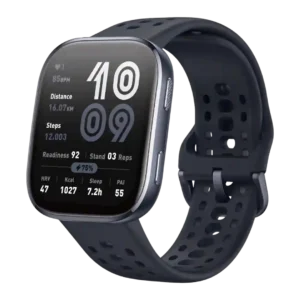
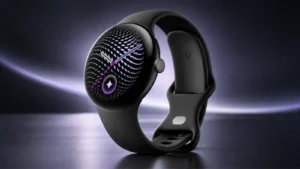
Amazfit Bip 6
Where It Has the Edge
No clear scored advantage over the other product.

Scorata scores summarize analyzed review evidence on a 1–5 scale; they are not laboratory measurements or a simple average of customer star ratings. Feature scores summarize the reviews covering that feature. The overall score averages feature scores within each review, then combines review averages. When both expert and customer evidence are available, those two groups receive equal weight. Products can have different review coverage, so small score gaps do not establish a winner.
Recommendations prioritize important features for the category, with a score of at least 3.5, a gap of at least 0.25 points and at least two supporting reviews per product. Features with widely varying scores or broad connectivity contexts are excluded from recommendations. These safeguards do not establish statistical significance.
Quick verdict
The available evidence supports the recommendation below, but does not establish an overall winner. Check the remaining features against your priorities.
There is not enough comparable review evidence to recommend Amazfit Bip 6 over the other product.
Choose Google Pixel Watch 5 for heart rate accuracy and GPS accuracy.
No clear scored advantage over the other product.
Scores are out of 5. Missing scores mean missing review evidence, not a missing feature.
Heart-rate accuracy was generally solid for running and steady workouts, but reviewers reported inconsistency during spikes, strength work, or cycling.
Heart-rate tracking earned excellent marks in the tougher fitness-focused tests, often staying very close to chest straps. Reviewers saw it as one of the watch’s most dependable health metrics.
GPS accuracy was mostly positive for a budget watch, with quick locks and usable routes, but several reviewers noted drift or weaker performance than dual-frequency sports watches.
GPS was one of the most praised upgrades, especially after Google’s post-processing cleaned up difficult urban routes. Results were not flawless, and some reviewers questioned the lack of real-time correction, but overall accuracy was repeatedly strong.
Fitness tracking accuracy was generally good for casual workouts, though a few reviewers noted treadmill, GPS, or exercise-type limitations.
Fitness tracking accuracy was praised strongly in direct testing, supporting the watch’s growing credibility as more than a casual activity tracker.
Sleep tracking accuracy was the most divided tracking area, ranging from close alignment with Oura/Samsung to major overestimates and weak sleep-stage accuracy.
Sleep tracking was generally viewed as accurate and useful, with timing and stage data often matching expectations. Some reviewers remained cautious about claimed percentage gains and Smart Wake precision.
Workout variety was excellent, with reviewers repeatedly highlighting 140-plus modes as far beyond typical budget-watch expectations.
The activity list is broad, but serious workout controls still lag sports-watch rivals. Missing manual laps and limited data-page configuration were called out as notable shortcomings.
Recovery insights were useful when tied to plans or Readiness, but some reviewers questioned the algorithm or noted premium/subscription limits.
Readiness stood out for reflecting accumulated fatigue in a practical way, giving the watch a useful recovery signal rather than just another raw metric.
Coaching features were generally viewed as useful, especially Zepp Coach workout plans and actionable training feedback.
Google Health Coach is a major strength, with reviewers praising tailored workout plans, conversational guidance and routines that move from phone planning to on-wrist execution. The main drawback is that some advanced coaching requires Premium.
Health tracking accuracy was mostly good as a baseline, though reviewers cautioned that some health data and explanations were not premium-grade.
Overall health tracking is strong, with one scientific-style test calling the watch highly reliable across daily health, sleep and fitness use.
Food and calorie tools were split: one reviewer found the calorie count wrong, while others found photo/barcode calorie logging accurate or convenient.
Calorie estimation can be imperfect, but the meal-photo workflow still helped with accountability and reduced the work of manual food logging.
Step counting was mostly acceptable against other trackers, but Wareable saw day-to-day variation.
Step tracking lined up closely with a comparison wearable in the test that addressed it, giving the reviewer confidence in everyday movement counts.
Wellness insights were useful when they explained trends, sleep, readiness, or recovery, but reviewers often wanted more context or disliked subscription limits.
The new wellness layer is promising, especially for readiness, blood-pressure trends, insulin-resistance trends and early awareness. Enthusiasm is tempered by delayed availability, subscription limits and uncertainty about how useful some trend reports will be in practice.
Battery life was the strongest consensus point, with reviewers commonly getting roughly a week or more and several calling the result impressive for an AMOLED smartwatch.
Battery life varies noticeably by size and usage. The 45mm model often approaches two days and earns praise, while the smaller model and heavy-GPS use still push many reviewers toward daily or near-daily charging.
Charging convenience was a common weakness because the watch uses a puck/proprietary dock and often requires the user to supply a USB-C cable.
The side-contact charging dock is convenient, quick to attach and can turn the watch into a small bedside clock. Charger continuity with the prior generation is another practical plus.
Charging speed was acceptable but not special, with several reviewers describing roughly 90 to 120 minutes and no fast-charge advantage.
Charging speed is a standout strength. Reviewers repeatedly reported very fast top-ups, often around 45-60 minutes for a full charge and roughly half a battery in about 15 minutes.
Comfort was a consistent strength, with reviewers calling the watch light and wearable day, night, and during workouts.
Comfort is a consistent strength: the watch is light, easy to wear overnight and comfortable during exercise. The main exception is comparison with thinner rivals, where the case can feel bulky.
Materials quality impressed reviewers for the price, especially the aluminum frame and higher-quality strap/display materials.
Materials are a mixed point: the watch looks premium, but some reviewers wanted higher-end materials at this price, especially tougher display glass.
Durability was mixed: the frame felt sturdy, but reviewers noted scuffing, limited ruggedness, and potential vulnerability from the glass/bezels.
Scratch resistance is the clearest hardware weakness. Multiple reviewers criticized Gorilla Glass 5 and reported or anticipated scratches, often wishing Google had moved to sapphire.
Size options were a drawback because reviewers repeatedly noted the large square case and lack of alternate sizes.
The 41mm and 45mm choices cover different wrist and screen-size preferences well, and reviewers specifically recommended the larger model for people who prefer a bigger watch.
Build quality exceeded expectations for the price, with reviewers calling the watch durable, sturdy, and not cheap-feeling.
Build quality feels solid in hand, with the watch giving a sturdy, well-finished first impression even though its exposed glass remains a separate durability concern.
Band impressions were mostly positive for security and breathability, but a few reviewers found the strap awkward or irritating enough to replace.
The included bands are generally comfortable, secure and easy to swap. One reviewer thought the revised material felt flimsier off-wrist, but day-to-day wear remained positive.
Style and design were generally praised as sleek and premium-looking for the price, though one reviewer found the design/navigation clunky.
The rounded, domed design is distinctive and often praised as premium or attractive, but taste is clearly split. Some reviewers love the minimalist pebble look while others find it plain, bulky or simply unattractive.
Water resistance was viewed positively for showering, swimming, rain, and pool use, though not for serious diving or intense water sports.
Water resistance is reassuring for everyday use, including swimming and rain, with no major usability concerns raised.
Display quality was one of the Bip 6's biggest strengths, with reviewers praising the AMOLED panel's color, contrast, sharpness, and overall look.
The curved AMOLED display remains a major visual strength, with vivid color, deep blacks and excellent legibility. A minority disliked the curved glass effect or the unchanged panel.
Outdoor visibility was usually praised thanks to the bright AMOLED screen, although a couple reviewers struggled in direct sun or with sunglasses.
Outdoor visibility is strong, with reviewers reporting clear readability in sunny conditions and good usability during outdoor activity.
Brightness was widely praised, with reviewers repeatedly pointing to the 2,000-nit AMOLED screen and easy readability in most conditions.
Brightness is consistently excellent, with 3,000-nit peak output making the watch easy to read in harsh daylight and bright outdoor conditions.
Reliability was mixed: the watch worked well overall, but reviewers reported storage bugs, app spam, UI hiccups, or unfinished-feeling features.
Reliability is mostly solid once running, but setup friction and troubleshooting around newer features hurt the otherwise seamless phone-to-watch experience.
Value for money was the strongest overall finding, with every review treating the Bip 6 as unusually capable for its sub-$100 price.
Value is the most consistent concern. The higher starting price and similarity to Pixel Watch 4 make the upgrade difficult to justify for recent owners, even though first-time buyers and older-model owners still get a polished overall package.
Contactless payment support was consistently treated as absent, making it a clear smartwatch-feature gap.
Express Pay reduces friction by letting users tap to pay without first opening Wallet, a small convenience that meaningfully improves day-to-day use.
Onboard music storage was a limitation because local music requires preloading and the watch has limited storage or no streaming-app support.
The jump to 64GB gives more room for apps, offline music and maps. Reviewers generally welcomed the extra capacity even when they were unsure most users would need all of it.
Menu navigation was polarized: some found it easy once learned, while others described settings and menus as clunky or tedious.
The crown makes long menus and notifications easy to scroll through, adding a convenient physical alternative to touch gestures.
The UI divided reviewers, from easy and snappy to clunky, confusing, or requiring practice.
The interface is clean, contextual and convenient, with glanceable information presented without much friction.
Voice assistant quality was highly inconsistent: TechRadar and some video reviewers praised Zepp Flow, while CNET and others found it laggy, limited, or unfinished.
Gemini is one of the watch’s clearest advantages. Reviewers liked Raise to Talk, faster responses, proactive suggestions and limited offline commands, with several calling it unusually useful for a smartwatch assistant.
Music controls were useful when controlling phone playback, but support varied by service and reviewer setup.
Media controls are especially convenient with gesture shortcuts, letting users jump into playback controls without digging through menus.
Touchscreen responsiveness was mixed-to-positive: some reviewers called it responsive, while others saw lag or sluggishness.
Touch interactions feel immediate, with taps and scrolls registering quickly and reinforcing the watch’s overall sense of fluidity.
Customization was mixed: reviewers liked designing faces and changing controls, but some found watch-face customization limited.
Tiles and configurable pages make important functions easy to reach. Reviewers liked the flexibility, though some still wanted deeper widget and layout control.
The ecosystem is one of the clearest limitations: reviewers repeatedly described the app store and broader platform as sparse or less robust than Wear OS/watchOS.
The broader app ecosystem drew sharp criticism in the one review that discussed it directly, especially around Google Health integration and developer friction.
Review contexts may differ, so use caution when interpreting the score gap.
Zepp OS was usually serviceable and sometimes smooth, but several reviewers described rough edges or a less mature ecosystem.
Wear OS 7 is consistently described as polished, stable and tightly integrated with Android. The experience feels mature and cohesive rather than experimental.
Software smoothness was mixed: some reviewers found the interface snappy, while others noticed lag or less-than-perfect fluidity.
Performance is one of the strongest consensus positives: menus, tiles, animations and apps usually feel fast, fluid and responsive. The generational speed gain is modest in some tests, but day-to-day smoothness is rarely questioned.
The Zepp app drew mixed reactions: some praised its detail and control, while others found it cluttered, confusing, or poorly explained.
The Google Health app drew mixed reactions. Some reviewers liked its clean presentation, while others complained about delayed workout syncing, sparse non-Premium sections and weaker data presentation than expected.
Third-party app support was limited overall, with missing Spotify and sparse app-store options offset by some fitness-platform syncing.
Serious athletes repeatedly criticized the lack of direct support for external heart-rate straps and cycling sensors. Third-party workarounds exist, but reviewers did not consider them a substitute for native support.
Review contexts may differ, so use caution when interpreting the score gap.
Notifications were useful and often reliable, but reply support was limited on iPhone and some notification features were uneven.
Notifications are easy to read and respond to, with quick replies and fluid handling making the watch feel well integrated with Android.
Button controls were generally useful and customizable, although one reviewer missed a crown-style control for long lists.
The crown and gesture controls are well liked, especially one-handed pinch and wrist-flick interactions. These controls make common actions faster and reduce the need to touch the screen.
Watch faces were a plus overall, with many options and some strong implementations, though one reviewer hit a storage bug and another found customization limited.
Watch faces are colorful, useful and increasingly information-dense, while generative faces add a playful customization option. A few reviewers found the AI-generated options limited, but overall sentiment was positive.
Call handling was useful and often clear enough, but speaker loudness, wrist-call awkwardness, and Bluetooth range kept it from feeling premium.
Call handling is serviceable in quiet environments; the speaker was considered good enough for short phone calls, though not a standout feature.
Smartwatch features were strong for the price, with calls, notifications, maps, music controls, and utility tools, though not as complete as premium watches.
As an everyday Android smartwatch, the Pixel Watch 5 is widely regarded as polished and feature-rich. The main reservation is that some headline additions were missing or felt incremental at launch.
Cross-platform compatibility was a major advantage, with reviewers appreciating support for both Android and iOS even when some reply features differed.
The Android-only requirement remains a meaningful limitation. Reviewers noted that the lack of iPhone support narrows the watch’s audience.
Reviewers who evaluated auto-detection liked that the Bip 6 starts common activity or strength tracking quickly, though coverage was not treated as a premium-level feature.
Automatic activity detection worked reliably in the hands-on tests that addressed it, catching walks and forgotten workouts with little effort from the wearer.
Safety-feature evidence was limited but positive, with one reviewer praising the night safety light concept for visibility in the dark.
Emergency features such as Breathing Emergency Detection add meaningful safety value, though availability can depend on region and regulatory clearance.
Blood oxygen readings received limited direct evaluation, but TechAdvisor found the data aligned well with other devices.
Stress tracking had only limited opinionated evidence, with CNET's hands-on review criticizing the lack of context around one-tap vitals.
Bluetooth was mixed: external sensor support earned praise, while phone range and dropped connection complaints lowered confidence for everyday connectivity.
Review contexts may differ, so use caution when interpreting the score gap.
Offline maps and navigation were a standout for the price, though reviewers noted setup, storage, and refinement limitations.
Review contexts may differ, so use caution when interpreting the score gap.
Pairing reliability was mixed, with one reviewer reporting lost pairing but quick re-pairing and another losing connection from one room away.
Review contexts may differ, so use caution when interpreting the score gap.
AI-powered health features raise legitimate privacy concerns because increasingly personal health information can be exposed to broader assistant functionality.
ECG remains one of the more immediately useful health tools, especially compared with newer trend-based metrics that need longer baselines.
Several launches felt unfinished because headline health and workout features were unavailable during testing. The delayed rollout repeatedly weakened the case for upgrading at launch.
Fit had limited scored evidence, but TechRadar liked how flush and light the watch felt on the wrist.

Best for long battery life, accurate GPS and useful offline maps at a strong price. Skip it if you need payments, richer apps, a built-in LED flashlight or polished smartwatch...
Pros: mapping and navigation, value for money
Cons: smartwatch features, contactless payments

Best for accurate run tracking, deep Garmin coaching and phone-free Spotify in a light package. Skip it if you need full maps, triathlon mode, Apple Music support or the strongest...
Pros: value for money, GPS accuracy
Cons: mapping and navigation, third-party app support

Good if you want premium running features, long battery life, and maps for under $200. Skip it if you need flawless heart-rate data, multiband GPS, LTE, or richer app support.
Pros: value for money, battery life
Cons: heart rate accuracy, third-party app support

Best for accurate running metrics, excellent coaching tools, a bright AMOLED display, and dependable battery life. Skip it if you need offline maps, music storage, contactless payments, multi-band GPS, or...
Pros: battery life, value for money
Cons: mapping and navigation, smartwatch features