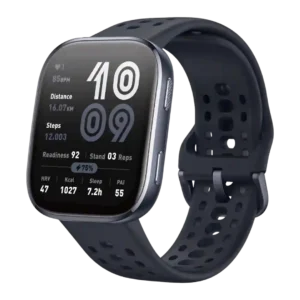
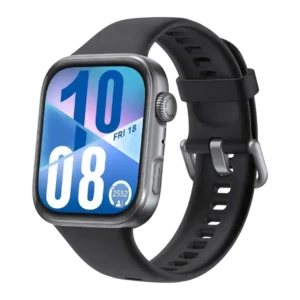
Amazfit Bip 6
Where It Has the Edge
- cross-platform compatibility is 4.4 vs 3.6. Cross-platform compatibility was a major advantage, with reviewers appreciating support for both Android and iOS even when some...

Scorata scores summarize analyzed review evidence on a 1–5 scale; they are not laboratory measurements or a simple average of customer star ratings. Feature scores summarize the reviews covering that feature. The overall score averages feature scores within each review, then combines review averages. When both expert and customer evidence are available, those two groups receive equal weight. Products can have different review coverage, so small score gaps do not establish a winner.
Recommendations prioritize important features for the category, with a score of at least 3.5, a gap of at least 0.25 points and at least two supporting reviews per product. Features with widely varying scores or broad connectivity contexts are excluded from recommendations. These safeguards do not establish statistical significance.
Quick verdict
The review evidence points to a tradeoff: cross-platform compatibility versus GPS accuracy and heart rate accuracy. Choose according to which strengths matter more to you; the overall score alone does not settle that choice.
Choose Amazfit Bip 6 for cross-platform compatibility.
Choose Huawei Watch Fit 4 for GPS accuracy and heart rate accuracy.
Scores are out of 5. Missing scores mean missing review evidence, not a missing feature.
GPS accuracy was mostly positive for a budget watch, with quick locks and usable routes, but several reviewers noted drift or weaker performance than dual-frequency sports watches.
GPS accuracy was a major strength, with reviewers praising fast lock-on, dual-band support, and close outdoor tracking results.
Heart-rate accuracy was generally solid for running and steady workouts, but reviewers reported inconsistency during spikes, strength work, or cycling.
Heart-rate accuracy was one of the most strongly supported health metrics, often comparing closely with chest straps or other watches.
Sleep tracking accuracy was the most divided tracking area, ranging from close alignment with Oura/Samsung to major overestimates and weak sleep-stage accuracy.
Sleep tracking was generally reliable for core metrics, though one reviewer said it remained less precise than a dedicated ring.
Fitness tracking accuracy was generally good for casual workouts, though a few reviewers noted treadmill, GPS, or exercise-type limitations.
Fitness tracking accuracy was generally good, with treadmill, pace, workout, and GPS results comparing well against reference devices.
Recovery insights were useful when tied to plans or Readiness, but some reviewers questioned the algorithm or noted premium/subscription limits.
Recovery insights were valued when reviewers mentioned recovery time, training load, and training index features.
Coaching features were generally viewed as useful, especially Zepp Coach workout plans and actionable training feedback.
Coaching features were useful when reviewers discussed prompts, training guidance, personal-trainer-like plans, and non-generic feedback.
Workout variety was excellent, with reviewers repeatedly highlighting 140-plus modes as far beyond typical budget-watch expectations.
Workout tracking variety was very strong overall, with over 100 modes, although one reviewer wanted a more complete list.
Stress tracking had only limited opinionated evidence, with CNET's hands-on review criticizing the lack of context around one-tap vitals.
Stress tracking and emotional well-being features were considered useful and interesting, especially for spotting calmer or unpleasant periods.
Step counting was mostly acceptable against other trackers, but Wareable saw day-to-day variation.
Step counting accuracy was strongly praised in one review that ranked Huawei among the best step counters tested.
Wellness insights were useful when they explained trends, sleep, readiness, or recovery, but reviewers often wanted more context or disliked subscription limits.
Wellness insights were a bright spot, especially emotional well-being, Health Insights, breathing links, and habit awareness.
Health tracking accuracy was mostly good as a baseline, though reviewers cautioned that some health data and explanations were not premium-grade.
Health tracking accuracy was broadly positive for everyday use, especially heart-rate and sensor reliability, while still framed as non-medical.
Food and calorie tools were split: one reviewer found the calorie count wrong, while others found photo/barcode calorie logging accurate or convenient.
Calorie tracking was only lightly supported, but one reviewer valued seeing calories beside other daily metrics at a glance.
Blood oxygen readings received limited direct evaluation, but TechAdvisor found the data aligned well with other devices.
Blood oxygen tracking received positive but cautious comments, with reviewers finding readings reliable or closely matching other devices while not treating them as medical-grade.
Battery life was the strongest consensus point, with reviewers commonly getting roughly a week or more and several calling the result impressive for an AMOLED smartwatch.
Battery life was one of the strongest points across reviews, ranging from a comfortable week to around 10 days depending on usage.
Charging convenience was a common weakness because the watch uses a puck/proprietary dock and often requires the user to supply a USB-C cable.
Charging convenience was mostly positive thanks to secure magnetic or wireless charging, though one reviewer disliked the proprietary cradle.
Charging speed was acceptable but not special, with several reviewers describing roughly 90 to 120 minutes and no fast-charge advantage.
Charging speed was considered good, with repeated mentions of a full charge in about 75 minutes and quick top-ups.
Comfort was a consistent strength, with reviewers calling the watch light and wearable day, night, and during workouts.
Comfort was praised across reviews because the watch is light, slim, and easy to wear all day.
Materials quality impressed reviewers for the price, especially the aluminum frame and higher-quality strap/display materials.
Materials quality was praised for the aluminum or metal body, premium feel, and strong case construction.
Durability was mixed: the frame felt sturdy, but reviewers noted scuffing, limited ruggedness, and potential vulnerability from the glass/bezels.
Durability feedback was positive overall, with Gorilla Glass or the regular model considered sufficient for most everyday users.
Band impressions were mostly positive for security and breathability, but a few reviewers found the strap awkward or irritating enough to replace.
Band and strap feedback was positive, with praise for secure clasps, comfort, grip, and premium-feeling strap hardware.
Fit had limited scored evidence, but TechRadar liked how flush and light the watch felt on the wrist.
Fit was praised for a just-right dial size, broad wrist adjustability, and a slim feel on the hand.
Style and design were generally praised as sleek and premium-looking for the price, though one reviewer found the design/navigation clunky.
Style and design were among the strongest areas, with repeated praise for a premium, slim, stylish Apple Watch-like look.
Build quality exceeded expectations for the price, with reviewers calling the watch durable, sturdy, and not cheap-feeling.
Build quality was repeatedly described as premium, top-notch, durable, or unusually strong for the price.
Water resistance was viewed positively for showering, swimming, rain, and pool use, though not for serious diving or intense water sports.
Water resistance was generally positive for swimming and everyday exposure, though one reviewer found water-ejection behavior less reassuring.
Display quality was one of the Bip 6's biggest strengths, with reviewers praising the AMOLED panel's color, contrast, sharpness, and overall look.
Display quality was one of the most praised attributes, with reviewers calling the AMOLED panel clear, vibrant, stunning, and responsive.
Outdoor visibility was usually praised thanks to the bright AMOLED screen, although a couple reviewers struggled in direct sun or with sunglasses.
Outdoor visibility was excellent thanks to the bright AMOLED screen, with reviewers repeatedly saying it stayed clear in sun or outdoors.
Brightness was widely praised, with reviewers repeatedly pointing to the 2,000-nit AMOLED screen and easy readability in most conditions.
Brightness was widely praised, especially the 2,000-nit AMOLED panel and its clear outdoor readability.
Reliability was mixed: the watch worked well overall, but reviewers reported storage bugs, app spam, UI hiccups, or unfinished-feeling features.
Reliability was mostly positive but not perfect, balancing strong trust in tracking and durability against occasional disconnects.
Value for money was the strongest overall finding, with every review treating the Bip 6 as unusually capable for its sub-$100 price.
Value for money was extremely strong across reviews, with many calling it one of the best budget or affordable smartwatch options.
Onboard music storage was a limitation because local music requires preloading and the watch has limited storage or no streaming-app support.
Onboard music storage was useful for phone-free listening, especially with Bluetooth earphones paired directly to the watch.
Menu navigation was polarized: some found it easy once learned, while others described settings and menus as clunky or tedious.
Menu navigation was praised for smooth scrolling, useful haptics, flexible layouts, and easy rearrangement.
Voice assistant quality was highly inconsistent: TechRadar and some video reviewers praised Zepp Flow, while CNET and others found it laggy, limited, or unfinished.
Voice assistant quality was weakly supported but negative, because the assistant was said to require a Huawei phone to work.
Software smoothness was mixed: some reviewers found the interface snappy, while others noticed lag or less-than-perfect fluidity.
Software smoothness was a standout positive, with reviewers repeatedly praising fluid animations, smooth menus, and responsive operation.
Contactless payment support was consistently treated as absent, making it a clear smartwatch-feature gap.
Contactless payments were a consistent weakness because NFC/payment support was limited or unavailable in many places.
The UI divided reviewers, from easy and snappy to clunky, confusing, or requiring practice.
The user interface was mostly praised as smooth, fluid, and premium, but permissions and occasional quirks lowered the ceiling.
Zepp OS was usually serviceable and sometimes smooth, but several reviewers described rough edges or a less mature ecosystem.
The operating system felt polished and smooth overall, though some reviewers noted limited development or similarity to older Huawei models.
Customization was mixed: reviewers liked designing faces and changing controls, but some found watch-face customization limited.
Customization was a strength, especially watch-face editing, widget/card management, and app/icon arrangement, despite some tile limits.
Button controls were generally useful and customizable, although one reviewer missed a crown-style control for long lists.
The crown and button controls earned positive notes for haptics, precision, and practical control over functions like the flashlight.
Touchscreen responsiveness was mixed-to-positive: some reviewers called it responsive, while others saw lag or sluggishness.
Touchscreen responsiveness was strong in normal use and even praised when wet, though one reviewer noted it was unusable underwater.
Music controls were useful when controlling phone playback, but support varied by service and reviewer setup.
Music controls worked well for phone playback control, though this was a smaller strength than onboard music storage.
The ecosystem is one of the clearest limitations: reviewers repeatedly described the app store and broader platform as sparse or less robust than Wear OS/watchOS.
Reviewers consistently found Huawei’s app store ecosystem limited, with basic apps available but far less depth than richer smartwatch platforms.
Review contexts may differ, so use caution when interpreting the score gap.
Call handling was useful and often clear enough, but speaker loudness, wrist-call awkwardness, and Bluetooth range kept it from feeling premium.
Call handling was generally strong, with loud speakers, clear microphones, and callers reportedly hearing the reviewer well.
Bluetooth was mixed: external sensor support earned praise, while phone range and dropped connection complaints lowered confidence for everyday connectivity.
Bluetooth was generally functional, with earbuds pairing and basic connectivity working as expected rather than standing out as a major strength.
Review contexts may differ, so use caution when interpreting the score gap.
Pairing reliability was mixed, with one reviewer reporting lost pairing but quick re-pairing and another losing connection from one room away.
Pairing reliability was mixed but acceptable, with occasional disconnects in one review and successful earbud pairing in another.
Review contexts may differ, so use caution when interpreting the score gap.
Offline maps and navigation were a standout for the price, though reviewers noted setup, storage, and refinement limitations.
Mapping and navigation were standout features for the price, especially offline maps, route-back support, and wrist-based map screens.
Review contexts may differ, so use caution when interpreting the score gap.
Third-party app support was limited overall, with missing Spotify and sparse app-store options offset by some fitness-platform syncing.
Third-party app support was limited, with Spotify control and basic apps available but a small AppGallery overall.
Review contexts may differ, so use caution when interpreting the score gap.
Notifications were useful and often reliable, but reply support was limited on iPhone and some notification features were uneven.
Notifications were useful for basic reading and replies on supported phones, but iOS limitations and missed notifications reduced consistency.
The Zepp app drew mixed reactions: some praised its detail and control, while others found it cluttered, confusing, or poorly explained.
Companion app opinions were mixed: one reviewer found it complete and easy, while others criticized clutter, bloat, and slow transfers.
Watch faces were a plus overall, with many options and some strong implementations, though one reviewer hit a storage bug and another found customization limited.
Watch-face quality was generally strong, with attractive built-in and downloadable faces, though some reviewers disliked paid options.
Smartwatch features were strong for the price, with calls, notifications, maps, music controls, and utility tools, though not as complete as premium watches.
Smartwatch features were adequate for the price, but reviewers agreed it is not as complete as more app-rich smartwatch platforms.
Cross-platform compatibility was a major advantage, with reviewers appreciating support for both Android and iOS even when some reply features differed.
Cross-platform compatibility was usable but uneven, with iPhone users losing features such as replies, mapping, or onboard music support.
Reviewers who evaluated auto-detection liked that the Bip 6 starts common activity or strength tracking quickly, though coverage was not treated as a premium-level feature.
Only one reviewer judged auto-detection directly, calling it handy while noting it can affect battery life.
The flashlight was treated as useful in small ways, especially because brightness can be adjusted, though it was not a core feature.
Safety-feature evidence was limited but positive, with one reviewer praising the night safety light concept for visibility in the dark.
Size options were a drawback because reviewers repeatedly noted the large square case and lack of alternate sizes.
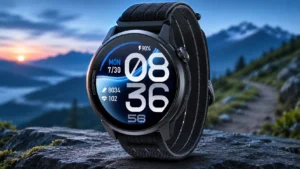
The Pace 4 Pro delivers an exceptional display, impressive battery life and reliable GPS in a remarkably light sports watch. Its wrist heart-rate tracking can be inconsistent during intense workouts,...
Pros: heart rate accuracy, display quality
Cons: band quality, smartwatch features
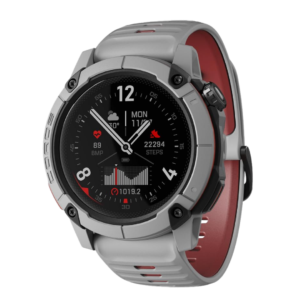
Best for long battery life, accurate GPS and useful offline maps at a strong price. Skip it if you need payments, richer apps, a built-in LED flashlight or polished smartwatch...
Pros: mapping and navigation, value for money
Cons: smartwatch features, contactless payments
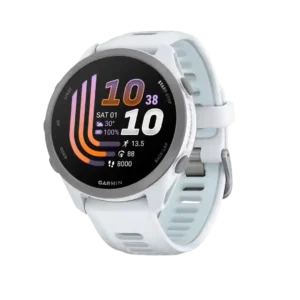
Best for accurate run tracking, deep Garmin coaching and phone-free Spotify in a light package. Skip it if you need full maps, triathlon mode, Apple Music support or the strongest...
Pros: value for money, GPS accuracy
Cons: mapping and navigation, third-party app support
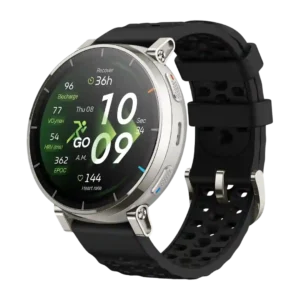
Good if you want premium running features, long battery life, and maps for under $200. Skip it if you need flawless heart-rate data, multiband GPS, LTE, or richer app support.
Pros: value for money, battery life
Cons: heart rate accuracy, third-party app support