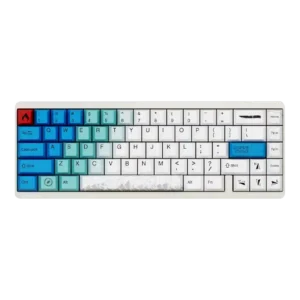
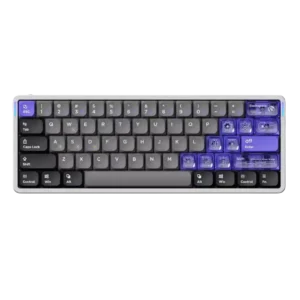
Varmilo Muse65 HE Magnetic Keyboard
Where It Has the Edge
- polling rate is 4.3 vs 3.9. High polling support was viewed positively, with reviewers calling it fast or smooth for competitive-style play.

Scorata scores summarize analyzed review evidence on a 1–5 scale; they are not laboratory measurements or a simple average of customer star ratings. Feature scores summarize the reviews covering that feature. The overall score averages feature scores within each review, then combines review averages. When both expert and customer evidence are available, those two groups receive equal weight. Products can have different review coverage, so small score gaps do not establish a winner.
Recommendations prioritize important features for the category, with a score of at least 3.5, a gap of at least 0.25 points and at least two supporting reviews per product. Features with widely varying scores or broad connectivity contexts are excluded from recommendations. These safeguards do not establish statistical significance.
Quick verdict
The review evidence points to a tradeoff: polling rate versus RGB customization and actuation consistency. Choose according to which strengths matter more to you; the overall score alone does not settle that choice.
Choose Varmilo Muse65 HE Magnetic Keyboard for polling rate.
Choose NuPhy Air60 HE for RGB customization and actuation consistency.
Scores are out of 5. Missing scores mean missing review evidence, not a missing feature.
Ergonomics had limited positive evidence because light switches reduced fatigue during longer use.
Ergonomics received limited but positive support around comfort adjustments and wrist positioning.
Durability evidence was positive, with reviewers tying the aluminum build and tank-like construction to a premium, durable feel.
Durability was mixed, with PBT legends and solid keycaps praised, but one reviewer strongly criticized scratching during use and travel.
Materials quality was praised for the aluminum case and premium-feeling construction.
Materials quality was mixed: aluminum and PBT elements earned praise, while one reviewer criticized scratch-prone plastic and coatings.
Size and form factor were mixed: one reviewer preferred TKL, while another liked the 65% layout for arrow-key access.
Size and form factor were usually praised for compactness and novelty, though one reviewer questioned the low-profile value because travel distance felt full-size.
Typing comfort was praised in limited evidence, especially for long typing sessions.
Typing comfort was praised by some reviewers as excellent, but others reported accuracy issues from the flat/light low-profile feel.
Build quality was a consistent highlight, with reviewers describing the keyboard as premium, solid, metal, and tank-like.
Build quality was broadly praised, with reviewers describing the board as sturdy, solid, premium-feeling, or well put together.
Reviewers repeatedly praised the Muse65 HE's appearance, calling it striking, good looking, beautiful, and nice across all five reviews.
Design aesthetics were usually praised as stylish, distinctive, and attractive, though a few reviewers disliked the keycap color mix in person.
Reliability was hurt by software crashes and finicky setup behavior in the negative reviews.
Reliability drew concerns from firmware-update problems and feet that did not lock securely in one critical review.
Value for money was split: some reviewers liked the $155 price, while another felt better value was available elsewhere.
Value for money was usually praised, especially versus other Hall Effect boards, but one negative review argued the price made little sense.
Rapid Trigger was well received, with reviewers saying it felt nice, worked as intended, and helped with fast resets.
Rapid Trigger support was repeatedly praised as responsive and useful, with reviewers noting near-instant reset and practical gaming benefits.
Software quality was the clearest weakness, ranging from merely early and improvable to janky, confusing, crashing, and very frustrating.
Software quality was one of the most consistently praised attributes, with reviewers liking the web app, stability, clean UI, and broad controls.
RGB customization was criticized because reviewers had trouble making lighting changes apply to the board.
RGB customization was viewed positively, with reviewers liking the available effects, side lighting, and web-based lighting controls.
Customization options were mixed: the board offers layers and actuation control, but reviewers criticized the software workflow and sliders.
Customization options were strongly praised for remapping, actuation tuning, lighting, layers, and Hall Effect controls.
Macro customization had limited positive evidence, with one reviewer calling macro setup very customizable.
Macro customization was mixed because one review praised available macros and custom delays while another said macro creation was missing.
Hot-swappable switch support was scored low from one review because switch choice and hot-swap ability were described as limited.
Hot-swap support was limited in practical value because compatible low-profile magnetic switch choices were narrow.
Compatibility was criticized in limited evidence because software setup required a Windows laptop.
Compatibility was positive in the reviews that tested or valued laptop use plus Mac, PC, and Linux support.
Extra gaming features were criticized because the Muse65 HE lacks premium features like Snap Tap and quad-actuation.
Extra gaming features were extensive and often praised, though SOCD/Hyper Tap-style features raised usefulness or fairness concerns for some reviewers.
Layout options had limited positive evidence from a reviewer who liked the 65% layout because it includes arrow keys.
Layout options were a common limitation because the 60% layout omits arrows, function keys, and navigation keys that several reviewers missed.
Profile management was criticized because one reviewer could not find a way to set different profiles.
Profile management was mixed: the physical switch was appreciated, but the three-profile limit was a possible deal-breaker.
Keycap quality was praised for soft-touch PBT feel and generally nice surface quality.
Keycap quality split reviewers sharply: some praised PBT feel and solidity, while others disliked slipperiness, light bleed, scratching, or average legends.
Switch choice was divisive: one review criticized the limited options, while another felt the available Gateron choices were strong.
Switch choice was criticized as narrow, with reviewers noting the current low-profile magnetic ecosystem leaves only the two Gateron LP Jade variants.
Actuation behavior was mostly strong, though one reviewer noted accidental deactivation at a zero bottom dead zone.
Actuation behavior was described as stable and reliable, especially with the dual-rail switches and dependable Hall Effect functions.
Frame rigidity and heft were praised because the heavy board felt stable, solid, and hard to knock around.
Frame rigidity was strongly praised in the PC Gamer review, which reported no flex or creaking.
Typing feel was positive overall, with reviewers calling the typing experience good and the regular keys pleasant.
Typing feel was the most divided core attribute: several reviewers loved it, while others found the keycaps, low-profile shape, or light actuation less satisfying.
Connectivity had a small caveat because one reviewer found the USB-C opening too narrow for a coiled cable.
Connectivity was the most repeated drawback because the board is wired-only and side USB or cable placement bothered several reviewers.
High polling support was viewed positively, with reviewers calling it fast or smooth for competitive-style play.
Polling rate was viewed as a strong spec, though reviewers also cautioned that 8K may be imperceptible or cause jitter for some setups.
Acoustics were generally positive but not perfect, with several reviewers liking the sound while one wanted better spacebar sound.
Acoustics were generally liked, especially the muted or satisfying low-profile sound, but some reviewers criticized the space bar or found the sound lackluster.
RGB lighting quality had limited but positive evidence, with one reviewer saying the RGB looked pretty nice.
RGB lighting quality was usually praised for brightness and visual effect, but keycap light bleed made it look odd to some reviewers.
Latency was praised in testing, with no input lag noticed during gameplay.
Latency was consistently praised as very low or imperceptible, with reviewers tying the board’s wired design and 8K capability to fast response.
Responsiveness was a major strength, with reviewers describing the switches and in-game input response as highly responsive or flawless.
Responsiveness was a major strength across reviews, with reviewers praising fast keystrokes, snappy switches, and responsive in-game behavior.
Switch feel was consistently positive, with reviewers liking the light force, smoothness, and Gateron dual-rail feel.
Reviewers generally liked the low-profile magnetic Jade switches for smoothness, snappiness, and comfort, though one reviewer found the light force required adjustment.
Stabilizer quality was mixed to weak because one reviewer specifically criticized the spacebar sound.
Stabilizer quality was a recurring weak spot, mostly because multiple reviewers singled out the space bar for wobble, rattle, or clanky sound.
Sound dampening was viewed positively in limited evidence, with one reviewer saying the construction made the keyboard sound more premium.
Sound dampening was praised when reviewers mentioned the foam and silicone layers, which helped make the thin board sound more refined.
Gaming performance was one of the strongest areas, with reviewers reporting snappy movement, indistinguishable Hall-effect performance, and flawless play.
Gaming performance was one of the strongest areas, with reviewers praising speed, responsiveness, Hall Effect control, and compact competitive use.
Noise level had limited positive evidence, with one reviewer describing it as not too loud for a rapid-trigger keyboard.
Noise level was considered office-friendly or pleasantly controlled rather than truly silent.
Backlight brightness was praised as bright and usable without being obnoxious.
Legend visibility drew criticism because several reviewers found the legends, translucent keys, or light bleed distracting or unclear.
Cable quality was mixed: the included angled cable was praised, while one reviewer found the side-port cable setup limiting for custom cables.
Desk space efficiency was praised for freeing mouse space in gaming setups.
Key spacing was criticized by reviewers who felt the flat or wide keys could cause accidental presses or strange typing.
Key stability was praised when reviewers focused on dual-rail or low-wobble behavior, with only limited criticism elsewhere.
Per-key lighting control was criticized in one review because custom lighting changes did not appear to sync to the keyboard.
Portability was mixed: reviewers liked the small, light body but repeatedly noted that wired-only operation undercuts travel appeal.
The optional wrist rest was liked in the one review that evaluated it, where it was described as comfortable and stable.
Switch replacement appeared physically easy in the one review that discussed removal directly.

Good if you want a premium 96% Hall Effect keyboard for work and gaming with excellent build, sound, and customization. Skip it if you need cheaper esports-first speed, 8,000Hz polling,...
Pros: size and form factor, typing feel
Cons: switch options, portability

Choose it if competitive gaming speed, Rapid Trigger, and deep per-key customization matter more than extras. Skip it if you need wireless, dedicated arrows/media keys, adjustable height, or a lower-cost...
Pros: overall satisfaction, customization options
Cons: value for money, switch options

Good if you want a premium, quiet TKL Hall Effect keyboard for typing and gaming. Skip it if price, portability, 8,000Hz polling, or broad switch choice matters most.
Pros: build quality, switch feel
Cons: switch options

Good if you want a premium full-size Hall Effect keyboard with smooth switches, quiet sound, and deep customization. Skip it if you need a portable, budget-friendly board or broad switch...
Pros: build quality, keycap quality
Cons: switch options, portability