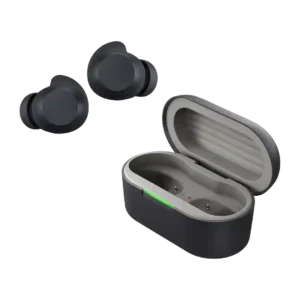
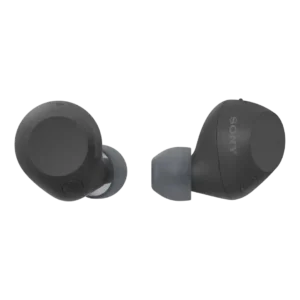
LG xboom Buds by will.i.am
Where It Has the Edge
- Transparency mode quality is 4.0 vs 3.7. Transparency mode is praised as useful for letting outside sound through when needed.

Scorata scores summarize analyzed review evidence on a 1–5 scale; they are not laboratory measurements or a simple average of customer star ratings. Feature scores summarize the reviews covering that feature. The overall score averages feature scores within each review, then combines review averages. When both expert and customer evidence are available, those two groups receive equal weight. Products can have different review coverage, so small score gaps do not establish a winner.
Recommendations prioritize important features for the category, with a score of at least 3.5, a gap of at least 0.25 points and at least two supporting reviews per product. Features with widely varying scores or broad connectivity contexts are excluded from recommendations. These safeguards do not establish statistical significance.
Quick verdict
The review evidence points to a tradeoff: Transparency mode quality versus Design and Aesthetics and Treble clarity. Choose according to which strengths matter more to you; the overall score alone does not settle that choice.
Choose LG xboom Buds by will.i.am for Transparency mode quality.
Choose Sony WF-C710N Earbuds for Design and Aesthetics and Treble clarity.
Scores are out of 5. Missing scores mean missing review evidence, not a missing feature.
Sound quality is the most divisive area: some reviewers heard enjoyable or even stellar audio, while others found it muddy, unclear, or below rivals.
Reviewers broadly found the WF-C710N enjoyable and strong for the price, with praise for full, engaging sound, though a few noted merely average or bass-heavy tuning.
Soundstage depth is limited, with What Hi-Fi? describing the presentation as claustrophobic.
Soundstage depth received positive comments around three-dimensional space, soundstage, and bass/soundstage impact.
Soundstage width is limited, with reviewers wanting greater spaciousness and more expansive layering.
One lab-based review credited the earbuds with wide, clearly defined spatial presentation.
Frequency balance needs adjustment, with TechRadar saying the buds require tuning for a more balanced sound.
Frequency balance was mostly praised as balanced or preference-aligned, though one reviewer wanted more middle and high-frequency presence.
Bass is a mixed strength: reviewers heard impact, depth, and fun energy, but several also connected the tuning to muddiness or reduced clarity.
Bass was one of the most praised traits, usually described as powerful, punchy, deep, or dynamic, with a minority saying it can overpower the mix or sound too heavy out of the box.
Noise cancellation is one of the clearest strengths, with reviewers praising how effectively it dulled or blocked low-frequency and everyday noise for the price.
ANC was the clearest consensus strength, repeatedly described as highly effective, above its price class, and unusually strong for budget earbuds.
Microphone noise reduction is serviceable but imperfect, since higher-frequency background sounds could still get through.
Microphone noise reduction was often praised for wind and background suppression, but a few reviewers said voice quality suffers or becomes hard to understand in noisy settings.
Spatial audio is a weakness because the product lacks the more immersive, three-dimensional focus found in pricier LG earbuds.
Spatial audio support was not a major draw, with reviewers noting limited service support or calling the feature unimpressive.
Volume output is a weakness because one reviewer found the buds quiet enough to push volume into leakage-prone levels.
One reviewer highlighted strong volume output, describing the earbuds as loud and energetic.
Instrument separation is a limitation, with TechRadar noting that vocals, synths, and other elements were not layered enough.
Instrument separation was praised in several reviews, with reviewers hearing clear placement, detail, and separation across layered tracks.
Multi-platform compatibility is mixed: Google and Microsoft pairing was praised, while iOS pairing was criticized.
Multi-platform compatibility was positive in the one review that tested both iPhone and Android without issues.
Treble clarity is inconsistent, sounding crisp in places but harsh or tinny without tuning.
Treble was often described as crisp, clear, or detailed, though several reviewers noted missing upper-treble detail or occasional distortion.
Preset EQ quality is uneven, with some presets improving individual tracks while treble-heavy tuning could sound harsh or tinny.
Preset EQ profiles were viewed positively when reviewers found bass boost, Excited, or Bright profiles useful for shaping the sound.
aptX support is a weakness because TechRadar specifically called out the absence of aptX Adaptive as a limitation.
aptX support was criticized as absent, especially because some cheaper or similarly priced earbuds offer it.
Maximum-volume clarity is weak, with reviewers hearing distortion, fuzziness, or quality loss at high volumes.
Maximum-volume clarity was mixed, with reviewers noting muddier mids at high volume and occasional treble distortion.
Carry case impressions are modest, with reviewers describing it as basic or cheap rather than premium.
Carry case quality split reviewers, with some finding it premium or sturdy and others calling it plasticky, chunky, cheap-feeling, or less sturdy over time.
Midrange clarity improves with tuning but can become muddy when bass dominates.
Midrange clarity was generally positive, especially for vocals, but some reviewers said heavy bass or higher volumes can make mids muddy or constrained.
LDAC support is absent, and reviewers treated that lack of higher-end codec support as a sonic limitation.
LDAC support was repeatedly called out as missing, which reviewers saw as disappointing for Sony earbuds and a drawback for serious listeners.
Portability is strong because the case is compact and light enough to pocket easily.
Portability was mostly good because the case fits pockets, though several reviewers called it bulkier than rivals or less ideal for tight pockets.
The integrated microphone earns praise through whisper-style use, with one reviewer saying it could pick up every word.
Integrated microphones were generally adequate to good for calls, with stronger indoor performance and weaker results in noisier conditions.
Transparency mode is praised as useful for letting outside sound through when needed.
Transparency and ambient modes were mixed: some reviewers found them useful or excellent, while others noticed hiss, delay, or weaker high-frequency reproduction.
Touch controls are mixed: they can be fast and responsive, but other reviewers reported accidental or phantom taps.
Touch control responsiveness was generally good, but repeated taps and accidental triggers made the control experience uneven.
Water and sweat resistance is adequate for light rain and workouts, but review evidence does not frame it as a standout durability feature.
Water and sweat resistance was seen as adequate for light workouts or casual use, though not all reviewers trusted the fit for exercise.
Stability is generally good thanks to hooks, seal, and secure fit, but it can fall apart when the eartips do not suit the wearer.
Stability was polarizing: some reviewers had no fallouts, while others found the earbuds slipped during running or were insecure for workouts.
Design and aesthetics are consistently weak, with reviewers calling the buds boring, bulky, not sleek, or visually uninteresting.
Design opinions were mixed but leaned positive, especially for the transparent Glass Blue finish; some reviewers found it toy-like or only average.
Comfort is sharply split: multiple reviewers found the rounded, bulky fit poor for long sessions, while others reported a comfortable fit.
Comfort was a major strength, with many reviewers saying the earbuds remain comfortable for hours or even all day.
Ear tip options are mixed: one reviewer achieved a snug fit, while another considered the number of options disappointingly modest.
Ear tip options were limited, with one reviewer warning that three sizes and no stabilizers may not suit many users.
Build quality is acceptable rather than premium, with the buds described as decently built while the overall feel remains basic.
Build quality was mostly solid for the price, though some reviewers described the plastics as slightly plasticky.
Eartip fit can be secure with a tight seal, but fit remains inconsistent because limited tip options and shape caused issues for some users.
Eartip fit was usually secure and comfortable when the right size was found, though smaller ears and seal sensitivity remained caveats.
Software and setup are helped by the useful fit-test function and simple pairing experience on supported platforms.
Software/setup simplicity was mixed, with one reviewer praising guided EQ setup and others reporting frustrating app signup or connection issues.
Bluetooth setup is hurt by iOS pairing friction, with one reviewer criticizing the lack of automatic discoverability on iOS.
Bluetooth reliability was mixed, with several reviewers reporting no issues or stable switching, while others encountered dropouts, app reconnection problems, or buzzing.
Call microphone quality ranges from usable to excellent, with one reviewer reporting exceptionally clear call sound and others noting some tinniness.
Call microphone quality ranged from clear and impressive to merely usable, with the best results in quiet or moderate environments.
The companion app is mostly praised for customization, fit testing, ANC controls, and clarity, though one short review criticized it.
The app was mostly praised for control and customization, but some reviewers wanted easier setup, more features, or fewer connection frustrations.
EQ customization is useful and can improve the sound, though reviewers agreed it does not fully erase the underlying tuning problems.
EQ customization was useful and often appreciated, though some reviewers wanted deeper controls or found Sony’s personalization basic.
Value for money is highly split: the buds bring ANC, battery, and features at a moderate price, but several reviewers preferred cheaper or clearer-sounding rivals.
Value was one of the strongest themes: reviewers consistently saw the WF-C710N as a strong budget buy despite compromises in codecs, case feel, controls, and fit.
Codec support is a drawback because reviewers criticized the lack of higher-resolution codec options.
Codec support was a recurring weakness because reviewers repeatedly criticized the earbuds for offering only AAC/SBC and lacking higher-quality options.
Multipoint is viewed as a useful perk, though the evidence is more about convenience than stress-tested reliability.
Multipoint was valued when it worked, but one reviewer reported disruptive dual-device buzzing, making reliability context-dependent.
Charging is a positive in the available review evidence, especially because the buds topped back up quickly.
Charging was mixed: quick charging earned praise, but the lack of wireless charging was a repeated limitation.
Battery life receives broad praise, with reviewers calling the figures strong, competitive, or impressive for the price.
Battery life was usually praised as long or above average, though one reviewer fell short of Sony’s claim in mixed ANC/ambient use.
Android compatibility was positive where tested, including Android pairing and no cross-platform issues.
Cable quality/accessories drew mild criticism because one reviewer wanted a longer USB-C-to-USB-C charging cable.
Included accessories were adequate but not generous, with one reviewer wishing Sony supplied a better charging cable.
Wear-detection sensors were praised as smooth, useful, and battery-saving.
Sidetone was weak in one review because the earbuds did not feed enough of the caller’s own voice back during calls.
Smudge resistance was mixed, with one reviewer finding the case not fingerprint-prone and another saying it attracts fingerprints and dust.
Auracast is repeatedly framed as a useful, uncommon, or unique feature that adds value if nearby broadcasts matter to the user.
Control usability was limited by awkward volume gestures and limited customization despite some responsive touch surfaces.
Lossless audio support was weak because one reviewer explicitly noted the lack of aptX lossless and LDAC.
Passive isolation received strong marks where tested, with reviewers crediting the ear tips and secure seal for blocking outside noise before ANC.
Sound leakage is a clear weakness in one review, especially above roughly 40% volume.
Low weight supported comfort, with reviewers noting the earbuds are light enough to forget they are being worn.

Best for detailed, natural wired sound, three connector options, and standout value around $99. Skip it if you need wireless features, stronger bass, softer treble, or a compact fit for...
Pros: Value for money, Multi-platform compatibility
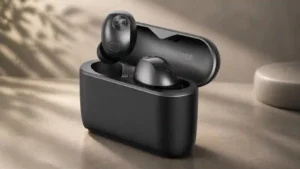
Choose these for excellent, balanced sound, a comfortable redesign, deep EQ tools and uniquely replaceable batteries. Skip them if you need class-leading ANC, consistently great calls or the smoothest treble...
Pros: User-replaceable batteries, Overall satisfaction
Cons: Auracast support, Sensors

Choose the AirPods 5 for strong open-ear ANC, clearer sound, easy Apple-device switching, and excellent value. Skip them if you need all-day battery, a very secure workout fit, or full...
Pros: Overall satisfaction, Sound quality
Cons: Battery, Eartips fit
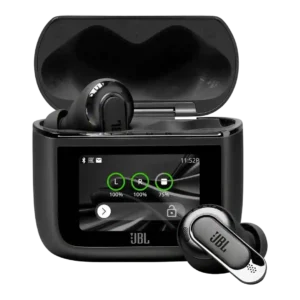
Choose the JBL Tour Pro 3 if you want feature-packed earbuds with strong sound, ANC, LDAC and a genuinely useful smart case. Skip them if you have smaller ears, want...
Pros: Sound quality, Carry case quality
Cons: Portability/foldability, Button control usability