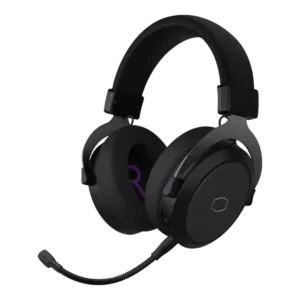
Cooler Master CH351 Gaming Headset
Where It Has the Edge
No clear scored advantage over the other product.

Scorata scores summarize analyzed review evidence on a 1–5 scale; they are not laboratory measurements or a simple average of customer star ratings. Feature scores summarize the reviews covering that feature. The overall score averages feature scores within each review, then combines review averages. When both expert and customer evidence are available, those two groups receive equal weight. Products can have different review coverage, so small score gaps do not establish a winner.
Recommendations prioritize important features for the category, with a score of at least 3.5, a gap of at least 0.25 points and at least two supporting reviews per product. Features with widely varying scores or broad connectivity contexts are excluded from recommendations. These safeguards do not establish statistical significance.
Quick verdict
There is not enough consistent, comparable evidence for a clear recommendation. Use the feature details and supporting reviews to weigh the tradeoffs.
There is not enough comparable review evidence to recommend Cooler Master CH351 Gaming Headset over the other product.
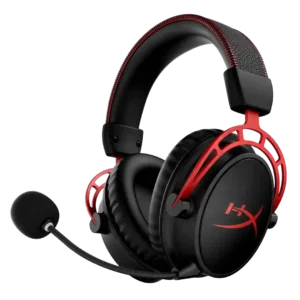
There is not enough comparable review evidence to recommend HyperX Cloud Alpha over the other product.
No clear scored advantage over the other product.
No clear scored advantage over the other product.
Scores are out of 5. Missing scores mean missing review evidence, not a missing feature.
Core sound quality is praised, especially because games still sound great even without spatial audio enabled.
Reviewers broadly praise the Cloud Alpha line for strong gaming and music sound, though a few find the tuning fuller, stuffier, or merely good rather than exceptional.
Positional audio is excellent because the reviewer could judge footstep distance and direction while playing.
Positional audio is usually strong for footsteps, gunfire, and spatial cues, though one reviewer prefers more tactical emphasis and another finds imaging limited.
Microphone noise rejection is a strength because nearby background noise was not picked up.
Noise reduction is often effective for voice clarity, but keyboard suppression and wireless mic behavior are not flawless in every review.
Soundstage is a strength, with the reviewer crediting its width for accurate sound reproduction.
Soundstage is described as wide and spacious in the strongest review evidence, with one reviewer calling it decent but not very wide.
Spatial audio is one of the clearest strengths and is described as making games sound fantastic.
Spatial audio is praised on PC or when supported, especially for immersion and opponent tracking, but it often depends on software or platform.
Game effects such as distant chatter, explosions and bangs are described as clear, supporting strong bass-impact performance in gameplay.
Bass is generally deep, punchy, and useful for gaming impact, but some reviewers note it can be boosted, imprecise, light on thump, or dominant in the low end.
Frequency accuracy is praised through the reviewer’s judgment that the headset produces nearly every sound accurately.
Frequency response is judged close enough to the source mix for clear detail, with only minor tuning deviations noted.
Software support is weak because there is no app for customization.
Setup is often simple and plug-and-play, but NGenuity driver recognition can undermine software setup on the wireless model.
Equalizer customization is poor because the reviewer specifically criticizes the lack of a companion app for EQ tweaking.
EQ customization is useful when available, especially on wireless models, and reviewers value the ability to create or tweak profiles.
The CH351-specific review treats the missing companion app as a clear drawback because it prevents customization.
NGenuity and related software are useful for battery, EQ, and spatial controls, but some reviewers report glitches or sparse features.
Controls are criticized as cluttered and unreliable, with buttons sometimes failing to register commands.
Physical controls are mostly easy to find and use, but some reviewers dislike the inline analog control or find a power button awkward.
Call or voice capture quality is strong, with the microphone described as loud and clear.
For ordinary Discord or team chat, the microphone is judged good enough, though not a replacement for a dedicated mic.
Wireless connectivity is judged poorly because it did not work as intended and produced distracting static.
Bluetooth is a weakness on wireless versions, with reviewers repeatedly criticizing the absence of Bluetooth backup or pairing.
Long-session comfort is weak because the reviewer felt pressure on the top of the head after about an hour.
Comfort is one of the strongest consensus areas, with many reviewers praising long-session wear, though some note heat, shallow pads, or pressure points.
Weight comfort is weak because the headset is described as being on the heavy side.
Weight comfort is generally positive; reviewers call the headset light or well-distributed even when the wireless model is heavier.
The design earns praise for fun colorways, especially the macaron teal-and-pink finish.
Design reactions are mixed: some like the black-and-red gamer style, while others call it dated or prefer subtler colors.
Build quality is praised, with the headset described as high-quality plastic with a soft-touch, premium finish.
Build quality is a major strength, with most reviewers praising sturdy metal/plastic construction, though a few call it only good or just okay.
Preset EQ support is poor because the reviewer complains that the CH351 lacks Music, Movie or Game mode-style presets.
Preset EQ opinions are mixed: one review says a preset improves mids, while another dislikes the built-in presets.
Loud effects are reported clearly, supporting good clarity during louder in-game moments.
The headset maintains clarity at high volume, with multiple reviewers reporting little to no distortion even at very loud levels.
Midrange dialogue clarity is praised because dialogue avoids the hollow or echoing character the reviewer dislikes elsewhere.
Midrange is usually described as clear or well-balanced, with some caveats about recessed vocals, heavy mids, or backgrounded guitar strums.
Connectivity is mixed: the headset supports multiple connection options, but the reviewer says its strengths work best over aux.
Connectivity versatility is split by version: the wired model is highly versatile via 3.5mm, while wireless versions are criticized for limited USB dongle-only use.
The microphone is praised as working very well in the CH351-specific review.
Microphone reactions range from clear and excellent for chat to thin, wonky, or not good enough for serious recording.
Volume output is strong for gameplay cues, with footsteps described as loud and clear.
Volume output is generally ample, with several reviewers saying it gets loud enough, though one notes lower output on PS4.
The detachable mic is treated as convenient, particularly because it can be removed for easier transport.
Detachable microphone convenience is strongly positive, letting users remove the mic for replacement, travel, or headphone-only use.
The earcups are a positive comfort point, with protein leather pads described as comfy.
Ear padding is usually praised for soft memory foam or leatherette comfort, but heat buildup and shallow pads appear in some reviews.
Value is undermined because the reviewer still found it hard to recommend despite the low price.
Value is strong for the wired $100 headset, but more mixed for the $200 wireless version because buyers pay heavily for battery life.
Battery life is the wireless model’s standout strength, with reviews repeatedly calling it industry-leading, astounding, or accurately long-lasting.
Charging earns positive marks where discussed, with quick USB-C top-ups and short full-charge times mentioned.
Cable quality is mostly positive thanks to braided, sturdy cables, though short length and cable rub/reverberation draw criticism.
Carry pouch comments are modestly positive where a bag is included, mostly as scratch protection or convenient storage.
Console compatibility limitations are a recurring wireless-model drawback, especially around Xbox, Mac, and feature support outside PC.
Detachable cabling is strongly appreciated because it improves repairability, portability, and non-gaming use.
Dongle feedback is mixed: wireless range can be strong in one test but limited or compatibility-constraining in others.
Limited swivel and inability to lay flat are recurring complaints across wired and wireless reviews.
Headband adjustment receives positive comments for defined, secure notches and stable sizing.
Included accessories are generally useful, especially windscreen, extra cable, and essential components, but one review misses a travel bag or alternate pads.
Separation and articulation are recurring strengths, especially from the dual-chamber design, though the praise is stronger in wired-model reviews.
Multi-platform compatibility is positive for PS5 in one review, but the broader evidence still shows platform limitations elsewhere.
Packaging receives limited but positive evidence from one reviewer who found the unboxing clean and professional.
Portability is limited because the headset does not fold or collapse, though some reviewers accept that tradeoff for durability.
Sidetone adjustment is weak: reviewers either cannot adjust mic monitoring or find the fixed level too strong.
Stability evidence is positive: reviewers mention secure on-head fit and, for PS5 use, a stable connection without dropouts.
Treble earns praise for clean, crisp highs, though a few reviews say the top end can be overshadowed or hard to bring forward.
USB-C is discussed positively in the context of quick wireless-model charging.
Wireless latency is mostly positive when mentioned, though one review reports occasional audio pops.
Xbox compatibility is a weak point for the wireless version, with reviews noting it will not work or lacks proper support.
Clamping force is usually acceptable or well-balanced, though one reviewer finds the grip stronger than ideal.
Hinge and joint durability receive limited but positive evidence, with one review noting robust protection around moving parts.
Replaceable earpads receive limited but positive evidence from one review that treats cushion replacement as beneficial.
Fit and seal are praised where discussed, helping stability and passive isolation.
Footstep scaling is a standout because the reviewer could judge which footsteps were closest and farthest away.
Passive isolation is a consistent strength, blocking or muffling household noise well for an over-ear gaming headset.
Sound leakage is usually controlled at normal volumes, though one wired review notes leakage at higher volumes.
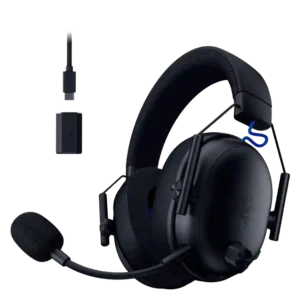
Best for excellent game audio, long-session comfort, clear voice chat, strong battery life, and low-latency wireless. Skip it if you need very high volume, flawless software, or zero tolerance for...
Pros: Overall satisfaction, Sound quality
Cons: Button control usability, Dongle
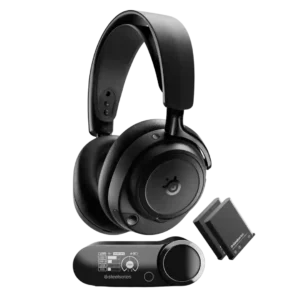
Choose the Arctis Nova Elite if you want top-tier wireless sound, ANC, hot-swap batteries, and multi-device mixing. Skip it if $600 feels excessive, you game on one console, or tight/heavy...
Pros: Sound quality, Connectivity versatility
Cons: Value for money, Carry case quality
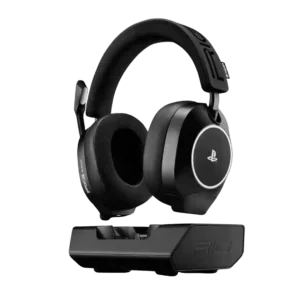
Best for sharp gaming audio, long battery life, an excellent dock, and strong value. Skip it if you need ANC, a detachable mic, maximum console volume, or seamless PS5/Xbox switching.
Pros: Sound quality, Included stand quality
Cons: Detachable microphone convenience
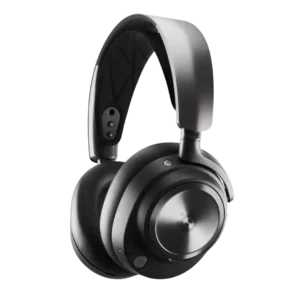
Choose the Arctis Nova Pro Wireless for premium gaming audio, hot-swappable batteries, broad device support, and deep EQ control. Skip it if the high price, mixed mic quality, or uneven...
Pros: Battery, Comfort during long use
Cons: Console compatibility limitations, USB-C