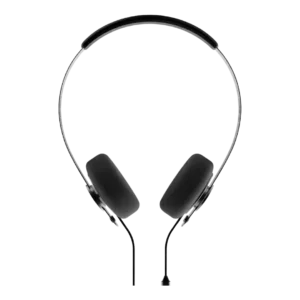
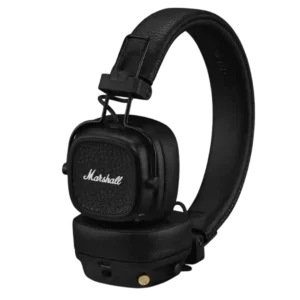
Gadhouse Wesley Retro
Where It Has the Edge
- Charging is 5.0 vs 4.6. Charging convenience is excellent because reviewers treat no-charge operation as a major plug-and-play benefit.

Scorata scores summarize analyzed review evidence on a 1–5 scale; they are not laboratory measurements or a simple average of customer star ratings. Feature scores summarize the reviews covering that feature. The overall score averages feature scores within each review, then combines review averages. When both expert and customer evidence are available, those two groups receive equal weight. Products can have different review coverage, so small score gaps do not establish a winner.
Recommendations prioritize important features for the category, with a score of at least 3.5, a gap of at least 0.25 points and at least two supporting reviews per product. Features with widely varying scores or broad connectivity contexts are excluded from recommendations. These safeguards do not establish statistical significance.
Quick verdict
The review evidence points to a tradeoff: Charging versus Button control usability and Headband adjustability. Choose according to which strengths matter more to you; the overall score alone does not settle that choice.
Choose Gadhouse Wesley Retro for Charging.
Choose Marshall Major V for Button control usability and Headband adjustability.
Scores are out of 5. Missing scores mean missing review evidence, not a missing feature.
Sound quality evidence is split: one review found muddy high-volume playback, while other sources praised held-up or exceptional sound.
Most reviewers liked the lively Marshall-leaning sound, but several found it average, treble-heavy, distant, or not competitive for audiophiles.
Bass performance is a weakness in the full listening review, where the low end muddied when volume and energy rose.
Bass impressions skewed positive for punch and warmth, though a few reviewers found the low end light or uneven depending on tuning.
Soundstage width is limited, with one track sounding hollow and underfilled.
Soundstage ranged from surprisingly wide and dynamic to compact, intimate, or under-imaged depending on the reviewer.
Audio-video sync benefits from the wired connection because the reviewer highlights avoiding Bluetooth-style delays.
Reviewers who discussed sync reported no noticeable delay or expected LE Audio benefits for video use.
Passive isolation has limited positive evidence, described only as decent in one source.
Passive isolation was mixed: the pads muffled some office chatter and ambient sound, but on-ear fit still let plenty through.
Maximum-volume clarity is a repeated drawback, with higher-volume listening described as muddy.
Reviewers noted that the headphones could play loudly without obvious strain and still had headroom.
Included accessories are useful because adapters help compatibility, though the missing carry case remains a separate drawback.
Included accessories were criticized as skimpy because reviewers expected more protection or extras for the price.
Portability is mixed: the headphones are not bulky, but the long cable makes bag use awkward.
Portability and foldability were consistently praised because the headphones collapse very small and fit easily in bags.
Instrument separation is mixed, with some good separation but weaker separation at higher volumes.
Reviewers who focused on separation generally praised stereo placement, detail visibility, and the ability to follow individual sound elements.
Cable quality is a practical drawback because the long wire is described as easily tangled.
Cable impressions were mixed: one reviewer liked the retro detail, while another disliked the tangling coiled cable.
USB-C support is positive where it is tied to universal compatibility through included adapters.
USB-C charging was viewed positively, especially as a more reliable option than fiddly wireless charging.
Travel friendliness is mixed: one source calls it commute-friendly, while another warns the cable tangles in bags.
Travel friendliness was mixed-to-positive: small size and battery helped, while no ANC and no case limited flights and loud travel.
Treble clarity is positive in the main test, where treble, bass and mids were all described as clear.
Treble was described as crisp and detailed by some reviewers, while others found the top end harsh, exaggerated, or clustered.
Carry case quality is poor because the full review notes that no carry case or dustbag is included.
Carry protection was a consistent weakness because reviewers repeatedly complained that no case, pouch, or tote was included.
Multi-platform compatibility is positive, with support framed around phones, laptops and vintage audio setups.
Multi-platform use was positive where one reviewer reported seamless switching between phone and laptop.
Headband adjustability is positive, with easy sizing and a snug adjustable fit both noted.
Headband adjustment was praised for smooth sliding rails and flexible adjustability.
The integrated microphone is useful for hands-free calls and casual gaming communication, with intuitive control support.
The integrated mic array was praised in one review as working well for clear recordings.
Sustainability receives limited positive evidence from one source crediting wired gear with lasting longer and being better for the planet.
Repairability was viewed as a plus because reviewers noted battery replacement through Marshall's repair program.
Ear cup padding is a standout comfort point, with foam pads described as very soft and squishy.
Ear cup padding was consistently praised as thick, soft, plush, or squishy enough to help the on-ear fit.
Midrange clarity is positive, with vocals described as clear through a full song.
Midrange clarity was often praised for vocals and detail, but some reviewers heard recessed or deficient mids.
Connectivity options are a strength, with adapters and plug-straight-in usefulness praised across sources.
Connectivity options were praised for wired listening, sharing audio, and useful device switching.
Overall recommendations favor retro style, simplicity and comfort, but one review is cautious about everyday listening.
Overall recommendations were mixed-to-positive: many reviewers recommended the headphones for battery, design, and casual use, but with clear caveats.
Software and setup simplicity are strong because the wired design avoids firmware fuss and works plug-and-play.
Setup was easy out of the box in one review, but app responsiveness and connection reliability were criticized elsewhere.
Button controls are a strength, described as simple, easy, tactile and intuitive across sources.
Physical button controls were one of the strongest points, with reviewers repeatedly praising the joystick-style knob as intuitive and reliable.
Long-use comfort is consistently positive thanks to light weight, soft pads and all-day comfort language.
Long-wear comfort was highly divided, with many praising light padding and hours-long comfort while others reported pressure, heat, or glasses discomfort.
Weight comfort is a clear strength, with multiple sources emphasizing the very light build.
Low weight was a consistent strength, with reviewers calling the headphones light, barely noticeable, and easy to wear.
Build quality receives positive evidence through a more robust headband and durability-oriented comfort language.
Build quality was generally praised as rugged, tough, and durable, though not always premium-looking.
Design is the strongest consensus point, with every source praising or emphasizing the retro 80s look.
The retro Marshall design was widely praised as distinctive, classic, stylish, and aligned with the brand's rock identity.
Charging convenience is excellent because reviewers treat no-charge operation as a major plug-and-play benefit.
Charging was mostly praised for fast, USB-C, and wireless charging, though several reviewers found wireless placement fiddly or unreliable.
Battery concerns are essentially avoided by the wired design, which a reviewer praises for not dying mid-commute.
Battery life was the clearest consensus strength, with reviewers repeatedly praising the 100-hour class endurance and real-world longevity.
Value is context-dependent: reasonable for fashion-first buyers, less convincing for audio-first buyers, and low-priced in one preview.
Value was split: reviewers liked the battery, design, and sound for the price, but many felt ANC competitors offered more.
The 3.5mm input was valued for wired listening and audio sharing, with several reviewers calling the sharing trick useful or cool.
Android compatibility was weakened by missing higher-quality Android-friendly codecs such as aptX or LDAC.
aptX support was criticized because reviewers specifically noted that aptX or aptX Adaptive was missing.
Hi-res playback is a consistent strength, with multiple sources praising or highlighting 48kHz lossless audio.
The detachable analog cable was praised for enabling the music-sharing trick with another pair of headphones.
One review praised the ear cups' 90-degree tilt as part of the flexible fit system.
Launch feature set was criticized as limited, especially compared with competitors that include ANC, transparency, cases, or richer apps.
Headband padding feedback was mixed, with one review praising full soft coverage and another calling it thin.
LDAC was criticized as a missing advantage versus a competing Android-focused headphone.
Premium feel was mixed: the design could look special, but some reviewers said the materials did not feel expensive.
Preset EQ feedback was limited but positive when reviewers singled out balanced or useful presets.
Fit stability was mixed: some reviews praised secure fit, while others found head movement could shift or dislodge the headphones.
Spotify integration was praised by Spotify users as genuinely useful for starting or cycling music quickly.
One reviewer found normal listening volume more than sufficient, with extra output available if needed.
Reviewers treated the lack of IP or water resistance as a real limitation for rain, sweat, hikes, and outdoor use.
Reviewers repeatedly flagged the absence of ANC as the Major V's biggest feature gap, especially for commuting, flights, and loud environments.
Measured frequency-response commentary was negative, with one review saying the tuning deviated drastically from the preferred curve.
Immersive audio has limited positive evidence from one source that calls notes crisp and immersive.
LE Audio readiness was treated as a forward-looking advantage for streaming, sync, and Auracast-related future use.
Microphone noise reduction received positive comments for cleaning up office, cafe, and ambient noise around speech.
Sound leakage was mixed-to-negative, with some office-safe results but several warnings about leakage at higher volumes.
One review said Dolby Atmos playback still had kick despite the lack of noise cancelling.
Wind handling was only discussed in microphone-test contexts and was generally positive alongside noisy-condition call performance.
Advanced software and feature impressions were mixed: battery preservation impressed, but feature depth lagged some competitors.
App opinions were mixed: support and customization were major upgrades, but some reviewers found the app buggy, basic, or limited.
Bluetooth was described positively where reviewers referenced modern or useful wireless capabilities rather than just listing the version.
EQ customization was useful and often praised, though some reviewers said its effect was subtle or insufficient.
Call quality was usually praised, with reviewers hearing loud, clear, understandable voice capture; one found it noisy but usable.
Smart listening features were useful for quick Spotify, EQ, or assistant access, though one reviewer found the M button nonessential.
Voice assistant use was positive in the review that tested Google Assistant and Siri.
Marshall's guitar-riff feedback tones were described as a nice brand touch by reviewers who mentioned them.
Auracast support was praised as rare and forward-looking, though some comments depended on future firmware or ecosystem adoption.
Codec support was mixed-to-weak: LC3/LE Audio helped, but reviewers criticized the lack of higher-quality codecs.
Replaceable earpads were a plus in reviews that noted removable pads or replacement cups.
Multipoint generally worked well, though one reviewer noted playback must be paused on one device before switching.
Clamp force feedback was mixed, ranging from gentle or moderate to too tight or uncomfortable depending on head shape and use.
Durability-over-time comments were positive where reviewers expected the headphones to survive years of use or abuse.
One reviewer disliked the way the metal hinges stick out when folded, making hinge design a minor caveat.
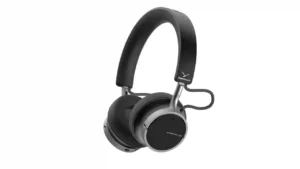
Choose the Aventho 100 for standout battery life, portable retro styling, strong ANC, and flexible wired/wireless use. Skip it if you dislike on-ear pressure or want a wide, consistently neutral...
Pros: Battery, Design and Aesthetics
Cons: Clamping force comfort, Soundstage width
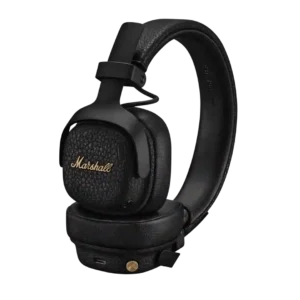
Choose the Milton A.N.C. for class-leading on-ear battery life, tactile controls, repairable parts, and lively sound. Skip it if you need over-ear isolation, dependable wear detection, natural call quality, or...
Pros: Overall recommendation, Battery
Cons: Wear detection auto-pause, Noise isolation (passive)

Exceptional battery life and useful sound customization make these inexpensive on-ears an appealing everyday choice. Expect limited noise isolation, no wired backup and potentially tiring ear pressure during long sessions.
Pros: Battery, Weight comfort
Cons: 3.5mm analog input availability, Portability/foldability

Punchy sound, outstanding battery endurance and a compact folding design make these a compelling budget buy. The firm on-ear fit and weak noise isolation are the biggest compromises.
Pros: Battery, Sound quality
Cons: Comfort during long use, Build quality